
News
Queensland based Sri Lankan professor receives $179 million on his innovations

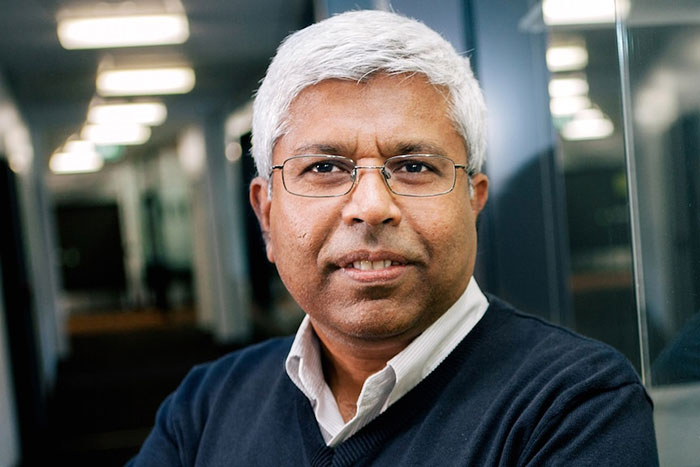
A Brisbane-based company that invented a smartphone app it says can diagnose COVID-19 and other respiratory illnesses by listening to someone cough has been purchased by Pfizer for nearly $180 million.ResApp Health Limited uses diagnostic technology developed by Associate Professor Udantha Abeyratne and his research team at the University of Queensland (UQ) to record and analyse a patient’s coughs on a smartphone.
The app also considers the self-reporting of simple symptoms like a runny nose or fever to diagnose and measure the severity of a range of pulmonary diseases, including asthma and pneumonia.Pfizer, which is one of the world’s largest bio-pharmaceutical companies, offered to buy ResApp earlier this year when the company announced positive results for its COVID-19 screening test.
Recent studies had shown the app had a 92 per cent success rate in diagnosing the virus among symptomatic patients, but more clinical trials were needed for it to gain regulatory approval.A Pfizer spokesperson said they were encouraged by the data they had seen so far and the $179 million acquisition, finalised on Monday, was another move toward enhancing the company’s expertise in digital health.
“We believe the COVID-19 screening tool is the next step to potentially provide new solutions for consumers that aim to quell this disease,” they said.
“We look forward to refining this algorithm further and working with regulators around the world to bring this important product to consumers as quickly as possible.”
UQ Vice-Chancellor Professor Deborah Terry said it was an “outstanding” outcome for ResApp and associated researchers as well.
“The value of translating research into new point-of-care diagnostics to improve healthcare on a global scale cannot be understated,” Professor Terry said.
UQ’s commercialisation company UniQuest licensed the technology to ResApp in September 2014.
Dr Abeyratne, from the School of Information Technology and Electrical Engineering, said the research that led to the breakthrough began more than a decade ago with grant funding from the Bill and Melinda Gates Foundation.
“When I open up my lungs, open up the airway, that is what I call an ‘information super highway’, so I wondered whether it’s possible to use cough sounds, advanced signal processing and AI technology to pick out features,” he said.
“From the very beginning, I had a big vision to develop scalable, cheap technologies to diagnose pulmonary diseases all over the world – not only in remote sub-Saharan Africa, but even in developed urban cities like New York and Brisbane.”
Dr Abeyratne said the smartphone technology, which was developed in consultation with medical practitioners, operates similarly to a doctor using a stethoscope to listen for sounds produced by a patient’s body.
“The diagnosis comes immediately, within a minute or so, telling the patient whether they have a particular disease, using only their smartphone – nothing else – and there’s no need for a network connection either,” he said.A Pfizer spokesperson said ResApp’s solutions in respiratory health align well with their own areas of focus.
“As the world becomes more digitally connected, and as respiratory illnesses — including COVID-19 — increasingly threatens the global population, digital apps provide consumers and patients with easy to use, non-invasive and cost-effective ways to detect, suspect and eventually, diagnose respiratory illness,” they said.
“Ultimately, we believe that science and health technology can be advanced in ways that can provide better information for clinicians and regulators, reduce patient and physician burden, and reduce time and costs across the development cycle.”
Dr Abeyratne said he is hopeful Pfizer’s acquisition of the app will help realise his dream of improving patient outcomes around the world.
“I hope they will be able to diagnose killer diseases like pneumonia in very remote communities in Africa and Asia because they don’t have access to sophisticated hospitals,” he said.
He said the technology could also benefit GP clinics and hospitals in developed countries by speeding up the screening process and preventing costly hospital admissions.
“It could be used in telehealth services, so patients don’t have to visit the doctor in-person. The doctor can do a diagnosis using the app on their smartphone first.
“In a pandemic or disaster-stricken area, respiratory diseases come quickly. So the technology could be used at airports or in areas affected by hurricanes and flooding.”
Dr Abeyratne said the app could also be used to monitor and manage chronic illnesses like asthma from home.
“I think in the future, with more resources, more could be done,” he said.
“There are many other applications … there are other skills, techniques and instruments that can be added [to the diagnostic technology] at low cost.” – ABC



Former first lady Shiranthi Rajapaksa, wife of former President Mahinda Rajapaksa was produced before the Hulftsdorp court, after being arrested by officers of the Commission to Investigate Allegations of Bribery or Corruption (CIABOC) and produce
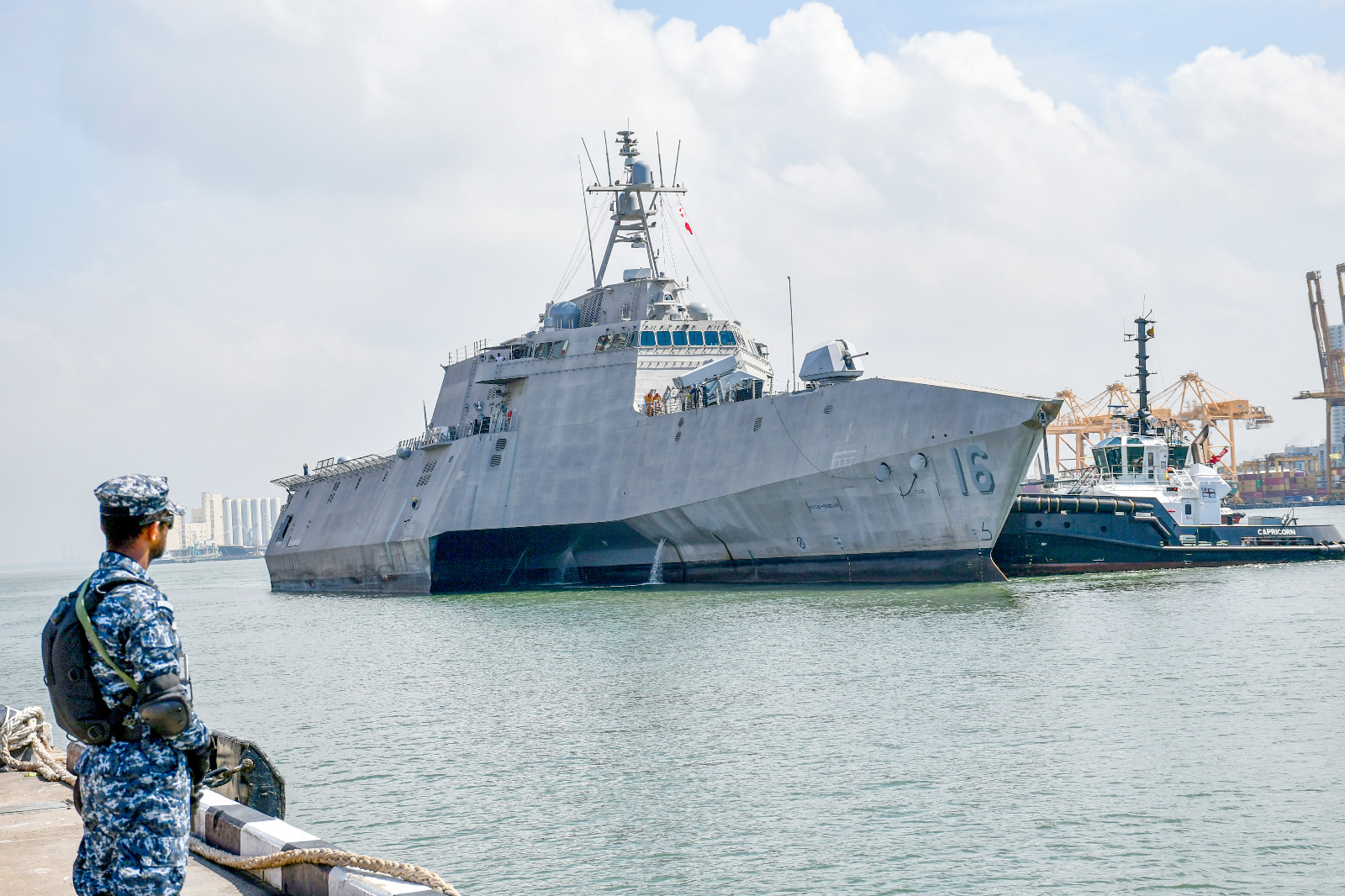
The U.S. Navy ship USS Tulsa (LCS 16) arrived at the Port of Colombo this morning, 7 October 2026 for replenishment purposes.
The visiting ship was welcomed by the Sri Lanka Navy in accordance with naval traditions.
The 127.7-metre-long platform is a Littoral Combat Ship commanded by Commander BM Wanier. Commissioned on 16 February 2019, USS Tulsa has since been in service with the US Navy.
The ship previously made a port call in Sri Lanka on 27 August 2025.


Govt. tells fuel distributors to maintain stocks to ensure uninterrupted supplies
by Saman Indrajith and Norman Palihawadane
The government had instructed private fuel distributors to maintain minimum stocks and ensure uninterrupted supplies to the market, Energy Minister Anura Karunathilaka told Parliament yesterday (06).
Karunathilaka said the Ministry of Energy Secretary had notified the relevant companies of the requirement, following a reduction in supplies by some private distributors, amid higher international fuel prices.
The Minister said private companies had informed the government that they were facing losses because international prices had risen while fuel was being sold, locally, at prevailing prices. As a result, some companies had reduced the volumes released to the market.
The reduced supplies had increased the burden on the Ceylon Petroleum Corporation (CPC), whose share of the diesel market had risen from about 54% to 82%, the Minister said.
“The CPC currently holds an 82% share of the market,” he said, adding that it had increased its supplies, compared with February, to compensate for the reduction by private distributors.
Karunathilaka said the government could not, under the existing agreements with private companies, specify the quantities they should supply to individual filling stations. However, it could require them to maintain minimum stocks in the country.
The Minister said the Energy Ministry had already instructed companies that had failed to maintain the required stocks to take steps to prevent supply disruptions.
The Minister attributed the queues reported at some filling stations to reduced supplies from private distributors, as well as normal variations in fuel distribution. He also said demand for CPC fuel had increased because private companies generally did not provide fuel to dealers on credit, while the CPC offered a three-day credit facility.
“We expect that, as the Ceylon Petroleum Corporation takes on this additional burden, the problem will ease to some extent by Wednesday or Thursday,” Karunathilaka said.
He said instructions had also been issued to increase supplies to CPC filling stations. A special discussion on the issue is scheduled for today (07), with officials of the Energy Ministry and CPC expected to participate,
along with President Anura Kumara Dissanayake.
Meanwhile, Petroleum Dealers’ Association officials have called for an early solution to the supply issue. Association Chairman D.V. Shantha Silva said queues had been reported at many filling stations, mainly those operated by private distributors.
He said the situation was not due to an overall shortage of fuel, but was linked to reduced orders by Lanka IOC, Sinopec and R.M. Parks amid concerns over losses incurred on fuel sales.
The Ceylon Petroleum Private Tanker Owners Association has urged motorists to refrain from panic buying, saying there was no nationwide disruption to fuel supplies.
The government earlier increased fuel prices and introduced a per-litre diesel subsidy following concerns raised by distributors over rising international prices.

Showers above 100 mm are likely at some places in the Western, Sabaragamuwa, Central, Uva and Southern provinces and in Anuradhapura district

Remembering Juvenal, Coke, Acton and Machiavelli

West Asian conflict undergoing manifold complications

Nissanka absence opens door for Sri Lanka’s young guns

The prelate who walked the talk

Needs of populace hit by Cyclone Ditwah seen as waiting to be addressed

‘Dates have the highest sugar content to fight Coronavirus’

Sunday Island 27 December – Headlines

#SundayIsland 17th December – Headlines

Sunday Island – 28th March

Sunday Island Headlines – 21 March

Sunday Island – 21st February – Headlines
-

 Editorial6 days ago
Colombo Port drug bust: The plot thickens
-

 Features4 days ago
The first woman in the foreign service or Ceylon Overseas Service it was then called
-

 Editorial5 days ago
Fuelling discontent and protest
-

 News3 days ago
Geneva takes up Sallay’s case and govt. ignores opportunity to answer accusations
-

 Latest News5 days ago
Tharindu Rathnayake, bowlers secure Asian Games Bronze for Sri Lanka
-

 Foreign News5 days ago
Ten injured after car crashes into rugby supporters in Australia
-

 Features3 days ago
Sri Lanka Cricket Bill: Governance reform is not yet a cricket strategy
-

 News4 days ago
Nearly 20 Iranian tankers stranded off Lanka amid US sanctions