
News
Queensland based Sri Lankan professor receives $179 million on his innovations

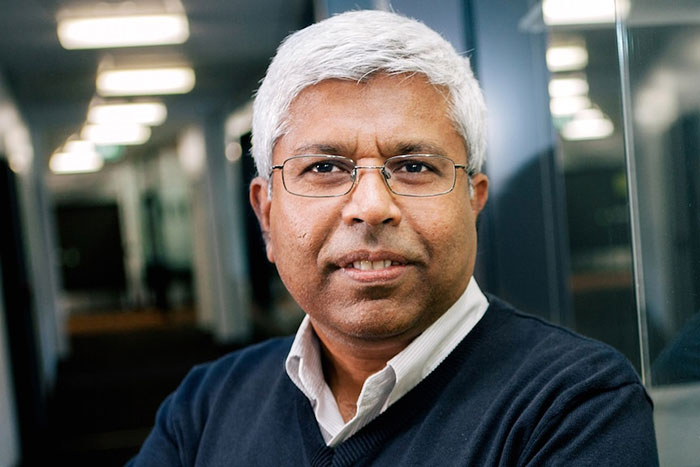
A Brisbane-based company that invented a smartphone app it says can diagnose COVID-19 and other respiratory illnesses by listening to someone cough has been purchased by Pfizer for nearly $180 million.ResApp Health Limited uses diagnostic technology developed by Associate Professor Udantha Abeyratne and his research team at the University of Queensland (UQ) to record and analyse a patient’s coughs on a smartphone.
The app also considers the self-reporting of simple symptoms like a runny nose or fever to diagnose and measure the severity of a range of pulmonary diseases, including asthma and pneumonia.Pfizer, which is one of the world’s largest bio-pharmaceutical companies, offered to buy ResApp earlier this year when the company announced positive results for its COVID-19 screening test.
Recent studies had shown the app had a 92 per cent success rate in diagnosing the virus among symptomatic patients, but more clinical trials were needed for it to gain regulatory approval.A Pfizer spokesperson said they were encouraged by the data they had seen so far and the $179 million acquisition, finalised on Monday, was another move toward enhancing the company’s expertise in digital health.
“We believe the COVID-19 screening tool is the next step to potentially provide new solutions for consumers that aim to quell this disease,” they said.
“We look forward to refining this algorithm further and working with regulators around the world to bring this important product to consumers as quickly as possible.”
UQ Vice-Chancellor Professor Deborah Terry said it was an “outstanding” outcome for ResApp and associated researchers as well.
“The value of translating research into new point-of-care diagnostics to improve healthcare on a global scale cannot be understated,” Professor Terry said.
UQ’s commercialisation company UniQuest licensed the technology to ResApp in September 2014.
Dr Abeyratne, from the School of Information Technology and Electrical Engineering, said the research that led to the breakthrough began more than a decade ago with grant funding from the Bill and Melinda Gates Foundation.
“When I open up my lungs, open up the airway, that is what I call an ‘information super highway’, so I wondered whether it’s possible to use cough sounds, advanced signal processing and AI technology to pick out features,” he said.
“From the very beginning, I had a big vision to develop scalable, cheap technologies to diagnose pulmonary diseases all over the world – not only in remote sub-Saharan Africa, but even in developed urban cities like New York and Brisbane.”
Dr Abeyratne said the smartphone technology, which was developed in consultation with medical practitioners, operates similarly to a doctor using a stethoscope to listen for sounds produced by a patient’s body.
“The diagnosis comes immediately, within a minute or so, telling the patient whether they have a particular disease, using only their smartphone – nothing else – and there’s no need for a network connection either,” he said.A Pfizer spokesperson said ResApp’s solutions in respiratory health align well with their own areas of focus.
“As the world becomes more digitally connected, and as respiratory illnesses — including COVID-19 — increasingly threatens the global population, digital apps provide consumers and patients with easy to use, non-invasive and cost-effective ways to detect, suspect and eventually, diagnose respiratory illness,” they said.
“Ultimately, we believe that science and health technology can be advanced in ways that can provide better information for clinicians and regulators, reduce patient and physician burden, and reduce time and costs across the development cycle.”
Dr Abeyratne said he is hopeful Pfizer’s acquisition of the app will help realise his dream of improving patient outcomes around the world.
“I hope they will be able to diagnose killer diseases like pneumonia in very remote communities in Africa and Asia because they don’t have access to sophisticated hospitals,” he said.
He said the technology could also benefit GP clinics and hospitals in developed countries by speeding up the screening process and preventing costly hospital admissions.
“It could be used in telehealth services, so patients don’t have to visit the doctor in-person. The doctor can do a diagnosis using the app on their smartphone first.
“In a pandemic or disaster-stricken area, respiratory diseases come quickly. So the technology could be used at airports or in areas affected by hurricanes and flooding.”
Dr Abeyratne said the app could also be used to monitor and manage chronic illnesses like asthma from home.
“I think in the future, with more resources, more could be done,” he said.
“There are many other applications … there are other skills, techniques and instruments that can be added [to the diagnostic technology] at low cost.” – ABC


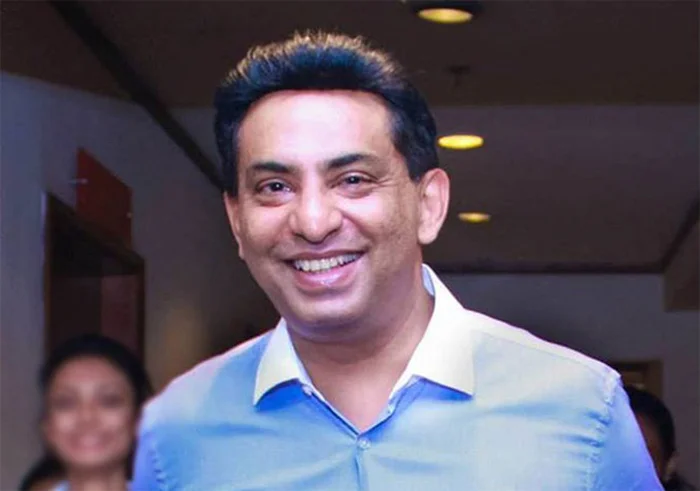
Prof. Prathibha Mahanamahewa has emphasised the need to examine the circumstances under which the court staff executed the bail bond, and the release process, in respect of the late Kapila Chandrasena, former Chief Executive Officer of SriLankan Airlines.
Chandrasena’s body was found in a house at Pedris Road, Colombo 03.
In case of any doubt regarding bail condition/s or any other matter (insufficient surety, identity issues, suspicious documents and unclear order), the Registrar had to get in touch with the relevant Magistrate, Mahanamahewa said.
Mahanamahewa was responding to The Island query regarding the acceptance of two Muslims as sureties. Had they followed the time-tested procedure, court registry/registrar staff would never have accepted sureties as blood relatives of Chandrasena, Mahanamahewa said, alleging a major defect in the execution of the bail bond.
They were arrested by police and remanded by the Colombo Magistrate’s court, till 13 May, pending further investigations.
Colombo Chief Magistrate Asanga S. Bodharagama, on 5 May, granted to Chandrasena cash bail of Rs. 500,000 and three surety bails of Rs. 10 million each. But soon after Chandrasena received bail, the court was told that two of the Rs. 10 million sureties had been produced, after payment of Rs. 15,000 each, were made to those two individuals to act as guarantors.
The bail application had been submitted by Rienzie Arsecularatne, PC, appearing on behalf of Kapila Chandrasena, when the case was earlier taken up, on 28 April.
Police also arrested an elderly person who arranged for the two persons who hadn’t even seen Chandrasena, even once, to offer themselves as sureties.
As soon as the police revealed the fraudulent manner Chandrasena obtained bail, Chief Magistrate Bodharagama issued an order to arrest and produce him before the court. This order was issued consequent to a request made by the Commission to Investigate Allegations of Bribery or Corruption (CIABOC), on the grounds that the defendant had violated bail conditions. The CIABOC wanted Chandrasena held pending the conclusion of the case.
Sources familiar with the execution of bail bond said that the moment the suspects had submitted their National Identity Cards and letters from Grama Sevakas, the court registry/registrar staff should have rejected them. In a such high-profile case, the failure on the part of the lawyers, representing Chandrasena, to check the gsureties’ relationship with Chandrasena, was another glaring shortcoming, sources said, pointing out that after having submitted bail application on 28 April, the defence team should have come prepared to put forward genuine guarantors.
The Island contacted the Bar Association of Sri Lanka for comment on the manner in which the court staff had handled bail for Chandrasena, but there was no response.
Sri Lanka’s former Ambassador to Moscow, accredited to Kiev, Udayanga Weeratunga, said that a thorough investigation should be conducted to ascertain facts about the execution of the bail bond. Asked whether he had been in touch with Chandrasena, Weeratunga said that he spent his first day at Welikada with Chandrasena and Ranjan Ramanayake in one cell. “That happened on 14 February, 2020. I was arrested when I returned to the country, from the UAE, and produced before the then Magistrate Ranga Dissanayake, the incumbent Director General of CIABOC,” Weeratunga said.
Weeratunga said that a couple of months after the change of government in 2024, the US State Department imposed a travel ban on him and Chandrasena and their families over what the US termed as significant corruption.
Weeratunga said that altogether the US designated 14 persons and, of them, two were Sri Lankan, who happened to be him and Chandrasena, accused of corruption in respect of acquisition of MiG 27s from Ukraine and the Airbus deal, during President Mahinda Rajapaksa’s tenure as the President.
SLPP sources said that Chandrasena’s demise shouldn’t prevent proper investigation on his affidavit that claimed pressure brought on him to name Mahinda Rajapaksa as a recipient of the Airbus bribe.
By Shamindra Ferdinando

President Anura Kumara Dissanayake emphasised yesterday (12) that the law would be enforced equally and no one was allowed to be above the law.
Addressing the Matale District Coordinating Committee meeting, at the Matale District Secretariat, President Dissanayake said, “Do not be afraid to work, but be afraid to engage in irregularities. Everyone must first be subject to the law and secondly, must fear the law. This applies to everyone, from the President down to the Grama Niladhari.”
“If we are to usher in a new era, we must submit to the rule of law. No one can be above it, he said, adding that previous Presidents had even violated the Constitution with impunity.
The President said that if there were any instances of selective law enforcement, they should be brought to his attention for action. Everyone was required to cooperate, if called upon to make statements in an investigation, he said.
By S.K. Samaranayake

Minister of Foreign Affairs, Foreign Employment and Tourism, Vijitha Herath, is on an official visit to Belarus, from yesterday to Friday (15), on the invitation of the Foreign Minister of the Republic of Belarus, Maxim Ryzhenkov.
The text of the Foreign Ministry release: “This visit will mark a milestone in the bilateral partnership as the two countries commemorated the 25th Anniversary of the establishment of Diplomatic Relations last year.
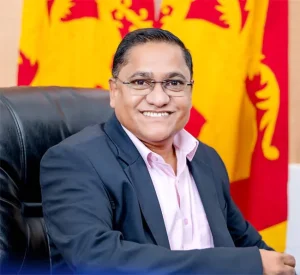 During his visit to Minsk, Minister Herath will call on Belarus President Alexander Lukashenko and will hold bilateral discussions with the Minister of Foreign Affairs of Belarus. Minister Herath is also scheduled to meet the Belarus Ministers of Education and Health. Several MoUs and agreements across sectors are envisaged to be signed with the Republic of Belarus during the visit.
In Minsk, Minister Herath will address a business and tourism roundtable, organised by the National Export Centre of Belarus. He is also scheduled to meet Sri Lankan students studying in Belarus.”

Gujarat Titans go No.1 after Rabada and Holder rout Sunrisers Hyderabad

Showers will occur in the Western, Sabaragamuwa, Central, North-western and Northern provinces and in Anuradhapura, Trincomalee, Galle and Matara districts

Ex-SriLankan CEO’s death: Controversy surrounds execution of bail bond

Law applies to all, regardless of power or influence – Prez

Sri Lanka and Belarus to sign several MoUs

Compensation paymentsto voluntary retirees in power sector to begin soon

‘Dates have the highest sugar content to fight Coronavirus’

Sunday Island 27 December – Headlines

#SundayIsland 17th December – Headlines

Sunday Island – 28th March

Sunday Island Headlines – 21 March

Sunday Island – 21st February – Headlines
-
 News6 days ago
MIT expert warns of catastrophic consequences of USD 2.5 mn Treasury heist
-

 News3 days ago
Lanka Port City officials to meet investors in Dubai
-

 Editorial6 days ago
Clean Sri Lanka and dirty politics
-
 News4 days ago
SLPP expresses concern over death of former SriLankan CEO
-

 Editorial5 days ago
The Vijay factor
-
 News4 days ago
Police inform Fort Magistrate’s Court of finding ex-CEO of SriLankan dead under suspicious circumstances
-
 Features5 days ago
Palm leaf manuscripts of Sri Lanka – 1
-

 News4 days ago
President of Vietnam and delegation departs Sri Lanka