
Foreign News
How dark web agent spotted bedroom wall clue to rescue girl from years of harm

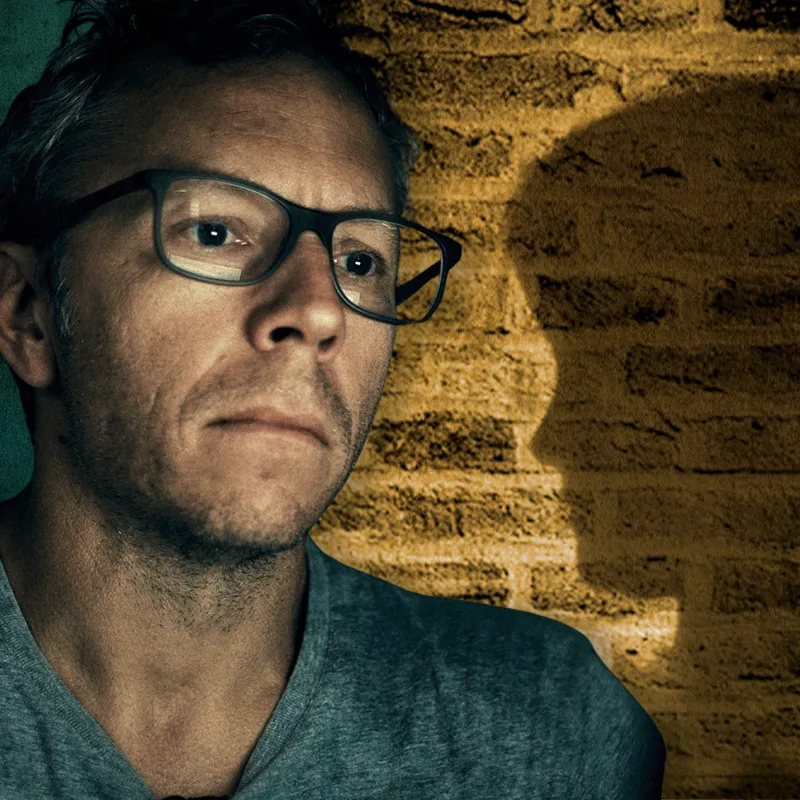
Specialist online investigator Greg Squire had hit a dead end in his efforts to rescue an abused girl his team had named Lucy.
Disturbing images of her were being shared on the dark web – an encrypted corner of the internet only accessible using special software designed to make owners digitally untraceable.
But even with that level of subterfuge, the abuser was conscious of “covering their tracks”, cropping or altering any identifying features, says Squire. It was impossible to work out who, or where, Lucy was.
What he was soon to discover was that the clue to the 12-year-old’s location was hidden in plain sight.
Squire works for US Department of Homeland Security Investigations in an elite unit which attempts to identify children appearing in sexual abuse material.
A BBC World Service team has spent five years filming with Squire, and other investigative units in Portugal, Brazil, and Russia – showing them solving cases such as that of a kidnapped and presumed-dead seven-year-old in Russia, and the arrest of a Brazilian man responsible for five of the biggest child-abuse forums on the dark web.
The unprecedented access shows how these cases are often cracked, not through state-of-the-art technology, but by spotting tiny revealing details in images or chat forums.
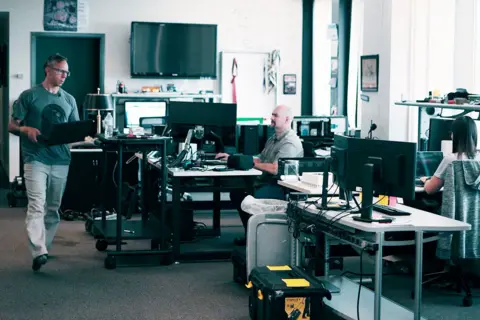
Squire cites Lucy’s case, which he tackled early in his career, as the inspiration for his long-term dedication.
He found it especially disturbing that Lucy was about the same age as his own daughter, and new photos of her being assaulted, seemingly in her bedroom, were constantly appearing.
Squire and his team could see, from the type of light sockets and electrical outlets visible in the images, that Lucy was in North America. But that was about it.
They contacted Facebook, which at the time dominated the social media landscape, asking for help scouring uploaded family photos – to see if Lucy was in any of them. But Facebook, despite having facial recognition technology, said it “did not have the tools” to help.
So Squire and his colleagues analysed everything they could see in Lucy’s room: the bedspread, her outfits, her stuffed toys. Looking for any element which might help.
And then they had a minor breakthrough. The team discovered that a sofa seen in some of the images was only sold regionally, not nationally, and therefore had a more limited customer base.
But that still amounted to about 40,000 people.
“At that point in the investigation, we’re [still] looking at 29 states here in the US. I mean, you’re talking about tens of thousands of addresses, and that’s a very, very daunting task,” says Squire.
The team looked for more clues. And that is when they realised something as mundane as the exposed brick wall in Lucy’s bedroom could give them a lead.
“So, I started just Googling bricks and it wasn’t too many searches before I found the Brick Industry Association,” says Squire.
“And the woman on the phone was awesome. She was like, ‘how can the brick industry help?'”
She offered to share the photo with brick experts all over the country. The response was almost immediate, he says.
One of the people who got in touch was John Harp, who had been working in brick sales since 1981.
“I noticed that the brick was a very pink-cast brick, and it had a little bit of a charcoal overlay on it. It was a modular eight-inch brick and it was square-edged,” he says. “When I saw that, I knew exactly what the brick was,” he adds.
It was, he told Squire, a “Flaming Alamo”.
“Our company made that brick from the late 60s through about the middle part of the 80s, and I had sold millions of bricks from that plant.”

Initially Squire was ecstatic, expecting they could access a digitised customer list. But Harp broke the news that the sales records were just a “pile of notes” that went back decades.
He did however reveal a key detail about bricks, Squire says.
“He goes: ‘Bricks are heavy.’ And he said: ‘So heavy bricks don’t go very far.'”
This changed everything. The team returned to the sofa customer list and narrowed that down to just those clients who lived within a 100-mile radius of Harp’s brick factory in the US’ south-west.
From that list of 40 or 50 people, it was easy to find and trawl their social media. And that is when they found a photo of Lucy on Facebook with an adult who looked as though she was close to the girl – possibly a relative.
They worked out the woman’s address, and then used that to find out every other address connected with that person, and all the people they had ever lived with.
That narrowed Lucy’s possible address down further – but they didn’t want to go door to door, making enquiries. Get the address wrong, and they could risk the suspect being tipped off that he was on the authorities’ radar.
So Squire and his colleagues began sending photos of these houses to John Harp, the brick expert.

Flaming Alamos were not visible on the outside of any of the homes, because the properties were clad in other materials. But the team asked Harp to assess – by looking at their style and exterior – if these properties were likely to have been built during a period when Flaming Alamos had been on sale.
“We would basically take a screenshot of that house or residence and shoot it over to John and say ‘would this house have these bricks inside?'” says Squire.
Finally they had a breakthrough. They found an address that Harp believed was likely to feature a Flaming Alamo brick wall, and was on the sofa customer-base list.
“So we narrowed it down to this one address… and started the process of confirming who was living there through state records, driver’s licence… information on schools,” says Squire.
The team realised that in the household with Lucy was her mother’s boyfriend – a convicted sex offender.
Within hours, local Homeland Security agents had arrested the offender, who had been raping Lucy for six years. He was subsequently sentenced to more than 70 years in jail.
Brick expert Harp was delighted to hear Lucy was safe, especially given his own experiences as a long-term foster parent.
“We’ve had over 150 different children in our home. We’ve adopted three. So, doing that over those years, we have a lot of children in our home that were previously abused,” he said.
“What Squire’s team do day in and day out, and what they see, is a magnification of hundreds of times of what I’ve seen or had to deal with.”
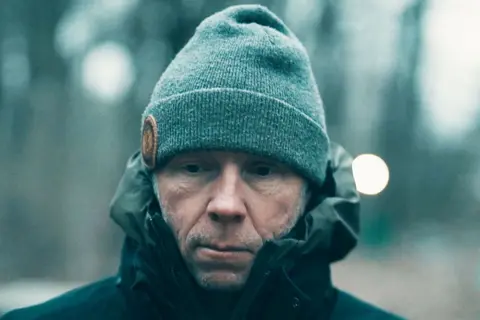
A few years ago, that pressure on Squire started to take a real toll on his mental health, and he admits that, when he wasn’t working, “alcohol was a bigger part of my life than it should have been”.
“At that point my kids were a bit older… and, you know, that almost enables you to push harder. Like… ‘I bet if I get up at three this morning, I can surprise a perpetrator online.’
“But meanwhile, personally… ‘Who’s Greg? I don’t even know what he likes to do.’ All of your friends… during the day, you know, they’re criminals… All they do is talk about the most horrific things all day long.”
Not long afterwards, his marriage broke down, and he says he began to have suicidal thoughts.
It was his colleague Pete Manning who encouraged him to seek help after noticing his friend seemed to be struggling.

“It’s hard when the thing that brings you so much energy and drive is also the thing that’s slowly destroying you,” Manning says.
Squire says exposing his vulnerabilities to the light was the first step to getting better and continuing to do a job he is proud of.
“I feel honoured to be part of the team that can make a difference instead of watching it on TV or hearing about it… I’d rather be right in there in the fight trying to stop it.”
Last summer Greg met Lucy, now in her 20s, for the first time.

She told him her ability to now discuss what she went through was testament to the support she has around her.
“I have more stability. I’m able to have the energy to talk to people [about the abuse], which I could not have done… even, like, a couple years ago.”
She said at the point Homeland Security ended her abuse she had been “praying actively for it to end”.
“Not to sound cliché, but it was a prayer answered.”
Squire told her he wished he had been able to communicate that help was on its way.
“You wish there was some telepathy and you could reach out and be like, ‘listen, we’re coming’.”
The BBC asked Facebook why it couldn’t use its facial recognition technology to assist the hunt for Lucy. It responded: “To protect user privacy, it’s important that we follow the appropriate legal process, but we work to support law enforcement as much as we can.”
[BBC]


A person has died after jumping an airport perimeter fence in the US state of Colorado and being struck by a Frontier Airlines plane, according to authorities.
Denver International Airport said the unusual incident occurred late Friday, after the unidentified individual gained access to the tarmac.
It said the “pedestrian jumped the perimeter fence and was hit just two minutes later while crossing the runway”.
A brief engine fire followed the collision, which was put out by emergency responders, according to the airport.
It said that 12 of the 231 people on board suffered minor injuries, with five hospitalised.
The airport said investigators had examined the fence line where the individual entered and “found it to be intact”.
It added that the struck individual “is not believed to be an employee of the airport”.
“We are extremely saddened by this incident and express our sympathies to those involved,” the airport said.
Both local authorities and the National Transportation Safety Board (NTSB) were investigating the incident.
Airport safety in the US came under renewed scrutiny earlier this year amid a prolonged shutdown of the Department of Homeland Security (DHS), which temporarily left both Transportation Security Agents (TSA) and air traffic controllers working without pay.
While instances of people being killed on airport tarmacs are rare, Friday’s incident came a day after a Delta employee was killed after an airport vehicle struck an airbridge at Orlando International Airport.
In March, two pilots were killed after an Air Canada Express plane crashed into a fire-rescue vehicle at LaGuardia Airport in New York.
About 225,000 people travel through Denver International Airport a day.
[Aljazeera]
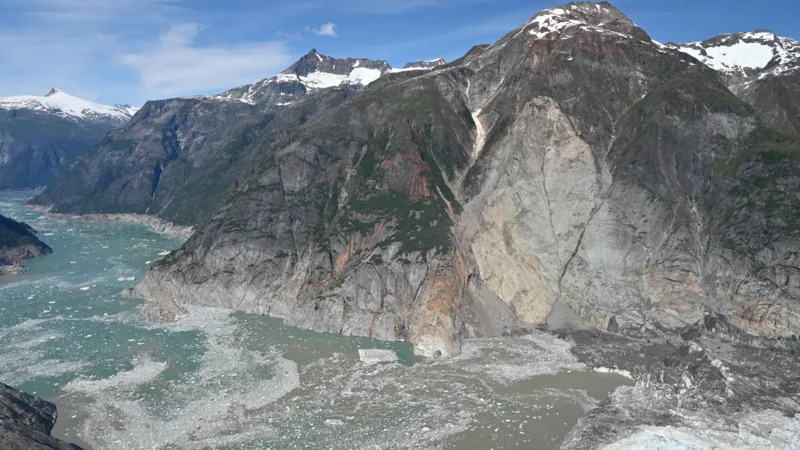
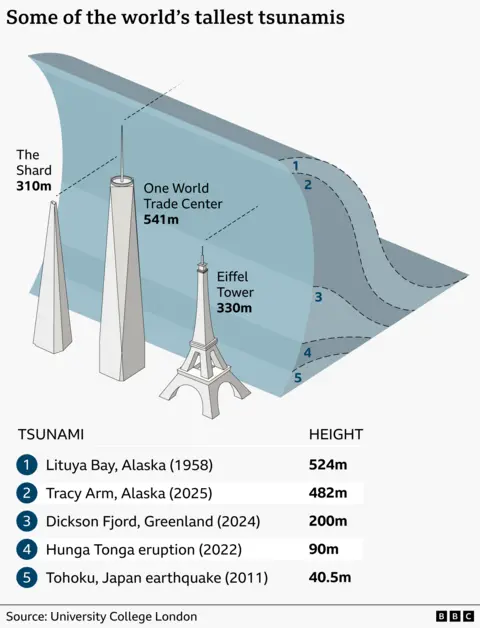
A massive ‘megatsunami’ wave created when part of an Alaskan mountain crumbled into the sea is the second tallest ever recorded – and a reminder of the risks posed by melting glaciers, say scientists.
Last summer a giant wave swept through a remote fjord in southeast Alaska leaving destruction in its wake.
The event went largely unreported at the time, but a new scientific analysis shows it was caused by a massive landslide.
An incredible 64 million cubic metres of rock – the equivalent of 24 Great Pyramids – splashed into the water below. The sheer power of that amount of rock plunging into the fjord in under a minute created a gigantic wave almost 500 metres tall.
Only the time it happened – in the early hours of the morning – prevented tourist cruise ships being caught up in the devastation, say the researchers.
Dr Bretwood Higman, an Alaskan geologist, who saw for himself the damage at Tracy Arm Fjord, said it was “a close call”.
“We know that there were people that were very nearly in the wrong place,” he said. ‘I’m quite terrified that we’re not going to be so lucky in the future.”
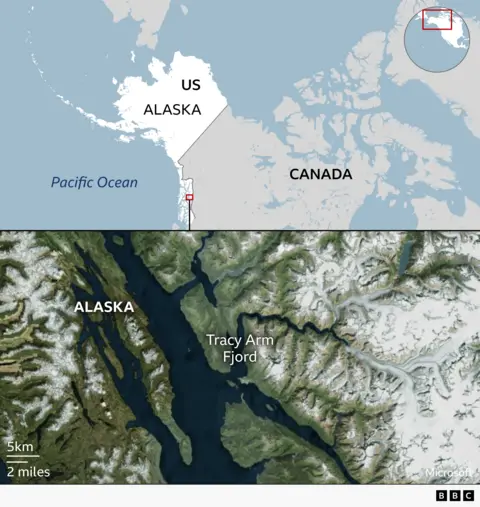
These huge waves, labelled megatsunamis, happen when a landslide caused by either an earthquake or loose rock hit water below. They are usually localised and dissipate quickly.
The other type of tsunamis happen in the open ocean and are directly triggered by earthquakes, or occasionally other powerful events such as underwater volcanoes.
They, like the 2011 Japan tsunami, can travel for thousands of miles, hitting populated areas and causing widespread devastation and loss of life.
The biggest megatsunami was in the 1950s and was over 500 metres. This latest megatsunami was the second largest.
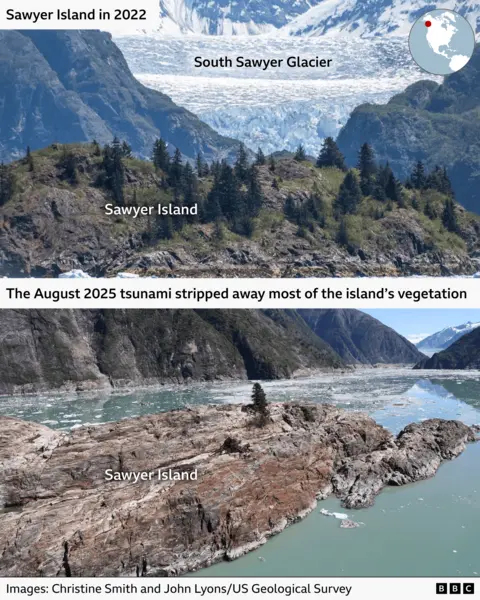
Dr Higman arrived on the scene a few weeks after the tsunami hit at the Tracy Arm Fjord – a destination popular with cruise ships exploring the natural wonders of Alaska.
He found broken trees littering the mountainside and hurled into the water, and vast swathes of scarred rock stripped of soil and vegetation.
Alaska is especially vulnerable to megatsunamis because of its steep mountains, narrow fjords and frequent earthquakes.
Now new research published in Science suggests glacier melt driven by climate change is making such collapses far worse.
The team combined field work, seismic and satellite data to reconstruct a domino chain of events and trace the height of the wave.
Dr Stephen Hicks of University College London said the glacier was previously “helping to hold up this piece of rock”, and so when the ice retreated, it exposed the bottom of the cliff face, “allowing that rock material to suddenly collapse into the fjord”.
He and his colleagues have studied tsunamis for decades and are worried.
“More people are now going to remote areas – often these tourist cruises are going to see the natural beauty of the area to actually learn more about climate change – but they are also dangerous places to be.”
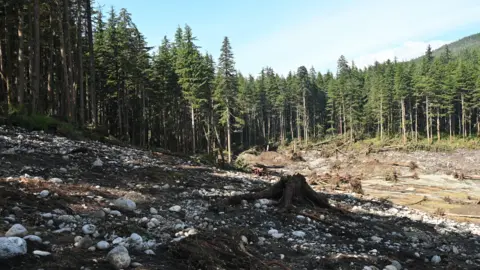
Dr Higman said there is little doubt that the risks of megatsunamis are increasing.
“At this point, I’m pretty confident that these are increasing not just a little bit, but increasing a lot,” he said.
“Maybe in the order of 10 times as frequent as they were just a few decades ago.”
The scientists are calling for wider monitoring of hazards in parts of Alaska that might be vulnerable to megatsunamis.
Some cruise companies have announced they are to stop sending ships into Tracy Arm amid safety fears.
[BBC]

Vivek Ramaswamy won the Republican nomination for Ohio governor on Tuesday, putting the staunch ally of Donald Trump on a path to running the Rust Belt state.
In unofficial results, he defeated Casey Putsch, a car designer with an automotive-themed YouTube channel, for a place in the general election, according to US media reports.
Ramaswamy, a health-technology entrepreneur, gained national recognition during his unsuccessful run against Trump for president in 2024. He later threw his support behind Trump.
In the Ohio primary, even as he ran against Republicans, he focused on Democratic nominee Amy Acton, the former Ohio public health director who guided the state’s response to the Covid pandemic and ran unopposed.
During a victory speech, Ramaswamy thanked Ohio voters “for getting us to this point”, adding, “The real destination is in November.”
Acton, who will face Ramaswamy in the general election, said during her own victory speech that she is running for governor to make Ohio more affordable again.
“It shouldn’t be this hard,” she said. “It is time to put working families first.”
Ohio’s current governor, Republican Mike DeWine, cannot run for re-election because of term limits.
Trump boosted Ramaswamy in a social media post on Tuesday: “I know Vivek well, competed against him, and he is something SPECIAL. He is Young, Strong, and Smart!”
Vice President JD Vance, who previously represented Ohio in the US Senate, travelled to Cincinnati on Tuesday to cast his ballot for Ramaswamy and others.
The state has shifted towards Republicans in recent years, and Ramaswamy benefitted from name recognition and shuffling in the top ranks of the state’s Republican Party caused by the ascension of Vance to the vice presidency.
Ramaswamy burst onto the national political scene in 2023 as a neophyte with a knack for using social media and podcast appearances to bolster his image. His mile-a-minute cadence and brash attacks resulted in viral moments during the 2024 Republican presidential debates, but he dropped out early due to lackluster support from voters.
Ramaswamy went on to serve as a top Trump surrogate during the 2024 presidential race and was involved in the effort to start Trump’s Department of Government Efficiency, before ceding control of the project to Elon Musk.
When he announced his run for Ohio governor, Ramaswamy cleared the Republican primary field of most competitors. He has drawn on his personal fortune to help fund his campaign; The Columbus Dispatch reported he loaned his operation $25m (£18.4m).
His victory sets up a general election campaign focused on the lingering fallout from the Covid-19 pandemic.
Acton had a highly visible role as the state’s public health director during the height of the crisis. Under DeWine’s leadership, Ohio took a more moderate approach to the pandemic response than other Republican-controlled states. Still, Ohio suspended in-person dining and postponed its presidential primary in 2020 as the virus spread.
But ongoing political backlash to Covid-19 restrictions, including masking and school closures, has opened up a path for Republicans to attack Acton six years later.
Ramaswamy recently released an ad claiming that Acton “called off Ohio’s election at the last minute, defying a judge’s order and abusing her power.”
DeWine – who has endorsed Ramaswamy – took the unusual step of defending Acton from the ad’s claims.
“I told her to issue the health order,” DeWine told NBC4 news station. “The decision was mine.”
The race promises to get more intense and expensive heading into the general election in November.
Meanwhile, seven Republican senators in Indiana who voted against Trump’s redistricting plan faced challengers in Tuesday’s primary election.
Five of the Trump-backed challengers have beat the incumbents, while one has lost. Results for the seventh race have not yet been determined.
The Indiana Republicans defied intense pressure from Trump last December by rejecting his demands to pass a voting map meant to favour their party in midterm elections, scheduled for November.
In one of the most conservative states in the US, 21 Republicans in the Senate joined all 10 Democrats to torpedo the redistricting plan last year.
Trump warned at the time that Republicans who did not support the initiative could risk losing their seats.
[BBC]

Spain starts evacuating virus-hit cruise ship in Tenerife

“Sri Lanka must shape the future of AI through policy, ethics, and inclusive governance, not simply adapt to it.” – Prime Minister

Bangladesh announce Women’s T20 World Cup squad, pick only two pacers

Landslide Early Warnings issued to the districts of Badulla and Monaragala

Successful Digital Education depends on strong infrastructure, quality content, and Teacher Training — PM

Navy renders assistance to bring ashore injured fisherman for urgent medical attention

‘Dates have the highest sugar content to fight Coronavirus’

Sunday Island 27 December – Headlines

#SundayIsland 17th December – Headlines

Sunday Island – 28th March

Sunday Island Headlines – 21 March

Sunday Island – 21st February – Headlines
-

 News4 days ago
MIT expert warns of catastrophic consequences of USD 2.5 mn Treasury heist
-
 News6 days ago
CJ urged to inquire into AKD’s remarks on May 25 court verdict
-

 News7 days ago
USD 3.7 bn H’tota refinery: China won’t launch project without bigger local market share
-

 Editorial4 days ago
Clean Sri Lanka and dirty politics
-

 Editorial7 days ago
Deliver or perish
-

 Opinion6 days ago
Security, perception, and trust: Sri Lanka’s delicate balancing act
-

 News2 days ago
SLPP expresses concern over death of former SriLankan CEO
-

 Editorial3 days ago
The Vijay factor