
Sports
Ananda Ranasinghe: A legend of Sri Lankan swimming


The news of Ananda’s untimely and sudden passing left me utterly shocked, struggling to find the words to express the depth of my sadness.
Ananda stands out as one of the most remarkable figures in the history of Sri Lankan swimming. His contributions and achievements in the sport have left an indelible mark on the country’s sporting legacy, ensuring his name will be remembered for generations to come.
Ananda was renowned for his fearless approach to swimming. He entered every event with unwavering determination, never shying away from a challenge. His fighting spirit in the pool went beyond what most could imagine, inspiring not only his teammates but also his competitors. Ananda’s courage and relentless pursuit of excellence made him a standout athlete, admired across the swimming community.
I consider myself fortunate to have known this giant of swimming personally. Over the years, I had the privilege of competing against him on several occasions. Each race revealed a new facet of his talent and tenacity, and every encounter deepened my
respect for his capabilities and his character. Facing Ananda in the pool was always an extraordinary experience; one that pushed me to perform at my very best.
Ananda’s legacy truly places him among the greats of Sri Lankan sport. Undoubtedly, he can be regarded as Sri Lanka’s own Michael Phelps, given his prowess in the pool and the extraordinary achievements he amassed during his swimming career. His success has set a standard for future generations of swimmers in the country, becoming a benchmark for what can be accomplished with passion and dedication.
Goodbye, my friend. It was my pleasure and privilege to have known you.


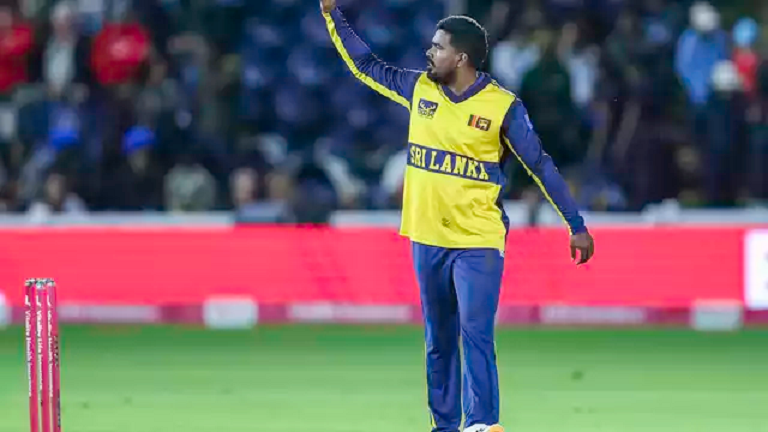
Vijayakanth Viyaskanth broke the stand with Parvez’s wicket and triggered another collapse. Bangladesh went from 50/5 to 72/8 in the space of 18 deliveries, the chase now well beyond their reach. Sri Lanka’s bowling quartet of Ratnayake (2-18), Nuwan Thushara (2-18), Vijayakanth Viyaskanth (2-26), Wanuja Sahan (2-17) did all of the damage as Bangladesh were bowled out for 102 – 63 short of their target.
Scores:
Sri Lanka 165/9 in 20 overs [Sahan Arachchige 33, Ashen Bandara 18, Thjarindu Rathnayake 65; Mahedi Hasan 2-19, Al Islam 1-18, Rishad Hossain 1-46, Saif Hasan 2-28, Mustafizur Rahman 2-43] beat Bangladesh 102/10 in 17.3 overs [Parvez Hossain Emon 20, Towhid Hridoy 11, Yasir Ali 21, Rishad Hossain 10, Nasum Ahmed 26; Nuwan Thushara 2-18, Tharindu Rathnayake 2-18, Vijayakanth Viyaskanth 2-26, SahanArachchige 1-09, Wanuja Sahan 2-17, Dushan Hemantha 1-11] by 63 runs.
[Cricbuzz]
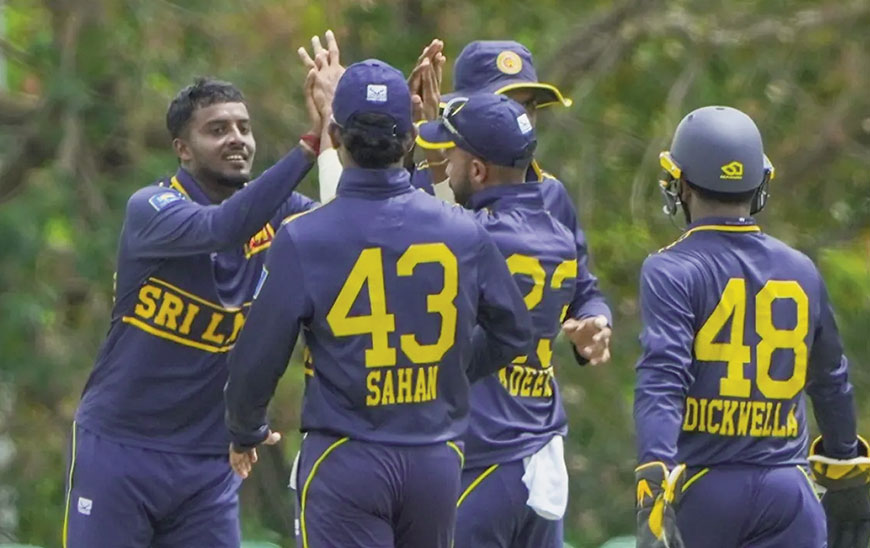
Opening batter Sineth Jayawardena has charged into the Sri Lanka T20I squad for the series against Pakistan, while Vijayakanth Viyaskanth has claimed the legspinner’s spot in the absence of the injured Wanindu Hasaranga. Seam-bowling allrounder Chamindu Wickremesinghe has also been named, as has batter Sahan Arachchige, while seamer Binura Fernando makes a return.
Omitted from the squad were the likes of batter Charith Asalanka, fast bowler Dilshan Madushanka, ambidextrous spinner Tharindu Rathnayake, and batting allrounder Janith Liyanage.
Fast bowler Dushmantha Chameera was named in the squad, but his participation is subject to fitness.
Jayawardena, 21, has got his call-up because of an outstanding recent run in domestic T20s. In the past month, he has struck 101 off 52 and 82 off 32 for Tamil Union Cricket Club in the club T20 competition. He has played a single T20I, at the ongoing Asiad, but otherwise has never been part of a full-strength Sri Lanka side.
Others, such as Wickramasinghe, Arachchige, and Viyaskanth have earned their call-ups through years of performance at domestic level. Each of these players has appeared in T20 internationals for Sri Lanka before, but with the national team having had little success in this format in 2026, this inclusion represents their best chance yet to embed themselves within the side.
The three T20Is, which are all set to be played in Rawalpindi, will begin on October 9.
Sri Lanka squad :
Kamil Mishara, Sineth Jayawardena, Kusal Mendis (capt.), Lahiru Udara, Sahan Arachchige, Kamindu Mendis, Dasun Shanaka, Chamindu Wickramasinghe, Dunith Wellalage, Maheesh Theekshana, Vijayakanth Viyaskanth, Binura Fernando, Nuwan Thushara, Eshan Malinga, Dushmantha Chameera (subject to fitness)
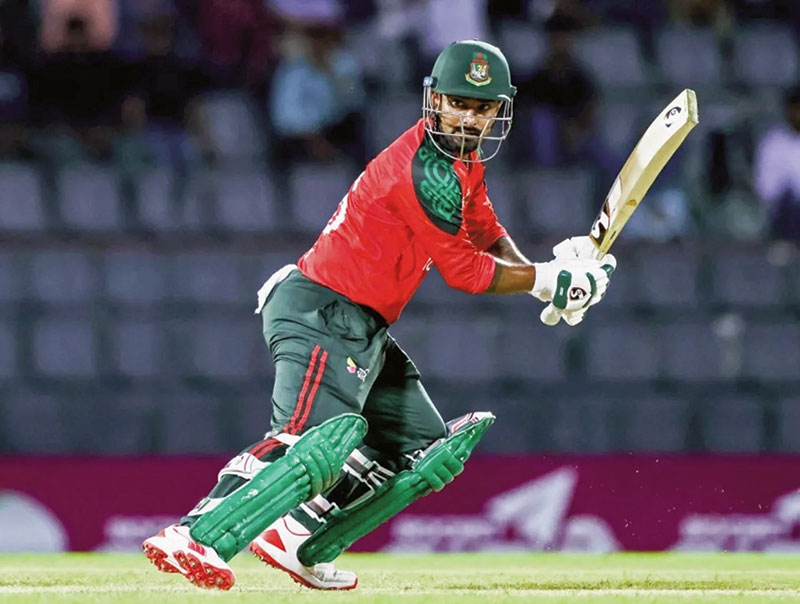
At the end of a wretched week in Nisshin, Bangladesh and Sri Lanka have something real to play for: an Asian Games bronze.
Both teams have a point to prove. Bangladesh recovered well from a poor start in their semi-final against Pakistan, thanks to Towhid Hridoy’s efforts with the bat, but their bowlers couldn’t defend 111 in a 13-overs-a-side game, and Mustafizur Rahman was taken to the cleaners in one of his rare poor outings in T20Is.
But at least they ran Pakistan close. In the other semi-final, India ran riot over Sri Lanka, bowling them out for 45. Sri Lanka had a second-string side on the field, but they wouldn’t have bargained for the basic mistakes they made, like the three run-outs in their innings.
Bangladesh, who can call on most of their first-choice players, start the third-place match as clear favourites, but the testing conditions at Nisshin can even up contests that look one-sided on paper. And both teams will have the motivation of bringing joy to contingents that have endured mostly barren Asian Games campaigns.
After a run-less Australia tour where Litton Das made three ducks in a row in the Test series, he was out for 2 against Pakistan. Litton faced just three balls, off which he attempted two reverse-sweeps, the second of them costing him his wicket. It was a perplexing innings on a pitch that offered a lot of turn and awkward bounce. Sometimes it’s hard to say if a batter is really out of form when he’s made a string of low scores, but Litton, who has led Bangladesh impressively in this format over the last couple of years, will want to break out of this run quickly.
Sahan Arachchige couldn’t quite muster up a captain’s performance against India, especially after his top three batters fell for ducks. He scored 9 before falling to a sweep shot against Axar Patel. He had earlier taken two wickets with his offbreaks. The 30-year-old allrounder now has the chance to put together a better show and inspire his team to the bronze.
Both teams could test their bench strength in the bronze-medal match.
Sri Lanka (probable): Sineth Jayawardena, Lasith Croospulle, Sohan de Livera (wk), Nuwanidu Fernando, Sahan Arachchige (capt), Ashen Bandara, Chamika Karunaratne, Wanuja Sahan, Tharindu Ratnayake, Vijayakanth Viyaskanth, Binura Fernando.
Bangladesh (probable): Tanzid Hasan, Saif Hassan, Litton Das (capt), Parvez Hossain Emon (wk), Towhid Hridoy (c), Mosaddek Hossain, Mahedi Hasan, Rishad Hossain, Aliss Al Islam/Nasum Ahmed, Shoriful Islam, Mustafizur Rahman/Hasan Mahmud.
[Cricinfo]

Tharindu Rathnayake, bowlers secure Asian Games Bronze for Sri Lanka

G7 to release 100 million barrels of oil and diesel after Trump export ban threat

Showers above 75 mm are likely at some places in the Central, Sabaragamuwa, Western, Uva, North-western, Southern and North-central provinces and in Mannar district.

All set for Colombo rally against govt.’s tax policies

Yoshitha R money laundering trial postponed

Lankan troops test mettle in Russian war games

‘Dates have the highest sugar content to fight Coronavirus’

Sunday Island 27 December – Headlines

#SundayIsland 17th December – Headlines

Sunday Island – 28th March

Sunday Island Headlines – 21 March

Sunday Island – 21st February – Headlines
-

 News5 days ago
Police remove Thileepan statue in Jaffna
-

 Features5 days ago
The 22nd Amendment, constitutional recovery and illiberal slippage
-

 Features5 days ago
Of foreigners as CEOs of Lankan ventures
-

 Latest News3 days ago
Gold winner Tharanga gets brand-new Honda Vezel from SLAAJ
-

 News5 days ago
Sajith rejects Jt. Opp. protest sabotage claim; SJB TU chief demands remedial action
-

 Features4 days ago
Thailand’s biggest new global star …
-

 Features3 days ago
Why Sri Lanka needs an Inclusive Civic Nationalism – urgently
-
 News4 days ago
First cases taken up by SC after enactment of 22A dismissed