
Sports
Senior Australia players hold off Cricket Australia deal amid BBL pay frustration

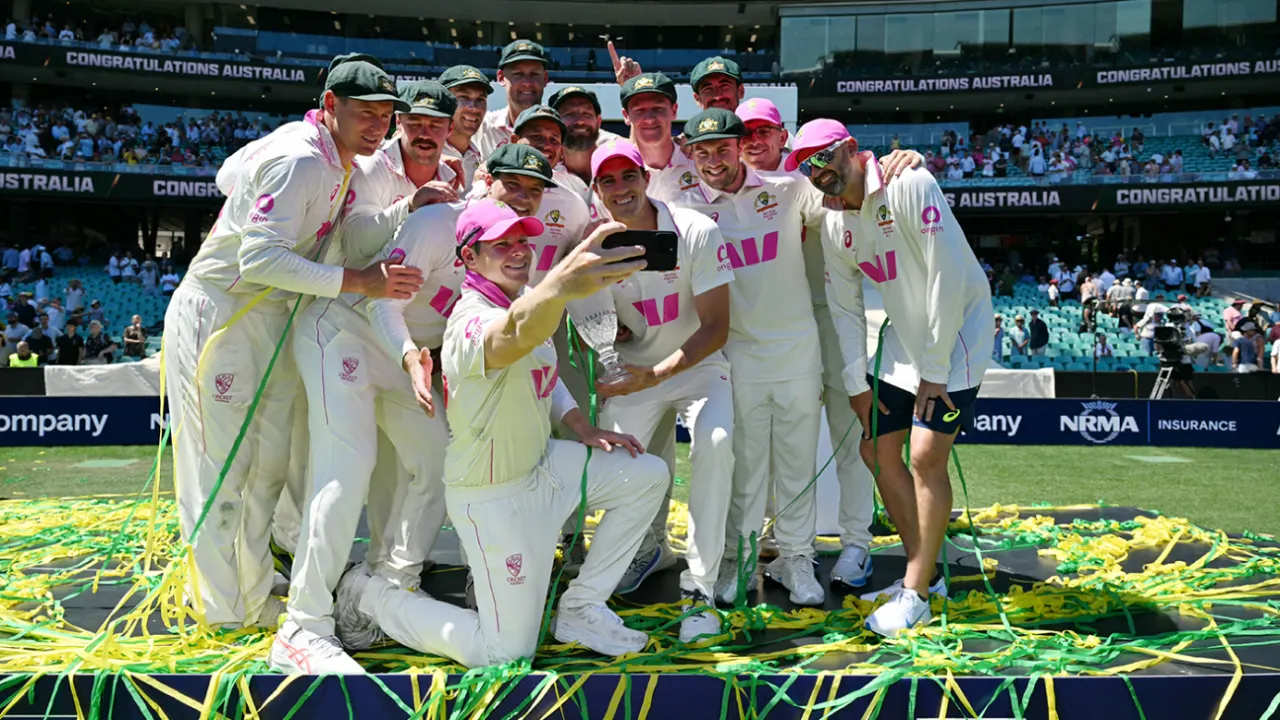
At least five senior Australia players have been left unimpressed by the initial 2026-27 Cricket Australia contract offers they have received in recent days and are yet to commit to signing them.
Meanwhile, a larger group of BBL stars are considering whether to play overseas during the summer after the stuttering BBL privatisation proposal stalled pay re-negotiations that would have redressed the fact that they have been earning between A$100-200,000 less than overseas players in the league in recent years.
First reported by Code Sports on Saturday, ESPNcricinfo understands a handful of Australian players were unimpressed by the initial CA contract offers that were tabled to them in the last week.
This follows reporting in the Age on Thursday that Test and ODI captain Pat Cummins had been offered A$4 million per year over the next three years, much of which was reported to be guaranteed money.
Under the current MoU (Australian players pay deal between CA and the Australian Cricketers Association), which runs until mid-2028, up to 24 national contracts are given out by national selectors for the 2026-27 financial year (July 1, 2026 to June 30, 2027) and those players share A$21,916,257 in the year in base salaries.
Players are ranked and receive contracts based on importance and the number of games they are likely to play in the cycle, with the lowest player earning a base of $360,645. In addition, players also earn nearly A$19,000 per Test appearance, nearly $8000 per ODI and nearly $5000 per T20I in match payments on top of the base. There are win bonuses on top, with a Test win worth roughly $30,000 per player in total. There is also a CA marketing pool, which contracted players share depending on appearances with commercial partners.
Player pay was already an issue in Australia and at the heart of the BBL privatisation debate. The rising money on offer in the franchise world has led players to consider whether locking themselves into a 12-month CA deal would cost them money over the year.
Players like Marcus Stoinis and Tim David have not had CA deals in recent years, knowing they would qualify for a base upgrade by playing the minimum number of T20Is in a year (six), whilst being able to sign franchise deals freely without the need for NOCs, to maximise earnings elsewhere.
CA got creative this year by offering contracts for only 21 players for for 2026-27 so that fewer players could share more of the unchanged pool despite Australia being set to play an unprecedented 17 Tests (possibly 18) in the financial year. They will only play nine ODIs and five T20Is in the period.
But the priority of paying Test players has been a source of tension for the white-ball players, who feel they can earn more than the offered CA deal if they went freelance. Meanwhile, there are three-format players concerned about what they are missing out on if they have to rest from certain series, or if more minor bilateral series are being played while lucrative franchise tournaments are on.
Cummins articulated this concern in March around playing two Tests against Bangladesh in August this year while letting go of the chance to earn upwards of A$675,000 (US$485,000) to play in the Hundred.
How the issue gets resolved in the short term remains unclear. Australia have two white-ball tours of Pakistan and Bangladesh coming up but they fall in the previous contract cycle. The first games of the 2026-27 cycle are the home Bangladesh Tests in August.
Meanwhile, a group of a dozen high-profile Australian BBL players are understood to be furious over the stalled privatisation proposal. The players had set up a WhatsApp group last October to discuss their long-term options after spending three years frustrated at CA over the pay disparity between them and overseas players. The introduction of the draft and the platinum signing of A$420,000 meant the likes of Luke Wood and Mohammad Rizwan were paid significantly more than Australian players with significantly better T20 records, who were on $200,000-$300,000.
CA was set to renegotiate the MOU with the ACA if they could move to the next phase of their privatisation plan but that fell over when two states did not want to proceed. A hybrid plan is now being devised but discussions with the players have been set aside for the moment.
The BBL stars are now considering their options. It is a unique season coming with the ILT20 moving to November before the BBL. There are Australian players who have been offered A$500,000 to play in the UAE.
Meanwhile, the SA20, which is seen as the major threat to the BBL, is rumoured to start on January 17.
The BBL is likely to run from mid-December until the last weekend in January, as it did last year. It does mean Australian players could play both but would need an NOC to go and would miss the first week of the SA20. It would lead to the farcical situation that happened a couple of years ago when several Australian players benefited from their BBL teams not making finals, which meant they could get to South Africa earlier and earn more money, as contracts are generally prorated on a games played basis. Australia’s Test players, however, would not be available for either as they have a five-Test tour of India that runs from mid-January to early March that immediately follows a four-Test home series against New Zealand in December and early January.
Australian players were furious when Dewald Brevis and Aiden Markram were bought for R16.5 million (A$1.3 million or US$940,000 approximately) at the SA20 auction last year, four to five times more than some of the top Australian contracts in the BBL.
It is understood that the senior BBL stars do not expect that type of money in the BBL in the short term but were hoping to close the gap significantly this year before privatisation redressed the situation in 2027-28.
It is understood that part of CA’s proposal to the states was to increase the salary cap by up to A$1.5 million. The issue for Australia’s players is that the bottom-end players in the BBL earn a minimum of A$52,000, whereas it is only roughly A$17,000 in the SA20, with the two salary caps reasonably similar at around A$3.2 million.
[Cricinfo]

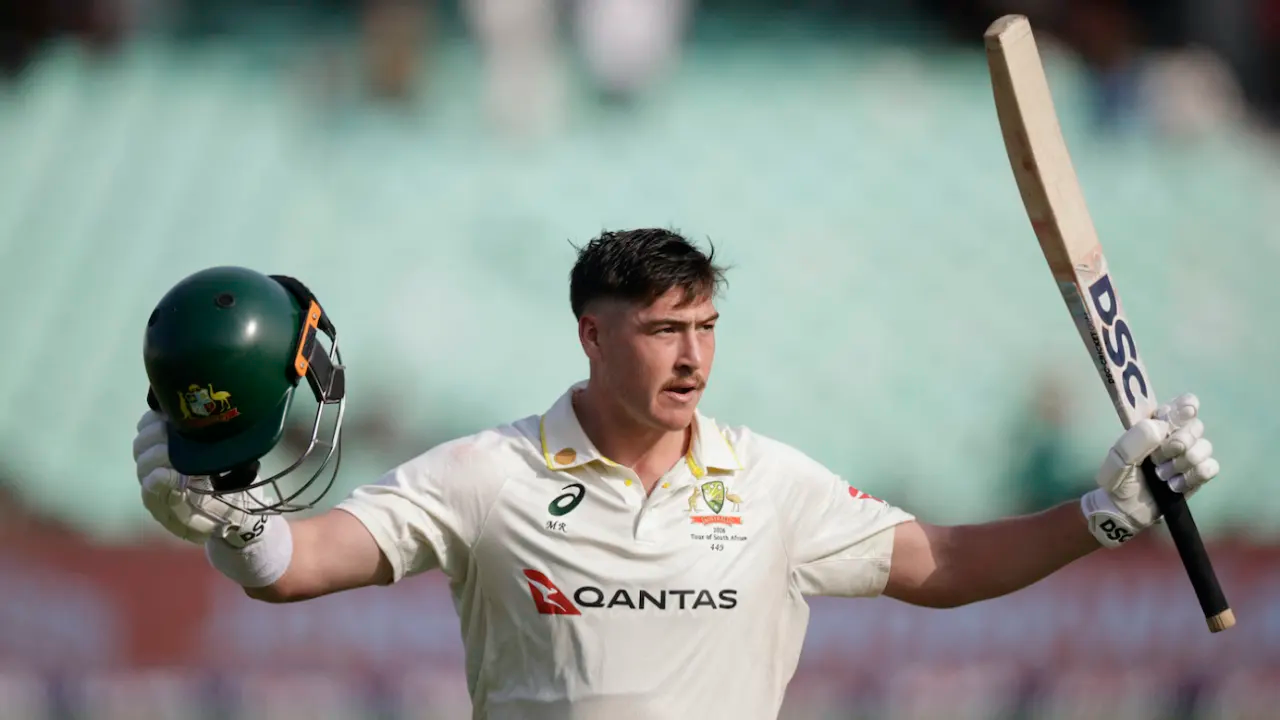
Matt Renshaw produced a herculean 190 and powered Australia to an unlikely first-innings total before Josh Hazelwood dismissed South Africa opener Ryan Rickelton for a duck late on day two of the first Test in Durban. Australia had their backs to the wall at 124 for 6 in familiar batting woes but Renshaw rescued the innings with his 397-ball marathon effort.
Renshaw fell short of what would have been a maiden double ton after being dismissed two balls into the final session, caught at slip off the bowling of offspinner Simon Harmer. His only other Test century was against Pakistan at the SCG in January 2017, when he made 184.
After 137.2 overs in the field, South Africa openers Rickelton and Aiden Markram faced a tough challenge under increasingly gloomy skies. A weary Rickelton did not fare well after edging Hazlewood to third slip in the second over, having attempted a lavish drive to a full delivery.
But Markram and new No. 3 David Bedingham were unruffled, and hit several attractive boundaries before bad light ended the day’s play just 8.4 overs into South Africa’s innings.
Having been on the back foot for much of the opening day, Australia were on top after day two as Renshaw produced the fourth highest score by an Australian in South Africa. Remarkably, he scored 174 of his runs with the last four batters, the most anyone has scored in a Test innings while batting with the tail since 2002.
Renshaw received strong support from the lower order, marked by an 86-run seventh-wicket partnership with Pat Cummins and a 134-run stand with Nathan Lyon, the second-most for the ninth wicket for Australia in their Test history.
Cummins and Lyon faced a combined 190 deliveries – that was 27 more than Australia’s top four batters – although batting became easier on a surface that on day one produced steep bounce and seam movement.
It has been a tough journey for Renshaw, who might have resurrected his Test career after providing a major tonic for Australia’s reshuffled batting order. He reached his century just before the lunch break with a boundary through the leg side, and raised his arms in delight and took off his helmet, showing off a beaming smile.
Highly disciplined but also showing a knack of going through the gears, Renshaw became the first Australia batter to face 300 balls in a Test innings since Usman Khawaja scored 232 against Sri Lanka in Galle in early 2025.
Renshaw has relished moving down to No. 5 after Nic Maddinson’s surprise selection as an opener, along with Cameron Green missing the match through injury. He had only filled the position four times previously – thrice during the 2023 tour of India, and once on the 2017 tour – with modest results, although has enjoyed success with Queensland there.
Renshaw had returned to Test cricket after three-and-a-half years as an opener against Bangladesh in August. While Maddinson’s selection has initially backfired, Renshaw looked at ease in the middle order, and equally untroubled against the seamers and spinners.
Having dominated much of the shortened first day, South Africa were left frustrated with their attack blunted by Renshaw. Seamers Wiaan Mulder, Marco Jansen and Anrich Nortje took nine wickets between them but struggled to consistently threaten on day two.
Spin duo Harmer and Keshav Maharaj claimed just one wicket from 48.2 overs, with Renshaw negating their influence, although the surface is expected to spin significantly later in the match. It was a disappointment for the sparse crowd in Durban, with the atmosphere rather subdued for Australia’s first Test series in South Africa since the 2018 sandpaper scandal.
Earlier on day two, Australia resumed their first innings on 187 for 6 after just 65.2 overs were bowled on a truncated opening day due to bad light. Renshaw and Cummins aimed to build on their unbeaten 63-run partnership from overnight. It did not take Renshaw long to reach his fourth Test half-century after edging Nortje through third slip and gully as he celebrated the milestone for the first time since March 2017.
Nortje, who played a starring role on day one after a three-and-a-half year exile from Test cricket, once again unfurled vicious short deliveries but occasionally tried to outfox Cummins by pitching up. A focused Cummins was unfazed, and pounced on a rare overpitched delivery with a beautiful square drive to the boundary. He had a fourth Test half-century in his sights – and the first since January 2024 – until, on 43, he edged a good-length delivery from Mulder to second slip.
Renshaw, meanwhile, showcased his much improved play against spin, reverse sweeping Maharaj with good effect to keep the scoreboard ticking over.
Much like Cummins, Mitchell Starc was intent on solid defence, and had a slice of luck when he edged Harmer through the hands of Markram at first slip as the ball flew to the boundary. South Africa had no hesitation in taking the second new ball, and Mulder capitalised when he clean bowled Starc with a cracker of a delivery that pitched on middle before crashing into the off stump.
But Renshaw kept South Africa at bay, and put the foot down in the back end of the elongated session. He hogged the strike after lunch as South Africa skipper Temba Bavuma deployed Maharaj and Harmer in tandem. The game went through a lull until the reintroduction of Nortje, who delivered a 143kph thunderbolt that whacked Renshaw on the grill of the helmet.
But Renshaw gave an immediate thumbs up and continued with his indefatigable effort after receiving medical attention. He reached 150 with a reverse sweep off Maharaj – and quite fittingly so, given his mastery of the stroke through the innings.
Lyon appeared set to bat through the entire second session before being trapped plumb lbw by a full delivery from Jansen, who was rewarded for a hostile spell before tea. The session was extended, but Hazlewood held firm with the bat before making an impact with the ball before stumps.
Scores:
South Africa 27 for 1 in 8.4 overs (Aiden Markram 15*, David Bedingham 12*; Josh Hazlewood 1-9) trail Australia 390 in 137.2 overs (Matt Renshaw 190, Pat Cummins 43; Marco Jansen 3-68, Wiaan Mulder 4-68, Anrich Nortje 2-88 ) by 363 runs
[Cricinfo]
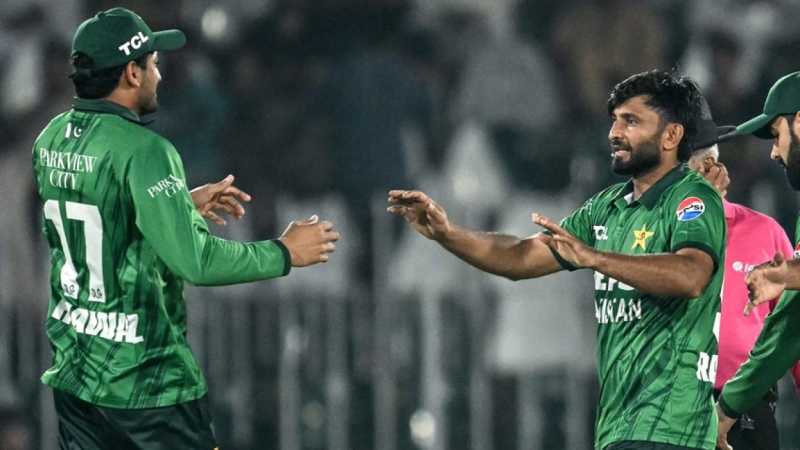
During the f8rst T20I against Sri Lanka on Friday, Pakistan demonstrated that 2026 is not quite like 2019. Back then, they had stumbled in pursuit of three Sri Lankan totals in succession – two of them lower than the 182 they gunned down with relative ease two days back, while the third was exactly 182. With that series perhaps fresher in Sri Lanka’s mind than it needed to be, Kusal Mendis’ side opted, against conventional wisdom, to bat first after winning the toss in Rawalpindi this time, hoping to recreate the magic formula from seven years earlier.
There were a few things we learned from the first game, though. The Rawalpindi surface isn’t quite as partial to fingerspin as T20 pitches in the subcontinent have been, which induced the hosts into playing three frontline seamers. Pakistan, who were playing with at least five potential opening batters, appear to have rejigged their batting order by pushing the timeless Fakhar Zaman up top and sending Saim Ayub at No. 5.
Sri Lanka, meanwhile, may have learned that while 32-year old Lahiru Udara hasn’t played much international cricket, his talent in this format is unmistakable, as is his temperament under pressure. Udara was the lone fighting hand for his side across much of the innings, though that shines more of a light on Sri Lanka’s batting order as a whole. With Dunith Wellalage, whose power-hitting abilities are limited, batting at No. 7, the visitors might want to beef up their batting order.
But there’s only so much that can be read into a lone T20I at the start of a long tour for Sri Lanka. Pakistan have an opportunity to wrap the series up by winning the second game, also in Rawalpindi, on Sunday, and will be favourites to do so after a dominant performance in the first. The worry for Sri Lanka is that their own indifferent showing comes on the back of three crushing defeats in England. On Sunday, they will try to show this is more of a temporary rut than a fair representation of their current T20I state.
Before playing on Friday, Naseem Shah’s last T20I came seven months ago. Even that game was against Sri Lanka, and as Pakistan bowed out of the T20 World Cup, he conceded 36 runs in four overs – exactly what he did in Rawalpindi. But two days back, Naseem had two more wickets to his name in a patchwork of a spell that shed a little more light on where his T20 game currently is. It is representative of a curious year for him as he works his way back after falling foul of the PCB at the PSL, before an injury sidelined him for months.
Naseem has worked his way back with respectable showings at a domestic 50-over tournament and the CPL. There might be hope of a foundation for a good run beginning to take shape, but it remains far too early to say.
Maheesh Theekshana too, conceded 36 runs in his four overs in the first T20I against Pakistan, but Sri Lanka may want more from the man who has become their lead spinner in Wanindu Hasaranga’s injury-enforced absence. More than any specifics about Theekshana’s spell, it was his bowling style that caught the eye – a poorly concealed imitation of Sikandar Raza’s rather than the more conventionally oriented action that he is recognisable in.
It appeared to have deprived Theekshana of the ability to slow the ball down as required, with Sahibzada Farhan often picking off the quicker pace with relative ease. Whether this remodelled action sticks will be a point of intrigue in this series.
Pakistan captain Farhan said he was thoroughly pleased by the performance in the first T20I. So an unchanged Pakistan side for the second T20I would not be a massive surprise.
Pakistan: Sahibzada Farhan (capt), Fakhar Zaman, Maaz Sadaqat, Hasan Nawaz, Saim Ayub, Khawaja Nafay (wk), Shadab Khan, Mohammad Imran, Razaullah, Naseem Shah, Abrar Ahmed
Wellalage at No. 7 might be a position too high. So Sri Lanka could look to add batting depth to their side by including Sineth Jayawardena instead of Nuwan Thushara, who went for 32 runs in three overs on Friday.
Sri Lanka: Lahiru Udara, Kusal Mendis (capt, wk), Sineth Jayawardena, Kamindu Mendis, Kamil Mishara, Sahan Arachchige, Dasun Shanaka, Dunith Wellalage, Dushmantha Chameera, Maheesh Theekshana, Eshan Malinga


by Reemus Fernando
A combined bowling effort and top order batting anchord by Ranmith Senarath powered Nalanda to a vital six wickets win over St. Joseph’s in the Under-19 Division I Tier A Limited Overs Tournament match at Campbell Place on Friday.
Ranmith struck an unbeaten 51 to steer the team to victory in the 30th over as Nalanda completed their group matches unbeaten.
Earlier they beat Thurstan (155) by seven wickets, St. Servatius’ Matara (187) by four wickets and Gurukula (113) by nine wickets.
Ranmith’s composed knock which came in 69 balls included six boundaries and a six.
Nadul Jayalath provided an aggressive start with 27 off 23 balls, including five boundaries, while Nemindu Akmeemana contributed 25 off 41 deliveries. Lithum Wijekumara added 14, and Rusandu Silva remained unbeaten on eight.
St. Joseph’s, batting first, struggled to build momentum and were restricted to 135 for nine in 47.2 overs. Pamoda Dalpadado top-scored with 36 off 59 balls, while Kavith Fernando made 24 and Vishwa Peiris contributed 17 off 63 deliveries.
Nalanda’s bowlers maintained control throughout the innings, with Santhul Wijeyarathne leading the attack with two wickets for 19 runs from nine overs. Osanda Pamuditha, Nadul Jayalath, Rusandu Silva, Methuka Perera, Sadew Indeepa and Lithum Wijekumara claimed a wicket apiece.

‘Time for Ukraine to get new president,’ says Trump after Zelensky condemns diesel deal

Cabinet approval has been granted to several proposals and policies related to the new Education Reforms – Prime Minister

The Anti-Corruption Act is being amended to strengthen It, not to weaken it – PM

Renshaw 190 lifts Australia to 390 before Hazlewood strikes

Pope says death penalty ‘inadmissible’ as US plans to livestream execution

Attack on airport in Saudi capital, Riyadh, leaves several injured

‘Dates have the highest sugar content to fight Coronavirus’

Sunday Island 27 December – Headlines

#SundayIsland 17th December – Headlines

Sunday Island – 28th March

Sunday Island Headlines – 21 March

Sunday Island – 21st February – Headlines
-

 News6 days ago
Geneva takes up Sallay’s case and govt. ignores opportunity to answer accusations
-

 Features7 days ago
The first woman in the foreign service or Ceylon Overseas Service it was then called
-

 News7 days ago
Nearly 20 Iranian tankers stranded off Lanka amid US sanctions
-

 Features5 days ago
Preventing grievances from becoming communal
-

 Sports3 days ago
Nissanka absence opens door for Sri Lanka’s young guns
-

 News4 days ago
Gnansara Thera to be assigned to prison printing section: Officials
-

 Features6 days ago
Sri Lanka Cricket Bill: Governance reform is not yet a cricket strategy
-

 Features3 days ago
The Sri Lankan who made Scottish history