
Opinion
Trump tariffs and their effect on world trade and economy with particular reference to Sri Lanka – Part V


(Continued from yesterday)
Domestic Market Development
While Sri Lanka’s relatively small domestic market (22 million people) limits the potential for inward-focused development, there may be opportunities to reduce import dependence in certain sectors and develop stronger linkages between export industries and domestic suppliers. This could create more balanced growth and reduce vulnerability to external shocks.
Policies to support domestic market development might include,
-
Import Substitution in Strategic Sectors: Targeted support for domestic production of essential goods and inputs to export industries, reducing dependency on imports.
-
Strengthening Domestic Supply Chains: Developing stronger linkages between export-oriented firms and local suppliers to increase domestic value addition.
-
Addressing Income Inequality: Policies that increase purchasing power among lower and middle-income Sri Lankans could expand the domestic market for locally produced goods and services.
Such approaches would need to avoid the pitfalls of earlier import substitution models that created inefficient, protected industries. The focus should be on developing competitive domestic capabilities rather than simply erecting barriers to imports.
Policy Recommendations
Based on the analysis of both short-term and longer-term strategies, several specific policy recommendations emerge for Sri Lanka,
Industrial Policy Reforms
Sri Lanka should develop a comprehensive industrial policy that goes beyond the current focus on export promotion to address structural vulnerabilities revealed by the tariff shock. This policy should,
-
Identify priority sectors for diversification based on a realistic assessment of Sri Lanka’s competitive advantages and global market opportunities.
-
Provide targeted support for research and development, skills training, and quality infrastructure in these priority sectors.
-
Reform regulatory frameworks to reduce barriers to business formation, innovation, and growth.
-
Develop specific strategies for upgrading within existing export sectors like textiles, helping firms move into higher-value activities.
Investment in Innovation and Skills
Human capital development represents a critical foundation for economic resilience and diversification. Sri Lanka should,
-
Align education and training systems more closely with emerging economic opportunities, emphasizing technical skills, digital literacy, and innovation capabilities.
-
Support university-industry collaboration to develop applied research relevant to Sri Lanka’s economic challenges.
-
Facilitate knowledge transfer through diaspora engagement, international partnerships, and strategic foreign direct investment.
-
Develop innovation hubs and incubators focused on priority sectors for diversification.
Sustainable Debt Management
The tariff shock highlights the importance of building greater resilience into Sri Lanka’s approach to external debt. Recommendations include,
-
Advocating for reforms to international debt restructuring frameworks that would explicitly link repayment obligations to export performance, similar to the London Debt Agreement model.
-
Developing contingency clauses in future debt agreements that would automatically adjust payment terms in response to external shocks beyond the country’s control.
-
Prioritizing concessional financing over commercial borrowing where possible to reduce vulnerability to market sentiment.
-
Building stronger foreign exchange reserves during periods of stability to provide buffers against future shocks.
Social Protection for Affected Workers
Finally, Sri Lanka must develop more robust systems to protect vulnerable workers during economic transitions. Recommendations include,
-
Establishing a dedicated adjustment assistance program for workers displaced by trade shocks, providing income support, retraining, and job placement services.
-
Developing community-based support initiatives in regions highly dependent on export industries.
-
Engaging international partners to support these efforts through technical and financial assistance.
-
Ensuring that economic diversification strategies explicitly address employment creation for workers with different skill profiles.
Implementing these recommendations would require significant political will, institutional capacity, and international support. However, the current crisis created by President Trump’s tariffs also presents an opportunity to address long-standing structural vulnerabilities and build a more resilient economic model for Sri Lanka’s future development, just like what Sri Lanka did post economic crisis, such as tax reforms, SOE reforms and cost reflective pricing.
CONCLUSION
The imposition of sweeping tariffs by the Trump administration represents a profound disruption to the global trading system with far-reaching consequences for economies around the world. As we have seen throughout this analysis, these tariffs are not merely technical adjustments to trade policy but potentially transformative shifts that challenge fundamental assumptions about economic development, international cooperation, and the distribution of benefits and costs in our interconnected global economy.
For Sri Lanka, the 44% tariff rate imposed on its exports to the United States threatens to undermine a fragile economic recovery and reverse hard-won progress following the devastating crisis of 2022. With the United States accounting for 23% of Sri Lanka’s exports and the textile industry, which employs 350,000 workers, particularly vulnerable to this trade shock, the human consequences could be severe. Projected losses of $300 million in annual export earnings not only threaten jobs and livelihoods but also raise serious concerns about Sri Lanka’s ability to service its external debt obligations, despite recent restructuring efforts.
Sri Lanka’s experience illuminates broader structural vulnerabilities in the global economic system. The export-led development model promoted by international financial institutions for decades has created deep dependencies on continued access to wealthy consumer markets, particularly the United States. When this access is suddenly restricted through unilateral policy decisions, developing countries bear disproportionate adjustment costs with limited capacity to cushion the impact. The international trade and financial architecture offer inadequate mechanisms to address such shocks, with debt sustainability frameworks failing to properly account for trade performance and multilateral institutions lacking effective tools to prevent or mitigate the damage.
This situation calls for both immediate crisis response and longer-term structural reforms. In the short term, Sri Lanka must pursue diplomatic engagement with the United States, provide targeted support to affected industries within its fiscal constraints, and implement emergency measures to protect vulnerable workers. Over the longer term, strategies for market and product diversification, value chain upgrading, regional integration, and domestic market development offer pathways to greater resilience, though none provides a quick or easy solution to the current challenge.
Beyond Sri Lanka’s specific circumstances, President Trump’s tariffs may accelerate broader shifts in global trade patterns. We may see increased regionalization of trade, a greater role for China as both market and investor for developing economies, production relocation to avoid tariffs, and renewed interest in South-South cooperation and domestic market development. These shifts could fundamentally reshape the global economic landscape in ways that create both risks and opportunities for developing countries.
The tariff shock also highlights the need for more fundamental reforms to the international economic system. A more equitable approach to trade and development would recognize the structural challenges facing developing economies and provide meaningful policy space for them to pursue diversification and resilience-building strategies. Debt sustainability frameworks should explicitly link repayment obligations to export performance, acknowledging the fundamental importance of trade capacity to debt service ability. And multilateral institutions should develop more effective mechanisms to prevent unilateral actions that disproportionately harm vulnerable economies.
For Sri Lanka specifically, this moment of crisis also presents an opportunity for reflection and reform. The country’s heavy dependence on a narrow range of exports to a small number of markets has created vulnerabilities that predate President Trump’s tariffs. A comprehensive strategy for economic diversification, encompassing both products and markets, could create greater resilience against future shocks while potentially opening new pathways for more inclusive and sustainable development.
Ultimately, the story of Trump’s tariffs and their impact on Sri Lanka reminds us that behind abstract economic policies and trade statistics lie real human lives and communities. The textile worker in a factory outside Colombo, the small business owner supplying packaging materials to exporters, the rural family dependent on remittances from a daughter employed in the garment industry, these are the people who will bear the true cost of these tariff policies. Their futures hang in the balance as global economic forces shaped by decisions in Washington ripple outward to distant shores.
As the international community responds to this disruption in global trade, we would do well to centre these human impacts in our analysis and policy responses. A truly equitable international economic system must not only facilitate the efficient exchange of goods and services but also ensure that the benefits of global integration and the costs of economic adjustment are distributed fairly between wealthy and developing nations. President Trump’s tariffs have exposed how far we remain from this ideal, and how urgently we need to work toward a more balanced and inclusive model of global economic cooperation.
Rethinking Trade Metrics: It’s the Current Account, Not Just the Trade Balance
While the Trump administration frames its tariff decisions around bilateral trade deficits in goods, that gives a very skewed picture. The true measure of how our economies are actually connected between nations is the current account, which includes not just the balance of goods, but also services, investment income, and transfer payments.
Take Sri Lanka, while it may appear to run a surplus in goods trade with the U.S., that surplus is more than offset by,
-
Payments for U.S.-based tech and streaming services (Google, Netflix, Apple)
-
Outbound tourism and overseas education costs
-
Interest payments on sovereign debt owed to institutions like the IMF and World Bank, whose returns flow back to major shareholders, including the U.S.
This broader deficit in the current account illustrates that Sri Lanka is not exploiting the U.S., but rather taking part in a back-and-forth economic relationship that is already tilted toward the American economy.
Basing tariff policy solely on trade deficits in goods completely misses this bigger economic picture, and risks harming the very development partners whose growth would ultimately benefit the global economy, including the United States.
(Concluded)
(The writer served as the Minister of Justice, Finance and Foreign Affairs of Sri Lanka)
Disclaimer:
This article contains projections and scenario-based analysis based on current economic trends, policy statements, and historical behaviour patterns. While every effort has been made to ensure factual accuracy using publicly available data and established economic models, certain details, particularly regarding future policy decisions and their impacts, remain hypothetical. These projections are intended to inform discussion and analysis, not to predict outcomes with certainty.
by M. U. M. Ali Sabry
President’s Counsel

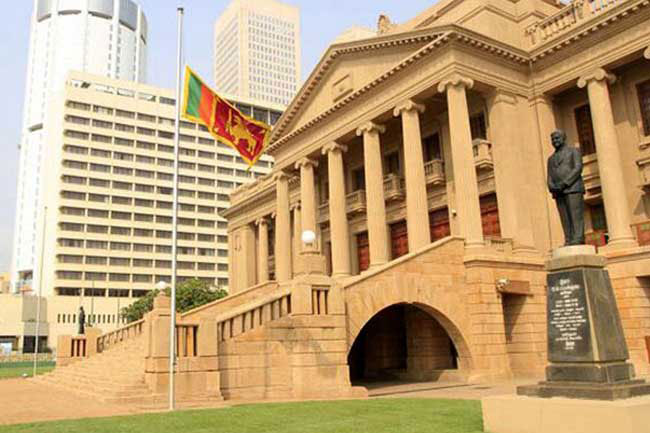
The recent meeting held at the Presidential Secretariat under the patronage of the Secretary to the President, Mr. Nandika Sanath Kumanayake, to review the functioning of Internal Affairs Units and the implementation of the National Anti-Corruption Action Plan 2025–2029 is a welcome development.
Particularly encouraging is the decision to focus attention on three of the country’s most important revenue-generating and revenue-collecting institutions: Sri Lanka Customs, the Inland Revenue Department, and the Department of Excise. These institutions interact daily with taxpayers, importers, exporters, manufacturers, service providers, and the general public. Their efficiency, integrity, and accountability have a direct impact on the country’s economic environment and public confidence in government administration.
The fact that the meeting was chaired by former Director General of Customs, Nandika Sanath Kumanayake, is particularly encouraging. Having served within the Customs Department, he should possess an intimate understanding of the institution, its operations, and the challenges that have confronted successive administrations. There is perhaps no one better placed to initiate a discussion on the reforms necessary to enhance transparency, accountability, and public confidence in revenue administration.
His willingness to bring Sri Lanka Customs, the Inland Revenue Department, and the Department of Excise under the anti-corruption spotlight is therefore commendable. Effective reform is most likely to succeed when it is led by those who understand the system from within.
The public announcement following the meeting confirms that anti-corruption measures and future initiatives were reviewed. However, it provides little indication of the specific issues discussed, the concerns raised, or the actions agreed upon. If the objective of the meeting was to strengthen public confidence in anti-corruption efforts, greater transparency regarding the matters discussed would be helpful.
Businesses and taxpayers who deal regularly with these institutions often have strong views regarding delays, discretionary decision-making, accountability, procedural inconsistencies, and the risk of corruption. Whether all such perceptions are justified or not, they exist and cannot be ignored.
The public would therefore benefit from knowing:
• What weaknesses were identified within the institutions concerned?
• What reforms are being considered?
• What specific targets have been established?
• Who will be responsible for implementation?
• How will progress be monitored and reported?
Transparency on these matters would not compromise ongoing investigations, intelligence gathering, disciplinary proceedings, or other confidential matters. There is a clear distinction between protecting sensitive information and keeping the public informed about the direction of reform. Indeed, publishing general findings, reform proposals, implementation timelines, and performance indicators would demonstrate that the Government is genuinely serious about accountability and is willing to be judged on measurable results.
At the same time, if the Government is serious about addressing corruption within revenue-collecting institutions, it may also need to confront certain difficult issues that have traditionally received little public attention. One such issue is the incentive scheme applicable to Customs officers.
For many years, concerns have been expressed by segments of the importing and exporting community that incentive structures linked to revenue collection and enforcement activities may unintentionally create pressures that contribute to excessive assessments, prolonged investigations, and unnecessary disputes with taxpayers and importers. Whether such concerns are justified in every instance is open to debate. However, the perception itself is sufficiently widespread to warrant careful examination.
The question policymakers may need to ask is whether incentive schemes should be based primarily on revenue collection and enforcement outcomes, or whether greater emphasis should be placed on service standards, facilitation of legitimate trade, efficiency, and timely dispute resolution.
If anti-corruption efforts are to succeed, no aspect of the system should be regarded as beyond review.
Another reality that cannot be ignored is the influence of employee unions within the three institutions under review. Successive governments have often found it difficult to implement significant reforms without encountering strong resistance from organised employee groups.
There is nothing improper in unions protecting the legitimate interests of their members. Employee representation is an important feature of any democratic society. However, concerns arise when the strength of organised resistance becomes a deterrent to reforms that may be considered necessary in the broader national interest.
The challenge for policymakers is therefore to strike an appropriate balance between safeguarding employee rights and ensuring that institutional reforms aimed at improving transparency, accountability, efficiency, and public confidence are not indefinitely postponed.
If the current administration is committed to meaningful reform, it may require leadership at the highest levels of government to initiate discussions on issues that previous administrations may have been reluctant to address. The willingness to examine difficult and sometimes uncomfortable questions is often the true test of a government’s commitment to reform.
The success of anti-corruption initiatives cannot ultimately be measured by the number of meetings held, committees appointed, or action plans prepared. It will be judged by whether citizens and businesses experience a tangible improvement in their dealings with public institutions.
Can matters be processed more efficiently?
Are decisions taken more transparently?
Are complaints investigated promptly?
Are officers held accountable where wrongdoing is established?
Do honest taxpayers and businesses feel they can obtain services without undue delay, influence, or improper demands?
These are the questions that matter most.
Public trust is strengthened not only when anti-corruption initiatives are undertaken, but also when citizens are able to see what is being done, understand the reforms being pursued, and assess whether meaningful progress is being achieved.
The meeting at the Presidential Secretariat is therefore a welcome first step. However, the public will judge its success not by the fact that the meeting was held, but by whether it leads to greater transparency, measurable reforms, improved service standards, and a genuine reduction in opportunities for corruption. Achieving those objectives may require a willingness to address not only individual misconduct but also the institutional structures, incentives, and long-standing practices that may have contributed to the problem in the first place.
Only then will anti-corruption initiatives be seen not merely as policy statements, but as genuine efforts to transform institutions that play a critical role in Sri Lanka’s economy.
A Concerned Importer ✍️
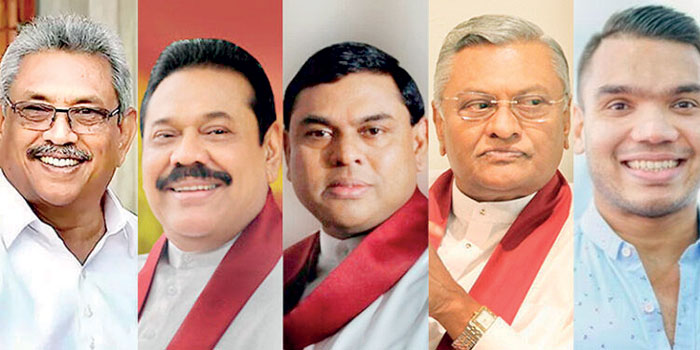
This is regarding the editorial of The Island on 19 May 2026, titled “Defeat of Terrorism- Triumph of hypocrisy”.
I fully agree with the Editor when he says that Terrorism needs to be eliminated in all its forms and manifestations. Terrorism is generally defined as “massacring innocents to achieve a political aim”. Whether the cause for terrorism is justifiable or not, terrorism per se, cannot be justified and thus, should be eliminated.
However, I have different views with the rest of the editorial.
The editor says what Rajapaksas did to the country was like saving a damsel in distress and abusing her thereafter. Elaborating the same, he says that Rajapaksas have thought leadership to defeat terrorism was a special license to do as they pleased and sought to politicise and monopolise war victory to accelerate their dynasty building projects. He continues to say that the post war Mahinda Rajapaksa (MR) admininstration became a government of Rajapaksas by the Rajapaksas and for Rajapaksas. In short, the implication was that MR, after defeating LTTE, has done nothing except furthering his and his family’s political interests.
MR, even during the critical period in the war against LTTE, handled the economy professionally. There was an upward trend in SL economy from 2005–2009 showing GDP growth from 24.4 billion dollars in 2005 to 42.5 billion dollars in 2009, doubling the 2005 GDP. During 2010–2015 showed Sri Lanka’s strongest economic performance with the economy growing from US $ 56.7 billion to US $ 80.6 billion.
The annual growth rate was over 7.4%, per capita income more than tripled (from US $ 1200 to over US $ 3,600) elevating SL to lower-middle income status. National poverty level declined significantly, dropping from over 15% in 2006 to below 7% by 2012. Unemployment declined to 4 %. Transport and energy sectors received a significant boost. Massive power generation projects such as Norochcholai coal power plant and Upper Kothmale Hydro power plant were completed.
The expansion of Colombo port, development of Hambantota port, Mattala International Airport and building of expressways (Southern and Colombo-Katunayake) greatly improved the country’s transportation capacity and brought SL clear to a goal of being a dynamic Maritime and Aviation Hub.
The above statistics of the Central Bank does not prove the fact that Rajapaksas only looked after their interests after the war. Hence the proverbial “Damsel” that the editor was referring to, was not abused as he claimed, but had been looked after very well.
Excesses may have happened and it happens everywhere in every field. But the fact remains that MR defeated the most ruthless terrorist organisation in the world and developed the country with roads, rails, ports, airports, expressways, bridges, power plants, stadiums etc. which deserves appreciation.
The editor then says MR suffered a humiliating electoral defeat in 2015, again came to power in 2019, but mismanaged the economy, indulged in corruption and bankrupted the country. That too is far from the truth.
The foreign exchange crisis that culminated in 2002 was not due to mismanagement /corruption of Gotabaya Rajapaksa (GR) government but mainly due to excessive foreign borrowings during 2015-2019. By 2019 Nov, the economy was already in a precarious state, with the IMF itself warning that SL was highly vulnerable to external shocks.
The editorial never mentions Covid 19, the worst global pandemic the GR government had to face. During this period the government revenue fell by approx. Rs 534 billion. (revenue lost from import restriction of motor vehicles, Covid lockdown and closure of liquor shops were Rs 136 billion, 323 billion and 75 billion respectively.) At the end of the MR regime in 2014, the outstanding ISBs were US $ 5.3 billion and the reserves were US $ 8.2 billion. By the time GR came to power, the outstanding ISBs were US $ 15.2 billion and the reserves were US $ 7.6 billion. In 2020-2021, the GR government did not issue any ISBs but settled them in time.
The decision to maintain debt servicing was not just about protecting the country’s image in financial markets but to ensure critical health and humanitarian support including vaccines, medicines, and essential supplies continued to flow into the country during the worst global health crisis in the country.
It’s a pity that the public who remained silent when foreign debt was piling up, launched an Aragalaya to expel the leader who settled the debts without obtaining fresh loans. Was it hypocrisy or treason?
The claim that the tax reduction implemented in Dec 2019 caused a significant loss of revenue was also not correct. When economic activity is deliberately halted by a global pandemic, with borders shut, businesses closed, citizens confined to their residences, production at the lowest, no tax rate high or low, can generate revenue from transactions that are simply not occurring.
The economic downfall was not due to mismanagement or corruption but due to the promulgation of bankruptcy (debt standstill) by Central Bank (CB) on the advice of former CB governor Dr. Indrajth Coomaraswamy and consultant Prof. Shantha Devaraja. That decision undermined the on-going efforts to stabilise the economy. I consider allowing such an announcement was a mistake done by GR. It halted IMF staff level already agreed loan, Indian Credit Line of US $ 3 billion and suspended WB and ADB loans. Also, China had to halt the loans already requested as China Secure (the government insurance company) could not insure loans to a bankrupt country.
The reserves were carefully used by GR to buy vaccines giving priority to human lives, and due to lack of foreign exchange, procurement of gas and fuel was critically effected. In the final stages there was an organised campaign by saboteurs to steal and hoard fuel. The JVP members publicly appealed to Sri Lankans abroad not to send any dollars to the country. A hate campaign was carried out against the Rajapaksas.
A protest called Aragalaya was held at Galle face. The entire episode was a grand conspiracy to oust GR, who was sworn in as the President at Ruwanwelisaya, the great symbol of Sinhalese Buddhist culture. Black Vesak lanterns, ridiculing Buddhist sacred symbols, insulting the Mahanayakas, anti-unitary slogans and glorifying federalism and free biriyani for the entire crowd by “unknown” sponsors were ample evidence of its hidden agenda.
Aragalaya, which forcibly took over the Presidential Secretariat, was obviously illegal. The other mistake done by GR was to allow protesters to operate without chasing them away using force if necessary. Finally, GR, the Commander in Chief of the three forces, left the country without hurting anyone.
The editor says that Rajapaksas squandered an opportunity that presented itself after the war to bring about national reconciliation and defeat LTTE ideology politically. He says reconciliation has become a victim of hypocrisy.
MR, after the war, launched a large number of development projects in the North constructing roads, bridges, grounds, schools, hospitals, etc. All the roads were carpeted. During the period 2010-2012 the growth rate in Jaffna was 22% compared to 7% in the rest of the country. That was the first step he took towards reconciliation.
Reconciliation needs an equal contribution from both sides. Unfortunately, the goodwill shown and the enormous economic support provided by MR were never reciprocated by the Tamil politicians. MR held PC elections (without abolishing 13A even with two-thirds majority in parliament) and allowed them to elect their own leaders. That was the second step towards reconciliation.
Mr. C. V. Vigneswaran studied at Royal college and Colombo Law College, became a Magistrate, High Court judge, a judge in the Court of Appeal and in the Supreme Court. Having lived among Sinhalese for more than 65 years, after being elected as the Chief Minister in the Northern Province, he declared that the Sinhalese had no right to live in Jaffna. Every year he returned most of the funds allocated for Northern development back to the Treasury without utilising it fully, to indicate that there was no support from the government. That was how Tamil politicians contributed towards reconciliation.
After 2009, hundreds of Tamil students in the North have become doctors, engineers, lawyers, top government officials, etc., due to unhindered education. The civilians who suffered under LTTE facing abductions, paying ransom, etc., now live in peace without any fear. Most of the Tamils have migrated to areas outside the North and the East. More than 52% of the Tamils are now living among Sinhalese without any problem. Main businesses in Colombo are dominated by the Tamils. What else is required Mr. Editor for the so-called reconciliation? Granting a separate state on a platter?
With all the above, the Tamils in the North annually commemorate the very person who made their lives miserable for 30 years. How would the Sinhalese feel when they see the terrorists who killed pregnant women, monks, infants, devotees being garlanded and felicitated in the North every year?
Yes, the editor was correct. Reconciliation has become a victim of hypocrisy.
Retired Rear admiral (Dr) Sarath Weerasekera VSV RWP USP
Former Public Security Minister

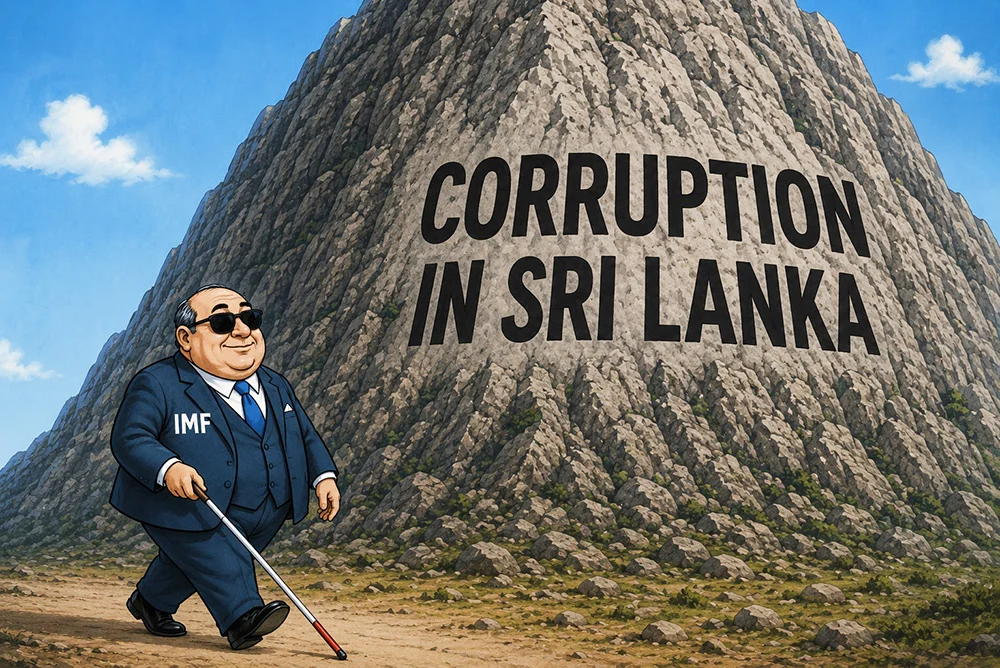
Anti-corruption and governance reforms are central pillars of Sri Lanka’s $2.9 billion bailout agreement with the International Monetary Fund (IMF). This was the first time in Asia that an IMF programme was explicitly linked to a comprehensive anti-corruption diagnostic and specific legislative measures.
At the press conference announcing the deal, Senior Mission Chief Peter Breuer said that the IMF had emphasised that anti-corruption and governance reforms are central pillars of the programme. He added that the IMF would subject Sri Lanka to a comprehensive governance diagnostic exercise, making it the first Asian economy to undergo such an exercise, which will assess corruption and governance vulnerabilities in Sri Lanka and provide prioritised and sequenced recommendations. “Sri Lanka will be the first country in Asia to undergo a governance diagnostic exercise by the IMF. We look forward to further engagement and collaboration with stakeholders and civil society organisations on this critical reform area,” the IMF official said.
An extract from the Technical Assistance Report on Governance Diagnostic Assessment, Sri Lanka (September 30, 2023) is as follows; “The report highlights immediate and short-term measures to address key corruption issues, as well as structural reforms that require more time and resources but are essential to strengthen governance and initiate lasting change. The recommendations are designed as a coherent approach to improving governance through a focus on: clarity of authority and responsibility for core functions; financial and operational independence of essential accountability and law enforcement institutions; transparency in government practices and performance, especially relating to the planning, spending, and accounting for the use of public funds and assets; inclusive, accessible, and rule-based means to enforce private agreements and challenge official behaviour; and efficient mechanisms for making information public and holding organisations and individuals to account for their performance and behaviour”.
Further, the agreement required Sri Lanka to implement several specific, actionable measures to curb corruption vulnerabilities:
New Anti-Corruption Legislation: The government passed the landmark Anti-Corruption Act in 2023, which expanded the powers of the Commission to Investigate Allegations of Bribery or Corruption (CIABOC), required electoral candidates and officials to declare their assets, and introduced protections for whistleblowers.
Fiscal and Procurement Reforms: The IMF programme included commitments to improve public financial management, increase tax transparency, and advance public procurement laws to eliminate political interference and cronyism in government contracts.
The IMF Executive Board is supposed to continuously track these anti-corruption and governance benchmarks during its periodic programme reviews to ensure compliance. The IMF officials’ last visit to Sri Lanka was from March 26th to April 9th when they reviewed the progress of the programme, decided that it was going well and approved the release of the final tranche. Their statement did not carry any reference to the activities of the government regarding control of corruption.
The Letter of Intent submitted by the government at the conclusion of the review becomes relevant under these circumstances. It was officially released on May 29, 2026. One of the critical undertakings by the government, according to the Letter of Intent, relates to cost-recovery pricing, the government has reaffirmed its commitment to maintaining cost-recovery pricing for fuel and electricity.
Going by available communications, apparently the IMF has not inquired into what caused the increase of cost of production of electricity. Cost of electricity production has gone up due to increased use of diesel, as low quality coal is not producing the required amounts. The coal that has been recently imported has been found to be of low quality and the government has said the losses due to this misadventure will not be shifted to the people. The irregularities in the coal procurement process that has happened recently is no secret, the Auditor General’s report has pointed out the flaws in the said procedure. Ironically, the IMF programme highlights the need to have fool proof procurement and tender procedures, and emphasises “holding organisations and individuals to account for their performance and behaviour” as the above quoted Technical Assistance Report mentions, yet it is silent on this matter showing its lack of responsibility. And it wants cost-recovery pricing for electricity! This may be taken as proof that the IMF is not very much concerned about the plight of the poor.
Further, these policies and recommendations of the IMF may substantiate the accusations made by left oriented organisations that the IMF insists on austerity measures, often at the expense of welfare expenditure, in order to serve neoliberalism. The clauses on corruption control in its agreement with the government appear to be mere lip service and window dressing. If no follow-up action is taken on these requirements, such clauses have no meaning and serve no useful purpose. If it is a responsible organisation, the IMF should have called for an impartial inquiry into the coal procurement procedure, for it is mandated to ensure transparency and integrity in these procedures. Moreover, if it is concerned about the welfare of the public it should not have asked for cost-recovery pricing of electricity when the reason for the increased cost could be corruption. Instead of going into the matter of corruption the IMF asks the government to recover the losses from the people. Cannot it think of a fairer means of recovering these losses instead of burdening the already impoverished people?
Thus, the question arises whether the IMF is a tool of imperialism. Many critics, particularly in the Global South, argue that the IMF functions as an instrument of financial imperialism or neo-colonialism. Structural Adjustment Programmes of the IMF ties its emergency loans to strict conditions like austerity, privatisation, and deregulation. Critics argue these demands dismantle local welfare systems, strip developing nations of their sovereignty, and open their markets to exploitation by multinational corporations. Further, the wealthy nations, particularly the United States and European powers, hold the majority of voting shares and effectively control the institution, dictating economic policy to weaker states. Critics claim that IMF-mandated currency devaluations artificially lower the cost of raw materials and natural resources in developing countries, benefiting wealthy creditor nations which amount to resource extraction.
Another matter of concern is that the interest rate for IMF loans to Sri Lanka, contrary to common belief that it is concessionary, is 5% which is pretty high and may be unbearable to a poor country like Sri Lanka. The country was in a woeful state in 2022 and was forced to declare bankruptcy, and seek IMF assistance. If we seriously examine the cause of this economic disaster, we will see that it was due to the economic policies the country had been following since independence. We import more than we export and take loans to meet the shortfall. This practice has gone on and on and is continued at present. No government, including the present one, despite its left leaning claims, had attempted to correct this colossal mistake. Our debt burden is frightening, less said about it the better.
The obvious solution to this problem would have been to achieve self-sufficiency in our essential needs, like food, and reduce reliance on imports. Most of our needs in food and other essentials could be locally produced. The IMF may not recommend such a course of action. It would want us to remain a poor country, struggling in the vicious cycle of import-export-debt quagmire.
by N. A. de S. Amaratunga

Women’s T20 World Cup 2026 warm-up: Kapp, Wolvaardt take SA past Ireland

Women’s T20 World Cup 2026 warm-up: Chamari Athapaththu’s 94 helps Sri Lanka beat Pakistan

Rahul, Gill hit centuries as India dominate Afghanistan on opening day

Persistent rain in Kingston washes out second ODI between West Indies and Sri Lanka

Heavy showers about 100 mm are likely at some places in the Western and Sabaragamuwa provinces and in Galle, Matara, Kandy and Nuwara-Eliya districts

Open hearing on coal procurement inquiry set for July first week

‘Dates have the highest sugar content to fight Coronavirus’

Sunday Island 27 December – Headlines

#SundayIsland 17th December – Headlines

Sunday Island – 28th March

Sunday Island Headlines – 21 March

Sunday Island – 21st February – Headlines
-

 News5 days ago
Lankan duo emerge winners in Latin dance championship held in Blackpool, UK
-

 Business6 days ago
IMF’s unstated rate:Sri Lanka’s $695m loan costs about 5.33% per annum
-

 Latest News3 days ago
Kusal Mendis, Pathum Nissanka, bowlers put Sri Lanka 1-0 up
-
 News3 days ago
New US tariffs proposed on 60 countries, including Sri Lanka
-

 Business6 days ago
Sri Lankan scientist-innovator Milinda Edirisinghe introduces AI-integrated gem testing system to gemological world
-
 Features2 days ago
Power crept into the Sangha and is now tearing it apart
-

 News6 days ago
UNP challenges NPP move to amend Vihara – Devalagam Act
-

 News5 days ago
Sri Lankan teen killed in Chennai clash; three arrested