
Sports
Rumesh Tharanga’s Rome masterpiece rewrites Sri Lankan athletics history

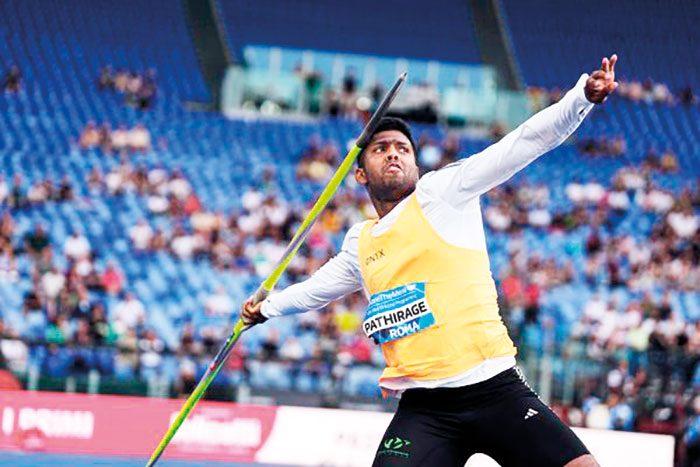
Sri Lanka javelin national record holder, Rumesh Tharanga, produced a performance for the ages at the Rome Diamond League on Thursday, elevating himself from a promising international contender to one of the world’s elite field athletes.
Competing against Olympic champions, world champions and several members of the exclusive 90-metre club, Tharanga unleashed a staggering throw of 92.62 metres to win the men’s javelin competition at the prestigious Golden Gala in Rome. The mammoth effort not only secured his maiden Diamond League victory but also established a new Sri Lankan national record, a meeting record and one of the finest performances in world athletics this year.
The significance of the achievement extends far beyond a single victory. By surpassing the 90-metre barrier, Tharanga entered one of athletics’ most exclusive clubs. His 92.62m effort elevated him among the greatest javelin throwers in history and underlined his emergence as a genuine medal contender on the global stage. According to World Athletics stats, the throw placed him among the all-time top performers in the event while restoring his position as the world leader for the 2026 season.
The Rome triumph came only days after Tharanga had become the first Sri Lankan athlete to finish among the top three of a Diamond League field event when he claimed second place at the Rabat Diamond League in Morocco with a throw of 85.97 metres. His rapid progression from secon place in Rabat to champion in Rome illustrates the remarkable consistency he has displayed throughout the season.
For Sri Lankan athletics, the achievement ranks among the greatest ever produced by a national athlete on the international circuit. The Diamond League represents the highest level of one-day athletics competition in the world, second only to the Olympic Games and World Championships. Winning a Diamond League event requires defeating the very best athletes in the sport, making Tharanga’s feat one of the most significant accomplishments in the country’s athletics history.
His performance also continues a remarkable journey that has seen him repeatedly raise Sri Lanka’s national record. The previous generation of Sri Lankan javelin throwing was led by former national record holder Sumeda Ranasinghe, who pushed the national mark into the mid-80 metre range and became the country’s first thrower to consistently challenge Asia’s best. Ranasinghe’s record-breaking performances laid the foundation for the current golden era of Sri Lankan javelin throwing.
Before Tharanga’s emergence, only one Sri Lankan athlete had competed at Diamond League events. Sprinter Yupun Abeykoon open the door for future Sri Lankan athletes to believe they could compete among the world’s elite.
However, while previous Sri Lankan athletes had reached finals, broken national records and earned international recognition, none had won a Diamond League event. That barrier has now been shattered by Tharanga.
At just 23 years of age, the Kalutara-born athlete has transformed from a promising youngster into one of the most feared javelin throwers in the world. Earlier this year he climbed into the world’s top rankings and established himself as the season leader with a series of outstanding throws. The Rome victory now confirms that Sri Lanka possesses an athlete capable of challenging for medals at the highest level of the sport.
More importantly, Tharanga’s achievement represents a watershed moment for Sri Lankan athletics. Just as legends such as Susanthika Jayasinghe and Duncan White inspired generations through their Olympic achievements, Tharanga’s Rome triumph has demonstrated that a Sri Lankan athlete can not only compete with the world’s best but can defeat them on one of athletics’ grandest stages.
The javelin launched into the Roman night travelled 92.62 metres. Its impact on Sri Lankan athletics may travel much further. (RF)


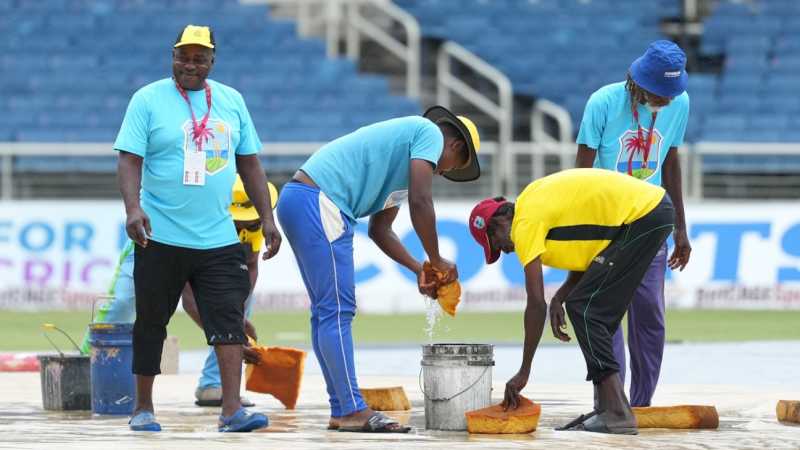
West Indies won the toss and put Sri Lanka into bat, but that was the extent of the action from thesecod ODI at Sabina Park, as persistent rain put an end to proceedings before they had even begun.
The washout means West Indies’ hopes of winning the series are wiped out, but they can still draw level in the final game on Monday. Perhaps more importantly, a win there will give the hosts a much needed rankings boost, with qualification for next year’s World Cup hinging on their final position come March next year.
The toss itself had been delayed by 30 minutes following rain earlier in the day, and it was the possibility of rain intervening later on that had influenced Shai Hope’s decision to field first.
Both teams had also made changes, with Amir Jangoo due to get a game for the injured Matthew Forde, while Eshan Malinga had been drafted in for Asitha Fernando. Shai Hope, playing his 150th ODI for West Indies, received a special jersey before rain came along.
(Cricinfo)
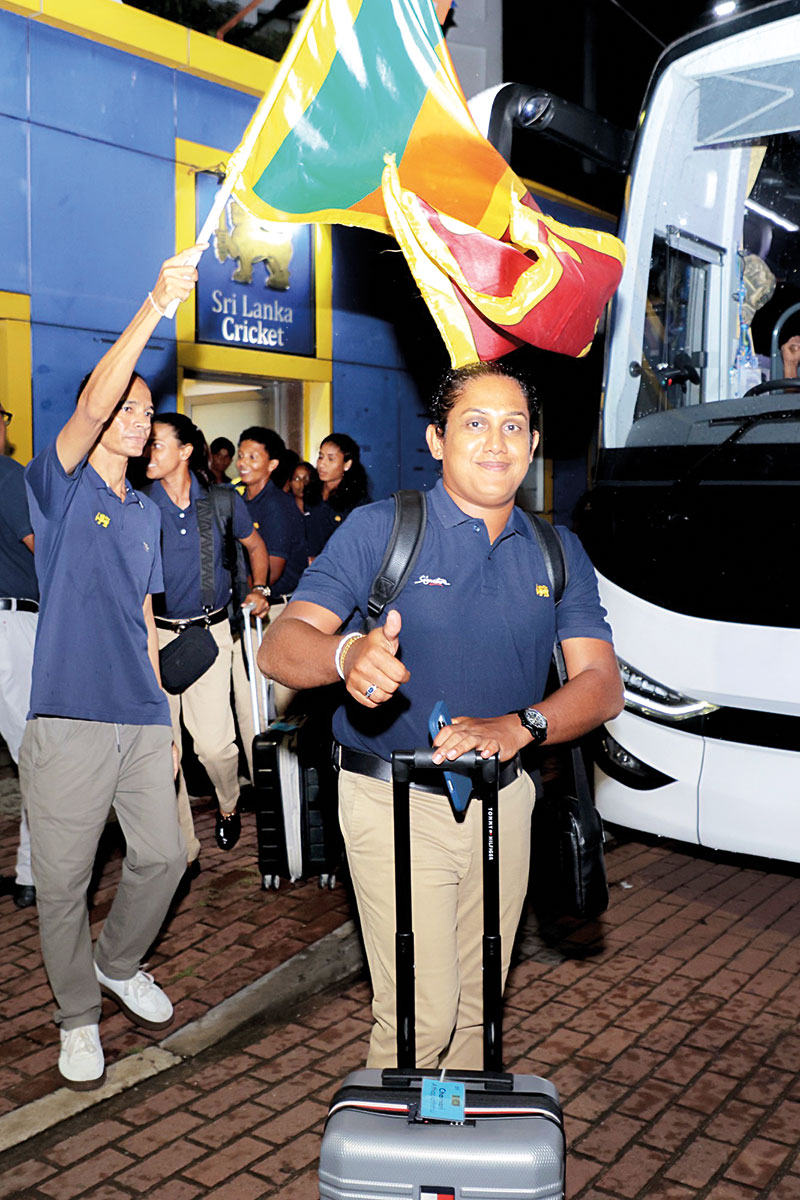
Sri Lanka women’s cricket team flew off to London this week to take part in the ICC T-20 World Cup that will get underway on the 12th June in Birmingham with Chamari Atapattu’s side playing England in the curtain-raiser.The national team will enter the 12 nation global showpiece event with renewed confidence and ambition under the newly appointed Head Coach Jamie Siddons.
Prior to the opening match, the team will play two warm-up fixtures against Pakistan and Netherlands. Placed in a challenging Group 2, apart from England, they have defending champions New Zealand, West Indies, Ireland and Scotland. The team arrives in England buoyed by recent successes, having secured impressive series victories over both West Indies and Bangladesh.
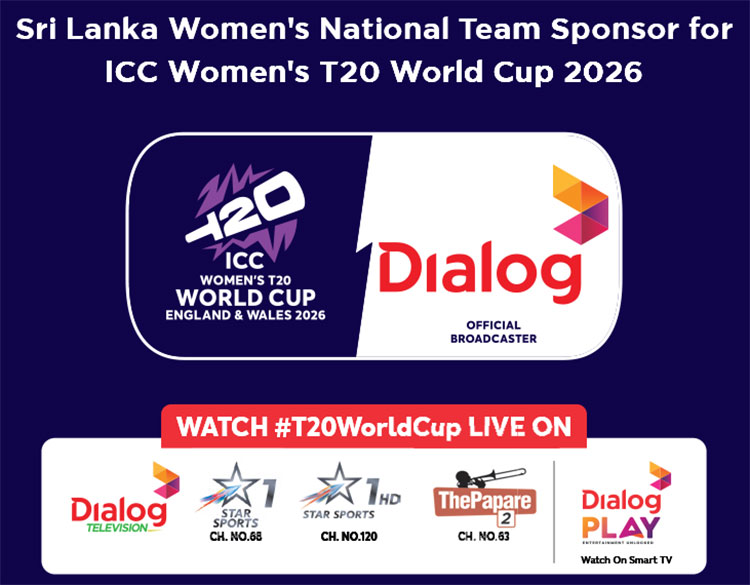
Sri Lanka’s participation in the tournament marks another significant chapter in the continued growth of women’s cricket in the country. Dialog, who holds the exclusive broadcast rights of ICC events in Sri Lanka, remains committed to supporting the development of the game and powering Sri Lankan athletes to compete on the global stage.
Cricket Fans can catch all the action live on Dialog Television (Channel Numbers 68,120 & 63), or stream via the Dialog Play mobile App and ThePapare.com.
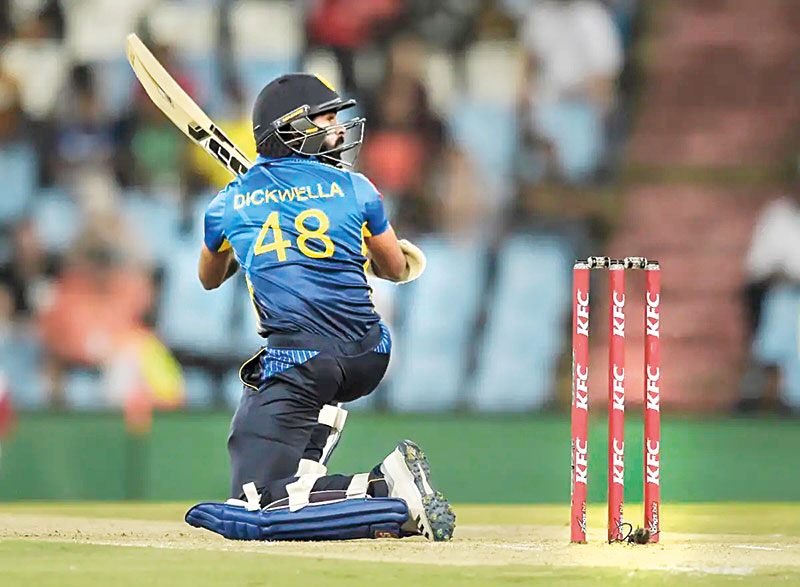
The committee headed by Eran Wickramaratne, which has taken charge of cricket governance, has certainly taken several steps in the right direction. When discipline, accountability, honesty and transparency become the cornerstones of administration, those values inevitably filter through the entire system. Do not be surprised if better governance eventually translates into improved performances by the national team as well.
The selection process in particular has been impressive, marked by bold decisions and some refreshing out of the box thinking. Promoting Kamindu Mendis to open the batting was a gamble worth taking. Few players have enjoyed the kind of success he has achieved over the last two years and spending time alongside players such as Pat Cummins and Travis Head during the IPL would only have broadened his cricketing horizons.
For reasons known only to the decision makers, Sri Lanka had refrained from naming vice-captains for several years. It created unnecessary confusion and highlighted the absence of long term planning. There was little effort to groom future leaders. On occasions when the captain had to leave the field, even umpires seemed unsure who was in charge. The selectors have now put an end to that uncertainty by appointing vice-captains across all three formats, creating a clear line of succession.
While many of the recent decisions deserve praise, the selection and appointment of Niroshan Dickwella as vice-captain of the Sri Lanka ‘A’ team has left a bad taste in many mouths. As the popular local saying goes, they have added a smidgeon of cow-dung to a pot of milk.
Sri Lanka ‘A’ cricket is meant to be a finishing school for emerging talent. It is the final stepping stone before players graduate to the national side. Dickwella, meanwhile, turns 33 in two weeks. He is firmly in the twilight of his career. Where is the logic in this selection and appointment?
The ‘A’ team series is against India. The Indian squad includes 15-year-old wonderkid Vaibhav Suryavanshi. Here we are, pitting a veteran of 54 Test matches against a teenager who is more than half his age. That fact alone should drive home the point.
This is not an attempt to run down Dickwella. If anything, it is a lament about how Sri Lankan cricket has failed to maximise a rare talent. Sampath Perera, the highly respected coach of Trinity College who has nurtured countless cricketers, had little doubt some 12 years ago that Dickwella was destined for greatness. Yet even then he issued a warning when speaking to the press.
“I hope he keeps his discipline,” Sampath said.
Dickwella made his Test debut at the age of 21 in a star-studded side featuring Sanga, MJ, Mathews and Rangana Herath. Yet he was the centre of attention. He blazed his way to 72, taking on Dale Steyn and Morne Morkel with remarkable audacity. A century on debut seemed inevitable.
South Africa looked clueless until Dickwella gifted away his wicket. He challenged, of all people, Quinton de Kock’s arm and paid the price. There was no dive. No visible frustration at missing out on a milestone. There was a hint of cockiness even then. Yet there was no doubt we had witnessed a special talent.
The Test hundred, however, never came.
Not in 54 Test matches.
Cockiness proved to be Dickwella’s Achilles’ heel. At times, James Anderson would tempt him mercilessly, bowling wide outside off stump with cover and extra cover strategically placed. It was a trap laid in plain sight. Dickwella would invariably take the bait and hit the ball exactly where Anderson wanted. He never seemed to learn.
Yet there was never any doubt about his skill.
A couple of years later in Durban, Kagiso Rabada was steaming in at express pace. Dickwella responded by scooping him over the wicketkeeper’s head as casually as if he were batting in the nets. Sri Lanka coach Graham Ford could scarcely believe what he had witnessed. Later that evening, Ford told reporters that this was the player who could change the fortunes of Sri Lankan cricket.
Sadly, Dickwella never reached the promised land.
As his seniority grew, so did the tattoos and the controversies.
He was sent home from England for breaching Covid protocols. It was a golden opportunity to send a powerful message. The retired judge who conducted the inquiry recommended a lengthy suspension. Yet the punishment was significantly reduced despite the judge noting that the players had shown little remorse during the hearing.
Cricketers have committed all manner of offences over the years. Some have been punished. Others have escaped sanction altogether. But cocaine use was something almost unheard of in Sri Lankan cricket. Yet Dickwella tested positive not too long ago. Once again, the punishment was reduced.
This time, however, a different set of learned men have gone a step further.
They have made him vice-captain.
So now a dressing room full of aspiring young cricketers is expected to look up to him for guidance and leadership.
Good luck to our cricket.
by Rex Clementine ✍️

Persistent rain in Kingston washes out second ODI between West Indies and Sri Lanka

Heavy showers about 100 mm are likely at some places in the Western and Sabaragamuwa provinces and in Galle, Matara, Kandy and Nuwara-Eliya districts

Open hearing on coal procurement inquiry set for July first week

TNA MP calls for complete repeal of PTA

Assistant manager, security officer held over Horana bank cash robbery

Korea, UNDP launch anti-corruption initiative assessment in Lanka

‘Dates have the highest sugar content to fight Coronavirus’

Sunday Island 27 December – Headlines

#SundayIsland 17th December – Headlines

Sunday Island – 28th March

Sunday Island Headlines – 21 March

Sunday Island – 21st February – Headlines
-
 News5 days ago
Lankan duo emerge winners in Latin dance championship held in Blackpool, UK
-

 Business6 days ago
IMF’s unstated rate:Sri Lanka’s $695m loan costs about 5.33% per annum
-
 Latest News3 days ago
Kusal Mendis, Pathum Nissanka, bowlers put Sri Lanka 1-0 up
-
 News3 days ago
New US tariffs proposed on 60 countries, including Sri Lanka
-

 Business6 days ago
Sri Lankan scientist-innovator Milinda Edirisinghe introduces AI-integrated gem testing system to gemological world
-
 Features2 days ago
Power crept into the Sangha and is now tearing it apart
-

 News6 days ago
UNP challenges NPP move to amend Vihara – Devalagam Act
-
 News5 days ago
Sri Lankan teen killed in Chennai clash; three arrested