
News
To the future through Digital Disruption


Today, we live in a very fast paced world which rapidly changes with the internet and technology. The significance of technology is as such, that if a nation, society or a company fails to adopt these evolving technologies for sure they’ll be left behind. In a way this scenario can be described from a biological viewpoint. In 1859 Charles Darwin published ‘Origin of species’ where he rejected the creationism and argued humans, animals, insects & all the living and nonliving things in the world were created through a process called evolution which took millions of years in the making. Darwin explained that “Natural selection acts by competition”, organisms or species who adapt to their environment and ecological factors to perform better than others and secure their survival through reproduction and increasing their numbers.
We can broadly apply this theory to many areas,
Today powerful technological advancements such as Machine Learning, Cloud Computing and Artificial Intelligence (AI) have spread from complex research based industries to perform simple day to day activities. Even in Sri Lanka, already there are companies which use such technologies to forecast future market activities, logistics supply and to conduct precise marketing campaigns. The impact of digital transformation is at that level where the biggest players in the market or industry do not hold the advantage, barriers to entry are so low or even cannot be seen in some areas. Small businesses with big ideas can turn the markets in quick time thanks to these advancements. It intensifies the competition and transfer the ultimate benefit to customers. If we refer to the Sri Lankan story, at the end of year 2022 there are 743 small tech savvy companies (some are industry leaders today) ‘Startups’ who directly involve to core operations of widespread multinational companies. Most of them are situated outside Colombo, which is proof that we are moving in the right direction.
Cutting edge technologies as AI & ML are widely used to analys trillions of consumer data to derive tailor made algorithms. Images captured by remote sensors are helping to train autonomous cars, patterns identified in financial markets are used to price insurance and place trades, access to patient data assesses healthcare providers to disease identification and to create solutions. Also, in the race against imminent Climate Crisis these high-tech applications are used to suggest how to cut down on greenhouse gas emissions and to recycle pollutants.
In the age of Digital evolution, success will lie with the nations or firms who adopt and apply new technological advancements to its operations not just with the intellectual capacity of people or employees. The best example for these applications are the reemergence of online market places and work from home initiative. Most of the traditional brick & mortar organisations had to get into the digital space to assure their survival. They had to offer goods and services via online platforms and to rely on AI based social media, search engine based promotional campaigns instead of costly ATL sources.
When you look at an economy from a macro point of view, it is like a large rive that flows, at some places branches connect to the river body carrying water in and out. When it comes across a barrier it either destroys them or changes its speed or changes its shape, but it’ll flow through.
Because of the Covid pandemic global economic growth rate came to a halt. Since we live in a highly globalised world the economic growth rates of US, China, Europa and Asia contracted at an alarming rate. The impact of the slowdown was felt across nations in every social stratum. Income levels dropped, businesses crashed resulting in mass layoffs, supply chains were blocked. At the height of the pandemic 50% of the global work force of 3.3 billion came near to the threat of getting unemployed. But things took a turn for the good by implementing touchless online sales platforms and by enabling employees do their job by working from home. These trends were evident in all the sectors of economy, education, healthcare, transportation, telecommunication and most prominently in the fintech industry. By reducing operational costs and gaining the trust of all the segments of society these technological improvements became close to ordinary people.
When we talk about the market adaptation to technology report by the CANTAR LMRB ‘Covid-19 Barometer Sri Lanka Report’ shows that when we compare the convergence of the e-commerce industry in SL there is a 245% growth. It lists what are the online activities our people engaged mostly, use of online facilities to do online payments, digital banking services, getting medical advice via video conferencing and to play online games. It further illustrates that money spent on average has increased from USD 11 to USD 38 compared to the pre Covid period. Therefore, as an individual with a progressive view to the future I believe we as a nation should invest heavily in new technologies when we sail the rough seas of economic crisis.
In our path to achive ultimate customer satisfaction we always believe in Digital Disruption, that is why we came up with our own Smart digital banking application the ‘NSB Pay’. Its available in Android and Apple store. It will empower you to experience the digital financial atmosphere at absolutely no charge, as at today we the NSB is the only bank to provide such high tech smart app for free to Sri Lankans. By using the app you can enjoy the ease of banking, settle the loan, transfer and get money to and from other banks in real time, settle your credit card, reload the phone, pay household bills, check your fixed deposit balances, sellte payments to selected governemnt entities etc.
As a responsible state bank we invest money to fine tune the efficiency and accuracy of our services to become more customer friendly hence, we think Machine Learning, Cloud Compting and use of AI is the future in achiving this ultimatum.
In a recent study by the ‘Economic Impact’ magazine it revealed that in US the post Covid e-commerce usage has increased from 17% to 33%. 70% Industry leaders have said that they experice the digital disruption and 85% of them forecasts that in the next five years the progress in this sector will exceed the expectations. Even if we do a similar survey in SL for sure we will get similar results.
By the end of 2022 60% of the world are connected to the world (in 2000 it was 5.8%) by usisng this connectivity our small island can go a long way. I know that the things are difficult and hard but these times shall pass too, nothing is for forever. Tough times comes to test our endurance, strength and capacity. When we look around I know it is easier said than done yet we as a nation cannot give up there’s lot more to achieve.
Banking sector is the backbone of our financial system, fruits of its success belongs to all of us and as the premiere specialized savings bank with RS. 1.6 trillion of asset base and Rs. 1.4 deposit base we the NSB strive towards future with optimisum and hope knowing that as a nation will come atop these difficult times for good.


by Norman Palihawadane
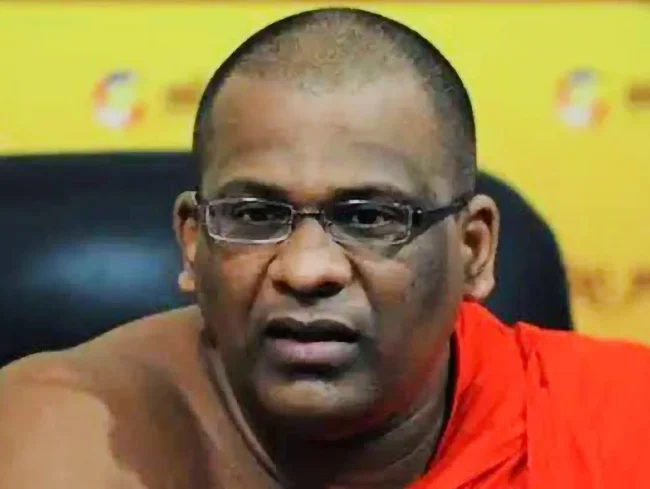
Bodu Bala Sena (BBS) General Secretary Ven. Galagoda Aththe Gnanasara Thera’s whereabouts have remained unknown since the Supreme Court, on Monday, annulled a presidential pardon granted to him in 2019.
Prison officers visited the Thera’s temple in Nawala, Rajagiriya, to take steps to return him to prison to serve the unexpired portion of his six-year sentence. However, monks at the temple had reportedly informed the officials that they were unaware of his whereabouts.
Police spokesman ASP F.U. Wootler said a separate court order was required for the police to trace the Thera, or assist in taking him into prison custody. No such order had been issued so far, he claimed.
Meanwhile, sources close to Gnanasara Thera said he was expected to attend a book launch in Colombo tomorrow (17),
The development follows the Supreme Court declaring the 2019 presidential pardon granted to Gnanasara Thera, by then President Maithripala Sirisena, null and void.
A three-member Supreme Court bench held that the pardon had been granted arbitrarily and violated public trust and principles of natural justice.
Gnanasara Thera had been serving a six-year prison sentence for contempt of court when the then President Sirisena granted him the pardon, in May, 2019. He had served only about nine months of the sentence at the time.
With the pardon annulled, the original sentence remains in force and the Thera is now required to serve the balance of his six-year term.
The Supreme Court ruling has raised questions over the procedure to be followed to return him to prison, with police and prison authorities yet to take custody of him.
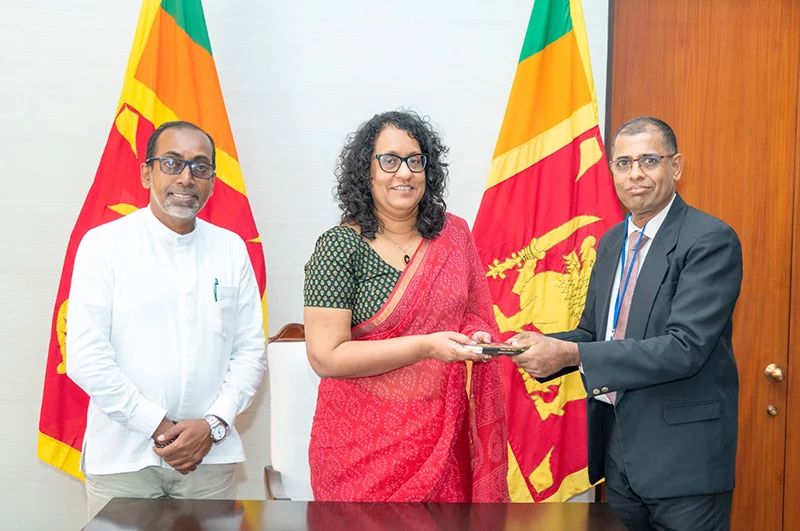
Russian citizens residing or temporarily visiting Sri Lanka will have the opportunity to cast their ballots in the elections to the State Duma of the Federal Assembly of the Russian Federation on September 20.
The Embassy of the Russian Federation in Sri Lanka said polling would be held at polling station No. 8338 at the Russian Embassy, 404, Bauddhaloka Mawatha, Colombo 07.
The polling station will be open from 8 a.m. to 8 p.m. on September 20, according to the Embassy.
Russian citizens aged 18 and above, including those permanently residing in Sri Lanka and those temporarily visiting the country, are eligible to vote, the Embassy said.
Voters are required to visit the polling station during its operating hours and produce documents certifying their Russian citizenship.
The Embassy said prior registration was not required to participate in the voting.
The election will be held to elect deputies to the ninth convocation of the State Duma, the lower house of Russia’s Federal Assembly.
Plastic waste is a growing challenge for Sri Lanka’s food sector, yet important gaps remain in understanding where and how single-use plastics are used, how they move through food value chains, and where interventions could have the greatest impact.
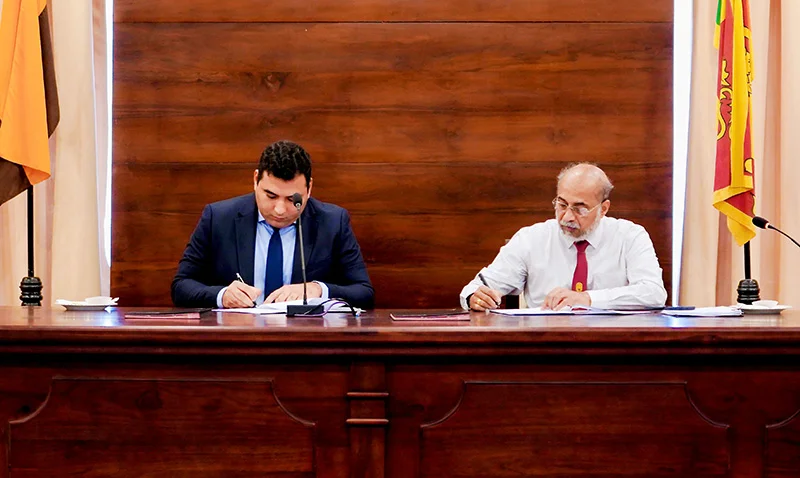
Through the European Union-funded CIRCULAR project, new research will help address these gaps by generating evidence to inform policy, business practices and more sustainable choices. Three research grants, totalling €Euro 110,000, will support university-led studies by research teams from the Faculty of Agriculture at the University of Ruhuna, and the Faculty of Medicine and Faculty of Computing at the University of Kelaniya.
Together, the studies will examine the use, flow and impacts of single-use plastics (SUPs) across selected food and beverage value chains in the Colombo and Galle Districts. The research will also seek to identify practical opportunities to reduce plastic use, promote more sustainable alternatives and strengthen circular economy practices.
At present, available data on plastic waste in Sri Lanka, particularly single-use plastics, do not provide sufficient detail on the sectors, sources and types of plastics involved. This limits the ability of policymakers, businesses and other stakeholders to pinpoint where plastic use can be reduced most effectively and to assess which interventions could deliver the greatest impact. The new research will help provide a more detailed understanding of these patterns, supporting more targeted and evidence-based action.
The three research teams will use a combination of data collection, waste-flow mapping, environmental and public health assessments, and life-cycle approaches to examine these challenges from different perspectives. The findings are expected to help identify opportunities to reduce plastic use, improve resource efficiency and promote more sustainable packaging and waste management practices.
The research grants are part of the CIRCULAR project’s broader efforts to support Sri Lanka’s transition towards more sustainable production and consumption in the food sector. Alongside research and evidence generation, the project works to raise awareness, encourage behaviour change and support approaches that move away from the traditional “take, make and dispose” model towards a more circular economy.
Circular Economy in the Food Sector (CIRCULAR) project is a three-year initiative focused on reducing food loss and food waste (FLW) and Single-use plastic (SUP) waste in the Food Sector in Sri Lanka. Funded by the European Union, and partially co-funded by the German Federal Ministry for Economic Cooperation and Development (BMZ), the project is jointly implemented by Expertise France (EF), the Food and Agriculture Organisation (FAO) and Deutsche Gesellschaft für Internationale Zusammenarbeit (GIZ) GmbH.
By strengthening the evidence base on single-use plastics, the research is expected to provide a stronger foundation for practical action, helping decision-makers, businesses and other stakeholders better understand where change is needed and how more sustainable solutions can be put into practice.

Showers about 75 mm are likely at some places in the Western, Sabaragamuwa, Central and Southern provinces

Brook, Buttler, Baker star as Sri Lanka slump to 119-run rout

Where is Gnanasara Thera?Police pass buck to court

Russian citizens in Lanka to vote in State Duma elections

Euro 110,000 research drive to tackle plastic waste in food sector

New SAU-RCSS pact to boost South Asian dialogue

‘Dates have the highest sugar content to fight Coronavirus’

Sunday Island 27 December – Headlines

#SundayIsland 17th December – Headlines

Sunday Island – 28th March

Sunday Island Headlines – 21 March

Sunday Island – 21st February – Headlines
-

 Sports5 days ago
DDS set to lose Test captaincy
-

 News5 days ago
Sri Lanka faces new grid challenge as rooftop solar surges: former CEB GM
-

 Latest News5 days ago
Shafali, Deepti power India into sixth T20 Asia Cup final
-

 Latest News4 days ago
Sri Lanka thwart Fatima Sana challenge to secure Asia Cup final spot
-

 News3 days ago
Gnanasara Thero absconding after SC ruling
-
 Features6 days ago
Lost for 90 years: Rare Goby resurfaces in Jaffna
-

 News4 days ago
Ammunition cache found in old Kandy bungalow
-

 Latest News6 days ago
Italian Naval Vessel ‘ITS Giuseppe Garibaldi’ arrives in Colombo