
News
TNA, GTF seek TN and Indian backing to achieve political goals

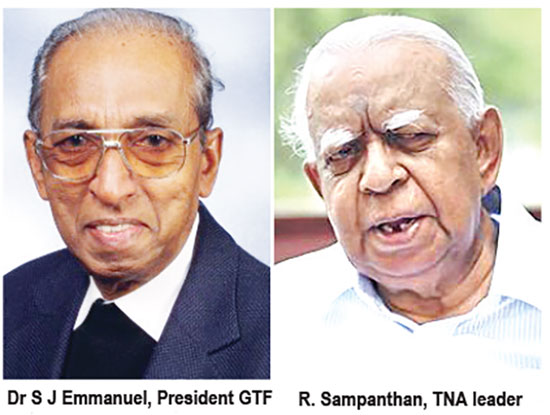
The TNA and the GTF, in a joint statement issued in Colombo and London over the weekend, declared that they looked forward to directly engaging the Tamil Nadu government and further strengthening the engagement with the government of India in line with overall efforts to settle the Tamil national question in Sri Lanka.
Tamil people in Sri Lanka aspire to a degree of self-rule in the areas of their historic habitation (the North-East) and believe this empowerment is fundamental for their equal citizenship in Sri Lanka and to protect their unique identity in the island – a position that always resonated with Tamil Nadu and Indian thinking and policy positions, they said.
The following is the text of the statement: “It has not even been a year since M. K. Stalin became the Chief Minister of Tamil Nadu, yet the mark that the Dravida Munnetra Kazhagam (DMK) leader has made in his State and among Tamils worldwide is unmistakable.
Whether it was ably handling the second wave of the pandemic, or the progressive social justice agenda that includes economically uplifting the underprivileged while removing caste and gender barriers in many aspects of lives, or the bold vision of making Tamil Nadu ‘a one-trillion economy’ by 2030 – Chief Minister Stalin has become the envy of many leaders across India.
With the theme of ‘let Tamil bind us together’, Chief Minister Stalin has taken many meaningful steps towards promoting the commonalities and cohesiveness of the global Tamil community, arguably more so than any other Tamil leader in recent history. Appointing a dedicated Minister, viz., K.S. Masthan, whose portfolio includes Welfare and Rehabilitation of Non-Resident Tamils; declaring January 12 as the World Tamil Diaspora Day with Chief Minister Stalin inaugurating the event; taking steps to institute Tamil studies in international universities, including through donations towards the establishment of Tamil Chairs at Harvard University and the University of Toronto – are just a few examples.
The TNA and the GTF hold Chief Minister Stalin in high esteem for his inspiring leadership of the global Tamil community.
From the perspective of Tamils from Sri Lanka, including those living in Sri Lanka and in the Diaspora – the approach adopted by the present Tamil Nadu government is commendable. They are grateful for the invitations extended to the Member of Parliament from the TNA, M. A. Sumanthiran, and the President of the Canadian Tamil Congress (CTC), Sivan Ilangko for the inaugural World Tamil Diaspora Day event last month. The participation and felicitation by the Tamil Nadu Minister Hon. K. S. Masthan at the annual Thai Pongal Celebrations conducted by the CTC on January 29, 2022 is equally pleasing.
Chief Minister Stalin’s announcement last August regarding Ilankai Thamizhar refugee camps, stating the following was a welcome gesture of notable significance. “They are not orphans; we are there for them and hereafter they will be called Ilankai Thamil rehabilitation camps” This announcement was backed up with a generous allotment of Rs. 317 crores for their welfare schemes, with a promise to improve their living standards further. We also note with gratitude Chief Minister M.K. Stalin’s strong public statements, in his capacity as Opposition leader, exerting pressure on India to support the UNHRC resolution on Sri Lanka during the March 2021 session.
Chief Minister Stalin’s supportive approach towards the Tamil struggle in Sri Lanka is consistent with the long tradition of Dravidian political leaders of Tamil Nadu, particularly his illustrious father, late Hon. Kalaignar M. Karunanidhi. Tamil people in Sri Lanka and their political leaders looked upon the leaders of Tamil Nadu for guidance, support and inspiration. Their support – directly, as well as through the Government of India – has always been a great source of comfort for the Tamil people living in Sri Lanka.
We remember with gratitude, the leadership shown by the late Hon. M. Karunanidhi – the initiatives to protect lives, property, and political rights of the Tamil people following the 1983 anti-Tamil riots; the late Chief Minister using his influence to prod different Indian Prime Ministers to find a political solution to address the Tamils’ quest for equality, justice, peace, dignity, and devolution of power; and DMK MPs’ consistently voicing for the Ilankai Thamizhar in the Lok Sabha over decades. We are also conscious that the DMK support for the Tamil cause continued despite many challenges it faced in the Indian Union, including the dismissal of the DMK government in 1991 relating to the Tamil peoples’ problems in Sri Lanka.
We are acutely conscious of the difficulties and degrading treatments encountered by the leaders of the mainstream Dravidian Movements in Tamil Nadu, many of such regrettable actions originating from unrealistic and hardline positions adopted by some from both sides of the Palk Strait. However, the overwhelming majority of the Tamils of Sri Lankan origin have always been appreciative and grateful for the support provided by the leaders of Tamil Nadu, and also recognise their limitations in shaping every event of the past. Such understanding is growing in strength and will help solidify the bonds and mutual respect enjoyed by the people and the leaders of both communities.
Tamils in Sri Lanka are, once again, at a critical point. Twelve years after the end of the war, their economic prospects are dismal. The progress on war-related accountability is marginal at best. Tamils face many existential challenges – to protect their land and to preserve their identity in the Northern and Eastern Provinces against rampant militarisation and state sponsored initiatives aimed at altering regional demography. It is feared a new constitution under preparation could further weaken the status of the Tamil people, especially by abolishing or weakening the Provincial Councils – the only constitutional power devolution arrangement the Tamil people achieved with direct Indian involvement.
It is in such a dire situation that we are looking for guidance and support from India and Tamil Nadu.
India has significant leverage over Sri Lanka and has repeatedly called upon Sri Lanka to address the legitimate aspirations of the Tamil people for equality, justice, peace, dignity, and meaningful political devolution. India has emphasised on many occasions, including during the March 2021 UNHRC sessions, about its two-pillar policy of supporting Sri Lanka’s unity and territorial integrity, and its commitment to Tamils’ aspirations, and that these were not mutually exclusive choices.
Tamil Nadu has always been critical in setting Indian policies towards Sri Lanka, and it is in this context that a path setting and pragmatic approach adopted by Chief Minister Stalin will give us enormous comfort. A continued focus on this issue at this critical time is crucial for the long-term peace and prosperity of the Tamil people in Sri Lanka. It is also intrinsically linked with the interests of Tamils on both sides of the Palk Strait, and the greater India.

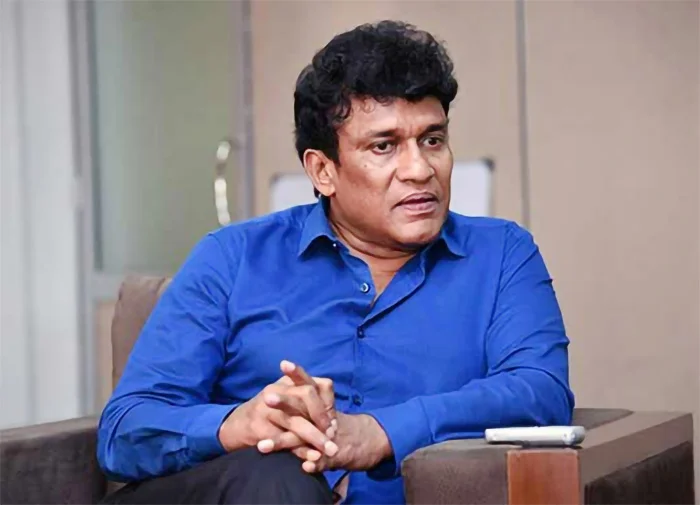
Leader of the Tamil Progressive Alliance (TPA), Mano Ganeshan, MP, said that India shouldn’t intervene here regarding the long-delayed Provincial Council polls.
The former Yahapalana Minister of National Co-existence, Dialogue and Official Languages (2015-2018), Ganeshan, who represents the main Opposition Samagi Jana Balawegaya (SJB) in the current Parliament, stressed that New Delhi’s intervention wouldn’t do any good for them or for us.
Lawmaker Ganeshan said so when The Island asked him whether the TPA would ask India to pressure the NPP government to conduct PC polls, last held in 2014, during Mahinda Rajapaksa’s second term. Ganeshan said: “India shouldn’t get involved in the issue at hand . Such a strategy is also in their interest, particularly in the context of the evolving global order. India should not be perceived as a pro-Tamil state, but rather as a state that supports Sri Lanka as a whole.”
Ganeshan said that the Indian state bears a moral responsibility in this matter. “That responsibility arises from the fact that India’s diplomacy and military intervention played a decisive role in neutralising the Tamil armed struggle in Sri Lanka. Although India’s mission remained unfinished, it nevertheless lost nearly two thousand soldiers in the process. There was also a prelude to this involvement, when Tamil militant groups received training in India. Consequently, the Indian connection became a sensitive issue for both the Sinhalese and Tamils of Sri Lanka.”
But, whatever had happened, the national issue should be settled among us. ” The solution must be found and settled within Sri Lanka itself. We do not need Western interventions in this regard.”
” In recent years, whenever we in the Tamil Progressive Alliance (TPA) have met Indian dignitaries—including the Prime Minister, the External Affairs Minister, and, most recently, the Vice President—the subjects of the 13th Amendment and Provincial Councils have never featured on our agenda.”
The 13th Amendment is part of Sri Lanka’s Constitution. Therefore, it is for Sri Lankans themselves to decide whether to retain, improve, fully implement, reform, or even repeal it, Ganeshan said.
MP Ganeshan found fault with those who represented the Northern and Eastern provinces for failing to utilise the goodwill and influence India enjoyed with successive Governments of Sri Lanka to pursue an amicable political settlement. The parliamentarian said that they should acted after the end of the war in May, 2009. Unfortunately, they failed to effectively use the Provincial Council framework to consolidate their political position and advance further, thereby earning the confidence of both India and successive Sinhala-majority governments, MP Ganeshan said.
Responding to another query, MP Ganeshan said: “
We should keep the ethnic issue separate from bilateral relations with India, while deepening economic connectivity and cooperation on the basis of mutual benefit and a win-win partnership.”
By Shamindra Ferdinando
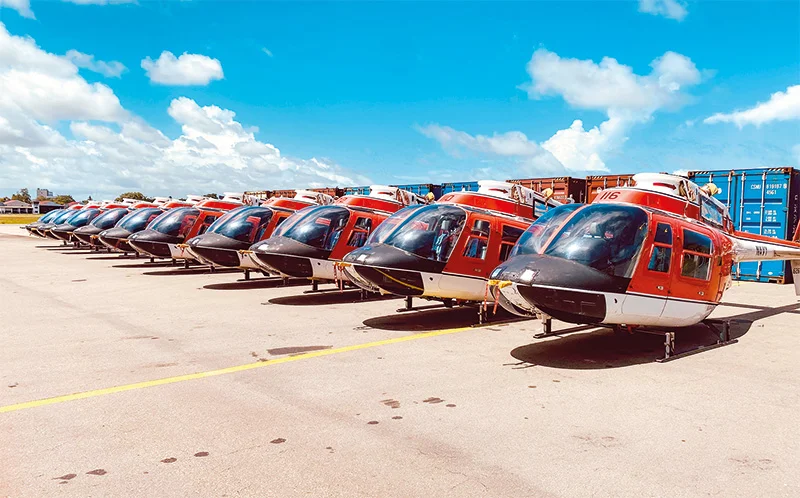
Sri Lanka has taken delivery of 10 TH-57 ‘Sea Ranger’ multi-role helicopters provided by the United States of America to the Sri Lanka Air Force. Air Forces headquarters said that the helicopters arrived here by sea.
The SLAF has said: “The arrival of these aircraft marks a significant milestone in the longstanding defence cooperation between Sri Lanka and the United States and represents a valuable contribution towards enhancing the operational and training capabilities of the Sri Lanka Air Force.
“The helicopters are currently undergoing configurations and technical preparations at SLAF Base Ratmalana. Following the completion of requisite inspections, acceptance procedures and test flights, the aircraft will be inducted into service and deployed for operational duties.
“The TH-57 fleet is expected to significantly strengthen the Air Force’s aviation training capacity while enhancing the ability to support a broad spectrum of national requirements. The aircraft will primarily be employed for pilot training, humanitarian assistance and disaster response (HADR) operations, search and rescue (SAR) missions and other public service commitments undertaken by the Sri Lanka Air Force.”
News
TPA demands House committee to probe Tilvin’s claim PC polls cannot be held due to fund constraints

Referring to the recent declaration made by JVP General Secretary Tilvin Silva that the Provincial Council elections couldn’t be held this year as funds allocated for that purpose were utilised to provide Ditwah cyclone relief, Tamil Progressive Front (TPA) leader Mano Ganeshan, MP, has asked Dr. Harsha de Silva, MP Chairman, Committee on Public Finance, to inquire into the issue at hand and take action deemed appropriate.
The text of MP Ganeshan’s letter: “I write with reference to a statement reportedly made by Tilvin Silva, General Secretary of the Janatha Vimukthi Peramuna (JVP), the principal constituent party of the National People’s Power (NPP) Government.
According to media reports, Silva stated, in substance, that funds allocated and set aside for the conduct of Provincial Council Elections had been utilised by the Government for disaster-rebuilding and related purposes.
While he is reported to have made further remarks, I confine my attention to the above statement, which raises a serious matter concerning public finance and parliamentary oversight.
To the best of my knowledge, Parliament has not approved any transfer or reallocation of funds, earmarked for Provincial Council Elections, to any other expenditure head or purpose. If the statement, attributed to Mr. de Silva, is accurate, it may indicate that such funds have been utilised without the requisite parliamentary authorisation.
In view of the above, I respectfully request that the Committee on Public Finance inquire into this matter and ascertain whether any transfer, reallocation, or expenditure of funds allocated for Provincial Council Elections has occurred in a manner inconsistent with parliamentary approval and financial regulations.
I would be grateful if the Committee could examine the facts and take any action deemed appropriate within its mandate.”

Thailand cracks down on foreign companies using fig leaf of local ownership

US strikes Iran’s Qeshm, says Tehran attacks Kuwait, Bahrain

Heavy showers likely at some places in the Western and Sabaragamuwa provinces and in Galle, Matara, Kandy and Nuwara-Eliya districts.

Trump berated Netanyahu? Analysts question US-Israel feud rumours

India should be kept out of PC polls, matters related to 13 A – Mano

US boost for SLAF

‘Dates have the highest sugar content to fight Coronavirus’

Sunday Island 27 December – Headlines

#SundayIsland 17th December – Headlines

Sunday Island – 28th March

Sunday Island Headlines – 21 March

Sunday Island – 21st February – Headlines
-
 News4 days ago
IMF urges Lanka not to meddle with exchange rate
-
 Business5 days ago
Sri Lanka’s construction industry losing ground while no one watches
-
 Business2 days ago
IMF’s unstated rate:Sri Lanka’s $695m loan costs about 5.33% per annum
-
 News4 days ago
State of emergency extended
-
 Features5 days ago
The Division Bell Mystery
-
 News2 days ago
UNP challenges NPP move to amend Vihara – Devalagam Act
-
 Features3 days ago
Are threats to Buddha Sasana external or from within?
-
 News6 days ago
RTI query of Ditwah funds: Presidential Secretariat mum on key questions