
News
EU to spend up to 300 billion euros to boost sustainable links around world


Global Gateway Initiative to counter China’s Belt and Road:
The European Commission (EC) and the High Representative for Foreign Affairs and Security Policy, yesterday, announced the launch of the Global Gateway, the new European Strategy to boost smart, clean and secure links in digital, energy and transport and strengthen health, education and research systems across the world. It, according to the EU, stands for sustainable and trusted connections that work for people and the planet, to tackle the most pressing global challenges, from climate change and protecting the environment, to improving health security and boosting competitiveness and global supply chains. Global Gateway aims to mobilise up to €300 billion in investments between 2021 and 2027 to underpin a lasting global recovery, taking into account our partners needs and EU’s own interests.
The EC said on its official website: “Global Gateway is about increasing investments promoting democratic values and high standards, good governance and transparency, equal partnerships, green and clean, secure infrastructures and that catalyse private sector investment.
“Through a Team Europe approach, Global Gateway will bring together the EU, Member States with their financial and development institutions, including the European Investment Bank (EIB), and the European Bank for Reconstruction and Development (EBRD) and seek to mobilise the private sector in order to leverage investments for a transformational impact. The EU Delegations around the world, working with Team Europe on the ground, will play a key role to identify and coordinate Global Gateway projects in partner countries.
“Global Gateway draws on the new financial tools in the EU multi-annual financial framework 2021-2027. The Neighbourhood, Development and International Cooperation Instrument (NDICI)-Global Europe, the Instrument for Pre-Accession Assistance (IPA) III, as well as Interreg, InvestEU and the EU research and innovation programme Horizon Europe; all allow the EU to leverage public and private investments in priority areas, including connectivity. In particular, the European Fund for Sustainable Development+ (EFSD+), the financial arm of NDICI-Global Europe will make available up to €135 billion for guaranteed investments for infrastructure projects between 2021 and 2027 up to €18 billion will be made available in grant funding from the EU budget and European financial and development finance institutions have up to €145 billion in planned investment volumes.
“The EU will offer not only solid financial conditions for partners, bringing grants, favourable loans, and budgetary guarantees to de-risk investments and improve debt sustainability – but also promote the highest environmental, social and strategic management standards. The EU will provide technical assistance to partners to enhance their capacity to prepare credible projects ensuring value for money in infrastructure.
Global Gateway will invest in international stability and cooperation and demonstrate how democratic values offer certainty and fairness for investors, sustainability for partners and long-term benefits for people around the world.
This is Europe’s contribution to narrowing the global investment gap, that requires a concerted effort in line with the June 2021 commitment of the G7 Leaders to launch a values-driven, high-standard, and transparent infrastructure partnership to meet global infrastructure development needs.
Global Gateway builds on the achievements of the 2018 EU-Asia Connectivity Strategy, the recently concluded Connectivity Partnerships with Japan and India, as well as the Economic and Investment Plans for the Western Balkans, the Eastern Partnership, and the Southern Neighbourhood. It is fully aligned with the UN’s 2030 Agenda and its Sustainable Development Goals (SDGs) and the Paris Agreement.
Global Gateway projects will be developed and delivered through Team Europe Initiatives. The EU institutions, Member States, and European financial institutions will work together with European businesses as well as governments, civil society and the private sector in partner countries.
Under the overall steer of the President of the Commission, the High Representative/Vice-President of the Commission, the Commissioners for International Partnerships and Neighbourhood and Enlargement will take forward the implementation of Global Gateway, and promote coordination among all actors.


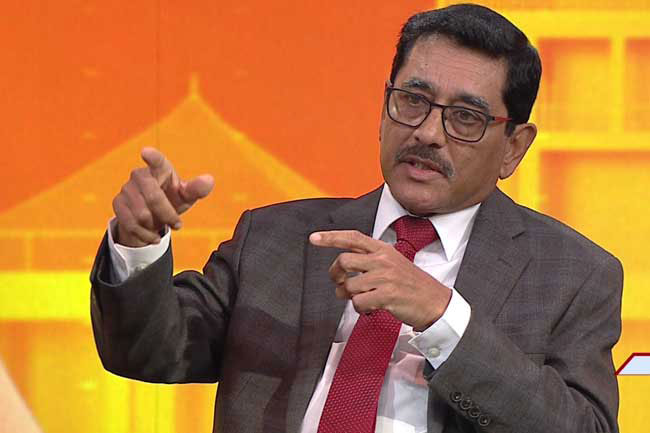
Central Bank Governor Dr. Nandalal Weerasinghe has expressed confidence that Sri Lanka will avoid being placed on the Financial Action Task Force (FATF) grey list for a third time as the country undergoes a crucial international evaluation of its anti-money laundering and counter-terrorism financing framework.
Speaking at an Anti-Money Laundering and Anti-Corruption Thematic Fund event in Thailand, held on the sidelines of the IMF-World Bank Annual Meetings, Weerasinghe said the country had undertaken extensive legal, regulatory and institutional reforms ahead of the assessment.
An on-site evaluation by international assessors commenced in Sri Lanka this week and is scheduled to continue for two weeks. The assessment will examine the effectiveness of the country’s measures to combat money laundering, terrorist financing and related financial crimes.
Weerasinghe recalled that Sri Lanka had been grey-listed twice, in 2014-2015 and again in 2017. Technical assistance from the International Monetary Fund (IMF) had played an important role in strengthening risk assessment frameworks for licensed banks and finance companies, helping the country secure its exit from the grey list by 2019, he said.
He described the current evaluation as particularly significant, noting that authorities had spent several years preparing with the aim of preventing another grey-listing.
A key step in this process was the IMF’s Governance Diagnostic Assessment in 2023, which identified weaknesses in governance structures and anti-corruption systems. Sri Lanka was among the first countries in Asia to publicly release the report, enabling stakeholders to identify the reforms required, the Governor said.
The assessment’s findings subsequently informed national risk assessments conducted in 2024 and 2025, which helped guide preparations for the current evaluation.
Weerasinghe said the government had since introduced a series of legislative and institutional reforms aimed at bringing Sri Lanka’s financial governance and regulatory framework into line with international standards.
These included the establishment of an asset recovery framework through CLIMAC, the enactment and implementation of a new Anti-Corruption Act, amendments to public finance legislation, reforms to Customs and Excise revenue administration, and the introduction of the National Audit Act.
Amendments to the Banking Act were also introduced to strengthen corporate governance and regulatory oversight, while changes to the Companies Act established beneficial ownership requirements in line with FATF recommendations.
Further amendments were made in 2026 to the Financial Transactions Reporting Act, the Prevention of Money Laundering Act and the Convention on the Suppression of Terrorist Financing Act to address evolving international standards.
However, the Governor stressed that enacting legislation alone would not be sufficient to secure a favourable outcome. Authorities must demonstrate that the laws and regulatory measures are being effectively implemented by the relevant institutions and enforcement agencies.
“The challenge now is to show that these laws work and that the framework is effective,” he said, underscoring the importance of demonstrating tangible results in practice.
Weerasinghe expressed confidence that the reforms undertaken, together with the support of domestic institutions and international partners, would help Sri Lanka successfully complete the evaluation without returning to the FATF grey list.
The outcome of the assessment is expected to be closely watched by international financial institutions, investors and development partners as Sri Lanka seeks to demonstrate the effectiveness of its financial oversight, anti-corruption and anti-money laundering measures.

Parliament, on October 05, opened its first Translation Unit aimed at improving the efficiency of its translation services and providing a better professional environment for translators.The unit was declared open by Secretary-General of Parliament Kushani Rohanadeera, who said sound leadership and collective unity were essential for institutional progress.
She said the Parliamentary Secretariat considered its employees its most valuable asset and remained committed to their welfare, job security and professional advancement.
Director of Legislative Services Jayalath Perera said the Interpreters’ Office handled a substantial volume of written translation work in addition to interpretation services. Despite the workload, no parliamentary office had complained about delays in translation work, he said.
The initiative to establish a separate Translation Unit was proposed by Chief Parliamentary Interpreter C. J. Karunarathna and implemented with the support of the Secretary-General and Assistant Secretary-General Hansa Abeyratne.
The ceremony also marked International Translation Day 2026, commemorated under the theme “Linguistic Diversity and Language Rights” and the sub-theme “The Power of Being Understood”.
Certificates were presented to newly appointed interpreters and translators who completed training conducted by the Interpreters’ Office.
Former Deputy Chief Parliamentary Interpreters K. M. Christopher and N. Seerpadam were also recognised for their service.
The event was attended by senior parliamentary officials, interpreters and translators.

Sri Lanka and Azerbaijan have discussed prospects for cooperation in the energy sector during a meeting between Foreign Minister Vijitha Herath and State Oil Company of the Republic of Azerbaijan (SOCAR) President Rovshan Najaf in Baku.
The meeting was held on October 15 on the sidelines of the seventh Summit of the Conference on Interaction and Confidence-Building Measures in Asia (CICA).
According to a press release, Najaf briefed Herath on major global energy projects initiated by Azerbaijan, SOCAR’s operations and its long-term strategic objectives.
The two sides also discussed SOCAR’s projects in Azerbaijan and other countries and exchanged views on possible cooperation between the Azerbaijani company and Sri Lankan companies in the energy sector.
They also discussed other matters of mutual interest, the statement said.
Herath is in Baku to attend the seventh CICA Summit, being held under Azerbaijan’s chairmanship.
The Summit is reviewing progress in the CICA transformation process launched in 2022 and the outcome of Azerbaijan’s chairmanship in strengthening the organisation and promoting practical cooperation among its member states.
The Summit is attended by heads of state and government and representatives of CICA member and observer states, observer organisations and partner entities.

Beyond arrivals: Can tourism and hospitality power Sri Lanka’s next growth phase?

SL’s ‘Global Destination Marketing and Communication Campaign’ gets into top gear

A trial balloon?

Labour shortages are pushing Plantation Companies towards machines, data and a different kind of worker

Lanka confident of avoiding third FATF grey-listing, says CBSL Governor

Parliament opens first Translation Unit

‘Dates have the highest sugar content to fight Coronavirus’

Sunday Island 27 December – Headlines

#SundayIsland 17th December – Headlines

Sunday Island – 28th March

Sunday Island Headlines – 21 March

Sunday Island – 21st February – Headlines
-

 News6 days ago
Sri Lanka escalates anti-graft drive with Shiranthi’s jailing
-

 News7 days ago
NPP govt. reminded of its responsibilities as US warship leaves Colombo
-

 Latest News5 days ago
Farhan and Sadaqat help Pakistan seal series in style
-

 News6 days ago
Iranian ships stranded, Lanka fears US sanctions
-

 Latest News4 days ago
Nissanka’s return headlines Sri Lanka’s Test squad against Pakistan
-

 Features5 days ago
Intake 16: 45 years of duty and honour
-

 News5 days ago
Malwathu Chapter issues statement on talks with President over Gnanasara Thera’s robes
-
 News5 days ago
CP alleges NPP has taken the blame for illegal US sanctions on Iranian vessels