
Midweek Review
The year that was: How ill-advised, reckless decisions ruined GR’s mandate

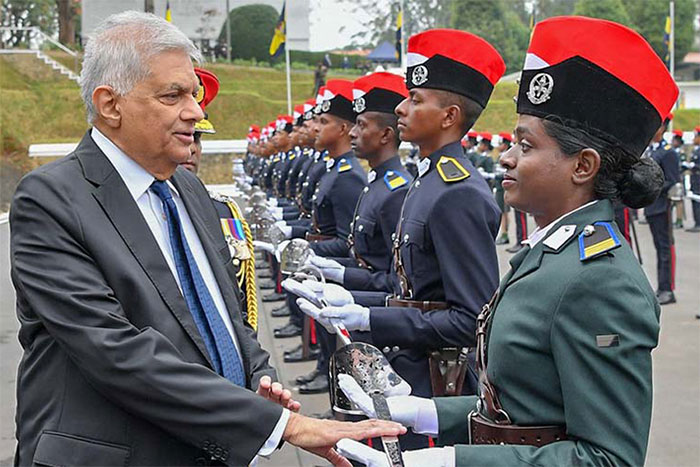
In spite of speculation over possible alliance between the SLPP and the UNP, serious issues remained to be addressed. The continuing disagreement on allocation of Cabinet portfolios underscores the crisis the government is faced with, though President Ranil Wickremesinghe speaks confidently of his plans to address the issues at hand.
By Shamindra Ferdinando
About a year before violent protests erupted outside the then President Gotabaya Rajapaksa’s Mirihana residence, over the crippling shortages of essential services and supplies, possibly exacerbated by some hidden hands, like the way Aragalaya was mainly bank rolled from abroad, or the mysterious forces who torched several dozen private homes of the then government politicians across the country, in a very systemic manner, on the night of May 09, the seventh executive President said that the people would decide whether he contest the next presidential election.
President Rajapaksa was addressing a gama samaga pilisandara programme at Yombuweltenna, Walapone, where he declared that only 14 months had been completed of his 60-month term. The President said that as he had plenty of time no one should be concerned about him not contesting again.
The then Senior Presidential Advisor, Lalith Weeratunga, sat on the President’s right. A confident Gotabaya Rajapaksa wore a light purple t-shirt, black trousers and a facemask as Covid-19 was raging. Referring to the last presidential election, in Nov 2019, Gotabaya Rajapaksa declared that the next time, too, the public would decide the outcome. It was not to be.
President Rajapaksa launched the gama samaga pilisandara programme on Sept 25, 2020, in the Badulla district. Yombuweltenna was the venue for the 15th programme in President Rajapaksa’s ambitious political project, meant to consolidate the electorate by going to the people at the grassroots. It was not to be.
Having won the presidency comfortably, just over a year earlier, President Rajapaksa was on a powder keg as a result of the rapidly deteriorating financial situation, primarily caused by the unprecedented pandemic in living memory, and some foolhardy and hasty decisions. Slashing of taxes, running into billions, after the presidential election, to give an impetus to the private sector to make the economy roar, drying up of Lankan worker remittances, for the first time, and the failure on the part of the government to initiate talks with the International Monetary Fund (IMF) for an urgently needed loan facility, had caused irreparable damage. Had President Rajapaksa realized the implications of that disputed decision, he could have avoided the humiliating exit from the Presidency. It was not to be.
About five weeks after the Walapane programme, President Rajapaksa imposed ban on the importation of fertiliser and agro chemicals. That move was perhaps meant to save USD 300-400 mn annually spent on the importation of fertiliser thereby ease pressure on the Treasury. It was not to be.
By then the Finance Ministry has perpetrated a scam reducing the duty on the importation of white sugar by a big margin without passing on the benefit to the consumer. It may have been a case of paying back the import mafia for financing the previous election campaign of the SLPP. Such shenanigans had been resorted to by virtually all past governments. Even the two massive bond scams would have been to reboot the UNP’s war chest that had been badly depleted due to the long recess in the opposition. Last November State Finance Minister Ranjith Siyambalapitiya confirmed that sugar scam caused Rs 1.6 bn revenue loss.
The culpability of the then immensely powerful and once very talented Presidential Secretary Dr. P. B. Jayasundera for the economic fallout should be investigated. One-time Treasury Secretary Jayasundera, who quit in Dec 2021 amidst a simmering controversy over the crisis, has been blamed for the unprecedented and continuing crisis. But can the Cabinet of Ministers chaired by the President absolve itself of the responsibility for Sri Lanka’s predicament? Regardless of ill-fated decisions that had been taken on the advice of Dr. P.B. Jayasundera et al, ministers cannot pass the buck. The Cabinet of Ministers should be held responsible for the continuing crisis. The responsibility of Governors of Central Bank Prof. W.D. Lakshman (Dec 2019-Sept 2021) and Ajith Nivard Cabraal (Sept 2021-March 2022) as well as the five-member Monetary Board should be examined. Two of those who had served the Monetary Board during the tenures of Prof. Lakshman and Cabraal remained therein. Can Dr. Ranee Jayamaha and Sanjeewa Jayawardena, PC, absolve themselves of the decisions taken/not taken during Dec 2019-March 2022. The role played by the then Finance Secretary S.R. Attygalle, too, should be examined. Surely the country will not believe that they were all simply awestruck by the all-powerful presidency.
President Rajapaksa brought in Dr. Nandalal Weerasinghe and Mahinda Siriwardena as the Governor and the Finance Secretary, respectively in early April this year.
By then, the economy was in ruins. Unprecedented protest at Pangiriwatte, Mirihana, on the night of March 31 may have been the test run to launch the high profile campaign that forced President Rajapaksa to flee the country and handover the reins to Ranil Wickremesinghe as the Premier. Samagi Jana Balavegaya (SJB) leader Sajith Premadasa’s refusal to accept the premiership when it was offered to him will remain a political mystery. Perhaps lawmaker Premadasa who also served as the Opposition Leader never expected the SLPP’s hare-brained strategy to hand over power wholesale. Offering the premiership to the United National Party (UNP) that had just one National List seat in parliament seemed so ludicrous perhaps no one really expected the strategy to succeed. But at least he had the backbone or received the signal from hidden puppet masters to take it with both hands. And for all purposes aragalaya was snuffed out overnight contrary to what its activists claimed before cameras earlier.
President Rajapaksa wouldn’t have anticipated in his wildest dreams having to reach a consensus with UNP leader Wickremesinghe as regards the presidency.
Wickremesinghe has achieved the unthinkable. Having failed to re-enter parliament at the last parliamentary election in the backdrop of the party being unable to win a single seat but avoided a complete whitewash by scraping a National List slot. Wickremesinghe has turned the political environment upside down. The ruling SLPP, struggling to cope up with internal dissent, has been compelled to play ball with Wickremesinghe, who shrewdly changed the political landscape. The elevation of Mahajana Eksath Peramuna (MEP) leader Dinesh Gunawardene, Wickremesinghe’s school buddy at Royal College, to the position of Premier wouldn’t have happened under a Rajapaksa administration. There hadn’t been a previous instance since the introduction of the Proportional Representation system of an MP with just two other members in parliament receiving the premiership. The MEP parliamentary group consists of Premier Gunawardena, Gampaha District MP Sisira Jayakody and the premier’s son, Yadamini Gunawardena accommodated on the SLPP National List.
SLPP ignores stern warning
Amidst a much deteriorated economic situation, a major internal crisis erupted in the ruling SLPP over the shady finalisation of a disputed agreement with the US based New Fortress Energy in respect of a new LNG terminal, the Yugadanavi power plant as well as gas supply to Sri Lanka’s power plants caused irrevocable damage to its relationship with its partners, the National Freedom Front (NFF), Pivithuru Hela Urumaya (PHU) and Democratic Left Front (DLF). In spite of NFF, PHU and DLF being represented by 06, 01 and 01 MPs, respectively, the extraordinary clash between the arrogant SLPP and Ministers Wimal Weerawansa, Udaya Gammanpila and Vasudeva Nanayakkara quickly developed into a deadly political battle. The developing political and economic crises-a lethal cocktail quickly destabilised the Rajapaksa administration.
President Rajapaksa allowed the situation to develop. In the wake of fierce attacks on the New Fortress Energy deal, strangely concluded in the dead of the night. The President’s Office threw its weight behind those who had been accused of manipulating the Cabinet process to sell 40 percent stake in the Yugadhanavi power station held by the Treasury along with the related other above deals.
It would be pertinent to ask whether President Rajapaksa authorized the then Presidential Spokesperson Kingsley Ratnayake to arrange disgraced CEB Chairman M.C.C. Ferdinando to defend the deal. Struggling to cope up with the crisis caused by its own incompetence, the administration brought in Ratnayake and Sudewa Hettiarachchi of Sirasa and Swarnawahini, respectively, to turnaround the situation. The government seemed to have wrongly recognised the crisis as an issue to do with not having the required media hype.
The powers that be until the very end believed costly media projects could turn around the situation. They refused to take remedial measures.
The Weerawansa-Gammanpila-Nanayakkara trio took on the government courageously in spite of the growing threat to them. Having failed to convince President Rajapaksa to reverse the controversial decision on the US energy deal, they moved the Supreme Court against the Cabinet of Ministers. They created history. In spite of the swift dismissal of the case by the SC, they pursued the campaign that commenced in Oct 2021. President Rajapaksa sacked Weerawansa and Gammanpila in early March 2022, several weeks before the eruption of public anger at Pangiriwatte.
Unfortunately, none of the other cabinet ministers had the guts to stand by their colleagues. Instead they reassured their commitment to a corrupt system that was on the verge of being toppled. The likes of Ali Sabry, PC, and Bandula Gunawardena remained silent though they disclosed the ugly truth in June 2022 (exclusive interview with Swarnawahini) and Dec 2022 (parliament), respectively. President Rajapaksa had to pay a very heavy price for allowing a corrupt cabinet to have its way. Those who had President’s or was it Basil’s ear pursued their own agenda regardless of the consequences.
Media and Transport Minister Bandula Gunawardena’s Dec 09 disclosure in parliament pertaining to the sugar duty scam that deprived cash-strapped Treasury of at least Rs 1.6 bn underscored the need to overhaul the system of governance. Minister Gunawardena has pinpointed those who perpetrated it. Thereby, the Colombo District lawmaker has implicated President Rajapaksa. Let us hope the former trade minister wouldn’t take cover behind parliamentary privileges to cover up those responsible. Should the so-called collective responsibility of the Cabinet of Ministers and parliamentary privileges be allowed to hinder investigations into the sugar scam?
Let us hope the Commission to Investigate Allegations of Bribery or Corruption (CIABOC) inquiring into the sugar duty scam perpetrated on the issuance of a gazette notification that brought the tax on a kilo of sugar from Rs 50 to 25 cents goes the whole hog.
Weerawansa’s failed bid
The then Minister Weerawansa made a desperate but determined bid to convince President Rajapaksa to take remedial measures. The former JVPer earned the wrath of the SLPP by urging President Rajapaksa to play an active role in politics. Weerawansa declared that President Rajapaksa should immediately intervene in the political decision making process. The SLPP launched a scathing attack on Weerawansa who retaliated regardless of the consequences. An irate Weerawansa, in a statement issued on Oct 10, 2021 set the record straight as regards comments made at a Cabinet meeting attributed to him. Alleging that his comments had been correctly interpreted and were in the public domain, particularly social media, lawmaker Weerawansa declared (1) the public lost faith in the government not because the administration didn’t do what was expected of it but did what was not expected, (2) hasty cabinet decisions taken at a single sitting without proper consultation among members, and finally (3) President Rajapaksa should participate in the decision making process, attend party leaders’ meetings and play an active role in politics.
Over Weerawansa’s public declarations SLPP General Secretary Sagara Kariyawasam clashed with him on a number of occasions.
Weerawansa appeared to have quite conveniently forgotten that in spite of not holding any position in the SLPP, President Rajapaksa took decisions on behalf of the government. But that shouldn’t be misconstrued. There had been serious issues as the Rajapaksas pulled in different directions. The crisis at Litro gas owned by Sri Lanka Insurance exposed unbelievable trickery. The Committee on Public Enterprises (COPE) vigorously opposed Litro halting the state audit process contrary to basic financial rules and regulations. Litro hired two President’s Counsel Romesh de Silva and Sanjeewa Jayawardena to defend its controversial decision. Then COPE Chairman Prof. Charitha Herath is on record as having said that Litro spent over Rs 20 mn on lawyers.
Finally, President Rajapaksa removed Litro Chairman Anil Koswatte and brought in Viyathmaga activist Theshara Jayasinghe who pointed to high profile large scale corruption at the enterprise.
Investigations into hundreds of gas-related explosions revealed that the mystery change in the composition of gas was the primary reason for these incidents. Maybe it was a case of some outside party staging a “mission impossible” type of plot, probably at the point of export. Prof. Shantha Walpolage, the Chairman of the Committee that had been appointed by President Gotabaya Rajapaksa to probe the recent gas explosions made this revelation. Prof. Walpolage contradicted Theshara Jayasinghe claim that the composition remained unchanged. The Litro chairman made this declaration at a media briefing arranged by Kingsley Ratnayake on Dec 20, 2021. The government never revealed the truth. Gas-related explosions remains a mystery like so many other mysteries of that government.
The government again exposed itself by trying to deceive the public over its decision to increase the price of fuel in June 2021. Arrogant SLPP leadership clashed with Udaya Gammanpila, who hit back hard when SLPP
General Secretary Attorney-at-Law Kariyawasam lambasted the minister over the decision to increase fuel price marginally. The SLPP propagated the lie that fuel prices wouldn’t have to be increased if Basil Rajapaksa served in the cabinet as the finance minister.
Following a sustained campaign Basil Rajapaksa re-entered parliament in June 2021 on the National List. President Rajapaksa in spite of strong objections by some SLPP constituents cleared the way for his brother’s re-entry by doing away with the clause on dual citizens. The stage was set for the CEB deal with New Fortress Energy signed close to midnight on Sept 17, 2021. By then, M.M.C. Ferdinando has returned from retirement in Australia to be the CEB Chairman and worked overtime to finalise the deal to the satisfaction of then US Ambassador Alaina B. Teplitz.
A flawed Temple Trees project
The overall failure on the part of the Rajapaksa government to address the issues at hand should be examined against the backdrop of a despicable Temple Trees project to save Mahinda Rajapaksa’s premiership. Temple Trees engaged in a desperate bid to consolidate Premier Rajapaksa’s position amidst calls even by a section of the SLPP parliamentary group for the twice President to step down as the Prime Minister. Finally, Temple Trees gave a turbo boost to the public protest campaign by unleashing violence on Galle Face protesters and those camping outside Temple Trees.
The May 09 attacks followed by fiery speeches delivered by SLPP leaders were outdone by counter attacks by so called aragalaya activists, which included a physical assault on DIG Deshabandu Tennakoon on the streets. But, the losses inflicted by well organised gangs that went on the rampage as the military and police just looked on, were staggering.
They had the tacit support of some political parties. For about 72 hours gangs roamed the streets. The Wickremesinghe-Rajapaksa government never really probed those attacks. But, within 24 hours after being elected as the President on July 20, UNP leader Wickremesinghe ordered the military to clear the Presidential Secretariat. The President repeatedly warned that unauthorised protests wouldn’t be tolerated under any circumstances.
The May 09 incidents should be examined taking into consideration Temple Trees repeatedly declaring that there was no need for the Premier to resign. Temple Trees issued a spate of statements reassuring the public the Premier was in control and measures were being taken at his behest to restore normalcy.
But the May 09 explosion of mobs even overrunning Temple Trees brought that silly effort to an end, thereby paving the way for the UNP to secure the presidency after 28 years.
However, the Wickremesinghe-Rajapaksa government faces an uphill task of facing the electorate at Local Government polls early this year. The government will do whatever possible to put off Local Government polls though the Opposition is pushing hard to prevent any delay in the election. Putting off the election seems as important as securing USD 2.9 bn early this year. Having bragged about the IMF facility, now it is clear that funds wouldn’t be available as expected within the next few weeks.



Regime change:

Egodawele
Gemunu Watch veteran retired Maj. Gen. K.B. Egodawele painted a bleak picture of the overall failure on the part of the Defence Ministry, National Security Council and the armed forces to deal with the Pangiriwatte, Mirihana, violent protest on 31, March, 2022. Had those responsible for overall security taken tangible measures, after the Pangiriwatte letdown, the rapid deterioration of the situation, leading to the 9 July, 2022, assault on the President’s House, could have been averted, he opined. The author explained how in the absence of even a basic plan to prevent large scale public movement/gathering, the conspirators succeeded in bringing several hundred thousand people to Colombo, that included even a train load of activists from Kandy. Egodawele quite rightly asserted that the hoodwinked ordinary innocent people had been the real strength behind the regime change operation. Egodawele raised a spate of pertinent questions regarding the security aspects, with the focus on the 09 July, 2022, assault, taking into consideration various influencing factors, including Field Marshal Sarath Fonseka’s appeal to the armed forces not to point guns at the public as they didn’t want a repetition of 9 May, 2022, at Galle Face.
Whatever the impact of politicians and religious leaders urging the armed forces not to intervene, the war-winning Army Chief’s appeal may have influenced the military and even some members of the National Security Council.
By Shamindra Ferdinando
Maj. Gen. (retd.) K.B. Egodawele believes the ban on import of chemical fertilisers and agrochemicals, in April/May 2021, that led to staggering drop in crop yields, and countrywide protests, had been a key contributing factors that helped galvanise the Western-engineered Aragalaya plot against President Gotabaya Rajapaksa, similar to parallel regime changes carried out by Washington in Pakistan, Bangladesh and Nepal.
Egodawele, who had served the President as an Additional Secretary (Administration), attached to the Presidential Secretariat, dealt with regime change in ‘Aragalaya: Adarayen Prachandathwayata (From Love to Violence). In fact, according to the ex-Gemunu Watch veteran, who retired in 2004, the crisis caused by the fertiliser ban had been the first major issue that undermined President Rajapaksa.
Turmoil over the fertiliser ban paved the way for a series of other large scale protests. Although not directly connected with the fertiliser issue, teachers’ protests, demanding higher salaries, campaign against Sir John Kotelawala National Defence University (KNDU) Bill, Muslims and Catholics’ protests, targeting the President, followed by countrywide demonstrations over the collapse of essential services and supplies, created an explosive situation. The unexplained explosions of gas cylinders, too, caused anger and confusion among the public struggling to cope up with the developing situation.
Egodawele asserted that the Tamil Diaspora played a significant role in the regime-change project, with external powers utilising political parties here to carry out the conspiracy. The author is confident that the regime change project got underway soon after the Gajaba Regiment veteran assumed Office, as the seventh executive President.
In addition to Egodawele, who launched his work in 2023, former Central Bank Governor Ajith Nivard Cabraal (2022), former parliamentarian Wimal Weerawansa (2023), renowned author Sena Thoradeniya (2023), one-time Finance Secretary Mahinda Siriwardana (2025), President Ranil Wickremesinghe’s media head Prof. Sunanda Maddumabandara (2025), political analyst Asanga Abeygunasekera (2026) and President Gotabaya Rajapaksa’s Media head/DG, Information Department Mohan Samaranayake (2026) dealt with the first successful use of calculated violence to achieve a regime change.
As a person who had a ring side view of the rapid developments, Egodawele quite rightly asserted that the crisis got out of hand due to the delay on the part of the government to reach consensus with the International Monetary Fund (IMF) to secure a lifeline. Who caused the delay in Sri Lanka initiating action to obtain IMF assistance for the 18th time? Those who had read Siriwardena’s book know that direct accusations were directed at the then Central Bank Governor W.D. Lakshman and others for their failure to seek IMF assistance, thereby jeopardizing the government. Samaranayake went a step further when he questioned whether such actions had been deliberate and meant to cause the downfall of the President, elected by a huge majority.
Referring to the Covid-19 crisis that dealt a knockout blow to the already weak national economy, Egodawele declared that it wouldn’t be fair by President Gotabaya Rajapaksa to blame him for the economic fallout as previous leaders, too, contributed to the collapse. Alleging that the external and internal conspirators exploited the Covid-19 crisis to achieve their political objective, the author named the main Opposition Samagi Jana Balwegaya (SJB), the Janatha Vimukthi Peramuna and JVP breakaway faction Frontline socialist party (FSP/Peratugami pakshaya) as well as other political parties and groups being among the schemers.
The Catholic Church was also accused of direct involvement in the operation against President Gotabaya Rajapaksa. However, the author’s assertion, in the foreword, that extremists took control over the protest campaign that was launched at Kohuwala by those ordinary people affected by the crisis seemed wrong.
Having perused all books which dealt with the regime change operation and discussed the issues at hand with those in government at that time, both civilian and military, The Island is of the view that the whole operation, from the very beginning, was planned and executed by political parties/groups, both in and outside Parliament. Perhaps as Samaranayake pointed out in his study of the regime change project, Switzerland, with the backing of the US, launched the operation in late November, 2029, by staging the abduction drama, with the help of Somalatha or Siriyalatha Perera (later changed to Garnier Banister Francis), a local employee at the Embassy (https://island.lk/focus-on-swiss-role-in-garnier-abduction-as-furgler-succeeds-mock/)
Egodawele’s assertion that President Gotabaya’s decision to accommodate UNP leader Ranil Wickremesinghe in his Cabinet, as Prime Minister, as a correct and prudent move, is questionable. The President had no other option but to reach consensus with Wickremesinghe after the SJB leader Sajith Premadasa declared pre-conditions for him to accept that offer. But, Wickremesinghe’s acceptance of premiership cannot be examined without taking into consideration his role in the US-India backed project. President Gotabaya Rajapaksa, too, declared that Wickremesinghe was the best person to handle the situation but, whatever the assertions, the fact remains he was part of it. The protest couldn’t have exploded at Pangiriwattte, Mirihana, outside the President’s private residence without the direct UNP involvement.
Internal strife
From the very outset, the President failed to receive the anticipated support from his team. In fact, the Sri Lanka Podujana Peramuna (SLPP) hadn’t been enthusiastic in fielding the wartime Defence Secretary as their candidate but the circumstances compelled them to do so. In the absence of direct control of the SLPP that commanded a 2/3 majority in Parliament, though it secured only 145 seats at the 2020 general election, the President never really received the backing of the ruling party.
Egodawele discussed this issue to some extent as one of the major reasons for the failure on the part of the President to face daunting challenges, particularly on the economic front. The President had been furious and so disappointed over the way the Central Bank and the Treasury responded to, what he called, the global crisis, and he directly accused them of not briefing him properly. Egodawele, who had been, most probably, present at a meeting the President called on 16 June, 2020, quoted him as having declared that the Central Bank failed to submit a single proposal to strengthen the economy.
The author emphasised the increase of funds required for debt servicing from USD 2 bn in 2014 to USD 6 bn by 2019 end as a key contributing factor for the crisis that overwhelmed President Rajapaksa. Those who had been very fast to blame President Gotabaya for bankruptcy are conveniently silent on the culpability of the UNP-SLFP Yahapalanaya.
The Wickremesinghe-Sirisena duo took an estimated USD 12.05 bn in foreign currency loans through International Sovereign Bonds (ISBs). In addition to ISBs, they borrowed over Rs. 5.7 trillion in domestic (rupee-denominated) loans via treasury bills and bonds. In spite of that, Wickremesinghe emerged as the country’s saviour and he, unashamedly, exploited the situation to his advantage at the 2024 presidential election. The UNP propagated the lie that Wickremesinghe saved the country from ruins without making reference to the massive borrowings, during the Yahapalana administration, that caused irreparable damage to the country and, as to this day, we do not know what they did with such huge borrowings. At least the Rajapaksas built a brand new international airport and a harbour, along with countless other development projects, from expressways to resuscitating badly neglected road network, and even built the country’s very first coal fired power plant at Norochcholai.
Egodawele should have paid sufficient attention to President Gotabaya’s hasty declaration of sweeping tax cuts to kick start the sagging economy with private investments. Instead of defending the President’s decision, the author should have dealt with the issue with an open mind. The ill-fated tax cuts should be examined taking into consideration the drastic reduction of the Special Commodity Levy (SCL) on imported sugar, from Rs. 50 to 25 cents per kilogram, in October, 2020. Although the author made no reference to the sugar scam, the writer believes it caused massive harm to the Rajapaksa government image and it can be compared with the release of 323 plus two ‘ice’ containers from the Colombo port by the incumbent government, in January, 2025.
Such shortsighted, corrupt and fraudulent actions erode public confidence in those governing the country. That is the undeniable truth our political parties cannot comprehend. The SLPP tried its best to cover up the sugar scam and, within weeks, ended up with a massively tarnished image. It may have been a case of paying back those who funded their previous election. The cocky SLPP never ever bothered to examine its actions. Instead, the SLPP attacked, including its own if they offered a dissenting opinion. Samaranayake, in his must-read memoirs, explained the parliamentary group, at the behest of Basil Rajapaksa, harmed both the party and the administration. (https://island.lk/overall-slpp-failures-stressed-in-new-aragalaya-narrative/)
GR overwhelmed
Amidst the rapid build-up of the unrelenting campaign against him, President Gotabaya requested visiting Chinese Foreign Minister Wang Yi, on 09 January, 2022, to help Sri Lanka in debt restructuring. Obviously, China, by then, had decided not to intervene and was an obvious spectator as the US-India sinister project developed beyond control.
The JVP/NPP that entered into seven MoUs with India, including one on defence, in April, 2025, and months later, allowed Indian takeover of the Colombo Dockyard Limited after having launched protests, in January, 2022, against President Gotabaya for reaching an agreement with India, regarding the Trincomalee oil tank farm. India neutralised our fake revolutionaries in JVP/NPP with a cue from Washington, their true master, and brought it within its orbit, and today New Delhi’s influence is growing. The recent declaration by Indian High Commissioner Santosh Jha regarding the urgent and vital need to establish an overland bridge between Rameswaram and Talaimannar underscored the gravity of the developing situation.
Egodawele discussed the acceleration of the SLPP’s internal collapse with the formation of a political group, consisting of 11 constituents/groups of the ruling coalition. The establishment of the grouping, on 02 March, 2022, forced the President to sack ministers Wimal Weerawansa and Udaya Gammanpila. According to the author, the President had been reluctant and refrained from taking a decision at a Cabinet meeting held in the morning but gave in after meeting the parliamentary group.
The President made a last ditch attempt to secure IMF help but by then the situation had deteriorated to such an extent a recovery seemed impossible. Pangiriwatte erupted in violence within days after the IMF agreed, in late March, 2022, to initiate action in response to his request. By then, the SLPP parliamentary group had been fragmented and lost direction as various interested parties sought to distance themselves from the beleaguered President.
The author has allocated an entire chapter to the Muslims’ contribution to the regime change operation. The transformation of their anger, initially over Gotabaya Rajapaksa’s support, in his capacity as the Defence Secretary, during Mahinda Rajapaksa’s presidential tenure, to ‘Bodu Bala Sena’ (BBS), to hatred, that demanded the community, as a whole, sought the President’s ouster, depicted a worrisome picture. That brought the Muslims, who had been chased out of the Northern Province in October, 1990, by the LTTE, and subjected a series of brutal massacres, together with the Tamil Diaspora, to support President Gotabaya’s violent and humiliating ouster, despite his pivotal role in eradicating the separatist terrorists, cannot be disputed, under any circumstances.
Unfortunately, President Rajapaksa, instead of addressing the developing issues, appeared to have aggravated the situation by setting “One Country, One Law” commission, under Ven. Galagodaatte Gnanasara, leader of the ultra-nationalist BBS. Obviously these fake ultra nationalist Sinhalese were like the bought over Jihadists in West Asia, who, in fact, were Western moles. But, perhaps, the author should have examined the much-touted claim that a group of Muslims carried out suicide attacks in April, 2019, to facilitate Gotabaya Rajapaksa’s victory at the presidential election as their (Muslim community) were contradictory. Had the Muslim community been so hostile towards Gotabaya Rajapaksa, why on earth would they sacrifice their own lives to help him win the presidency and then join the Tamil Diaspora and the Catholic Church in the Galle Face regime change project.
Egodawele confidently confirmed that a hasty ban on import of chemical fertilisers, and agrochemicals, was taken due to the government’s inability to pay for fertiliser imports. The author asserted that the government found it difficult to allocate as much as USD 400 mn for fertiliser imports on one occasion.
The GMOA’s role, particularly the influencing actions of its President Dr. Anuruddha Padeniya, and the Chinese carbonic fertiliser fiasco that developed into a major diplomatic issue, resulting in catastrophic Chinese response, undermined the President, who further suffered as a result of teachers’ protests demanding higher salaries, KNDU Bill as well as domestic gas cylinder explosions.
Egodawele’s narrative explained the serious shortcomings on the part of the government in responding to the rapidly developing situations. The seventh chapter that discussed the 31 March, 2022, incidents, near the President’s private residents, proved that those who had been directly responsible for security of the Head of State were clueless regarding the sinister plan hatched by the interested parties to transform the protest campaign to a violent assault. Security chiefs, as well as the intelligence staff, were obviously caught napping. The author dealt with the then Prime Minister Wickremesinghe’s visit to the Pangiriwatte residence to meet President Rajapaksa, the warning issued by the UNPer regarding the gathering of people outside the President’s residence, and secretly planned protest in addition to the one at Jubilee Post junction that seemed peaceful. The author speculated that the protest at Jubilee Post junction may have been carried out to deceive those in charge of security regarding the conspirators real and deadly intentions. The author alleged that the SJB had been involved in the conspiracy. A private television station was also accused of inviting people to join the Pengiriwatte confrontation
Declaring that the Army had been slow in responding to the situation, Egodawele commended the police for not falling to the protesters’ bid to force them to open fire. Egodawele also questioned the rationale in JVP/NPP leader Anura Kumara Dissanayake’s claim that on 01 April, 2022, there were suspicions regarding a group affiliated to the government causing property damage at Pangiriwatte. The despicable role played by a section of the lawyers, in the aftermath of the Pangiriwatte mayhem, was mentioned by Egodawele who opined that had the President taken punitive measures against all those responsible for the Pangiriwatte security failure, perhaps the subsequent events could have been avoided, or successfully dealt with.
The President’s decision to vacate the Pangiriwatte home and move to the President’s House, on the recommendation of the National Security Council, was taken on 01 April, 2022.
Necessity for a proper investigation
Egodawele carefully examined the circumstances leading to the President’s fall. He seems to believe whatever caused the unprecedented crisis the flight of the President could have been averted if the armed forces acted in unison. He dealt with various situations and possibilities while pointing the finger at the JVP/NPP as the dominant party that exploited the situation and secured the support of some retired armed forces officers and men. It would be pertinent to mention that Egodawele launched his book during Wickremesinghe’s presidency in 2023 as the JVP/NPP was making rapid progress.
The need for comprehensive investigation into regime change operations is required. The military needs to identify the shortcomings (intentional/unintentional) on their part to take remedial measures. The author referred to the Rathupaswala shooting, in 2013, and the Rambukkana incident where the Kegalle police opened fire to prevent a violent group from setting a fully loaded fuel bowser on fire, in April, 2022, as two factors that may have impacted on the police and the military. The Rajapaksas response to Rathupaswala and Rambukkana incidents may have discouraged the armed forces and police to an extent they refrained from taking action. Egodawele also found fault with the intelligence services for their failure to recognise the developing insecurity among the police and armed forces and the growing belief that the growing regime change operation was certain to succeed.
Those who are genuinely interested in the regime change project should peruse Egodawele’s easy to comprehend presentation that lucidly dealt with a crisis created by what can be described as collective blunders by successive governments, though the declaration of bankruptcy was blamed on President Gotabaya Rajapaksa.
Tripitaka was first recorded on palm leaves. Religious histories such as Mahavamsa and Tupavamsa were also written on palm leaves. The printed texts we read today, of ancient classics, were composed after examining and comparing several palm leaf manuscripts. We forget this when we read. We assume that they were always on paper!
It is important to remember that literacy was developed through the use of ola manuscripts. The hodiya (alphabet) was written on palm leaf. The Sinhala hodiya included additional characters to accommodate Sanskrit and Pali phonemes. There were 52 letters. The library of the National Museum, Colombo has a palm leaf hodiya.
The tradition of writing on palm leaves continued throughout the colonial period. Robert Knox, who spent nearly two decades in captivity in the Kandyan Kingdom (Udarata), while the Dutch controlled Sri Lanka’s coastal areas (17th Century), said the ‘books’ available in Sinhala homes were on religion, medicine, magic, etc. This interest continued in the years that followed. In 1930, when the Historical Manuscripts Commission surveyed palm-leaf manuscripts held in private homes in Udarata, it found manuscripts on medicine, astrology, and charms.
The tradition of writing on palm leaves was held in high esteem and was not readily abandoned, observed analysts. Ananda Coomaraswamy, who was in Sri Lanka from 1903 to 1907 during British rule, said that Kandyan craftsmen invariably prepared their jewellery drawings on ola leaves. He had encountered only a handful drawn on paper.
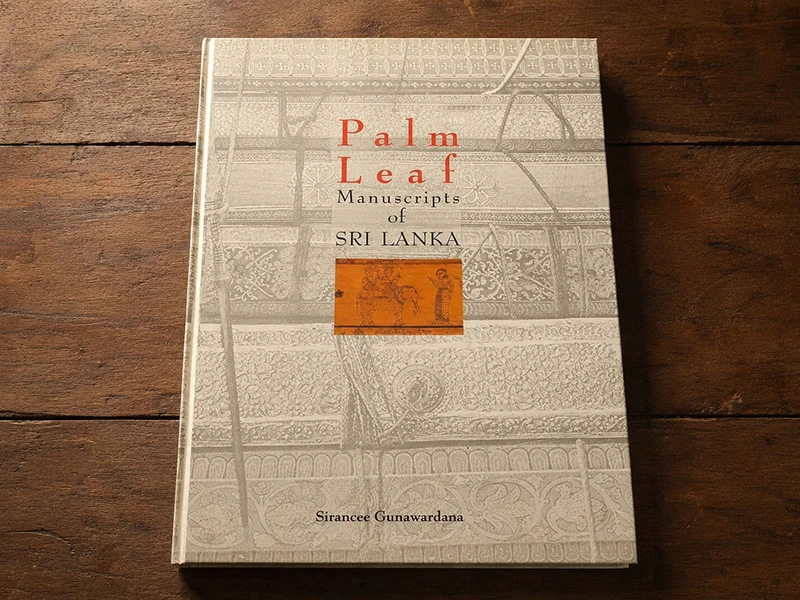
Sirancee Gunawardena’s book titled “Palm leaf manuscripts of Sri Lanka “(1977) is the first and probably only book which gives a comprehensive account of the palm leaf manuscripts of Sri Lanka. The book is a landmark publication. There is no other book like it on the subject. The author deserves much praise and appreciation for her painstaking work.
This book has been written primarily to encourage Sri Lankans to regard palm-leaf manuscripts as a valuable part of Sri Lanka’s heritage. Palm leaf manuscripts are historical documents and should be preserved as such, says Sirancee. They contain rich primary data, making them a valuable source for primary research as well. Some olas, at least, had beautiful handwriting and a high standard of grammar. They also contained palindromes that could be read in all four directions, she says.
The book is the product of 12 years of painstaking research. Sirancee speaks of “the joy and feeling of exultation” she experienced “peering into dusty nooks and cobweb encrusted wooden boxes and forgotten corners of libraries”. She has spoken to a number of specialists, including persons who knew how to prepare ola leaves and those who could read the manuscripts. She has personally copied scores of manuscripts and the drawings in them.
Sirancee has examined manuscripts dating from the 13th century to 19th century. She has examined the 13-century copy of Chullavagga in the Museum library. This manuscript has 144 folios, size is 23″ x 2 ½”. The writing is beautiful. It has wooden covers with a design. This may be the oldest book illustration in Sri Lanka, says Sirancee.
She was able, over a long period, to personally examine most of the ola manuscripts in the National Museum. She also examined the collections in temple libraries. The Potgul Vihara, Hanguranketa, had one of the largest and best-arranged libraries of palm-leaf manuscripts.
There was a photograph of Sirancee examining the ola manuscripts at Sri Rahula Vihara, Bentota, and another of Sirancee writing down the text as Gamariya read out from a copy of the Mahavamsa. This was probably the well-known astrologer Daniel Gamariya.
There was a great range in size and content in palm-leaf manuscripts. The average manuscript seen by Sirancee had 60–65 folios. Most manuscripts were pure text, but Vessantara Jataka and yantra manuscripts were profusely illustrated. In one manuscript, there was a drawing of the peacock vehicle of the Kataragama God. The drawing extended over three pages stitched together.
Some Vessantara Jataka olas are illustrated, event by event. These illustrations closely resemble temple fresco paintings. The Vessantara jataka manuscript at Dharmadasa Vihara, Boralesgamuwa is profusely illustrated and in colour. The Illustrations are small, in cameo form but have minute decorative details. In her book, Sirancee had reproduced the full text, including illustrations, of two Vessantara jataka texts (p 93-126,275-278). An illustrated Vidura Pandita Jataka from the Hugh Nevill collection is also reproduced in full (p 269-273).
Sirancee wants to give the reader some idea of the wide range of subjects found in palm-leaf manuscripts. She provides the following list. She notes that palm-leaf manuscripts are a source of material on ancient medicine, veterinary science, astrology, yantra and mantra practices, land endowments by kings, medieval taxation, agriculture, trade in ancient times, land grants, land transfers, royal amnesties, acupuncture, ophthalmology, music, metaphysics, and cosmology, as well as the construction of tanks, temple building, and ancient systems of taxation.
Let us take a closer look at some of the subjects mentioned above. First, it is clear that the Mahavamsa was not the only historical text found in curated palm-leaf collections. The Dipavamsa and the Rajavaliya were also included. Copies of the Rajavaliya are found in abundance in both public and private collections. These include holdings in the Colombo Museum Library, the University of Peradeniya, the British Library, and the private collections of L. S. D. Peiris and S. W. R. D. Bandaranaike.
The Rajavaliya was also found in the following temples: Subadrarama Vihara, Balapitiya; Kande Vihara, Atabage; Pallewela Sellawali Raja Maha Vihara, Halloluwa; Pravachanodaya Pirivena Temple, Molligoda, Wadduwa; and Yogilalena Temple, Sandalankara. The copy at the Sri Vardhanarama Library, Mohotimulla, is one of the oldest.
Historical Manuscripts Commission of 1930 found that family collections had various olas that gave information on the Sinhala kings, especially Udarata kings, with the exact dates and hour of their death. The Thalgodapitiya family collection had a Sri Wickrama Alankaraya by Vaidyaratne Basnayake nilame, 1882. Kurunegala Vistaraya was found in many private family collections.
The Historical Manuscripts Commission did not consider these manuscripts to be of academic importance. However, it noted that Yapahuwa temple had an ola with the dates of coronation and death of kings and other important events in the life of “all kings of Kandy”.
Buddhist temples collected ola manuscripts on Buddhism, with particular emphasis on the Dhamma. Olas containing religious texts of great significance were wrapped in silk and kept in the inner sanctum of the temple, Sirancee observes.
The histories of important stupas and temples were also written on ola manuscripts. The Tupavamsa gives the history of the Mahathupa, the Lowa Maha Paya, and the Mirisaveti Stupa. The Andreas Nell collection contains an ola manuscript describing how the four boundaries of the Ridi Vihara were determined. The Henry Parker collection includes an ola manuscript which states that, in relation to the Ridi Vihara, silver was discovered in a nearby cave by a traveller during his journey.
The temple collections included these historical texts. Nagolle Vihara had a copy of the Mahabodhivamsa. Copies of the Hathavanagalla Vihara Vamsa were distributed to neighbouring temples and can still be found today at the Attanagalla Raja Maha Vihara and the Beligammana Raja Maha Vihara.
Palm leaf manuscripts also gave the specifications for the Buddha statue. There were manuscripts on the art of making images of the Buddha, as well as hamsa, lata, kinnara and makara images. The Sariputra ola in Colombo Museum gives dimensions of images in general and Buddha in particular. It gives specifications for the standing, sitting and reclining Buddha. It is written in Sinhala, but text is in Sanskrit. It is in good handwriting.
The Historical Manuscripts Commission (1930) reported the discovery of a Pirit Pota in a family collection. The manuscript was written using black vegetable dye. According to the Commission’s report, the letters remain as black today as they were when written a century ago. The coloured floral illuminations were also executed using the same vegetable dye.
Jataka stories were held in palm leaves. Sirancee has personally examined many magnificent, large Jataka olas held in libraries. Colombo Museum had two large manuscripts containing many jataka stories. One was titled Sinhala Jataka Pota. Each had over one thousand leaves. The leaf strips were 27″ to 33″ by 2 ½. “
The Pansiya Panas Jataka manuscript owned by K.V.J. de Silva is one of the largest manuscripts Sirancee had seen and possibly the largest in Sri Lanka. It was a copy of a manuscript written in the time of king Parakrama bahu IV (1302-1326). It was written in Sinhala and had 984 folios. The folios at the end of the manuscript contained an index to the stories.
There is a manuscript of Vidura Pandita Jataka in the Hugh Nevill collection in the British Library. It is an original manuscript written in the time of king Senerat (1604-1635). It was written by Matale Rate Atapattu Amanthi of Owille in Matara (sic). The text is accompanied by very beautiful illustrations. The LSD Pieris collection has a small jataka manuscript, 10.5 cm in size, containing several illustrated jatakas. One illustration shows Siddhartha Gautama putting his bowl into the river.The most popular jataka story in Sri Lanka, is undoubtedly the Vessantara Jataka. It features prominently in our temple frescos and olas. The T. P. P. Goonetilleke collection held at Peradeniya had 30 Vessantara Jataka manuscripts. Some Vessantara manuscripts are held in private collections as heirlooms.
Legal matters were recorded on palm leaf manuscripts. Abhaya dana was written in olas. The ola had the royal sign “Sri “symbolising the king but inscribed by a Mohottala on the order of the Sannas Rala. Sirancee had come across a manuscript which stated that when a person died intestate the king inherited the lands. The LSD Pieris collection had a manuscript on a money transaction. The ola recorded that the money owed was handed over in the presence of witnesses who were named.
Land grants were recorded on olas. They were recorded on gold, silver and copper plates as well. Sirancee came across many Land grants in the collections she looked at. VP Ratnayake had a manuscript which said “By this it is declared that Godakkumbura Setunge Mudiyanse was given Pallekumbura in Udukaha pattu Kotugampola Korale on Jan 1630 by Monerawila Rajapakse, Bathwadana Nilame, who is the owner of Matale Dissawa and Sat Korale Dissawa.
P.E.E. Fernando found in the record room of the district court of Kandy, a deed of conveyance drawn up at the request of a person named Patra-Abo Sastru-raja, where he transferred to a vihara he had constructed, a house and garden called Dharmapata geratta (sic) in which he was residing, together with other lands, the boundaries of which were set out in great detail. Some movable objects such as a pitcher, palanquin and three slaves including a female slave were also offered. The document was attested by four persons and a fifth person stated that he had written the document.
Temples carefully looked after olas relating to the ownership of their temple lands. Ridi vihara has a very old manuscript titled Sangaraja Vahanseta Mahanuwara Lekan Pota with names and information on the temples given to the chief monk. When paddy lands were offered to temples, the transfer was recorded in an ola. There is an ola which stated that Pahalavela Kumbura was offered to Atkande Vihara by Teliyaskatuwe Lekam and Maddumaya.
Temples also held on to olas which gave the decisions on disputes over temple land. The high priest of Aluvihare, Matale had an ola on litigation relating to Aluvihare lands. The text is given in full by Sirancee on p 298. Uthurupaw Vihara had an ola issued by Adikara Dissawe. It contained the judgment in a land dispute which had taken place in the 15th century.
In ancient times, administration was done through olas. The Esala Perahera in Kandy has a chieftain mounted on an elephant carrying an ola which gives permission for the perahera to take place. Appointments were announced via olas. The Matale Maha Dissawe Kadaimpota, announced that ‘Niharapola Alahakoon Mohottala was appointed lekam of Tun Korale and also received the Ran Panhinda and flag.’ Administrative responsibilities were given in olas. Historical Manuscripts Commission found at the Atkande vihara, a 16th century ola giving information on the dissaves in charge of Kurunegala district.
Kadaimpot and Lekam Miti were held on ola. The Historical Manuscripts Commission found several of these in private collections. The Maya Rata Kadimpota held in a private collection, gave information on the 28 districts or towns in Maya Rata. At Padiyapelella, the Commission found a Kadaimpota dating to 14th Century, dealing with Ruhuna, Maya, Pihiti with names of subdivisions, the ratas, also Kelaniya, Panadura, Dambadeniya and so on. The Lekam Miti Pota of 1.1.1830 listed land holdings in the eastern part of Nuwarakalaviya. (To be continued)
References
Sirancee Gunawardana Palm leaf manuscripts of Sri Lanka 1977
L.S.D. Pieris Yantra drawing on palm leaf sri Lanka. 2018
1st report of the Historical Manuscripts Commission 1933, SP 9 of 1933
3rd report of Historical Manuscripts Commission 1951, SP 19 of 1951
Ismeth Raheem
https://www.sundaytimes.
lk/260426/plus/turning-back-the-pages-of-sri-lankas-paper-trail-639604.html
by KAMALIKA PIERIS
A peaceful counter-revolution is taking shape,
Against current ‘Digital Age’ intoxications,
At that ever-green seat of higher learning,
Wolfson College of the University of Cambridge,
Where one hour every Thursday is set apart,
For reading, writing and creative activity,
In the more time-tested analogues ways,
For those who opt for it, in an august space,
Thus paving the way for the Creator to prevail,
Over Creatures who are tending to run berserk,
More so why humans could cry out in one voice:
‘Long Live, WCSA Digital Detox Thursdays!’
By Lynn Ockersz

Pakistan hold their nerve to take series in low-scoring scrap

Robinson routs New Zealand top-order as England hit back on 16-wicket day

Rumesh Tharanga shatters Rome Diamond League record

Showers about 100 mm are likely at some places in the Western and Sabaragamuwa provinces and in Galle, Matara, Kandy and Nuwara-Eliya districts

Elders’ home devastated by fire was a ‘house of horror’: Witnesses

CERT : AI-generated videos depicting Prez, PM lure public into financial scams

‘Dates have the highest sugar content to fight Coronavirus’

Sunday Island 27 December – Headlines

#SundayIsland 17th December – Headlines

Sunday Island – 28th March

Sunday Island Headlines – 21 March

Sunday Island – 21st February – Headlines
-
 News6 days ago
IMF urges Lanka not to meddle with exchange rate
-
 News3 days ago
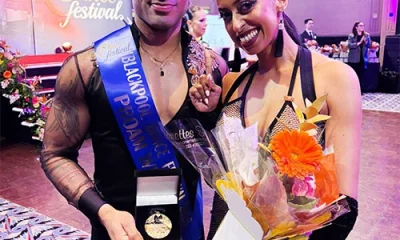
Lankan duo emerge winners in Latin dance championship held in Blackpool, UK
-
 Business4 days ago
IMF’s unstated rate:Sri Lanka’s $695m loan costs about 5.33% per annum
-
 News6 days ago
State of emergency extended
-
 Features5 days ago
Are threats to Buddha Sasana external or from within?
-
 News4 days ago
UNP challenges NPP move to amend Vihara – Devalagam Act
-

 Business4 days ago
Sri Lankan scientist-innovator Milinda Edirisinghe introduces AI-integrated gem testing system to gemological world
-
 News3 days ago
Sri Lankan teen killed in Chennai clash; three arrested