
Business
Sublime W15 Hanthana Estate

By a correspondent
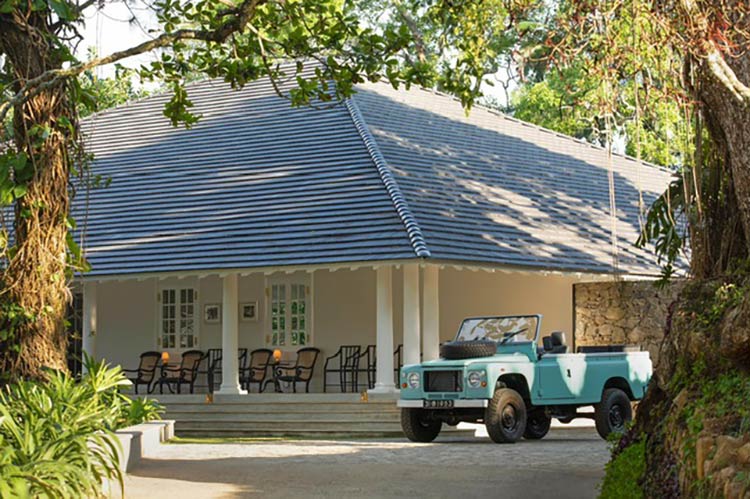
The Hanthana mountain range softly breathes, alive with the sound of silence. A pristine white bungalow sits facing these emerald-clad hills, its colonial crevices invoking the charm and nostalgia of a bygone era. A face from another time, kissed by the warm rays of the sun or caressed by the cool fingers of the mist. This is the resplendent Hanthana Estate by the W15 Collection, a place of beauty, a place of peace, where transcendent excellence is an apt description.
I took the early morning Ella Odessey train to Kandy, a comfortable journey that was accentuated by breathtaking vistas closer to Kandy. I was picked up at the station by the W15 driver and my personal butler for my stay. The first inkling of how my stay would pan out came when I was pleasantly surprised with the regular hotel welcome inside the Land Rover. The offer of a cool towel, the choice of a warm or cold beverage to ease fatigue, even before one steps into the foyer of a hotel, was an astute gesture towards ensuring customer delight.
W15 Hanthana Estate is a deliberately crafted blend of colonial charm (the bungalow being over 125 years old, lovingly and attentively restored to its present glory by renowned architect Chamika de Alwis) and modern opulence. The main bungalow unfolds like a tapestry of sepia and cream, weaving together six exclusive suites with four more situated a little beyond in the two storied stables, which boast an awe-inspiring view of the Uragala and Katusukonda mountains. I’m told that these mountain ranges have a certain significance to movie buffs who might recall that the famed “Indiana Jones and the Temple of Doom (1984) had certain shots filmed in the vicinity.
They offer numerous activities such as trekking in some of the most scenic hiking routes of the island, mountain biking, bird and butterfly watching, wildlife excursions (for the uninformed like myself, there are leopards, elusive yes but still roaming these jungles along with the more common sambar deer), nature sessions with the in-house naturalist or scenic walks and visits to nearby temples to interest you. Hanthana Estate also offers cookery lessons where you could pick your own vegetables from their herb and vegetable garden and have the pleasure of making your own lunch with the help of their chefs. One could also set off on an invigorating and informative drive through the tea plantations in their vintage Land Rover along with their naturalist who has a wealth of knowledge about the mountains, the flora and fauna, history and folklore. With kudos to the management for keeping history alive, Hanthana Estate also offers its guest a traditional, colonial inspired delectable high tea with finely cut finger sandwiches, flaky pastries, dainty fairy cakes and freshly baked scones with a pot of Ceylon tea. This high tea in a picnic form or cocktails as per guest preference, can also be enjoyed at a rock outcrop just a ten-minute jeep drive away from the bungalow which they call the ‘Rock Bar’, while the setting sun paints the skies in vivid hues.
This land initially belonged to Oodewella tea plantation, founded in 1880 which is one of the oldest tea estates in the country, considering that the tea cultivation in the country, established by James Taylor, dates back to 1867. Hanthana Group was created between 1985-1988 where Oodwella group was amalgamated with the Hanthana Estate. It would have seemed like a flashback when the great grandson of Gordon Pyper visited Hanthana Estate recently. The first Gordon Pyper had come to Sri Lanka in 1872 when Hanthana was a coffee plantation and following the coffee blight, planted tea in this beautiful estate. His son and grandson were superintendents at Hanthana and the current Gordon Pyper lived the first 11 years of his life in these environs. He affirms that its “wonderful to be back to the Hanthana of his childhood and W15 Hanthana Estate has given him wonderful memories to cherish always.”
It is an understatement to say that W15 Hanthana Estate caters to every whim and fancy of their discerning guest as they operate on an all-inclusive basis. Your personal butler is just a call away, your food is an exquisitely crafted story, your bed an epitome of comfort which entices you to linger, a shower is more of a response of sensual indulgence with irresistible Spa Ceylon products. Once you tear yourself away from your suite, the bungalow with its art, cosy chesterfield sofas and warm lighting and verdant hills that call you name – all this and more is what W15 promises. In my eyes, what makes Hanthana Estate special is not just beautiful surroundings and peace- I feel what makes this wonderous place feel like home, is the attention they pay to details such as the offer of a warm shawl when a guest involuntarily shivers, the evening turn down service where a hot water bottle is left beneath the duvet, the cushy slippers placed just right, and a myriad of little things that makes you smile or sigh contentedly.
I leave Hanthana Estate feeling a little lighter. All I can feel is that my soul is quieter and softer and more sublime.


Pan Asia Banking Corporation PLC’s Senior Listed Rated Unsecured Redeemable Debenture issue of up to Rs. 5 billion was oversubscribed following its opening reflecting strong investor interest.
The debentures, with a par value of Rs. 100 each, will be listed on the Colombo Stock Exchange (CSE). The three-year debentures offer an interest rate of 12.75% interest payable annually, while the five-year debentures offer 13.50% interest payable annually.
The issue has been assigned a BBB+ (Stable) rating by Lanka Rating Agency.
The debenture issue was managed by the Investment Banking Unit of Commercial Bank of Ceylon PLC, with SSP Corporate Services (Private) Limited serving as the Registrar to the Issue.
The Bank said the strong investor response demonstrates continued confidence in Pan Asia Bank and its approach to creating long-term value for its stakeholders.
Pan Asia Bank, which positions itself as ‘The Truly Sri Lankan Bank’, continues to strengthen its role in supporting the financial requirements of individuals and businesses while contributing to the development of Sri Lanka’s economy.
Business
SLIIT International and Liverpool John Moores University inaugurate dedicated international learning facility
The Sri Lanka Institute of Information Technology (SLIIT) and Liverpool John Moores University (LJMU), United Kingdom, recently inaugurated SLIIT International in Collaboration with LJMU, a dedicated international learning facility located at No. 17, Dickmans Road, Colombo 04, marking a significant milestone in a partnership spanning more than a decade and reinforcing their commitment to providing Sri Lankan students with access to internationally recognised UK higher education qualifications.
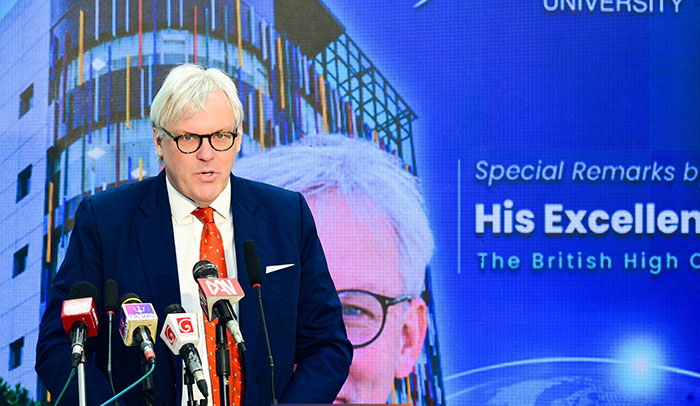
The Grand Opening Ceremony was attended by Andrew Patrick, British High Commissioner to Sri Lanka, who graced the occasion as Chief Guest, alongside senior representatives from SLIIT, Liverpool John Moores University, the British Council, academia, industry and other stakeholders, marking the next chapter of the longstanding SLIIT–LJMU collaboration. The new facility is particularly significant as Sri Lanka’s first academic facility dedicated exclusively to the delivery of LJMU degree programmes, reflecting the strength, maturity and long-term commitment of the partnership.
Over the past decade, the SLIIT–LJMU partnership has established a growing network of more than 1,500 alumni, while providing Sri Lankan students with opportunities to gain internationally recognised UK qualifications locally. The new dedicated facility has been designed to provide a world-class learning environment exclusively for LJMU programmes, supporting future programme expansion, strengthening the student experience and creating opportunities for deeper academic collaboration, innovation, research and student engagement.
Commenting on the milestone, Prof. Lalith Gamage – Vice-Chancellor, Managing Director and Chief Executive Officer, SLIIT, stated, “The launch of SLIIT International in Collaboration with Liverpool John Moores University represents an important new chapter in our longstanding partnership with Liverpool John Moores University. Our vision is to provide Sri Lankan students with a world-class education and student experience right here in Sri Lanka, while equipping them with the global outlook, critical thinking, professional capabilities and career readiness required to succeed in an increasingly interconnected world. This dedicated facility strengthens the student experience while providing a strong foundation for the continued growth of our collaboration with LJMU.”
Prof. Timothy Nichol, Pro-Vice-Chancellor, Faculty of Society and Culture, Liverpool John Moores University, said, “The opening of Sri Lanka’s first facility dedicated exclusively to LJMU degree programmes represents a significant milestone for the University and our partnership with SLIIT. It reflects the strength of our collaboration and our shared commitment to delivering a high-quality LJMU educational experience in Sri Lanka. The new facility also creates exciting opportunities for deeper academic collaboration, innovation, research and student engagement as we look towards the next phase of our partnership.”
A key highlight of the Grand Opening Ceremony was the panel discussion titled “Beyond Borders: The Role of British Higher Education in Developing Globally Competitive Graduates.” The discussion examined the growth of international educational opportunities in Sri Lanka, the future expansion of UK degree programmes, maintaining the quality and integrity of UK qualifications, developing future-ready graduates with global competencies, and the role of international higher education in strengthening graduate employability. The panel brought together Prof. Lalith Gamage; Prof. Timothy Nichol; Mr. Sajeewa Meepage, Representative of the British Council; and Dr. Harsha Cabral, Board Member of SLIIT.
The panelists further emphasized on emerging trends in areas including law, business, psychology and artificial intelligence, as well as the contribution of UK higher education to Sri Lanka through internationally recognised qualifications that uphold global academic standards.
The discussion explored the history and future of the SLIIT–LJMU partnership, the strategic significance of the new SLIIT International facility, academic quality, graduate employability and the long-term growth of LJMU programmes in Sri Lanka.
The ceremony also featured a special address by Andrew Patrick, British High Commissioner to Sri Lanka, followed by an address by Mrs. Clare Sears, Country Director, British Council Sri Lanka. The evening also included the ceremonial exchange of the partnership document between SLIIT International and Liverpool John Moores University, symbolising the continued commitment of both institutions to strengthening their collaboration and expanding international educational opportunities for Sri Lankan students.
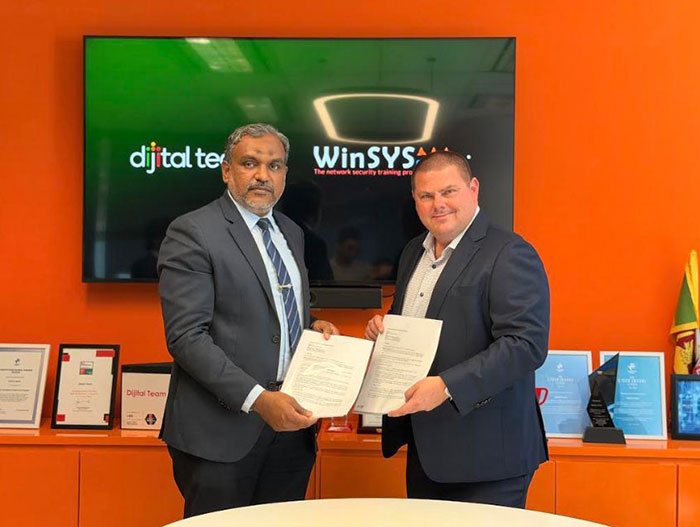
Dijital Team has signed a two-year partnership with Winsys City University, strengthening the skills and capabilities of its team members to support Managed Service Providers and IT service providers while elevating tech talent to immediate industry-readiness. With a Memorandum of Understanding (MOU) signed recently, the partnership was formally launched on 9 September 2026 at Dijital Team’s office premises, Colombo.
Combining Dijital Teams’ international employer network and understanding of the capability requirements of MSPs and IT service providers across Australia, New Zealand and the United Kingdom with Winsys City University’s training heritage of 21 years, the joint programmes create legitimate classroom-to-international-career pathways, offering structured learning and certification avenues that support deeper capability across cloud, cybersecurity, automation, AI and emerging technologies.

Tharindu Rathnayake, bowlers secure Asian Games Bronze for Sri Lanka

G7 to release 100 million barrels of oil and diesel after Trump export ban threat

Showers above 75 mm are likely at some places in the Central, Sabaragamuwa, Western, Uva, North-western, Southern and North-central provinces and in Mannar district.

All set for Colombo rally against govt.’s tax policies

Yoshitha R money laundering trial postponed

Lankan troops test mettle in Russian war games

‘Dates have the highest sugar content to fight Coronavirus’

Sunday Island 27 December – Headlines

#SundayIsland 17th December – Headlines

Sunday Island – 28th March

Sunday Island Headlines – 21 March

Sunday Island – 21st February – Headlines
-

 News5 days ago
Police remove Thileepan statue in Jaffna
-

 Features5 days ago
The 22nd Amendment, constitutional recovery and illiberal slippage
-

 Features5 days ago
Of foreigners as CEOs of Lankan ventures
-

 Latest News3 days ago
Gold winner Tharanga gets brand-new Honda Vezel from SLAAJ
-

 News5 days ago
Sajith rejects Jt. Opp. protest sabotage claim; SJB TU chief demands remedial action
-

 Features4 days ago
Thailand’s biggest new global star …
-

 Features3 days ago
Why Sri Lanka needs an Inclusive Civic Nationalism – urgently
-
 News4 days ago
First cases taken up by SC after enactment of 22A dismissed