
News
Sri Lanka’s economic reform programme yielding first signs of recovery – IMF

The economic reform programme, implemented by the Sri Lankan authorities is yielding the first signs of recovery with positive real GDP growth in the third quarter of 2023, low inflation, increased revenue collection, and a build-up of external reserves, the IMF has said.
Staying the course on the reform agenda is necessary for this stabilization to evolve into broad-based and stable growth that will ensure a full and lasting economic recovery benefitting the people, the IMF has said.
Progress in meeting key commitments, under the IMF-supported programme, will be formally assessed in the context of the second review of the Extended Fund Facility (EFF) arrangement, alongside the forthcoming 2024 Article IV consultation assessing Sri Lanka’s economic health.
An International Monetary Fund (IMF) mission team, led by Mr. Peter Breuer, visited Sri Lanka from January 11 to 19, 2024, to discuss recent macroeconomic developments and progress in implementing economic and financial policies under the EFF arrangement. At the end of the mission, Mr. Breuer issued the following statement:
“The economic reform programme, implemented by the Sri Lankan authorities, is yielding the first signs of recovery. Real GDP recorded positive growth of 1.6 percent year-on-year in the third quarter of 2023, the first expansion in six consecutive quarters. Shortages of essentials have eased, and inflation remains contained. Gross international reserves increased by USD 2.5 billion during 2023, and preliminary data point to improved fiscal revenue collections during the fourth quarter of 2023. However, challenges remain as these improvements need to translate into improved living conditions for Sri Lanka’s people.
“In this context, sustaining the reform momentum and ensuring timely implementation of all programmes commitments are critical to rebuilding confidence and putting the recovery on a firm footing that will benefit all people. Swift progress towards the introduction of a progressive property tax is key to ensuring fair burden sharing while sustaining the revenue-based consolidation. Tax policy measures need to be accompanied by strengthening tax administration, removing tax exemptions, and actively eliminating tax evasion to make the reforms more sustainable and to further build confidence among creditors to support Sri Lanka’s efforts to regain debt sustainability.
“Building on the Central Bank of Sri Lanka’s success in taming inflation, future monetary policy decisions should remain prudent with a focus on keeping inflation expectations well anchored. Against continued uncertainty, it remains important to continue rebuilding external buffers through strong reserve accumulation. Protecting the poor and the vulnerable through improved targeting and better coverage of cash transfers remains critical.
“To safeguard the stability of the financial sector and bolster its capacity to support economic growth, the authorities need to urgently finalize amendments to the Banking Act in line with their commitment under the IMF-supported program, implement the bank recapitalization plan and strengthen the financial supervision and crisis management framework.
“Following the publication of the IMF Governance Diagnostic report, it is now imperative for the authorities to adopt their own action plan for implementing the recommendations in the report beyond the priority commitments under the EFF arrangement. At the same time, ensuring an enabling environment for governance and transparency reforms to take place is key to bolstering public confidence and facilitating implementation of these important efforts.
“The authorities have made commendable progress with putting debt on a path towards sustainability. The execution of the domestic debt restructuring was an important milestone. A swift completion of final agreements with official creditors and reaching a resolution with external private creditors remain critical. Progress in meeting key commitments under the IMF-supported program will be formally assessed in the context of the second review of the EFF arrangement alongside the forthcoming 2024 Article IV consultation assessing Sri Lanka’s economic health.
“The IMF team held meetings with President and Finance Minister Ranil Wickremesinghe, Central Bank of Sri Lanka (CBSL) Governor Dr. P. Nandalal Weerasinghe, Speaker Mr. Mahinda Yapa Abeywardana, Minister Mr. Kanchana Wijesekera, Minister Mr. Wijeyadasa Rajapakse,State Minister Mr. Shehan Semasinghe, Secretary to the Treasury Mr. K M Mahinda Siriwardana, Governor of Northern Province Mrs. P.S.M.Charles, Governor of Eastern Province Senthil Thondaman, and other senior government and CBSL officials. The IMF team also met with Parliamentarians, representatives from the private sector, civil society organizations, and development partners.
“We would like to thank the authorities for the excellent collaboration during the mission, including during the mission’s visit to the Northern and Eastern provinces. This visit enriched the mission team’s understanding of the challenges as well as the potential of Sri Lanka. We reaffirm our commitment to support Sri Lanka for a full economic recovery from the crisis.”











News
Showers will occur in the Western and Sabaragamuwa provinces and in Galle, Matara, Kandy and Nuwara-Eliya districts


WEATHER FORECAST FOR 02 SEPTEMBER 2026
Issued at 05.30 a.m. on 02 September 2026 by the Department of Meteorology
The atmospheric conditions are getting favorable for afternoon thundershowers in the Northern, North-central, Eastern and Uva provinces in the next few days.
Several spells of showers will occur in the Western and Sabaragamuwa provinces and in Galle, Matara, Kandy and Nuwara-Eliya districts. Showers or thundershowers may occur at a few places in the Eastern and Uva provinces and in Mullaitivu district after 2.00 p.m.
Fairly strong winds of about (30-40) kmph can be expected at times over the Western slopes of the Central hills, the North-central and North-western provinces and in Hambantota and Matale districts.
The general public is kindly requested to take adequate precautions to minimize damage caused by temporary localized strong winds and lightning during thundershowers.
Latest News
Sun directly overhead Anamaduwa, Moragollagama, Dambulla, Manampitiya and Valaichchenai, at about 12.10 noon today (02)

The sun is going to be directly over the latitudes of Sri Lanka from 28th of August to 07th of September due to its apparent southward relative motion.
The nearest places of Sri Lanka over which the sun is overhead today (02) are Anamaduwa, Moragollagama, Dambulla, Manampitiya and Valaichchenai, at about 12.10 noon.

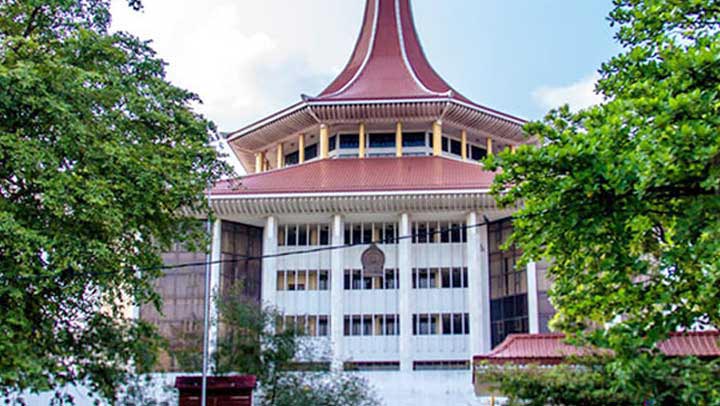
The Supreme Court yesterday rejected a request that the petitions challenging the 22nd Amendment to the Constitution be heard by a full bench of the Supreme Court.
Rejecting the request, Chief Justice Preethi Padman Surasena said the consideration of the petitions would proceed before the five-judge bench.
Appearing on behalf of one of the petitioners, President’s Counsel M. A. Sumanthiran made the request when the petitions were called for hearing yesterday before a five-judge bench of the Supreme Court, headed by Chief Justice Surasena.
President’s Counsel Saliya Pieris, Ali Sabry, Geoffrey Alagaratnam, Eraj de Silva, Srinath Perera, Anura Meddegoda, and Maithri Gunaratne, along with other counsel appearing for several other petitioners, also made the same request.
Solicitor General Viraj Dayaratne, appearing on behalf of the Attorney General, pointed out that the authority to determine the composition of a judicial bench rested with the Chief Justice. Refering to Article 132(3) of the Constitution, the Solicitor General argued that the discretion to determine the number of judges on a bench lay with the Chief Justice and that no other party had the authority to interfere in the matter.
Counsel including President’s Counsel Nigel Hatch, appearing for an intervening petitioner, also made submissions pointing out that the discretion to determine the composition of a bench rested with the Chief Justice.

Showers will occur in the Western and Sabaragamuwa provinces and in Galle, Matara, Kandy and Nuwara-Eliya districts

Sun directly overhead Anamaduwa, Moragollagama, Dambulla, Manampitiya and Valaichchenai, at about 12.10 noon today (02)

SC rejects petitioners’ request for full bench

Seven years RI for former Civil Aviation Minister Piyankara Jayaratne

40 professional organisations and TU oppose proposed 22A

Ai-CHA expands Lankan footprint with new Negombo outlet

‘Dates have the highest sugar content to fight Coronavirus’

Sunday Island 27 December – Headlines

#SundayIsland 17th December – Headlines

Sunday Island – 28th March

Sunday Island Headlines – 21 March

Sunday Island – 21st February – Headlines
-

 News5 days ago
Eight politicians in drug kingpin probe
-

 Features3 days ago
“Wrap Me Up in My Blazer”— A Gentlemanly Bradby Reminiscence
-

 Business5 days ago
Sri Lanka opens up: A new season of direct connectivity
-

 Features5 days ago
Redefining ageing in Sri Lanka
-
 Latest News6 days ago
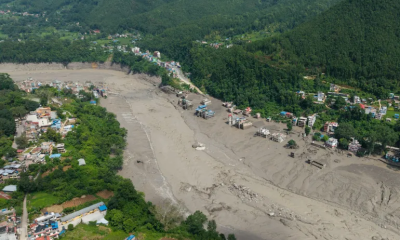
Nepal-Tibet floods: What happened, what caused them and who is missing?
-

 Editorial6 days ago
Unfolding El Niño and burning issues
-
 Foreign News7 days ago
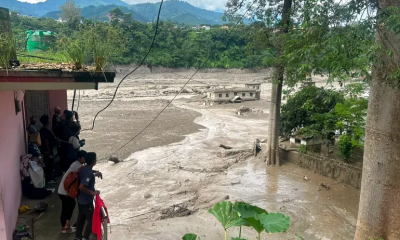
At least eight killed, hundreds missing after Nepal flash flood
-
 Latest News7 days ago
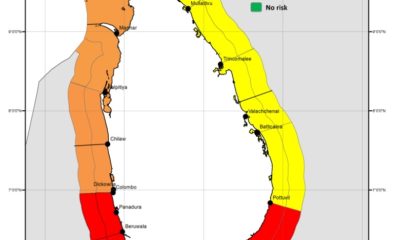
Advisory for High Waves for the sea areas extending from Colombo to Pottuvil via Galle, Matara and Hambantota