
News
Sri Lanka’s book publishing industry faces crisis as 18% VAT sparks job losses and closures

By Rathindra Kuruwita
Thousands of jobs in Sri Lanka’s book publishing industry will be lost due to the imposition of VAT (18%) on books publishers claim.They claim that about 30 percent of bookshops have been closed due to the economic crisis.
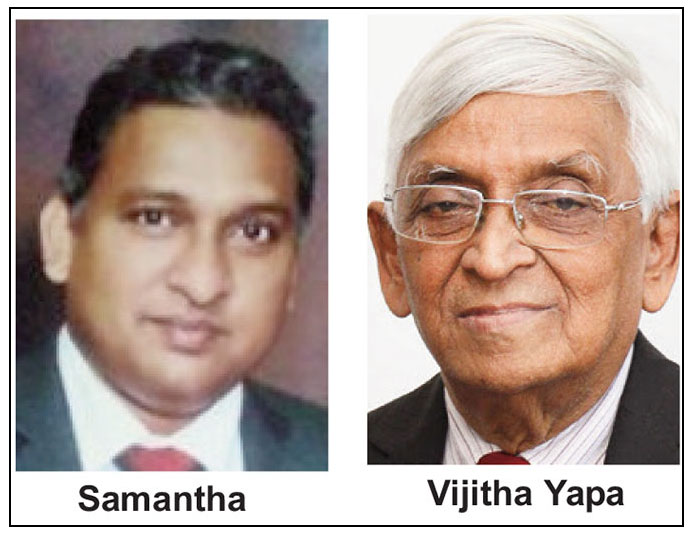
There had been no taxes on books before 01 January 2024, Sri Lanka Book Pub lish ers Asso ciation (SLBPA), President Samantha Indeewara, said.The book publishing industry was in crisis even before the imposition of VAT, he added.
“The prices of all raw materials have increased. For example, the price of paper has risen by 300 percent in the past few years.”
“Books and stationery prices will increase by more than 20 percent. The income of parents has not risen. What will they do? Children’s education will suffer.”
Indeewara said Sri Lanka imported at least 90 percent of the inputs needed to produce a book. All of them were subjected to VAT and other import duties.”However, the final product was not subjected to VAT earlier.”
Indeewara said book sales had dropped in the 1990s, with the spread of electronic media. Book publishers started the Colombo International Book Fair to reverse the trend.
“But in recent years, book sales have dropped again because of the economic crisis.
SLBPA former President Vijitha Yapa said that when Ranil Wickremesinghe was Prime Minister in 2002, he proposed a tax on books. However, the government had withdrawn the proposals due to protests from the book publishers.
“In 2016, Wickremesinghe again attempted to impose a tax on books. When Wickremesinghe came to the Colombo International Book Fair that year, as the Chief Guest, we again urged him not to impose a tax. The proposal to impose taxes on books was again withdrawn,” he said.
Yapa mentioned that in September 2023, they had heard the government was planning to impose VAT on books. The book industry representatives met the President and inquired about the possible tax.
“The President said nothing was set in stone and that we would have an opportunity to discuss the matter. He told us that the IMF wanted him to impose a tax on books.”
Despite the assurances, the book industry didn’t get an opportunity to discuss the impending taxes with the government, he said. The industry representatives wrote to the President, and his chief of staff, Sagala Ratnayake, said he would inform the President.
“Later, we were asked to talk to the IMF. Then we wrote to the IMF. It has been two months; there has not been a reply from the IMF.”
Yapa said that from what he knows, no other South Asian nation has imposed VAT on books.
“Some publishers only print about 500 copies of a book,” he added. “Earlier, we used to print thousands of copies. Prices of books are now high because we print less. There are no economies of scale. Printing books is so expensive here that people actually print books abroad and bring them here. It’s cheaper for them to pay import taxes than to print in Sri Lanka. Thousands of jobs will be lost.”
Yapa went on to say that 30 percent of bookshops have closed down already, and more shops will go out of business soon.
“We don’t know how much the government is trying to make by taxing us. We don’t know, and they won’t tell us.”
President of the Ceylon Booksellers Importers And Exporters Association, Dinushi Abeywickrama, said the text books they import for students sitting for foreign exams have tripled in price.
“Families with a few kids are seriously affected by this. Parents can’t buy. Earlier, parents used to come and buy the entire set of text books for their kids. Now they buy these books on a staggered basis. Most parents try to see if they can get the text book photocopied,” she said.
The government is violating the Agreement on the Importation of Educational, Scientific and Cultural Materials (also known as the Florence Agreement), she said.
Abeywickrama added this is a 1950 UNESCO treaty whereby states agree to not impose customs duties on certain educational, scientific, and cultural materials that are imported.
“We are a party to that agreement,” she said, adding that the President is a well-read person and that he has used the knowledge he has gained from reading to make a name for himself in the world.
“I, therefore, urge him not to deprive other people from learning and improving themselves by reading books,” she said.








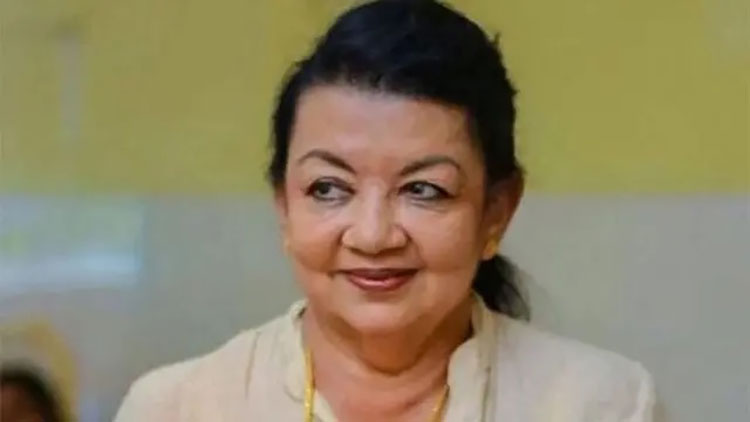
Shiranthi Rajapaksa, wife of former President Mahinda Rajapaksa, was granted bail by the Colombo Magistrate’s Court yesterday (16) in connection with the alleged misappropriation of funds linked to the ‘Siriliya Saviya’ organisation.
Colombo Chief Magistrate Asanga S. Bodaragama ordered her release on two surety bonds of Rs. 10 million each and a cash bail of Rs. 100,000. The Magistrate also imposed an overseas travel ban on her.
Rajapaksa was arrested by the Commission to Investigate Allegations of Bribery or Corruption (CIABOC) over allegations of criminal misappropriation and financial irregularities involving an account linked to the ‘Siriliya Saviya’ Fund.
The investigation centres on the alleged misuse of Rs. 10 million provided by the National Savings Bank to the organisation.
Meanwhile, a medical report submitted to the court yesterday indicated that Rajapaksa required bypass surgery.
After examining the report, the Magistrate told court that it detailed her medical condition and indicated the need for the procedure. He also noted that the report had been submitted with a covering letter from the Director of the Colombo National Hospital.
by Norman Palihawadane
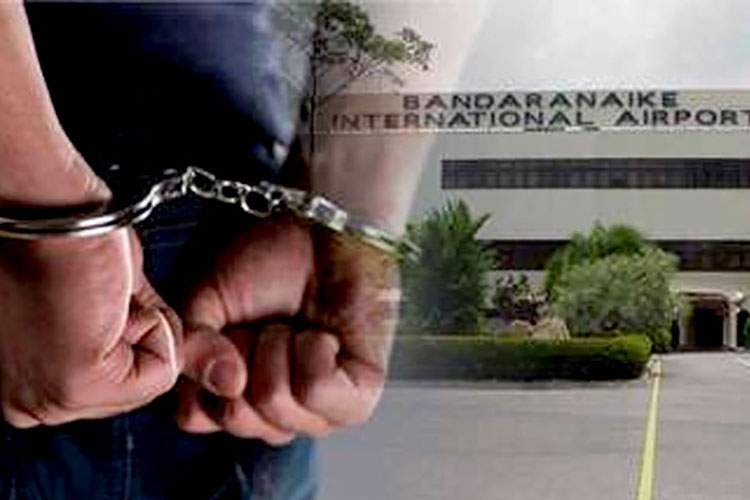
Three Thai nationals were arrested at the Bandaranaike International Airport (BIA) in Katunayake after nearly five kilos of hashish were allegedly found concealed in beauty products, police said.
The suspects were arrested by officers of the Police Narcotics Bureau on Thursday after arriving on a flight from Bangkok, Thailand.
Investigators said the suspects had allegedly concealed the narcotics in cosmetic and beauty-care products and attempted to smuggle them into Sri Lanka.
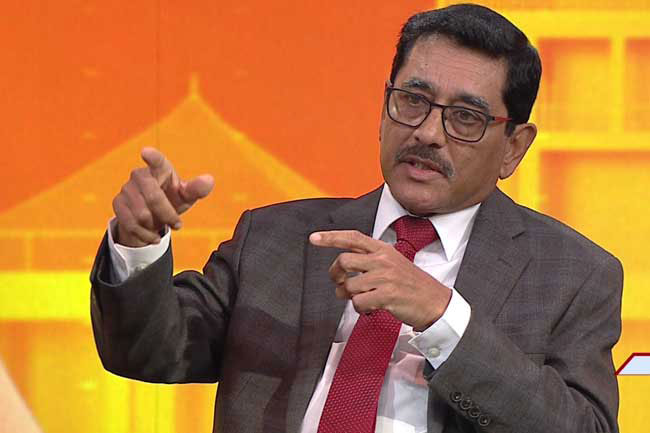
Central Bank Governor Dr. Nandalal Weerasinghe has expressed confidence that Sri Lanka will avoid being placed on the Financial Action Task Force (FATF) grey list for a third time as the country undergoes a crucial international evaluation of its anti-money laundering and counter-terrorism financing framework.
Speaking at an Anti-Money Laundering and Anti-Corruption Thematic Fund event in Thailand, held on the sidelines of the IMF-World Bank Annual Meetings, Weerasinghe said the country had undertaken extensive legal, regulatory and institutional reforms ahead of the assessment.
An on-site evaluation by international assessors commenced in Sri Lanka this week and is scheduled to continue for two weeks. The assessment will examine the effectiveness of the country’s measures to combat money laundering, terrorist financing and related financial crimes.
Weerasinghe recalled that Sri Lanka had been grey-listed twice, in 2014-2015 and again in 2017. Technical assistance from the International Monetary Fund (IMF) had played an important role in strengthening risk assessment frameworks for licensed banks and finance companies, helping the country secure its exit from the grey list by 2019, he said.
He described the current evaluation as particularly significant, noting that authorities had spent several years preparing with the aim of preventing another grey-listing.
A key step in this process was the IMF’s Governance Diagnostic Assessment in 2023, which identified weaknesses in governance structures and anti-corruption systems. Sri Lanka was among the first countries in Asia to publicly release the report, enabling stakeholders to identify the reforms required, the Governor said.
The assessment’s findings subsequently informed national risk assessments conducted in 2024 and 2025, which helped guide preparations for the current evaluation.
Weerasinghe said the government had since introduced a series of legislative and institutional reforms aimed at bringing Sri Lanka’s financial governance and regulatory framework into line with international standards.
These included the establishment of an asset recovery framework through CLIMAC, the enactment and implementation of a new Anti-Corruption Act, amendments to public finance legislation, reforms to Customs and Excise revenue administration, and the introduction of the National Audit Act.
Amendments to the Banking Act were also introduced to strengthen corporate governance and regulatory oversight, while changes to the Companies Act established beneficial ownership requirements in line with FATF recommendations.
Further amendments were made in 2026 to the Financial Transactions Reporting Act, the Prevention of Money Laundering Act and the Convention on the Suppression of Terrorist Financing Act to address evolving international standards.
However, the Governor stressed that enacting legislation alone would not be sufficient to secure a favourable outcome. Authorities must demonstrate that the laws and regulatory measures are being effectively implemented by the relevant institutions and enforcement agencies.
“The challenge now is to show that these laws work and that the framework is effective,” he said, underscoring the importance of demonstrating tangible results in practice.
Weerasinghe expressed confidence that the reforms undertaken, together with the support of domestic institutions and international partners, would help Sri Lanka successfully complete the evaluation without returning to the FATF grey list.
The outcome of the assessment is expected to be closely watched by international financial institutions, investors and development partners as Sri Lanka seeks to demonstrate the effectiveness of its financial oversight, anti-corruption and anti-money laundering measures.

Shiranthi granted bail in ‘Siriliya Saviya’ fund probe

Three Thai nationals arrested with hashish at BIA

Beyond arrivals: Can tourism and hospitality power Sri Lanka’s next growth phase?

SL’s ‘Global Destination Marketing and Communication Campaign’ gets into top gear

A trial balloon?

Labour shortages are pushing Plantation Companies towards machines, data and a different kind of worker

‘Dates have the highest sugar content to fight Coronavirus’

Sunday Island 27 December – Headlines

#SundayIsland 17th December – Headlines

Sunday Island – 28th March

Sunday Island Headlines – 21 March

Sunday Island – 21st February – Headlines
-

 News6 days ago
Sri Lanka escalates anti-graft drive with Shiranthi’s jailing
-
 News7 days ago
NPP govt. reminded of its responsibilities as US warship leaves Colombo
-

 Latest News5 days ago
Farhan and Sadaqat help Pakistan seal series in style
-

 News6 days ago
Iranian ships stranded, Lanka fears US sanctions
-

 Latest News4 days ago
Nissanka’s return headlines Sri Lanka’s Test squad against Pakistan
-

 Features5 days ago
Intake 16: 45 years of duty and honour
-

 News5 days ago
Malwathu Chapter issues statement on talks with President over Gnanasara Thera’s robes
-
 News5 days ago
CP alleges NPP has taken the blame for illegal US sanctions on Iranian vessels