
Business
Sri Lanka’s Angel Fund shortlists five startups for investment

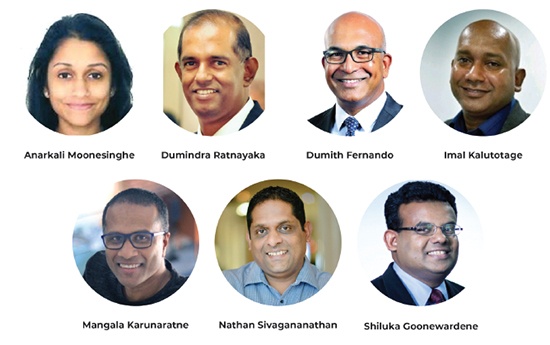
The Angel Fund Investment Committee members who unanimously select the startups for investment.
The Angel Fund, the first of its kind in Sri Lanka, has shortlisted its five early-stage startups for potential investment; Niftron, Traccular, Medica, Soulboner Clothing, and Ophir. This follows an intense application and selection process, spanning September, October, and November 2020, which initially attracted 80 applications.
The Angel Fund, launched earlier this year by the Lankan Angel Network (LAN), was established with the support of ecosystem development partner Ford Foundation to catalyze the growth of Sri Lanka’s startup ecosystem. Comprising 100 angel investors, including many high-profile entrepreneurs and corporate leaders, who represent more than a dozen sectors with proven competencies in over 20 functional domains, the Angel Fund is also distinct in that it features 20% of its investment from members based out of Canada, Dubai, Hongkong, Qatar, UK, and the USA.
The process was guided by the Fund’s high-profile Investment Committee (IC) consisting of angel Fund members Dumith Fernando, chairman of Colombo Stock Exchange/chairman of Asia Securities, Dumindra Ratnayaka, Chairman/Senior Consultant at Martin & George. The IC also comprises Nathan Sivagananathan, Co-Founder of Hatch Works; Anarkali Moonesinghe, former CEO of CIMB Sri Lanka; Mangala Karunaratne, Founder/CEO of Calcey Technologies; and Imal Kalutotage, Founder/CEO of NCINGA. Joining them as Independent IC Member is Shiluka Goonewardene, Principal – Deal Advisory – KPMG.
Angel Fund IC member Dumith Fernando stated, “The investment approval process for the Angel Fund was quite robust with seasoned experts from varied backgrounds participating in the Investment Committee. We were encouraged by the quality of the shortlisted startups that presented to us. We set a high bar for investment selection this time. And even among those founders who did not gain funding this quarter, we found several who would be investable with some tweaks to their business models and plan.”
Some shortlisted startups were:
• Niftron – A Blockchain-as-a-Service platform that allows for easy and efficient integration of blockchain with products or projects, enhancing ownership, transparency, and security.
• Traccular – A cloud-based IoT-enabled visitor management system that provides a scalable solution for companies looking for an efficient check-in and verification process to improve efficiency and security.
• Medica – A cloud-based patient and prescription management platform for doctors. From when a patient registers, to when they walk out with their medicines from the pharmacy, the entire process is managed within Medica, which aims to build a digital ecosystem for primary health care for Sri Lanka.
• Soulboner Clothing – A fun, casual Sri-Lankan streetwear line made for GenZ and the young Millennial. The brand focuses on creating a lifestyle and a community and boasts a customer base in many countries.
• Ophir – A brand focusing on a range of chemical and synthetic-free, all-natural body care and spa products, which deliver the rich benefits of Camellia Sinensis, Ceylon Tea. Ophir taps into the skyrocketing global demand for natural skincare products, with the added advantage of Sri Lanka’s millennia-old fame resulting from its cornucopia of botanicals, spices, and herbs, as well as Ayurveda.
Independent IC Member Shiluka Goonewardene said, “The finalists for evaluation by the committee were all startups with good ideas and opportunities. The varied experience of the IC members enabled us to evaluate and shortlist the best participants for the funding stage. Overall, it was a great learning experience for me as well, listening to the presentations of the finalists and the follow-up discussions among the IC members.”
These startups will be featured at the LAN hosted Angel Roundup, an exclusive virtual event to be held in mid-December for the network’s angel investors. The event is partnered with Sri Lanka’s largest private-sector retail bank Hatton National Bank PLC, a long-term strategic partner for LAN
Commenting on behalf of the top five shortlisted startups, Ophir Founder Rohini Nordmann said, “The Angel Fund has been both rigorous and supportive of its participants. A winning combination for the investment seekers as well as the investors.”
Angel Fund IC member Anarkali Moonesinghe added, “The Angel Fund was created to bridge the gaps that exist within the startup ecosystem in terms of opening this alternative asset class to a wider audience as well as connecting these investors with incredible entrepreneurs. It serves as not only an avenue to secure funding at an early stage, but also affords startups access to an amazing group of individuals who can be true mentors while, also, opening doors to international markets and networks.”
The Rs. 100 million Angel Fund has plans to eventually invest in six to 10 high potential startups in total, gearing them up to scale domestically, and even internationally. It is managed by LAN’s fund management team, which continues to identify and evaluate opportunities for investment across the island, including in traditionally underserved regions. The fund is dedicated to investing in, and mentoring and supporting, early-stage startups across multiple sectors; from making investments at the early stages, to even helping startups identify sources for future funding.



By Ifham Nizam
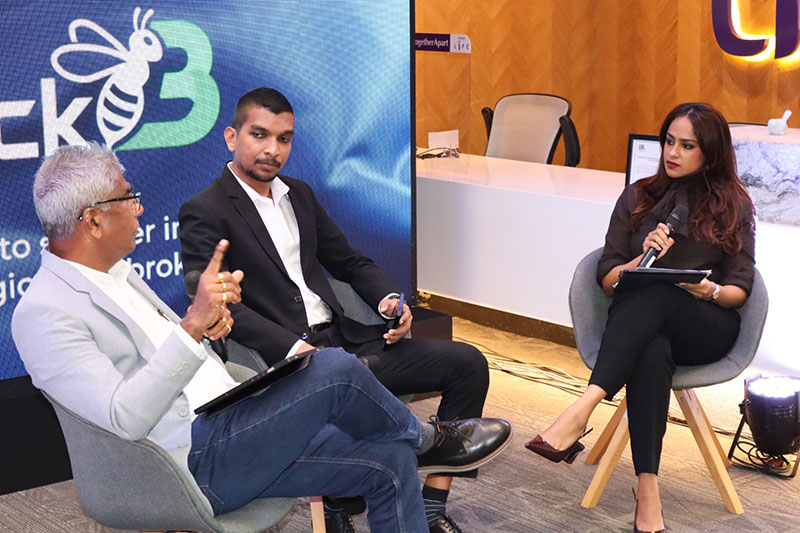
Softlogic Stockbrokers is betting on a more mobile-first future for Sri Lanka’s capital market with the launch of StockBee, a proprietary application that brings online trading, investment research, market intelligence, portfolio information and analytical tools together on a single digital platform.
The launch marks a significant technology push by the brokerage firm at a time when investors are increasingly looking for faster and more convenient ways of accessing market information and executing investment decisions.
StockBee has been developed to reduce the fragmentation investors can face when obtaining market information, research and trading services through different channels.
The launch was attended by Dihan Dadigama, Director/CEO of Softlogic Stockbrokers; Clehan Pulle, CEO and Director of Finetech Holdings; Alanki Krishani Perera, media presenter, talk show host, law graduate and entrepreneur and Mohan Abesundara, Head of IT at Softlogic Stockbrokers.
Speaking to The Island Financial Review, Abesundara said the fundamental vision behind StockBee was to create a single platform through which investors could access the information and services they require.
‘The vision behind StockBee was to create a single platform for our investors where they can access all the information they need through a single platform, Abesundara said.
‘Previously, they had to rely on multiple channels and sources to get all this information. We wanted to bring all these experiences together with StockBee.’
A major differentiating feature of the platform is the integration of online trading directly into the mobile application.
According to Abesundara, this makes StockBee different from existing mobile offerings in the local brokerage space.
‘Right now, there are no brokerage companies with a mobile application which has trading in it, he told The Island Financial Review. ‘This is the first time that a company has released a mobile application on its own with the trading facilities integrated into it.’
The application brings together company research, equity research, macroeconomic information, trading tips and recommendations, as well as charts and other market information.
The idea is to allow investors to move more seamlessly from gathering information and analysing market developments to making and executing investment decisions.
StockBee’s current features include real-time market data, portfolio monitoring, trading and order management, research material, watchlists and analytical tools.
‘It is my team and the Softlogic Stockbrokers IT team. We developed the application internally. We are not relying on third parties or anything like that, he said.
The project has been several years in the making. While the final intensive development and testing
Softlogic Stockbrokers Director and CEO Dihan Dadigama has described the application as the beginning of a new journey to take the stock market closer to retail investors, with the mobile platform intended to reduce the amount of time investors need to spend connecting with a broker when direct access is possible.
The development is particularly significant because StockBee has been designed as an investment platform rather than simply a mobile order-placement facility. The combination of information, research, analysis and execution gives investors the ability to follow the market and act through the same digital environment.

Sri Lanka Institute of Directors (SLID), the Young Directors Forum (YDF), and the Women Directors’ Forum (WDF), in collaboration with John Keells Stockbrokers (JKSB), successfully hosted an exclusive knowledge-sharing event titled “Investing in Times of Uncertainty” recently at the Sheraton Colombo.
Held under JKSB’s #SHEinvests initiative, the event brought together SLID members and invited participants for an evening of insightful discussions on navigating today’s evolving economic landscape while encouraging greater female participation in Sri Lanka’s capital market.
The evening commenced with a keynote address by renowned economist and Director of Arutha, Rehana Thowfeek, who provided a comprehensive overview of Sri Lanka’s economic journey from the multiple domestic and global crises experienced between 2018 and 2026 to the country’s ongoing path toward recovery. She highlighted how significant fiscal, monetary, and governance reforms have strengthened Sri Lanka’s economic foundation, improving its resilience against external shocks. While acknowledging that global uncertainty is likely to remain the norm, she emphasized that macroeconomic stability alone is not enough to sustain long-term growth. Instead, increased private sector investment, responsible risk-taking, and greater financial inclusion—particularly through empowering women to actively participate in the economy—will be key drivers of Sri Lanka’s future prosperity.
The keynote was followed by an informative presentation by Dewni Tissera and Navin Ratnayake of JKSB, who guided participants through the fundamentals of investing in the stock market. Their session covered practical steps for first-time investors, key investment principles, and smart strategies for building resilient investment portfolios during periods of market uncertainty, reinforcing the importance of maintaining a disciplined, long-term investment approach. Navin further stated that if one is careful & plan, accordingly, investing in equity markets can give better returns than fixed deposits.
The event also featured a recap of the progress made under #SHEinvests, John Keells Stockbrokers’ flagship initiative dedicated to empowering women through financial literacy and investment education. Over the past two years, #SHEinvests has continued to encourage more women to take charge of their financial futures by providing accessible knowledge, practical investment guidance, and opportunities to confidently participate in the stock market.
Business
Haycarb and Coconut Cultivation Board support 784 Eastern Province farmers with free seedlings


Homegrown global leader in coconut shell-based activated carbon, Haycarb PLC, in partnership with the Coconut Cultivation Board (CCB), is expanding its coconut cultivation programme in Sri Lanka’s Eastern Province, supporting farming communities while strengthening the long-term resilience of the country’s coconut value chain.
As a member of the Hayleys Group, Haycarb’s work with coconut farmers in Batticaloa and Ampara reflects the Group’s broader commitment to long-term value creation that extends beyond its own supply chain into the economic wellbeing of the districts it operates in.
The initiative builds on a similar partnership Haycarb implemented with CCB in the Northern Province from 2023 to 2024, under which 100,000 seedlings were distributed with a survival rate of 80 to 85 percent. Following the identification of suitable districts by CCB, Haycarb selected Batticaloa and Ampara for the Eastern Province expansion, targeting the distribution of 65,000 seedlings by the end of 2026.
Since 2025, the initiative has supported 784 farmers in Batticaloa and Ampara with 35,786 free coconut seedlings across 559 acres.
As coconut shell forms the primary raw material for Haycarb’s activated carbon production, strengthening coconut cultivation also supports the long-term resilience of the company’s raw material base. The initiative therefore connects farmer livelihoods and agricultural development with Haycarb’s broader approach to responsible sourcing and circularity.
Haycarb’s initiative forms part of a broader effort to address challenges facing coconut cultivation in Sri Lanka, including ageing plantations, low replanting rates, water scarcity, climate variability and human-wildlife interactions. These pressures are particularly relevant in parts of the Eastern Province, where farmers must manage environmental constraints alongside the practical challenges of establishing new cultivation. Field assessments under the programme combine farmer-reported conditions with district-level data to help inform and tailor the support provided. Field engagement has also highlighted how farmers are adapting through locally appropriate practices, including moisture retention and soil improvement to support the establishment of young coconut palms.

Haycarb PLC, Managing Director, Rajitha Kariyawasan
Under the partnership, CCB regional offices identify eligible farmers through their coconut development officers, verify land ownership and readiness, and coordinate seedling transport and technical guidance on fertiliser, pest and irrigation management. Farmers receive CCB-certified coconut seedlings free of charge and take on responsibility for their upkeep, with the trees taking around five years to bear fruit and remaining productive for over 60 years.
The partnership reflects the role that collaboration between industry and public institutions can play in strengthening agricultural resilience, particularly in regions facing increasing environmental and resource pressures.
“Coconut farming supports thousands of rural livelihoods and is also fundamental to the renewable raw material base on which our industry is built. Our experience in the Northern Province showed us that providing quality planting material, together with the right technical support and continued engagement, can deliver meaningful long-term results.
In Batticaloa and Ampara, farmers are working in conditions shaped by water constraints, climate variability and wildlife pressures. Our partnership with the Coconut Cultivation Board allows us to combine institutional expertise with direct engagement at the farm level, helping farmers establish productive coconut cultivation while strengthening the resilience of the wider coconut value chain,” Haycarb PLC Managing Director Rajitha Kariyawasan said.
Farmers retain full ownership of their harvest and are free to sell to any buyer, with no supply agreement tied to Haycarb. Field visits to farms in the Eastern Province found that many farmers are growing vegetables and fruit alongside young coconut palms, providing an additional source of income while the coconut trees mature.
Haycarb PLC is a global manufacturer and supplier of coconut shell-based activated carbon, serving customers across water and air purification, gold recovery, food and beverage, industrial applications and energy storage. With manufacturing operations across multiple geographies, Haycarb builds on its strengths in technical excellence, innovation, customer centricity and sustainability to develop specialized carbon solutions for evolving global applications.

Softlogic Stockbrokers bets on mobile-first investing with StockBee

‘Investing in Times of Uncertainty’

Haycarb and Coconut Cultivation Board support 784 Eastern Province farmers with free seedlings

Vipul Misra appointed Acting CEO, SriLankan Airlines

New Rothschild Tea Factory achieves an all-time record price of Rs. 2,950/- per Kg

ClOVE Beach Wadduwa unveils new chapter in coastal luxury hospitality

‘Dates have the highest sugar content to fight Coronavirus’

Sunday Island 27 December – Headlines

#SundayIsland 17th December – Headlines

Sunday Island – 28th March

Sunday Island Headlines – 21 March

Sunday Island – 21st February – Headlines
-

 News6 days ago
Namal remanded until Sept. 18 over Airbus deal investigation
-

 Latest News5 days ago
Tharanga creates history with Diamond League crown in Brussels
-

 News5 days ago
Dispute which triggered listed company director being detained at BIA resolved
-

 Features4 days ago
After the parade: What a traffic OIC’s walk-out tells us
-

 Opinion7 days ago
In Memory of Dr Upatissa Pethiyagoda
-

 Editorial6 days ago
Power vs Equality
-
Editorial4 days ago
Arrests as theatre
-

 Latest News4 days ago
Harshitha’s composed knock seals Sri Lanka’s semi-final berth