
Latest News
Sri Lanka crumble after Khawaja and Inglis set up mammoth Australia total

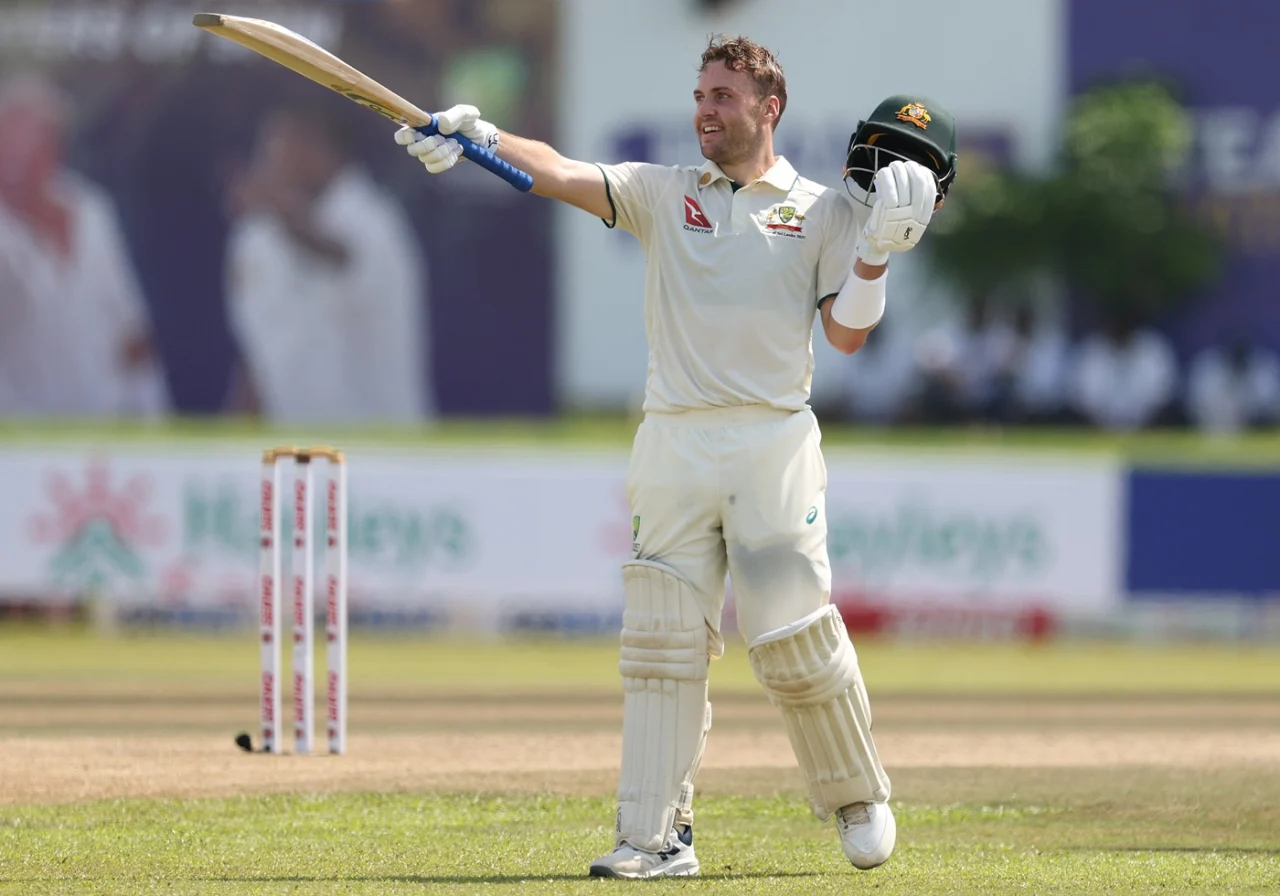
Usman Khawaja’s maiden Test double century and a rapid ton from debutant Josh Inglis decimated a flagging Sri Lanka before Australia’s attack breathed life into a slow Galle surface late on day two.
After stand-in captain Steven Smith declared Australia’s innings on 654 for 6 midway through the final session, Sri Lanka’s top order fell apart and they lost three wickets inside the opening 10 overs. Sri Lanka reached 44 for 3 when rain ended the day’s play prematurely with Australia enjoying a firm grip on the first Test.
Exhausted after spending 154 overs in the field, openers Oshada Fernando and Dimuth Karunaratne were dismissed within the first five overs.
With Mitchell Starc selected as Australia’s only frontline quick, there was intrigue over who would share the new ball with him. Left-arm spinner Matthew Kuhnemann, playing in his first Test match in almost two years, was an inspired choice and claimed Fernando lbw for 7 in his first over.
Bowling from around the wicket, Kuhnemann trapped him on the flap of his front pad as Fernando reviewed in vain. Kuhnemann was mightily pleased when the decision was upheld having made a speedy recovery from a thumb injury sustained in a BBL match on January 16.
Sri Lanka slid further when Karunaratne edged a short-of-a-length delivery from Starc to gully, where substitute fielder Nathan McSweeney completed a catch on the juggle having desperately turned around and dived after the ball bobbled over his head.
Having had little to do in the recent series against India, offspinner Nathan Lyon completed Australia’s near perfect day with the wicket of Angelo Mathews, who was brilliantly caught by a diving Travis Head at short leg.
Australia have completely capitalised on winning a favourable toss and batting first on a slow surface amid stifling humidity as they amassed their highest ever total against Sri Lanka.
Khawaja finished with 232 off 352 balls and fell early in the second session dominated by Inglis, who became the first Australian debutant to score a Test century since Adam Voges – his Western Australia coach – in 2015.
England-born Inglis reached his century off just 90 balls and he jumped high before punching the air with his proud parents visibly emotional in the terraces. He joined Michael Clarke and Shaun Marsh as Australian century-makers on Test debut in Asia.
Inglis showcased his proficiency against spin with decisive footwork either by skipping down the track or rocking back deep into the crease. His aggressiveness and maturity, having captained Australia in ODI and T20I cricket recently, reinforced why the selectors were keen to shoehorn him in the side.
Inglis, the Western Australia wicketkeeper playing as a specialist batter, celebrated his milestone with incumbent keeper Alex Carey at the crease before he fell on 102 having faced 94 balls.
Khawaja had earlier notched his highest Test score, overtaking his 195 not out against South Africa at the SCG in 2023 when rain forced an Australia declaration.
Khawaja and Smith were the fulcrum of Australia’s massive first innings, combining for a 266-run partnership. Smith was the only wicket to fall in the morning session after being trapped lbw for 141 by legspinner Jeffrey Vandersay, Sri Lanka’s most threatening bowler.
Smith added 37 runs to his overnight tally after a momentous opening day where he became the fourth Australian to reach 10,000 Test runs en route to a 35th century.
The 38-year-old Khawaja celebrated his first Test double century just before lunch as he kneeled down and bowed to the turf as the fans, many of whom are Australians, applauded with gusto.
He had earlier overtaken Justin Langer’s 166 in Colombo in 2004 as the highest score by an Australian in Sri Lanka. Having struggled against spin earlier in his career in South Asia, Khawaja has become only the second Australian after Allan Border to make Test centuries in India, Pakistan and Sri Lanka.
Khawaja has wound back the clock after an 18-month Test-century drought, having most recently against India struggled at the hands of tormentor Jasprit Bumrah.
Sri Lanka utilised just their four frontline bowlers with sole quick Asith Fernando bowling just 15 overs. Left-arm spinner Prabath Jayasuriya was effectively blunted with 3 for 193 off 60 overs in a far cry from when he claimed 12 wickets against Australia on the same ground in 2022.
Sri Lanka’s attack were unable to counter Australia’s aggressive approach and stem the flow of runs. Their tardy performance in the field on the opening day, where they missed several opportunities to dismiss Khawaja and Smith, proved costly.
Australia resumed on 330 for 2 with play starting 15 minutes early after rain ended day one prematurely. After resorting to a defensive leg-stump tactic late on day one, Jayasuriya attacked the stumps and aimed to skid the second new ball on.
But after four overs, Smith had enough and showed his first signs of aggression by skipping down the wicket as the partnership passed 200 runs.
Khawaja unfurled the reverse sweep to good effect on day one, but was lucky on his first attempt in the morning’s play when he only just cleared Peiris over short third for a boundary.
A third straight wicketless session loomed for Sri Lanka until Vandersay deceived Smith with a delivery that straightened down the line and hit him on the back pad. Vandersay’s enthusiastic appeal was initially turned down, but the decision was overturned on review in a massive relief for Sri Lanka.
After waiting almost 100 overs, Inglis finally entered the crease as he chewed gum furiously awaiting his first delivery in Test cricket. He started in fine fashion with a boundary after whipping Vandersay through mid-on and was at ease against spin.
He showcased his confidence by skipping down the track and launching several blows down the ground to race to 44 at a run a ball pace by tea.
Fernando was handed the ball after the interval for the first time in the day’s play and tried to provide a spark for his flagging team. But his short delivery was treated with disdain by Inglis, brought up on the WACA’s fast and bouncy surface.
Inglis reached his half-century off 51 balls to become the third Australian debutant in as many Tests to reach that landmark, following in the footsteps of Beau Webster and Sam Konstas.
Shortly after the pair reached their 100-run partnership, Inglis was given out lbw on 58 off Nishan Peiris after being struck on the back leg having missed a reverse sweep. But he reviewed immediately and the decision was overturned with a nick on the bottom of the bat detected.
Inglis remained unflustered and continued attacking, but Khawaja’s indefatigable knock finally ended when Jayasuriya enticed an edge to wicketkeeper Kusal Mendis.
Inglis reached his ton with a push through the off-side before providing a simple catch to cover as Jayasuriya’s toil was again rewarded.
Australia ground Sri Lanka into the ground before Smith finally declared and batting suddenly became extremely difficult for the beleaguered home team.
Brief scores:
Sri Lanka 44 for 3 (Kamindu Mendis 13*, Dinesh Chandimal 9*; Mitchell Starc 1-10, Mathew Khuneman 1-26, Nathan Lyon 1-7) trail Australia 654 for 6 dec in 154 overs (Usman Khawaja 232, Steven Smith 141, Josh Inglis 102, Travis Head 57; Jeffrey Vandersay 3-182, Prabath Jayasuriya 3-193) by 610 runs
[Cricinfo]

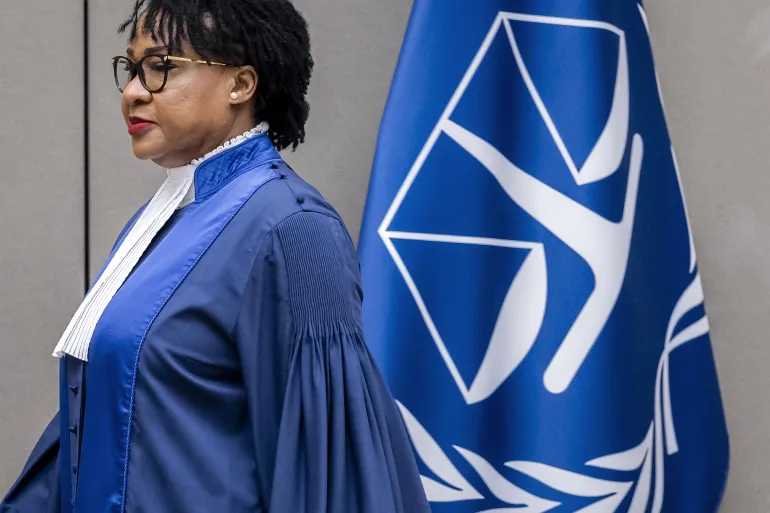
United States Secretary of State Marco Rubio has announced a new set of sanctions against the International Criminal Court (ICC), this time targeting the entity itself, as opposed to the tribunal’s officials or groups that provide support.
The announcement on Friday represented a major escalation from the administration of US President Donald Trump, which has vowed an “all of government” approach to dismantling the court.
“We will ban transactions with this rogue court, cutting off their resources and crippling their ability to operate against us because our message is clear: the United States and the American people are not subject to the jurisdiction of this fake ICC,” Rubio said in a video posted on social media. “Either the ICC will end its threats, or we will end the ICC.”
As justification for its actions, the administration has pointed to the court’s ongoing investigation into abuses committed in Afghanistan, which could ensnare US military and intelligence personnel, as well as the ICC’s arrest warrant for Israeli Prime Minister Benjamin Netanyahu and former Defence Minister Yoav Gallant for war crimes committed in Gaza.
Before Friday’s actions, the US had sanctioned ICC judges and prosecutors, a UN special rapporteur focusing on the occupied Palestinian territories and Palestinian rights groups that have provided evidence to the court.
Several rights groups have challenged those sanctions in US federal court, saying restricting how US citizens interact with the court treads on their constitutional freedoms. Sanctioned ICC judges have also launched legal challenges in the US.
[Aljazeera]

United States President Donald Trump said that Russia has agreed to supply 300,000 tonnes of diesel fuel to global markets amid discussions with Russian President Vladimir Putin.
“I have just concluded a highly successful discussion with President Vladimir Putin, of Russia, wherein it was agreed that Russia will immediately supply over 300,000 Tons of Diesel Fuel to the American and Global Marketplace, another 500,000 Tons during the month of November, and 1,000,000 Tons immediately thereafter,” Trump said in a post on his Truth Social platform.
The president added that Russia would deliver an additional 3 million tonnes of fuel “within a short period of time”. He said that the country would supply 500,000 tonnes in November.
An envoy for Russian President Vladimir Putin, Kirill Dmitriev, praised cooperation between Russia and the United States on diesel and energy in a post on X shortly after.
“Russia-US cooperation on diesel and energy will benefit the world,” Dmitriev wrote on X.
Petrol price pressures
The deal comes despite Ukrainian air strikes, which have taken more than half of the country’s oil refining capacity offline, according to claims made by Ukraine’s Ministry of Defence on Sunday.
The latest announcement comes a week after the G7 countries agreed to release 100 million barrels amid pressure from the White House.
Diesel prices have been elevated in recent months but have started to decline. The average price for a gallon is $6.27 ($1.66 per litre), according to the American Automobile Association (AAA), which tracks daily petrol prices. That’s down $0.10 from this time last week, but up $5.94 from this time one month ago.
[Aljazeera]
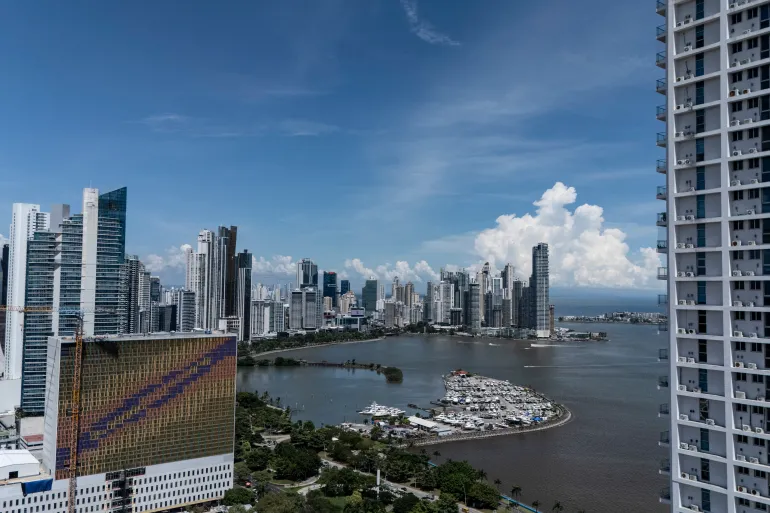
A magnitude 7.7 earthquake has hit southern Panama, triggering tsunami warnings across Central and South America.
The US National Weather Service issued tsunami warnings for Panama, Colombia, Ecuador, Nicaragua and Guatemala on Friday following the quake.
Chile’s naval Hydrographic and Oceanographic Service also issued a tsunami warning.
The US Geological Survey said the earthquake was centred about 10km (6 miles) southwest of the remote community of Pitaloza Arriba along the Pacific Ocean coast.
Residents of Panama City reported feeling tremors, with buildings shaking and people evacuating into the streets.
“We felt it very strongly. It knocked things over in the kitchen, but we’re okay, though we’re very scared,” 60-year-old Rosendo Dominguez, who is from Herrera province, where the earthquake struck, told The Associated Press news agency by phone.
“Everyone is outside, scared,” Dominguez added.
Videos shared by newspaper La Prensa showed the tower of a historic building had collapsed along with several balconies of a residential building in Penonome, a city about halfway between the epicenter and Panama City.
Panama’s ministry of education ordered schools closed.
There have been several destructive earthquakes in the region this year.
In June, twin quakes hit northern Venezuela, causing widespread devastation and killing at least 6,500 people.
In August, a magnitude 7.4 earthquake hit Colombia, killing at least 289 people.
[Aljazwwea]

Sri Lanka ITEC Alumni Association formally launched

Measures underway to protect Diyagama Forest as a Reserve — Deputy Minister of Environment

Showers or thundershowers will occur in most parts of the island after 1.00 p.m.

NPP govt. reminded of its responsibilities as US warship leaves Colombo

CERT: Beware of foreign Uni. scams on social media

Shiranthi receives treatment at National Eye Hospital

‘Dates have the highest sugar content to fight Coronavirus’

Sunday Island 27 December – Headlines

#SundayIsland 17th December – Headlines

Sunday Island – 28th March

Sunday Island Headlines – 21 March

Sunday Island – 21st February – Headlines
-

 News5 days ago
Geneva takes up Sallay’s case and govt. ignores opportunity to answer accusations
-

 Features6 days ago
The first woman in the foreign service or Ceylon Overseas Service it was then called
-
 News6 days ago
Nearly 20 Iranian tankers stranded off Lanka amid US sanctions
-

 Features4 days ago
Preventing grievances from becoming communal
-

 Sports2 days ago
Nissanka absence opens door for Sri Lanka’s young guns
-

 Features5 days ago
Sri Lanka Cricket Bill: Governance reform is not yet a cricket strategy
-
 News3 days ago
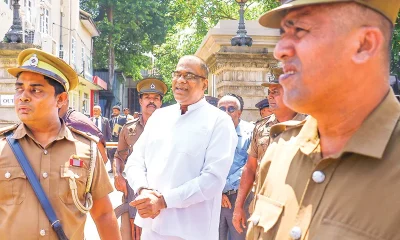
Gnansara Thera to be assigned to prison printing section: Officials
-

 News6 days ago
Lanka enters new phase of prosecutions as hurdles clear