
Features
Selling Oil, motor racing and moving from Shell to Reckitt and Colman


Excerpted from the memoirs of
Lalith de Mel
His first real job was with the Shell Company of Ceylon Ltd. Which her joined at age 22. The Research Economist role at the Coconut Research Institute was almost a continuation of life at Cambridge. Academic research at one’s own pace was close to preparing a piece of work for the supervisor.
Shell was a proper job. He had a boss, and he had to accomplish whatever his boss wanted him to do in an industry and in activity that was far removed from Economics. It was new territory, marketing petroleum products. It was his first encounter with petroleum and his first encounter with marketing, but he settled easily into the world of commerce.
His first role at Shell was working directly for the Head of Marketing as his Personal Assistant. He was an experienced petroleum man and a rather unfriendly Egyptian national. His core role for Lalith was having him prepare feasibility studies on building new filling stations.
Shell worked a half day on Saturdays, and Mike Khoury (that was his name) would give him an assignment around 11 a.m. and insist that he gets the report the same day. He did this regularly and justified it by saying that it was only on Saturday afternoons that he had the time to study investment projects. Lalith grudgingly says that this was probably true.
After his stint as a PA he was given responsibility for marketing kerosene and reporting to an Iraqi national. The man was happy to not exert himself unduly and probe the rural markets and to leave it all to Lalith. He was pleased that as a 22-year-old he was virtually responsible for marketing kerosene, which was perceived as a product with good growth potential. It was the main source of lighting in rural areas and the task was to persuade housewives to move from firewood to kerosene for cooking.
He enjoyed the opportunity of traveling all over the rural areas. It was perhaps this understanding of rural areas that has triggered his firm belief in the need to develop rural areas, on which theme he has written many articles.
From kerosene, he became a part of the Retail Marketing team. That was the engine room that drove sales of Shell products. Shell was one of the key retailers of petroleum products worldwide. The main competitors globally were equally big boys. Market share varied. The way Shell International ensured consistency in approach across the world was by having detailed process manuals for all parts of the marketing mix. The local companies had to develop their campaigns within the lines set by the process manuals. It was a wonderful course in structured marketing. He says it was like doing a marketing degree and freely admits that he learned his marketing at Shell.
After a few years, he was moved to the Finance Division. He had twin roles. In addition to carrying out a normal accounting function, he worked in the special unit created to study the options for formulating claims for compensation for assets that were taken over by the Government when Shell and the other oil companies were partly nationalized. He quickly became head of this unit and his last role was in putting together the claims for compensation on the agreed format, signing on behalf of Shell and submitting the claims to the Government.
Shell was keen that he should continue his lectures at Aquinas, and he continued to teach students studying for the BSc London University Economics degree in the evenings.
Outside work, Shell was a fun place. It had an excellent sports ground. He got into the cricket team that was in the A division of the Mercantile league. He also played badminton and hockey in the inter-firm tournaments. Shell took a keen interest in motor racing. The objective was to get the top drivers to use Shell petrol and Shell oil. Dudley Perera, a very Senior Manager at the time, was the link man between Shell and motor racing and Lalith became his assistant.
The atmosphere at motor race meets, the roar from the cars, the smell of burning oil and the vibes from screeching tyres got to him and he started motor racing. He drove a red MGA with the distinctive number plate I SRI 5555. He raced for many years and had his share of wins both at Katukurunda and the Mahagastota Hill Climb in Nuwara Eliya. In one event at Katukurunda, he raced with Upali Wijewardene, his Cambridge University friend and subsequent famous entrepreneur, and Asoka Gopallawa, the son of the Governor General, all driving MGAs.
How Shell plans management succession
“After five years at Shell, I felt the urge to move on. There was uncertainty about the future, with partial nationalization of the petroleum industry. The exciting future appeared to be in the new foreign investments to set up the manufacturing industry.
When I sent in my resignation, I was summoned by the General Manager, a Dutchman named Jan Van Reeven. He did not want me to go as they had identified me as a potential International General Manager. I probably had a bemused expression on my face and so Van Reeven said, `Let me explain.’ He said that Shell had over 100 operating companies around the world and they had 100 General Managers, some would move to other companies, some would get fired and the rest would eventually retire at some stage in the future. So he said it was a continuous process in Shell companies to identify potential future General Managers and to develop suitable career paths for them that would eventually lead to a General Manager post in the future.
The process, he explained, was for operating Shell companies to seek and recruit outstanding persons as management trainees from time to time. The new trainee’s first job is to work for one of the directors as a Personal Assistant. At the end of this period, an early call is made as to whether the person is a potential future GM. If the answer is yes, the trainee is given a challenging career path and reassessed at the end of each year.
`As your preferred path was Marketing, you were given various marketing roles,’ Van Reeven explained. After three years the Shell approach was to test the trainee in a different discipline. “That’s why you were transferred to Finance as an Accountant.’ He then said: ‘After five years, we were convinced you would be a future GM and our development plan is to transfer you to the international pool as an employee of Shell International and transfer you to a Shell Company overseas.’
I was having a great social life in Colombo and had no desire to go and work abroad. 1 thanked him for the excellent training I had at Shell and said all the appropriate nice things about Shell and Van Reeven and then said I was firmly committed to pursuing a Marketing career in a consumer goods company. He was very gracious and wished me well and as I got up to leave he said, ‘Someone I know is setting up a multinational manufacturing company and he wants a marketing man; would you like to meet him?’ I said yes and he sent me to meet Alex Alexander, the Managing Director of Reckitt & Colman of Ceylon, who was setting up the business. He offered me the Marketing Manager role. I accepted, and that was the start of my journey with Reckitt & Colman.”
He was marketing manager of Reckitts at age 27 and a director of that company at 29-years.
Shell always had a big advertising budget. Their agency was Grants, then headed by Reggie Candappa and his assistant was Anandatissa de Alwis, who later became Minister of State and the Speaker. Later on in life he started his own agency, De Alwis Advertising. Lalith said: “They both became good lifelong friends. I signed them on and they became our advertising agents at Reckitt & Colman. They deserve a good part of the credit for the excellent sales performance of the string of brands we launched.”
The first Marketing Manager of Reckitt & Colman of Ceylon was Michael Morris. He had been with the Indian business for a few years and came to help to set up the new business in Sri Lanka. He was in Sri Lanka for a relatively short period; he decided to go back to the UK as his wife was a doctor and wanted to go back into medical practice. This created the vacancy for which he was recruited. Morris later became a Member of the British Parliament and Deputy Speaker and was then ennobled to become Lord Naseby. He was recently in the news about war crimes in Sri Lanka. He continues to be a good friend.
Two Englishmen had been sent to start the business, Alex Alexander as Managing Director and Peter Crisp as Factory Manager. All the hard work was at the manufacturing end. Disprin was being manufactured for the first time outside the UK. A whole host of previously imported products were progressively locally manufactured.
The excitement of getting a job as a Marketing Manager of consumer products in a multinational company was short-lived. He soon felt it was a well-paid non-job with nothing to do by afternoon. The Reckitt’s products were distributed by E.B. Creasy & Co. and the Goya range by Lalvani Brothers; the advertisements were sent from the UK. All the advertisements were ones used by the group in the UK. All he had to do was send them to the advertising agency.

Basil Reckitt on a visit to Sri Lanka, with Lalith de Mel at an evening reception
After a few months he assessed the scene and made his move. It was brave, reckless or foolish. He had never marketed any consumer products, knew nothing about the Pettah wholesale market which controlled 50% of sales and had never managed a sales force. He was good with numbers and knew how to put together convincing project proposals (learnt the hard way at Shell).
He formulated a proposal to terminate the distribution agreements, to set up his own marketing office and to recruit a sales force, a product manager and an advertising manager. In his proposal, he demonstrated that the commissions paid to the two distributors would more than cover the cost and in fact make a significant contribution to profits. The MD Alexander was impressed with the proposal and bought into the idea. He had just asked one question: “Are you sure you can do it?” When Lalith said “yes,” Alexander had said, “Okay, go and do it.”
He did not quite know how he was going to do it. There were many things he had not done before but he was certain that he could do them. As subsequent events will show, this was a trait he carried right through his life. He persuaded Terrence de Silva who had worked for him at Shell to join him as the Manager for everything – HR, admin, credit control, managing the fleet of vans, etc. Terrence was with him as a part of the team until he left for England. Terrence was the engine room of the Marketing division and kept everything running smoothly, whilst he launched and developed a great basket of products.
They had an amazing array of products, such as Disprin, Dettol, Brasso, Silvo, Robin Blue, Harpic, Mansion polish, Cobra shoe polish and the Goya range of fragrance products such as perfumes, colognes, talc and soap. One by one they were rolled on to the market and it was a great challenging time for him.
Fortunately it all worked out well, the sales grew, there were no bad debts, which was always a risk with the Pettah wholesale market, the profits grew and the business was highly successful and profitable. The overseas investors were pleased.
Basil Reckitt’s visit
There is a story that must be told. Basil Reckitt, the Chairman of Reckitt & Colman UK, came for the formal opening, which was also attended by Prime Minister Sirimavo Bandaranaike, as it was the first major foreign investment in Sri Lanka during her tenure as the Prime Minister.
They were seated next to each other and chatting and she asked Basil Reckitt whether there was anything that she could do and he said, “Please could we have a telephone?” Those were the days when it was impossible to get a telephone. When Lalith became the Chairman of Sri Lanka Telecom later on, his objective was to make sure that anybody who wanted a telephone would get one within a week and by the time he left his role this objective had been achieved.
Marriage
In 1966, whilst he was busy building the business, he also got married. His wife was then an undergraduate at the University of Colombo and she had to continue her studies to complete her degree. After she graduated, she started working in the university itself Since she was studying, they did not have a much of social life in the evenings, so he thought it would be useful to do some studying himself and he started studying Accountancy. He completed the intermediate exams of Cost and Works Accountants, the precursor of CIMA, and also did the exams to become an Associate of the Institute of Book Keepers. When his wife graduated and was no longer poring over books in the evening, he stopped his studies. However what he had learned proved to be very helpful as it helped him to develop a good understanding of finance and accounting.
Managing Directors
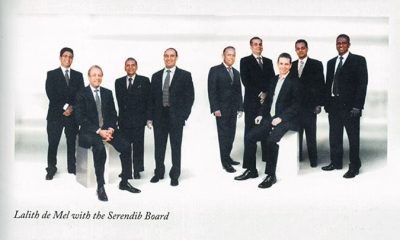
Alex Alexander moved on to another part of the Group and was followed by Mark Foster, who was also a Cambridge graduate. When Mark moved on, he was followed by Greg Courtier, who became his third British boss. He did not resent this as that was the style back then, where all foreign firms had a foreigner as the Managing Director.
He was asked to say something in his own words about his key achievements and his relationship with his foreign bosses during this period. Multinationals controlled their businesses from Head Office. The local Managing Director reported to a Regional Director at Corporate Headquarters. There were very specific guidelines on what required approval from HQ
“All advertisements were sent from the UK. For the local language press we had to translate the English ads. After my spell at Shell, I appreciated that multinationals wanted to preserve the brand footprint and have the same consistent message all over the world. The challenge was to wriggle some freedom within this constraint in order to create better advertising that was more relevant in the context of the local market. After a long exchange of correspondence, I succeeded in getting approval to create our own ads.
I had to stay within the parameters of the global branding footprint but was given freedom on how to convey this in local media. We were probably the first Reckit’s market in the Commonwealth to win
this concession. I also got approval to shift the positioning of Dettol from solely a treatment for cuts and wounds to a personal care product that prevented infection. I pursued this right through my career and created a mega global brand in developing countries that is still growing. Dettol is
amazing marketing story as nobody has seen germs or seen Dettol kill germs, but were made to believe that it did provide protection from germs.Both Mark Foster and Greg Courtier were marketers, but they knew nothing about how to market and advertise products in Ceylon. They thought it prudent not to interfere with me and I had the freedom to operate in effect without a boss in the Colombo office whilst the MD worked out of the factory and office at Ratmalana. The challenge in a multinational is getting this freedom.

The wedding retinue, with Bestman Upali Wijewardene
The UK office was pleased with the results and naturally the MD got the credit for the good sales and profits growth. I made no claims for any credit from our lords and masters in the UK for the good results. When the Head Office staff visited the business, I made it a point to say as many times as possible how much I enjoyed working with Mark/ Greg and said I greatly valued their guidance. It was true I enjoyed working with them because they did not interfere. As for guidance it was not true, and they were not really able to provide any meaningful guidance.
But strategically it was a good thing to say, so this led to a good partnership with the Managing Director. Not getting the credit and warm congratulations from the parent company was a small price to pay for having complete freedom. I steered well clear of the pitfall of trying to get plaudits for the company performance from the overseas owners and getting into a competition for praise with the boss and thereby having a not-so-congenial relationship with him.
I had a gut feeling that payback time would come. They were possibly slightly embarrassed to take the credit for my sales and profits results and had to do something to acknowledge my contribution. They recommended that I be made a Director of the Ceylon Company, which was a public quoted company.
I was pleased and content. That was as far as one’s aspirations went in those days, to become a director of a local multinational company. There was no ambition to go any further, because less foreign firms were likely to always have a foreigner as the head of their business.
The Government formed a new company named Consolidated Exports and it came to be called Consolexpo. This was a joint public sector-private sector partnership to generate and support the growth of exports. I was flattered and pleased when I was invited to join the Board. This was my first experience with the Government sector. It was also my first Board appointment outside Reckitt & Colman, so I count this as one of my achievements during this period.
Then one day a visiting director from the parent company called me in for a chat. He said they had been following my progress and were pleased with what they saw. He said almost casually that I might have the chance of being the first Sri Lankan Managing Director, but added in the same breath that I would have to prove myself in another market. I impulsively asked whether I could be sent to Australia. Half my vintage Josephian rugger team and all my Burgher school friends had migrated to Melbourne. I thought if I had a spell in Australia I could have a whale of a time with my old buddies.
The visiting Director said, ‘We will let you know in due course’ and eventually they told me that they had decided I should go and work in Brazil as a member of the management team of that company. That was their biggest business in South America and it was a huge market. Brazil was five times the size of India.








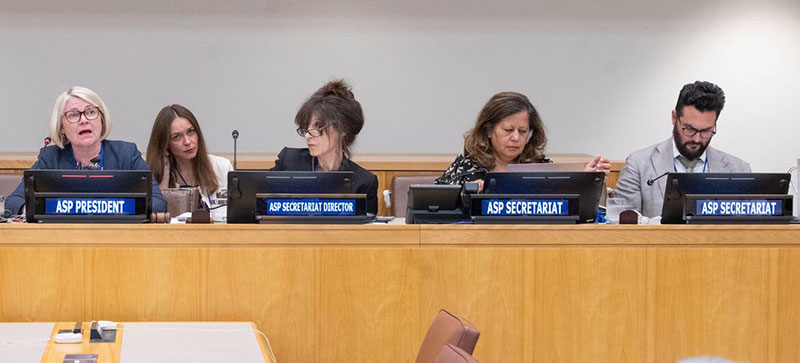
 US Secretary of State Marco Rubio’s warning to the International Criminal Court (ICC) was stark: ‘Either the ICC will end its threats, or we will end the ICC.’ It followed US central administration accusations that the court was unfairly targeting Americans on the basis of trumped-up war crimes charges.
However, a new plethora of sanctions has been clamped on the ICC by the US, which in turn has spurred accusations by sections of the world that the latter has unleashed an ‘assault’ on the international legal order.
What some of the sanctions would mean for the ICC was outlined by Rubio: ‘We will ban transactions with this rogue court, cutting off their resources and crippling their ability to operate against us.’
The ICC has shown consistency of purpose over the years. Despite some operational constraints it has indicted a large number of political strongmen from around the world, accused of war crimes and other governance excesses that come under its purview. Two such recent figures are: Russian President Vladimir Putin and Israeli Prime Minister Benjamin Netanyahu.
Rather than enjoy a mere nominal presence in the world community, the ICC has proved its effectiveness by detaining and bringing to justice scores of VIP politicians and others of their ilk who have been found guilty of human rights abuses and kindred excesses that come within the terms of reference of the ICC.
Accordingly, the international justice system would be stymied considerably as a result of the ICC being dis-empowered, particularly financially. Needless to say, potential and real perpetrators of the species of crime coming under the jurisdiction of the ICC would stand to gain most from such anarchic tendencies. That is, political repression globally would be enabled to enjoy a new lease of life.
A detailing of the types of crime coming under the purview of the ICC provides an idea of what it would cost the international community if the ICC’s operations are gravely hampered. They are mainly: genocide, war crimes, crimes against humanity and the crime of aggression.
That is, the part of the world to be worst affected would be the global South, since the latter is awash with the mentioned crimes. Needless to say, a chronically-disaffected South will sooner rather than later undermine the well being of the world dangerously. The world is already being put through these paces.
At the time of writing, ‘illegal migrants’ from the South, for example, are aggravating many a Western economy’s woes, besides creating for them acute law and order issues. The fact that these migrants’ presence goes on to become a virtual test of the migrant receiving states’ ability to forge domestic social inclusion in the face of jingoistic protests by mainly white supremacist groups is evidence of the latter. As is known, the US, to take just one example, has been up against this crisis for quite a while.
Accordingly, it will be in the best interests of the West if ‘illegal’ migrant arrivals on their shores are stemmed. If the socio-political and economic problems assailing the South are effectively managed through North-South collaborative, ‘trouble-shooting’ efforts the causes leading to ‘illegal’ migration and connected issues could be resolved at source as it were. For, it is the aggravation of the South’s material questions that lays the basis for the emergence of repressive and anti-democratic regimes in the hemisphere.
Until such time that the aforementioned issues in North-South relations are visited afresh and addressed urgently, a vibrantly functioning ICC would be needed. For, the latter would prove a deterrent to Southern political and military strongmen, highly prone to power abuse and like excesses, from coming into being in the wake of the South’s chronic material woes and the wars and conflicts that result from them.
It stands to reason then that the US would be acting in its own interests by enabling the ICC to perpetuate its mandate without hindrance. For a crop of issues that impinges negatively on internal law and order would be defused.
Meanwhile, there needs to be a meeting of minds among the rest of the West to put back in place a North-South dialogue process aimed at reducing some of the economic pressures that are weighing on the South.
Since economics usually drives politics it will be in the interests of the world community to scrutinizingly re-visit North-South issues of the past and put in place economic relief packages for Southern publics that would enable them to tide over their material hardships rather than permit the latter to aggravate into social disaffection and eventually armed militancy. It is the latter juncture that paves the way for the emergence of authoritarian rulers in the South who then go on to be a blight on their publics.
Accordingly, the Southern-based global development thinking of the past that envisaged a more equitable world economic order needs to be seen as an urgent need. That is, NAM’s international development paradigms need to be resuscitated to the extent possible.
It is unlikely that rightist governments of the West, such as the current Republican administration in the US, would find these projects feasible, but democratic states of Europe, led by perhaps the UK, are likely to think otherwise. For it would not be beneficial for the democratic world to be having on their hands repressive governments in the South who would be gravitating towards the major military and economic actors of the South, such as Iran and North Korea, who tend to be in constant power struggles with the West.
However, until such time that the mentioned, pro-people initiatives are given serious thought the ICC would need to be enabled by the international community to be in place comfortably and carry on with its mandate of bringing repressive rulers to book. Besides the ICC should pave the way for the peoples of the developing world to enjoy some substantial respite from the political repression and even terror which tend to be their lot.
Meanwhile, the wars of West Asia are relentlessly aggravating the economic hardships of people everywhere, driving the point home to enlightened sections that there is no alternative to peacemaking. A challenge is to convert the US under President Trump to this line of thinking.

 This week, I give you five simple, time-tested homemade remedies that help reduce the appearance of blemishes, control excess shine and leave your skin feeling softer and smoother.
The Honey and Lemon Brightening Dab:
For stubborn blemish marks, this is a classic. Mix one teaspoon of pure bee honey with three to four drops of fresh lemon juice. Apply gently, only on the affected spots, and leave for 10 minutes before rinsing with lukewarm water. While honey soothes and softens, lemon helps to brighten naturally. Use twice a week in the evening.
Besan and Rose Water Oil-Control Pack:
An ideal remedy to combat shine, especially on the T-zone. Take two teaspoons of besan (gram flour) and mix with sufficient rose water to form a smooth paste. Add a pinch of turmeric for its antiseptic goodness. Apply evenly, keep for 15 minutes and wash off. It absorbs excess oil without over-drying, leaving a beautiful matte finish.
Aloe Vera and Cucumber Ice Soother:
Blend fresh aloe vera gel with the juice of a grated cucumber and freeze the mixture in an ice tray. Each morning, wrap one cube in a soft muslin cloth and gently rub over a cleansed face for 30 seconds. It calms, tightens pores and imparts a baby-soft smoothness.
Oatmeal and Curd Gentle Polish:
Roughness and old blemish marks need gentle exfoliation. Combine one tablespoon of finely powdered oatmeal with one tablespoon of fresh curd (yoghurt). Massage very gently, in circular motions, for one minute, leave for five minutes and rinse. It removes dead cells and unveils softer, clearer skin.
Multani Mitti and Green Tea Magic Mask:
Brew some green tea and allow it to cool completely. Mix one and a half teaspoons of Multani Mitti (Fuller’s Earth) with the tea water to make a fine paste. Apply for 10 to 12 minutes – do not let it dry and crack completely – and wash off. It draws out impurities, fades blemishes and bestows a fresh, shine-free glow.
A Gentle Reminder:
As with any natural remedy, always do a patch test on your inner arm first. For those with oily or combination skin, avoid heavy coconut oil application and harsh scrubbing, as they tend to aggravate shine and blemishes.

 Dream of performing on a world stage? Well, here is your unique, golden opportunity!
The World Championships of Performing Arts (WCOPA) — the one and only official “Talent Olympics” — is the world’s premier global platform for aspiring singers, dancers, actors, models, instrumentalists, etc., to compete, shine and be discovered!
And, yes, this world stage is open to YOU, Sri Lankans living in Sri Lanka and overseas!
Held annually in glittering Las Vegas, WCOPA brings together over 70 countries, all competing for Gold, Silver and Bronze Medals, just like the traditional Olympics.

Lakisha Bernard: Will represent Team Sri Lanka at WCOPA 2027
Outstanding performers vie for the coveted titles of Junior and Senior Grand Champion Performer of the World, with winners and standout participants awarded over $500,000 in scholarships, cash awards and prizes to catapult their education and careers!
Sri Lanka is already making waves! At WCOPA 2026, Natharie Wickramasinghe, representing Team Sri Lanka, made the nation proud by winning a Bronze Medal in the Ethnic/Folklore Dance category!

Lakisha: Accomplished freelance Model and Fashion Design graduate
Recruitment for this prestigious competition is handled through a system of scouts and licensed National Directors — and this is where our very own Chris Rajendra, now based in Las Vegas, and National Director for Team Sri Lanka, comes into the scene.
If you are a singer, dancer, actor, model, instrumentalist — if you have talent burning inside you — contact Chris Rajendra today for registration and, who knows, you may find yourself in Las Vegas, and proudly draped in the Sri Lankan flag, at WCOPA 2027!
The contact address is: Chris Rajendra, wcopa.nationaldirector.sl@gmail.com
or chris.rajendra@gmail.com
Meanwhile, a star is born for 2027, in the form of Lakisha Bernard who is all set to represent Team Sri Lanka at WCOPA 2027.
Originally hailing from the sun-drenched coastal city of Colombo and now carving out her creative career in Canada, 22-year-old Lakisha is stepping into the international spotlight.
This accomplished freelance Model and Fashion Design graduate has officially been appointed as the Team Sri Lanka Promoter for Canada as she prepares to represent Team Sri Lanka at WCOPA in Las Vegas.
Lakisha brings a unique blend of high-fashion sensibility, captivating camera presence and expert garment design to the Team.
Having built her career, from local college shoots to high-glamour concepts, Lakisha’s inspiring journey embodies the true spirit of cultural bridge-building and creative resilience, bringing immense pride and recognition to Sri Lanka on the global stage.
WCOPA 2027 will be held at the legendary Westgate Hotel & Casino, Las Vegas, from 12th to 20th July – the very same iconic arena where the late, great Elvis Presley himself performed!
Your moment is now. Your stage is Las Vegas, so hurry and contact Chris Rajendra.

AgriConnect Sri Lanka’ to be launched on 30 October to Modernise the Agricultural Sector Through Digitalisation

57th Annual Saints’ Quadrangular Tournament on Saturday and Sunday

Showers or thundershowers will occur at most parts of the island

Prison rules to be revised over monks’ attire

AC President recuses himself from hearing prison attire case pertaining to Gnanasara Thera

Court orders steps to obtain INTERPOL Red Notice against Basil

‘Dates have the highest sugar content to fight Coronavirus’

Sunday Island 27 December – Headlines

#SundayIsland 17th December – Headlines

Sunday Island – 28th March

Sunday Island Headlines – 21 March

Sunday Island – 21st February – Headlines
-

 News7 days ago
NDB fraud Rs 60mn more than reported
-

 News7 days ago
Removing monk’s robes matter for Sangha to decide: Mahanayake Theras
-

 News6 days ago
NPP govt. reminded of its responsibilities as US warship leaves Colombo
-

 News5 days ago
Sri Lanka escalates anti-graft drive with Shiranthi’s jailing
-
 Latest News6 days ago
Farhan, Sadaqat help Pakistan ace 183 chase to go 1-0 up
-
 News7 days ago
BHC, Colombo: “LTTE remains a proscribed org. in the UK”
-

 Latest News4 days ago
Farhan and Sadaqat help Pakistan seal series in style
-

 News5 days ago
Iranian ships stranded, Lanka fears US sanctions