
Features
On to the private sector – JKH, Hemas and Schaffter company


Working simultaneously with state and private sectors
(Excerpted from the autobiography of Lalith de Mel)
About the time I joined the SLT Board, Ken Balendra, the Chairman of John Keells Holdings, invited me to join the Board of his company. That was the start of my working simultaneously with the private sector and the State sector. Ken was a strong personality and could by himself enforce the disciplines of good governance. He was due to retire and he felt, and I think correctly, that he should leave JKH with a more formal structure to ensure good governance. He appointed three Independent Directors, S. Easparathasan, Franklyn Amerasinghe and myself, and later Tarun Das.
There was a major issue with the management arrangements at JKH. It had a serious ‘Parents-and-Children’ syndrome. The Executive Directors managed their segments of responsibility, like a chief executive. So they became the children managing the business. But they were also in corporate terms the parent responsible to the Board for this segment’s activity. So in effect they reported to themselves for their area of responsibility. So they were both parents and children.
In management terms this was a bad model and has been extensively discussed in the literature. I found a very good book on the subject and insisted that they all read it. The JKH team comprised nice and intelligent people and they were prepared to think positively about change where it was necessary. It was a pleasure working with this group, and they appreciated what I did for them.
They accepted that the business units should have a head reporting to the Directors – a separation of parents from children. The parents would be accountable to the Board. This is the classic management model and I was glad to take JKH down this road.
JKH had an entrepreneurial culture. I think this heritage came from Mark Bostock’s time. Instinct had played a role in selecting acquisitions. Persuading them to adopt hurdle rates and cash-flow paybacks helped to test acquisitions and to dispose of some bad acquisitions. When I was on the Board, the LMS (Lanka Marine Services) acquisition came up for discussion. The financials were good. I had a Shell background in my youth and knew something about petroleum products and bunkers.
I discreetly asked Susantha Ratnayake (who was promoting the acquisition) whether he or JKH knew anything about the bunker business. He said, `No, but Sir, it is not rocket science and we can learn it.’ He had acquired some of the JKH entrepreneurial culture. It was brave of him to persuade the Board to buy a business without knowing the business. They bought it and it was very profitable.
Ken Balendra knew his team better than anybody else and had selected Lintotawela to succeed him. He was a finance man and perhaps Ken thought it best to have a numbers man to preside over his entrepreneurial troops. I did not think he was quite JKH style and thought that Susantha was the driving force in the business. After I left the Board, whenever I met Susantha I told him that he was developing a stoop by carrying the business on his shoulders (he turned a light shade of pink and hated me for saying it). Subsequently Susantha Ratnayake became the very successful Chairman of JKH.
LEAVING JKH
I met Abbas Esufally, I think it was at the Golf Club, and he said Hemas was debating whether to go public (with a listing on the CSE), and he wanted me to help them to decide, and if they went ahead to help them through the process. I agreed to meet them and talk about it as I held the view, and still do, that a private sector economy would survive best if all the big companies went public, so that the wider public could also benefit from their success, and this would create inclusive growth.
Eventually I agreed to help Hemas, and I told JKH about it. Lintotawela was unhappy and I could not be on the JKH Board and the Hemas Board. He saw a conflict of interest because JKH was in Hotels and Serendib had three hotels, one in Sigiriya and one in Waikkal, where JKH had no hotels, and one three-star in Bentota where JKH had the five-star Bentota Beach Hotel. The JKH team tried to persuade me to dump Hemas and stay with them, but I felt I had done my bit for JKH and it was an interesting challenge to take Hemas public.
I resigned from the JKH Board to join Hemas. The JKH Directors continued as friends and still Susantha very kindly invites me for dinner from time to time.
Investing in Serendib and joining Hemas
Even during the dark days of the war, when tourist arrivals were poor, I believed that in the long-term tourism would be our oil well. To get closer to the industry I wanted to make an investment in a hotel company. Through a mutual friend I met Abbas Esufally and with his help bought the shares of a Director of Serendib Hotels, who was retiring. It was a relatively modest investment but it got me to the top three non-corporate individual shareholders and I was invited to join the Board. I also invested in the quoted Serendib subsidiary companies Sigiriya and Dolphin.
This gave me a good and continuous rolling insight of the tourism industry. I had always been interested in tourism as a good industry for developing countries. This close-up picture of the hotel industry was helpful in developing my knowledge. I was happy to be on the Board.
Serendib was a fairly unstructured business and I endeavoured to help the management develop relevant business processes. I encouraged the management to develop Serendib as a brand and to leverage the Bawa connection.
It was one of Geoffrey Bawa’s early hotels. It had been heavily influenced by 18th century Dutch architecture. The facade viewed from the beach had a remarkable resemblance to the well-preserved Dutch building in Pettah.
The hotel put together a Bawa room to illustrate and leverage the Bawa link. After Srilal Miththapala, the enthusiastic Manager in the early phase, we had Ranil De Silva, a very experienced modern Manager. I was happy to be an active and involved member of the Board, and saw the hotel expanding both physically and in quality and as a shareholder I was pleased that it also was a steady, profitable hotel.
Abbas Esufally, one of the four major shareholders of Hemas Holdings, was Chairman of the Company. He was perceptive of the issues relating to tourism, was a pleasure to work with, and I enjoyed working with him, for many years.
The Minor Group, a big international hotel group with a base in Thailand, had expressed an interest in some form of collaboration. This proved to be a distraction. The Serendib management was heavily involved in building its Anantara property in Kalutara and the Hemas Minor Joint Venture hotel in Tangalle. The joint venture with Minor never happened and Serendib had to consider a life without Minor. This was a new strategic challenge. I did not stand for re-election.
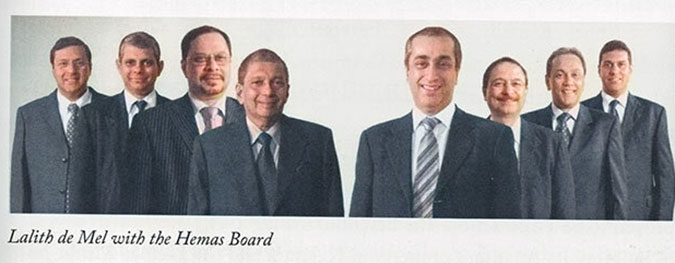
Hemas was owned by four Esufally cousins. Each managed a piece of the business, with freedom to do as they pleased. They had the same cars and same salary and lived down the same road. A high comfort zone.
My role was to explain the process, advantages and consequences of becoming a public company. The big concern was whether the public would buy the shares of a firm in Bristol Street owned by four Borah cousins. I was convinced that a properly-constructed public offering would succeed.
The daunting question for them was whether to remain private in their comfort zone or to release the value by going public and accepting all the restrictions on freedom that came with it. The prospect of becoming billionaires won. But it proved to be a hard struggle to get them to keep their part of the bargain and accept the restrictions on their freedom as a public quoted company. I agreed to come on the Board and lend my name to the public issue and the financial advisers were confident that the issue would be fully subscribed. It was.
Public company
It had three Independent Directors, and I was the Independent Chairman. I tried to perform two roles. To give them the benefit of my management experience and be a mentor to develop the management skills of the company and as Chairman to establish the good governance practices of a public company and create the corporate structures that would help optimize shareholder value.
The first problem
To complacently accept less than the best skills available was not compatible with the obligations of a Chairman, the custodian of the public shareholders’ interests. This created problems. The four family shareholders were all intelligent and educated. In the management structure of any good company, that only gets one to the starting gate. What they all, including Hussein, lacked was good business experience gained by working elsewhere under outstanding managers and a high quality management education.
It was a struggle to get them to accept that they should relinquish the Managing Director type of roles they performed, and to bring in first-class management so as to optimize shareholder value and for them to move to a Non-Executive Chairman type of role.
I can well understand that they would have resented me for pushing them to give up their roles, but probably reluctantly accepted that it was in the best interest of protecting the billions of value they owned in shares. Abbas Esufally was charming and gregarious, looked at it all in a very mature fashion, and took it all in his stride in the interests of developing shareholder value. His only concern was fashioning a useful role when he gave up his executive line job.
The biggest block
Hussein Esufally was the biggest block to creating a proper Board-managed company. Transition from a family firm to public company meant the major roles of managing the business, which were all in Hussein’s hand as the CEO of the family business, had to be vested in the Board headed by the Chairman.
He resented it, but had to accept, for example, that there had to be a Remuneration Committee, an Audit Committee, and that annual plans and investment proposals, etc. had to be approved by the Board. Good governance processes remain cosmetic until you give them teeth, and giving them teeth was not easy.
He saw this as a move of authority from him to me and did not like it, as it affected his ego. His reaction was to endeavour to diminish the image of the Chairman. He did not provide the Chairman with an office or a secretary, let alone a company car or entertainment allowance. When I insisted on an office, he gave me a little cubicle behind a secretary.
This undermined my ability to interact with the senior management as I had no proper venue to meet them and it was not in keeping with the image of a chairman of a public company to ask managers to meet the Chairman in his shoebox! When he had decided that he would be the next chairman, a grand office was created. I was like a shadow hovering relentlessly, pursing the reduction of his powers and creating a proper Board-managed public company.
Snakes and ladders
I thought that over the years I had convinced the family that the best method of protecting their wealth was to be a proper public company with an independent chairman and an experienced management team with a good track record managing it.
Steadily over the years we climbed up the ladder, rung by rung. I thought I had convinced them that the two sacred pillars of a good public company were an independent chairman and an excellent and experienced CEO.
When it was time for me to retire, sadly both these pillars were ignored. It was case of whizzing down a snake at the end. Hussein had decided to be Chairman. An end to independent chairmen at Hemas.
The choice for Chief Executive was Enderby. When I was a Director of CDC Plc in the UK, Donald Peck was Managing Director South Asia and Steven Enderby was a member of his private equity team. Steven Enderby had never managed a business as an executive CEO.
CDC was in private equity operations and Enderby could perhaps use his contacts from private equity days to get some funds to buy Hemas in the market and thereby help the share price. Steven is a friendly, charming and intelligent person but had no general management experience to bring to the party. After a long career of success in my endeavours, this is the one big blot of failure.
Fortunately for shareholders, Hemas had some good people, Malinga Arsakularatne had done an excellent job as Head of Finance. There had been many good marketing men in FMCG. If Hemas was prepared to have a CEO with great potential but no previous CEO experience in a big business, the very talented Kasturi Chellaraja Wilson would have been an excellent choice.
In addition to being appointed, there was also something in the air about Steven Enderby wanting to buy a large block of shares at a discount. I don’t know whether this ever happened. I did not want to be a party to the decisions regarding the Chairman and CEO. I said I must retire from the Board before these decisions were made and did so.I did not leave Hemas with the gratitude of the family but I think it was with their resentment.
Trading in bonds
Dinesh Schaffter wanted my help and guidance on developing a conglomerate of businesses he had put together. I said I would have a good look at his business and see whether I could add value. Ksathriya, as it was called, was managed by a small team of highly-paid managers.
I was appalled by what I saw in the numbers. They had made a number of bad acquisitions and were in the throes of making another, a supermarket chain, which had all the signs of another bad acquisition. Ksathriya was kissing distance away from bankruptcy. The task was not growth but restructuring for survival.
The management team was discontinued. Manjula Mathews, Dinesh’s sister, who also had a financial interest, joined the team to salvage what we could from this business which was in dire straits. This was the beginning of a long association with the Schaffters and their businesses. Ksathriya could not be saved as an ongoing business and all commercial operations dwindled down and were wound up.
Dinesh Schaffter was the eternal entrepreneur and his philosophy was ‘if one failed, look for another’. Ksathriya was reborn as Dunamis. Tucked away within it was a piece of relatively neglected business, which was high risk but interesting. The business called First Capital was a licensed bond trader and could trade in Government securities. So I joined First Capital as a mentor, ended up on the Board, and eventually was Chairman.
Trading in Government securities, to put it very simply, was to buy at the Central Bank auctions with money borrowed from the Banks and sell on at a profit but at very thin margins of profit. It was volume that gave one a meaningful profit, but volume meant high debt. It was a difficult business of predicting trends in interest rates and backing the judgment with high-risk trading.
Good governance was paramount. Processes had to be put in place to ensure good governance of trading and good management and they had to be rigorously enforced. The industry was heavily regulated. Compliance was vital as failure could result in losing the license to trade, which would mean the end of the company.
A compliance team was established but it was necessary for the Board to keep this activity under continuous review. The other area to be managed with utmost care was the management of risk and there was a Risk Management Committee. It was compliance to protect the license and risk to protect the shareholders’ money.
There were the other corporate bells and whistles essential in a public company, like a Remuneration Committee and an Audit Committee, and these were established. Around First Capital, there was another conglomerate developing. Wealth management, investment funds and a stockbroking firm. Good processes were established to facilitate their development.
The Schaffters, Manjula and Dinesh, were delightful people to work with, for many reasons. They were both very bright, there was always a chuckle even when contemplating dire circumstances if things went wrong. Never a risk of rumbling egos. If they had any, they never brought them to work. They always appreciated what I did for them. Whenever I met their father, Chandra Schaffter, he never failed to thank me for helping his children.
The thought of retiring from all work was hovering in my mind. A difficult regulatory development provided the exit. Stringent regulations were introduced about related party transactions. In close-knit conglomerates this was a problem and created the need to unravel them and to create new arrangements that complied with the regulations. At the tail-end of my career I had little appetite to take this on, and I had a good solution.
I had brought two excellent finance people on to the Board, Minette Perera and Nishan Fernando. They had both worked in companies where I was Chairman. Minette at Reckitts and Nishan at SLT. They were appointed to a Related Party Transaction Committee. After watching over it for a few months I knew it was in safe hands, and as I had done my bit for the Schaffters over the years I thought it was in good order not to stand for re-election, and brought the curtain down after a 55-year career.









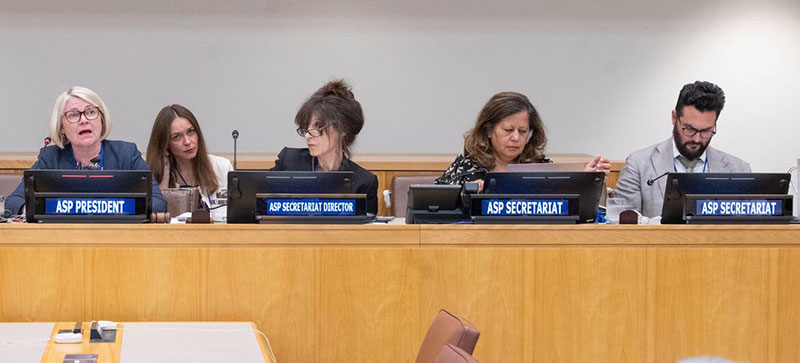
 US Secretary of State Marco Rubio’s warning to the International Criminal Court (ICC) was stark: ‘Either the ICC will end its threats, or we will end the ICC.’ It followed US central administration accusations that the court was unfairly targeting Americans on the basis of trumped-up war crimes charges.
However, a new plethora of sanctions has been clamped on the ICC by the US, which in turn has spurred accusations by sections of the world that the latter has unleashed an ‘assault’ on the international legal order.
What some of the sanctions would mean for the ICC was outlined by Rubio: ‘We will ban transactions with this rogue court, cutting off their resources and crippling their ability to operate against us.’
The ICC has shown consistency of purpose over the years. Despite some operational constraints it has indicted a large number of political strongmen from around the world, accused of war crimes and other governance excesses that come under its purview. Two such recent figures are: Russian President Vladimir Putin and Israeli Prime Minister Benjamin Netanyahu.
Rather than enjoy a mere nominal presence in the world community, the ICC has proved its effectiveness by detaining and bringing to justice scores of VIP politicians and others of their ilk who have been found guilty of human rights abuses and kindred excesses that come within the terms of reference of the ICC.
Accordingly, the international justice system would be stymied considerably as a result of the ICC being dis-empowered, particularly financially. Needless to say, potential and real perpetrators of the species of crime coming under the jurisdiction of the ICC would stand to gain most from such anarchic tendencies. That is, political repression globally would be enabled to enjoy a new lease of life.
A detailing of the types of crime coming under the purview of the ICC provides an idea of what it would cost the international community if the ICC’s operations are gravely hampered. They are mainly: genocide, war crimes, crimes against humanity and the crime of aggression.
That is, the part of the world to be worst affected would be the global South, since the latter is awash with the mentioned crimes. Needless to say, a chronically-disaffected South will sooner rather than later undermine the well being of the world dangerously. The world is already being put through these paces.
At the time of writing, ‘illegal migrants’ from the South, for example, are aggravating many a Western economy’s woes, besides creating for them acute law and order issues. The fact that these migrants’ presence goes on to become a virtual test of the migrant receiving states’ ability to forge domestic social inclusion in the face of jingoistic protests by mainly white supremacist groups is evidence of the latter. As is known, the US, to take just one example, has been up against this crisis for quite a while.
Accordingly, it will be in the best interests of the West if ‘illegal’ migrant arrivals on their shores are stemmed. If the socio-political and economic problems assailing the South are effectively managed through North-South collaborative, ‘trouble-shooting’ efforts the causes leading to ‘illegal’ migration and connected issues could be resolved at source as it were. For, it is the aggravation of the South’s material questions that lays the basis for the emergence of repressive and anti-democratic regimes in the hemisphere.
Until such time that the aforementioned issues in North-South relations are visited afresh and addressed urgently, a vibrantly functioning ICC would be needed. For, the latter would prove a deterrent to Southern political and military strongmen, highly prone to power abuse and like excesses, from coming into being in the wake of the South’s chronic material woes and the wars and conflicts that result from them.
It stands to reason then that the US would be acting in its own interests by enabling the ICC to perpetuate its mandate without hindrance. For a crop of issues that impinges negatively on internal law and order would be defused.
Meanwhile, there needs to be a meeting of minds among the rest of the West to put back in place a North-South dialogue process aimed at reducing some of the economic pressures that are weighing on the South.
Since economics usually drives politics it will be in the interests of the world community to scrutinizingly re-visit North-South issues of the past and put in place economic relief packages for Southern publics that would enable them to tide over their material hardships rather than permit the latter to aggravate into social disaffection and eventually armed militancy. It is the latter juncture that paves the way for the emergence of authoritarian rulers in the South who then go on to be a blight on their publics.
Accordingly, the Southern-based global development thinking of the past that envisaged a more equitable world economic order needs to be seen as an urgent need. That is, NAM’s international development paradigms need to be resuscitated to the extent possible.
It is unlikely that rightist governments of the West, such as the current Republican administration in the US, would find these projects feasible, but democratic states of Europe, led by perhaps the UK, are likely to think otherwise. For it would not be beneficial for the democratic world to be having on their hands repressive governments in the South who would be gravitating towards the major military and economic actors of the South, such as Iran and North Korea, who tend to be in constant power struggles with the West.
However, until such time that the mentioned, pro-people initiatives are given serious thought the ICC would need to be enabled by the international community to be in place comfortably and carry on with its mandate of bringing repressive rulers to book. Besides the ICC should pave the way for the peoples of the developing world to enjoy some substantial respite from the political repression and even terror which tend to be their lot.
Meanwhile, the wars of West Asia are relentlessly aggravating the economic hardships of people everywhere, driving the point home to enlightened sections that there is no alternative to peacemaking. A challenge is to convert the US under President Trump to this line of thinking.

 This week, I give you five simple, time-tested homemade remedies that help reduce the appearance of blemishes, control excess shine and leave your skin feeling softer and smoother.
The Honey and Lemon Brightening Dab:
For stubborn blemish marks, this is a classic. Mix one teaspoon of pure bee honey with three to four drops of fresh lemon juice. Apply gently, only on the affected spots, and leave for 10 minutes before rinsing with lukewarm water. While honey soothes and softens, lemon helps to brighten naturally. Use twice a week in the evening.
Besan and Rose Water Oil-Control Pack:
An ideal remedy to combat shine, especially on the T-zone. Take two teaspoons of besan (gram flour) and mix with sufficient rose water to form a smooth paste. Add a pinch of turmeric for its antiseptic goodness. Apply evenly, keep for 15 minutes and wash off. It absorbs excess oil without over-drying, leaving a beautiful matte finish.
Aloe Vera and Cucumber Ice Soother:
Blend fresh aloe vera gel with the juice of a grated cucumber and freeze the mixture in an ice tray. Each morning, wrap one cube in a soft muslin cloth and gently rub over a cleansed face for 30 seconds. It calms, tightens pores and imparts a baby-soft smoothness.
Oatmeal and Curd Gentle Polish:
Roughness and old blemish marks need gentle exfoliation. Combine one tablespoon of finely powdered oatmeal with one tablespoon of fresh curd (yoghurt). Massage very gently, in circular motions, for one minute, leave for five minutes and rinse. It removes dead cells and unveils softer, clearer skin.
Multani Mitti and Green Tea Magic Mask:
Brew some green tea and allow it to cool completely. Mix one and a half teaspoons of Multani Mitti (Fuller’s Earth) with the tea water to make a fine paste. Apply for 10 to 12 minutes – do not let it dry and crack completely – and wash off. It draws out impurities, fades blemishes and bestows a fresh, shine-free glow.
A Gentle Reminder:
As with any natural remedy, always do a patch test on your inner arm first. For those with oily or combination skin, avoid heavy coconut oil application and harsh scrubbing, as they tend to aggravate shine and blemishes.

 Dream of performing on a world stage? Well, here is your unique, golden opportunity!
The World Championships of Performing Arts (WCOPA) — the one and only official “Talent Olympics” — is the world’s premier global platform for aspiring singers, dancers, actors, models, instrumentalists, etc., to compete, shine and be discovered!
And, yes, this world stage is open to YOU, Sri Lankans living in Sri Lanka and overseas!
Held annually in glittering Las Vegas, WCOPA brings together over 70 countries, all competing for Gold, Silver and Bronze Medals, just like the traditional Olympics.

Lakisha Bernard: Will represent Team Sri Lanka at WCOPA 2027
Outstanding performers vie for the coveted titles of Junior and Senior Grand Champion Performer of the World, with winners and standout participants awarded over $500,000 in scholarships, cash awards and prizes to catapult their education and careers!
Sri Lanka is already making waves! At WCOPA 2026, Natharie Wickramasinghe, representing Team Sri Lanka, made the nation proud by winning a Bronze Medal in the Ethnic/Folklore Dance category!

Lakisha: Accomplished freelance Model and Fashion Design graduate
Recruitment for this prestigious competition is handled through a system of scouts and licensed National Directors — and this is where our very own Chris Rajendra, now based in Las Vegas, and National Director for Team Sri Lanka, comes into the scene.
If you are a singer, dancer, actor, model, instrumentalist — if you have talent burning inside you — contact Chris Rajendra today for registration and, who knows, you may find yourself in Las Vegas, and proudly draped in the Sri Lankan flag, at WCOPA 2027!
The contact address is: Chris Rajendra, wcopa.nationaldirector.sl@gmail.com
or chris.rajendra@gmail.com
Meanwhile, a star is born for 2027, in the form of Lakisha Bernard who is all set to represent Team Sri Lanka at WCOPA 2027.
Originally hailing from the sun-drenched coastal city of Colombo and now carving out her creative career in Canada, 22-year-old Lakisha is stepping into the international spotlight.
This accomplished freelance Model and Fashion Design graduate has officially been appointed as the Team Sri Lanka Promoter for Canada as she prepares to represent Team Sri Lanka at WCOPA in Las Vegas.
Lakisha brings a unique blend of high-fashion sensibility, captivating camera presence and expert garment design to the Team.
Having built her career, from local college shoots to high-glamour concepts, Lakisha’s inspiring journey embodies the true spirit of cultural bridge-building and creative resilience, bringing immense pride and recognition to Sri Lanka on the global stage.
WCOPA 2027 will be held at the legendary Westgate Hotel & Casino, Las Vegas, from 12th to 20th July – the very same iconic arena where the late, great Elvis Presley himself performed!
Your moment is now. Your stage is Las Vegas, so hurry and contact Chris Rajendra.

AgriConnect Sri Lanka’ to be launched on 30 October to Modernise the Agricultural Sector Through Digitalisation

57th Annual Saints’ Quadrangular Tournament on Saturday and Sunday

Showers or thundershowers will occur at most parts of the island

Prison rules to be revised over monks’ attire

AC President recuses himself from hearing prison attire case pertaining to Gnanasara Thera

Court orders steps to obtain INTERPOL Red Notice against Basil

‘Dates have the highest sugar content to fight Coronavirus’

Sunday Island 27 December – Headlines

#SundayIsland 17th December – Headlines

Sunday Island – 28th March

Sunday Island Headlines – 21 March

Sunday Island – 21st February – Headlines
-

 News7 days ago
NDB fraud Rs 60mn more than reported
-

 News7 days ago
Removing monk’s robes matter for Sangha to decide: Mahanayake Theras
-

 News5 days ago
Sri Lanka escalates anti-graft drive with Shiranthi’s jailing
-
 News6 days ago
NPP govt. reminded of its responsibilities as US warship leaves Colombo
-
 Latest News6 days ago
Farhan, Sadaqat help Pakistan ace 183 chase to go 1-0 up
-
 News7 days ago
BHC, Colombo: “LTTE remains a proscribed org. in the UK”
-

 Latest News4 days ago
Farhan and Sadaqat help Pakistan seal series in style
-
 News5 days ago
Iranian ships stranded, Lanka fears US sanctions