
News
Sacking of SLMC president, council members sparks a furore

Health Minister’s move ‘completely flawed’
bY SURESH PERERA
The sacking of the president and four members nominated to the Sri Lanka Medical Council (SLMC) by the previous government has triggered an uproar, with medical professionals slamming Health Minister Pavithra Wanniarachchi’s move as “completely flawed” and “an attempt to undermine the autonomy and independence of the apex regulatory body”.
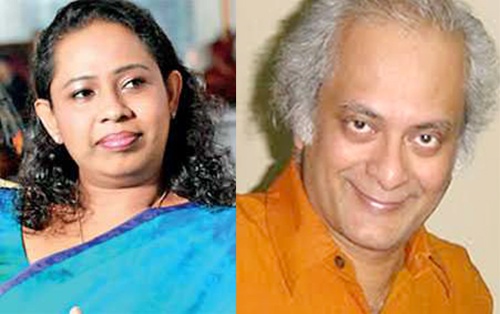
Expressing consternation over his sudden dismissal as the president of the statutory body, eminent Specialist Consultant Paediatrician, Prof. Harendra de Silva, said he was contemplating legal action against his removal by the Minister.
“I will be challenging my dismissal in the Court of Appeal”, he said.
In terms of the Medical Ordinance, there is no provision to remove the president or any of the four council members nominated by the serving Health Minister of the time, he asserted.
“Before I was informed of my termination, some Health Ministry officials urged me to resign, but I declined to do so”, Dr. de Silva told The Sunday Island.
 Pressure was also exerted on the other four members of the council to step down, he noted. “However, we collectively stood our ground and refused to throw in the towel”.
“It was after I dismissed the overtures calling for my resignation that a letter indicating that I have been removed as SLMC president was sent across”, he further said.
Prof. Narada Warnasuriya and Dr. Pushpika Ubesiri, two of the other council members who were dismissed, said that they will also be seeking legal redress over their removal in “contravention of the Medical Ordinance”.
Apart from them, the other two ‘Minister’s nominees’, as they are called, who were given the marching orders were Dr. Upul Gunasekara and Dr. Sunil Ratnapriya. However, there was still no word on the four new nominees of the Minister.
Under the Medical Ordinance, the serving Health Minister can name the president and four nominees to the 25-member council. Apart from the Minister’s nominees, the other members are drawn on the basis of one each (generally the Dean) from Faculties of Medicine, and other diverse medical spheres. The Director-General of Health Services is an ex-officio member.
The Government Medical Officers’ Association (GMOA) has four elected representatives in the council – Dr. Anuruddha Padeniya, Dr. Naveen de Zoysa, Dr. Nalinda Herath and Dr. Harris Pathirage. However, Dr. Pathirage has since resigned from the council citing personal reasons, GMOA Assistant Secretary, Dr. Chandana Dharmaratne said.
The SLMC election was on the cards but had to be put off indefinitely due to the worsening Covid-19 pandemic.
Though the Health Minister claimed that the dismissal of the SLMC president and the four nominated council members was based on the findings of the five-member committee appointed by her, that’s not the factual position, said Dr. L. A. Ranasinghe, president of the Association of Medical Specialists (AMS).
“Contrary to the Minister’s assertion in her letter to the SLMC president, personal communications we had with some of the committee members (Dr. Hemantha Perera and Dr. Anula Wijesundara) indicated that they had not singled out any member or the president in their report as responsible person/s for the deficiencies of the SLMC. Neither did they recommended the removal of anyone from the council”, he noted.
According to the committee members, the whole council is responsible for their decisions and actions and not individual members (similar to collective responsibility of Cabinet decisions), he explained.
As far as we know, there is no legal provision for the Minister to remove the SLMC president or any member according to his/her wishes without following the regulations stipulated in the Medical Ordinance, Dr. Ranasinghe remarked.
The process the Health Minister followed is completely flawed and purely based on the agenda of a trade union. This has created a very bad precedent that could be “the first step towards undermining the autonomy and independence of the SLMC”, which is tasked with the regulation of Sri Lanka’s medical profession, the AMS chief further said.
The SLMC is facing a crisis never witnessed in its recent history, he continued, while urging the Health Minister to reverse her decision immediately to avoid unnecessary turbulence in the field of medicine in this hour of dire need.
The five-member committee Health Minister Pavithra Wanniarachchi appointed in September 2020 to “look into the activities of the SLMC” comprised Specialist Prof. Hemantha Perera, former Dean of the Ragama Medical Faculty, Specialist Prof. Prashantha Wijesinghe, Specialist Dr. Anula Wijesundera, Specialist Dr. Maithri Chandraratne and Specialist Dr. Dharshana Sirisena.
The Minister said at the time that the SLMC is an independent body established by a charter and its primary function is to maintain a quality medical service by protecting the rights of patients. The institution protects the quality of medical education and regulates physicians.
Under Section 15 of the Medical Ordinance, the president/council member is deemed to have vacated his post in the event of death, resignation, declared insolvent or bankrupt by a competent court, found guilty by a court of law, cancellation of medical registration, non-attendance of three consecutive board meetings or being away from the country for a period of one year or more, medical officials said.
“Whatever the reasons adduced, the crux of the matter here is that the present regime was not comfortable with a president and council that was appointed by former Health Minister, Dr. Rajitha Senaratne under the UNP administration”, they claimed.
“The reality of the situation was that the incumbent Health Minister buckled under pressure from the GMOA to sack the SLMC president and the four nominated members”,
With the appointment of Prof. Vajira H. W. Dissanayake, the Dean of Colombo Medical Faculty, as the new SLMC president, the GMOA welcomed what it called the “restoration of the independence and dignity” of the statutory body.
GMOA Secretary, Dr. Senal Fernando charged that that former Health Minister Rajitha Senaratne interfered with the functions of the SLMC by appointing his henchmen to the council, which resulted in more than one thousand individuals, who failed all three subjects at the Advanced Level examination, being registered as doctors.
He further accused the SLMC of undermining medical education by striking out three recognized Russian universities from the list of foreign universities recognized by Sri Lanka. These higher seats of learning included the world-renowned Patrice Lumumba University, which admit Sri Lankan students for medical degrees.
Expressing dismay over the developments, the Government Medical Officers’ Forum (GMOF) said that never in Sri Lanka’s history has a Health Minister of a government elected to power interfered with the SLMC in this manner by dismissing the nominees of the previous Minister.
Over the years, Nimal Siripala de Silva, Maithripala Sirisena and Rajitha Senaratne, as Health Ministers, respected the independence of the SLMC and the appointments made to it by their predecessors, says GMOF president, Dr. Rukshan Bellana.
They are trying to politicize the SLMC, he charged. “The incumbent Health Minister is giving into the dictates of the GMOA and lost her sense of direction as a result”.
President of the Public Service United Nurses Union, Ven. Muruththettuwe Ananda Thera, said the Health Minister has no right to meddle with the SLMC, which is an independent regulatory body.
Members to the SLMC are nominated to the SLMC for a five-year term by an incumbent Health Minister and dismissing them before they complete their tenure violates the Medical Ordinance, the prelate noted.
He said that health services in the country have plunged to a new low so much so it is more apt to describe the Health Ministry as “Unhealthy Ministry”.
The mess in the health sector could have been prevented if there was at least a secretary with a backbone in charge of the ministry, he asserted.
The Sri Lanka Medical Council (SLMC) was established in 1998 as a statutory body. It replaced the former Ceylon Medical Council formed in 1924.





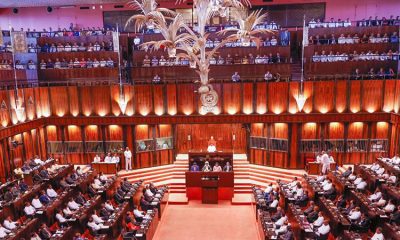


More than 1,600 students sat this year’s Russian Classical Ballet Examination, the largest number ever to take part in the examination in Sri Lanka. Exams were held in Colombo from 5, to 18, October and in Galle on 10 October.
Students aged four and above came from across the island, including Colombo, Galle, Gampaha, Negombo, Matara, Kelaniya, Panadura, Wattala, Kiribathgoda, Ratnapura, Kandy, Kurunegala, Bandarawela and Badulla. They are taught by 15 dedicated teachers trained in the Vaganova method, the renowned Russian system of classical ballet training.
They were examined by Dr. Oxana Karnovich of the Moscow State Academy of Choreography, a distinguished academic and curator.
The Russian School of Ballet and Dancing was established in 2001 by Michael Ustinov, Buddhapriya Ramanayake and Mrs Chandi Aluvihare, with Mrs Galina Pleshakova as its founding instructor. Today the School is led by Director Madam Maria Popova, Counsellor of the Embassy of the Russian Federation in Sri Lanka.


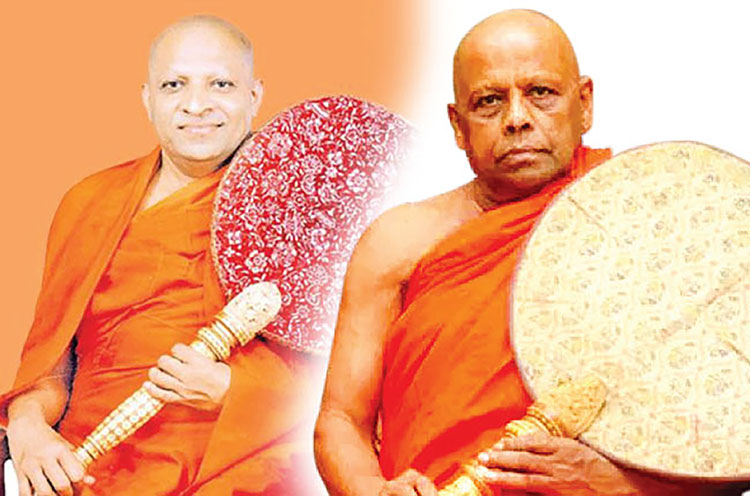
MONETABRIEF– Sri Lanka’s two most senior Buddhist chapters, Malwatte and Asgiriya, demanded special concessions for monks serving prison sentences, following the disrobing of convicted monk Ven. Galagodaatte Gnanasara in line with established procedures.
The chief prelate of the Asgiriya chapter, Most Venerable Warakagoda Sri Gnanarathana, told Prisons Commissioner Senaka Palletenna that Ven. Gnanasara, who is serving a six-year sentence for contempt of court, must be released immediately.
Prison authorities have no power to release or pardon convicts, but Palletenna told the monk in Kandy on Friday that he would convey his request to the relevant government authorities.
“There is no point in talking about this and that… The entire country has been shaken (??????? ) . He must be released,” the Asgiriya chief prelate said.
The Malwatte chief prelate, Most Venerable Thibbatuwawe Sri Siddhartha Sumangala, appeared to accept the court verdict against Ven. Gnanasara, but asked the prisons chief whether a separate section could be established for convicted monks.
Palletenna noted that a special ward for the clergy already existed at Welikada Prison.
At least 63 convicted Buddhist monks are currently incarcerated within Sri Lanka’s criminal justice system.
Meanwhile, a group of 34 Buddhist monks named in a Colombo Fort Magistrate’s Court order to vacate the vicinity of the Presidential Secretariat ended their protest and dispersed after lunch on Friday.The monks are demanding an unconditional pardon for Ven. Gnanasara, who has previously been imprisoned, making him a reconvicted prisoner.
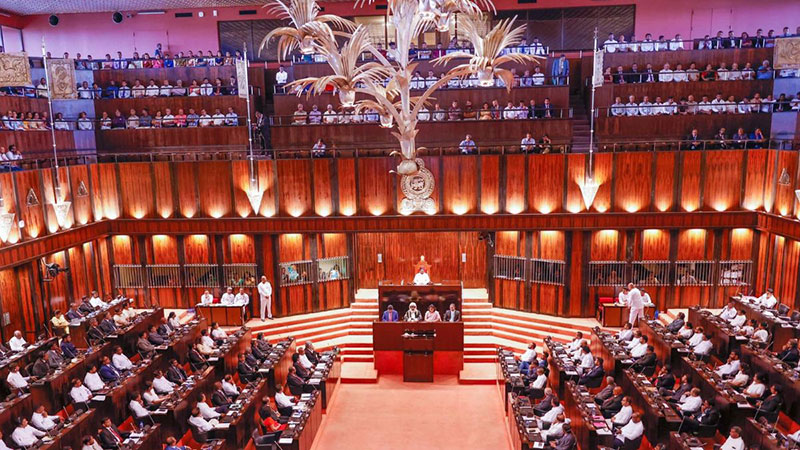
The debate on the no-confidence motion against Speaker Dr. Jagath Wickramaratne, submitted by the Samagi Jana Balawegaya (SJB), has been postponed indefinitely pending the Attorney General’s opinion on certain technical issues in the motion.
Government representatives raised the matter at a meeting of the Committee on Parliamentary Business, pointing out that several provisions of the motion required clarification and that the Attorney General’s advice should be obtained.
As obtaining the opinion would take time, the debate could not be scheduled for the next parliamentary week, parliamentary sources said.
Chief Opposition Whip Gayantha Karunatilaka said a date for the debate would be decided after the Attorney General’s advice was received.
Meanwhile, Parliament is scheduled to meet from October 20 to 23, Secretary General of Parliament Kushani Rohanadeera announced.
The parliamentary business for the week was finalised at a meeting of the Committee on Parliamentary Business held on Friday (16) under the chairmanship of Deputy Speaker Dr. Rizvie Salih.
On each sitting day, the period from 9.30 a.m. to 10 a.m. will be allocated for parliamentary business under Items 1 to 6 of Standing Order 22. Questions for Oral Answers will be taken up from 10 a.m. to 11 a.m., followed by questions under Standing Order 27(2) from 11 a.m. to 11.30 a.m.
On Tuesday, October 20, an Opposition-sponsored Adjournment Motion will be debated from 11.30 a.m. to 5.30 p.m.
On Wednesday, October 21, a resolution under the Public Debt Management Act and a Supplementary Estimate will be taken up for debate and approval from 11.30 a.m. to 5 p.m. The annual reports of five statutory institutions will subsequently be presented for approval without debate, while questions at the Adjournment Time will be taken up from 5 p.m. to 5.30 p.m.
On Thursday, October 22, the Second Reading debates on two Bills to amend the Poisons, Opium and Dangerous Drugs Ordinance (Bills Nos. 79 and 80) will be held from 11.30 a.m. to 5 p.m.
The annual reports of five statutory institutions will then be taken up for approval without debate, followed by an Opposition-sponsored Adjournment Motion from 5 p.m. to 5.30 p.m.
On Friday, October 23, the Second Reading debate on the Elimination of Rabies and Registration of Dogs Bill will be held from 11.30 a.m. to 5 p.m. A Government-sponsored Adjournment Motion will be debated during the final half-hour of the sitting.

Record 1,600 students take Russian Classical Ballet examination in Sri Lanka

Half a million people join protests in France, but some turn violent

Deadly fire breaks out at Canada military base

Showers or thundershowers will occur in most parts of the island after 1.00 p.m.

Buddhist hierarchy demands prison perks for monk convicts

Debate on NCM against Speaker postponed indefinitely

‘Dates have the highest sugar content to fight Coronavirus’

Sunday Island 27 December – Headlines

#SundayIsland 17th December – Headlines

Sunday Island – 28th March

Sunday Island Headlines – 21 March

Sunday Island – 21st February – Headlines
-

 Latest News5 days ago
Nissanka’s return headlines Sri Lanka’s Test squad against Pakistan
-

 Latest News7 days ago
Farhan and Sadaqat help Pakistan seal series in style
-
 Features7 days ago
Intake 16: 45 years of duty and honour
-
 News7 days ago
Malwathu Chapter issues statement on talks with President over Gnanasara Thera’s robes
-
 News7 days ago
CP alleges NPP has taken the blame for illegal US sanctions on Iranian vessels
-

 Opinion7 days ago
How long can Sri Lanka remain silent on its demographic crisis?
-

 News5 days ago
Sri Lanka, India caught in US-Iran ship crisis
-
 Latest News5 days ago
Kusal Mendis’ unbeaten 87 hands Sri Lanka consolation win