
Business
Operationally strong ComBank Group posts healthy topline growth, amidst prudent provisioning


The Commercial Bank of Ceylon Group has posted a strong operational performance in the first nine months as well as in the third quarter despite the continuing adverse effects of macroeconomic variables which have necessitated a tripling of impairment provisions for the nine months ended 30th September 2022 and reduced profits for the quarter as well as the year to date compared to the corresponding periods of last year.
Nevertheless, the Bank reported that the third quarter witnessed a reversal of the operating loss before Value Added Tax (VAT) on Financial Services of Rs. 3.581 billion reported for the second quarter of the year.These achievements were recorded even after providing relief for affected businesses and individuals in line with directions issued by the Central Bank of Sri Lanka as well as the Bank’s own relief schemes which included deferment of repayment terms of credit facilities, concessionary rates of interest on eligible loan products (debt moratorium) and waiving off certain fees and charges following the global pandemic, the Bank said.
Comprising of the Commercial Bank of Ceylon PLC, its subsidiaries and an associate, the Group reported gross income of Rs 195.573 billion for the first nine months of 2022 and Rs 76.056 billion for the third quarter, reflecting robust growth rates of 62.91% and 89.58% respectively in topline. Growth in loans and a noteworthy increase in income from interest-earning assets resulted in interest income for nine months improving by 56.15% to Rs 150.257 billion and by an even more impressive 89.04% to Rs 62.140 billion for the third quarter.
However, the growth in deposits in the review period combined with a sharp rise in interest rates and the consequent conversion of low-cost funds to high-cost funds saw interest expenses increasing by 79.58% to Rs 87.443 billion for the nine months, and by a whopping 142.71% to Rs 40.039 billion for the third quarter. The Bank’s CASA ratio, an industry benchmark, stood at 40.14% at the end of the nine months reviewed, as against 47.83% at end 2021 and 42.72% at end 2020. The increase in interest rates and the consequent reduction in the CASA ratio contributed to the higher interest expenses recorded in the period reviewed.
Nevertheless, net interest income for the nine months improved by 32.15% to Rs 62.814 billion, while net interest income for the third quarter increased by 34.97% to Rs 22.101 billion. With the escalation in interest expenses, net interest income accounted for 60.49% of the total operating income of the nine months reviewed, in contrast to 68.94% at the end of the third quarter of 2021.
Noting that the external challenges that have depressed profit and other indicators continued in the third quarter, Commercial Bank Chairman Prof. Ananda Jayawardane said: “The growth we have recorded in business volumes indicates that core banking operations remained intact. The single biggest impact on growth in terms of bottom line continues to be the burgeoning provisioning for impairment, which is an unavoidable response to the prevailing economic environment. Such provisioning assures our stakeholders that the Bank is financially prepared for any future contingencies.”
The Bank’s Managing Director and CEO Mr Sanath Manatunge commented: “Our results underline that at Commercial Bank, risk appetite and risk tolerance continue to be well-managed, especially in the context of the challenges faced by the banking sector. We have continued our focus on preserving the quality of the loan book, managing interest rates and liquidity, while improving compliance to minimize reputational risk. The increase in the cost of funds is inevitable, but all possible steps have been taken to increase the fee-based income and to maintain non-interest costs at acceptable levels.”
According to the Interim Financial Statements filed with the Colombo Stock Exchange (CSE), the Commercial Bank Group recorded a total operating income of Rs 103.837 billion for the nine months under review, an improvement of 50.59%. The figure for the third quarter was Rs 34.605 billion, reflecting an even stronger growth of 53.07%.
The net fee and commission income of the Group improved by 61.84% to Rs 13.913 billion for the nine months, while other income, which comprises of net gains from trading, net gains from derecognition of financial assets and net other operating income, grew by 111.45% to Rs 27.111 billion. Net gains from trading for the period amounted to Rs 34.124 billion compared to Rs 2.037 billion recorded for the corresponding period of the previous year. This was primarily from realized and unrealized gains from forward exchange contracts, spot and swap transactions and mark to market gains.
Impairment charges and provisions for other losses for the nine months amounted to Rs 52.272 billion, reflecting an increase of Rs 34.274 billion or 190.44% from Rs 17.997 billion recorded for the corresponding nine months of 2021. For the third quarter alone, impairment charges nearly quadrupled to Rs 17.053 billion from Rs 4.343 billion provided in respect of the third quarter of last year. Notably, a substantial portion of the impairment charges is on account of Government Securities denominated in Foreign Currency in view of the Sri Lankan Sovereign rating downgrade and the debt restructuring program currently being negotiated by the Government. Further, the exchange impact on impairment charges on loans and advances and Government Securities denominated in foreign currency was adjusted in Net Other Operating Income where the corresponding exchange gains are recognised. This was done in order to accurately reflect the underlying cost of risk and also to normalize the exchange gains and losses reported, the Bank said.
As a consequence of the increased impairment charges, net operating income for the nine months under review improved only by a marginal 1.20% to Rs 51.566 billion, while the figure of Rs 17.552 billion for the third quarter reflected a decline of 3.9%.
Operating expenses increased by 22.26% for the nine months to Rs 26.017 billion, and by 10.90% for the third quarter to Rs 7.985 billion, mainly due to the impact of inflationary pressures, Rupee deprecation and an increase in Government taxes. Consequently, personnel expenses increased by 20.40%, depreciation and amortization by 8.58% and other operating expenses by 30.59%. As a result, the Group’s operating profit before Value Added Tax on Financial Services reduced by 13.90% to Rs 25.549 billion for the nine months under review and by 13.53% to Rs 9.567 billion for the third quarter.
With VAT on Financial Services reducing by 23.81% to Rs 3.511 billion, the Group reported a profit before tax of Rs 22.036 billion for the nine months, recording a decline of 12.09% over the first nine months of 2021. Income tax for the period increased by 8.70% to Rs 6.576 billion despite the drop in pre-tax profit for the period under review as the figure for the corresponding nine months of 2021 was reduced by the reversal of an over-provision for 2020 resulting from the reduction in the corporate tax rate from 28% to 24%, which was adjusted in the first quarter of 2021.
Consequently, the Group’s profit after tax of Rs 15.460 billion for the nine months represented a decline of 18.70% compared to the corresponding period of last year. For the third quarter, the Commercial Bank Group reported a net profit of Rs 6.283 billion, a reduction of 5.72% compared to the same period of last year. Taken separately, Commercial Bank of Ceylon PLC posted a profit before tax of Rs 20.649 billion for the nine months, a drop of 15.46% while profit after tax for the third quarter was down 22.40% to Rs 14.438 billion.
Total assets of the Group grew by Rs 406.810 billion or 20.51% over the nine months to reach Rs 2.390 trillion as at 30th September 2022. Asset growth over the preceding 12 months was Rs 427.840 billion or 21.80%. A significant portion of the growth in assets during the period under review was due to the depreciation of the Sri Lankan Rupee against the US Dollar up to June 2022.
Gross loans and advances of the Group increased by Rs 147.574 billion or 13.48% to Rs 1.243 trillion as at 30th September 2022, while the growth of the loan book of the Group over the preceding year was Rs 175.451 billion or 16.44%.
Total deposits of the Group recorded a growth of Rs 380.829 billion or 25.86% in the nine months to Rs 1.853 trillion as at 30th September 2022, while the YOY deposit growth was Rs 405.581 billion or 28.01%. Here too, the Bank said the primary reason for the growth in gross loans and advances and deposits was the sharp depreciation of the Sri Lankan Rupee against the US Dollar in the first half of the year.
In other key indicators, the Bank’s net assets value per share increased by 14.16% to Rs 157.63 from Rs 138.08 as at end 2021. The Bank’s Tier 1 Capital Ratio, and the Total Capital Ratio stood at 11.571% and 14.355% respectively as at 30th September 2022, both above the statutory minimum ratios of 10% and 14% respectively. The Bank’s net interest margin improved to 3.80% for the nine months ended 30th September 2022, from 3.51% for the year 2021 and 3.37% for the nine months ended 30th September 2021. The Bank’s return on assets (before taxes) stood at 1.29% and return on equity at 10.72%.In terms of asset quality, the Bank’s impaired loans (stage 3) ratio stood at 4.09% compared to 3.85% at end 2021, while its stage 3 impairment to stage 3 loans ratio stood at 40.49% as at 30th September 2022, compared to 42.76% at end 2021.
The Bank’s Cost to Income Ratio before VAT on Financial Services improved to 24.94% for the period under review from 31.61% for 2021 and 33.95% for 2020. The cost to income ratio inclusive of VAT on Financial Services improved to 28.39% from 37.97% for 2021 and 39.96% for 2020.
Sri Lanka’s first 100% carbon neutral bank, the first Sri Lankan bank to be listed among the Top 1000 Banks of the World and the only Sri Lankan bank to be so listed for 12 years consecutively, Commercial Bank operates a network of 268 branches and 940 automated machines in Sri Lanka. Commercial Bank is the largest lender to Sri Lanka’s SME sector and is a leader in digital innovation in the country’s Banking sector. The Bank’s overseas operations encompass Bangladesh, where the Bank operates 19 outlets; Myanmar, where it has a Microfinance company in Nay Pyi Taw; and the Maldives, where the Bank has a fully-fledged Tier I Bank with a majority stake.











HNB PLC, the leading private bank in Sri Lanka, has partnered with IDEAL Motors (Pvt) Limited to provide customers with attractive leasing solutions for brand-new vehicles & generators .
The partnership introduces a range of benefits designed to support individuals, entrepreneurs, and businesses seeking reliable vehicle and power solutions. Through this collaboration, customers can access structured lease facilities, special interest rates, free life insurance coverage, and attractive discounts through HNB General Insurance.
Commenting on the partnership, HNB, Senior Vice President/ Head of Retail Banking, Kanchana Karunagama, said, “At HNB, we believe that the right financial support can help people and businesses move forward with greater confidence. This partnership with IDEAL Motors shows our commitment to creating meaningful solutions that make vehicle and power investments more accessible, while helping our customers achieve their personal and business aspirations. By combining HNB’s financial expertise with IDEAL Motors’ industry capabilities, we are creating opportunities that support the ambitions of Sri Lankans and contribute towards a stronger, more connected economy.”
Customers purchasing vehicles through IDEAL Motors will also benefit from exclusive offers including free registration, and discounts on Bolero Maxx Pik-Up, Alfa Plus Load Carrier, Mahindra Pik-Up Single Cab, Mahindra Pik Up Double Cab, XUV 3XO vehicles, creating greater value throughout their ownership journey.
IDEAL Motors (Pvt) Limited, Director Legal and Corporate Affairs, Nimesha Welgama, said, “Our collaboration with HNB represents a shared commitment to supporting Sri Lankans in achieving greater financial independence through accessible ownership solutions. By combining IDEAL Motors’ mobility and power solutions with HNB’s financial expertise, we aim to empower individuals and businesses with opportunities that contribute to economic progress and community development. This partnership highlights our vision of creating lasting value by enabling customers to confidently invest in their future.”
With IDEAL Motors recognised for its diverse portfolio of automotive and power solutions, and HNB’s extensive expertise in financial services, the partnership aims to provide a seamless experience from selection to ownership, supported by flexible financing options and customer focused solutions.
The partnership further strengthens HNB’s commitment to supporting economic progress by providing financial solutions that enable customers to invest in personal mobility, commercial growth, and business continuity. Through collaborations with leading industry partners, HNB continues to expand opportunities for Sri Lankans while delivering a banking experience built around accessibility, trust, and value.
Business
Sri Lanka Insurance Corporation General and the Ministry of Education committed to protect Sri Lanka’s schoolchildren

Sri Lanka Insurance Corporation General Ltd (SLICGL) and the Ministry of Education, Higher Education and Vocational Education share a commitment to protect Sri Lanka’s children throughout their school education. The pledge is delivered through the Suraksha Student Insurance Scheme, which protects over 4 million school children.
The Government of Sri Lanka, through the Ministry of Education, Higher Education and Vocational Education, provides the Suraksha Student Insurance Scheme free of charge to schoolchildren throughout the country. SLICGL is proud to partner with the Ministry in delivering this national initiative, which helps safeguard students against the financial impact of unforeseen circumstances.
Eligible students include those aged 5-21 years in Grades 1-13 from government schools, government-approved private schools, and Pirivena education, as well as students aged 4-21 years in assisted special schools.
The scheme provides hospitalisation, outpatient and critical illness cover, as well as personal accident cover for permanent and temporary disability, together with a life insurance benefit for children from low-income families on the death of a parent. Cover applies to incidents within and outside school premises.
For a child, an illness or accident can be far more than a temporary setback. It can place added pressure on a family and, in some circumstances, disrupt schooling. Suraksha acts as a safety net, giving children and their families greater peace of mind and helping them stay in school despite life’s uncertainties. The scheme is easily accessible through SLICGL’s islandwide network of 200 branches and customer service centres.
Children’s Day is a celebration of hope, the hope for every child to have the opportunity to learn, grow and build a better future. Celebrating children also means protection, not for a single day but for every day they spend in the classroom.
Commemorating Children’s Day, SLICGL extended support towards the educational needs of children at an underprivileged school. The project highlighted the company’s belief in protecting the future not only by being supportive when the unexpected happens, but also in helping create an environment in which children can learn, grow and fulfil their potential.
As Sri Lanka’s National Insurer, SLICGL’s role goes further than protecting people against risk. It is also about contributing to a stronger, safer and more resilient country as children’s education, wellbeing and aspirations contribute directly to help build the journey ahead.
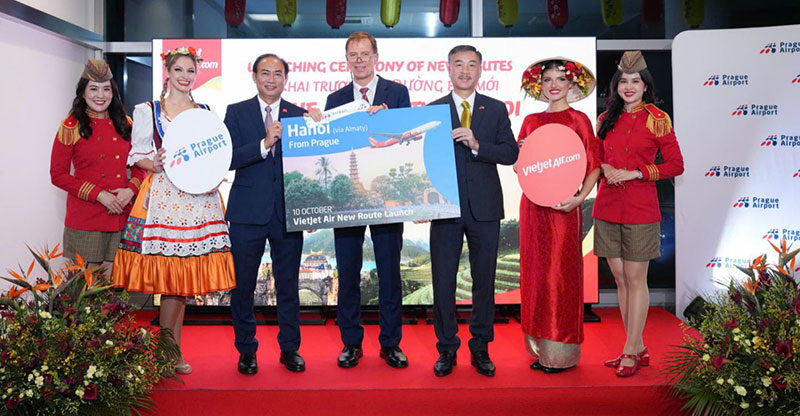
Vietjet, which already flies between Colombo and Ho Chi Minh City, has officially launched new services connecting Hanoi with Almaty, Kazakhstan, and Prague, Czech Republic, as well as Almaty with Prague, expanding its intercontinental network and marking its entry into the European Union. The new air links offer more affordable travel options while fostering greater tourism, trade and cultural exchange between Asia and Europe.
For Sri Lanka, the new routes widen the network that Vietjet is building out of Colombo. The airline has operated non-stop flights between Colombo and Ho Chi Minh City since August 2026, three times a week on Tuesdays, Thursdays and Saturdays, while its new Ho Chi Minh City to Maldives service via Colombo is scheduled to begin on 5 December 2026. With Hanoi now linked to Central Asia and Europe, Sri Lankan travellers have a growing choice of destinations reachable through Vietjet’s extensive network.
The inauguration ceremonies took place at Almaty International Airport and Václav Havel Airport Prague on 10 October, amid a warm welcome from local leaders, residents and visitors. The inaugural flights were greeted with traditional water cannon salutes and performances showcasing local cultural heritage, marking the beginning of new journeys connecting the three regions and welcoming international travellers to Vietnam. Passengers on the inaugural flights also received commemorative gifts from Vietjet and the airports, adding a special touch to their journeys.

AgriConnect Sri Lanka’ to be launched on 30 October to Modernise the Agricultural Sector Through Digitalisation

57th Annual Saints’ Quadrangular Tournament on Saturday and Sunday

Showers or thundershowers will occur at most parts of the island

Prison rules to be revised over monks’ attire

AC President recuses himself from hearing prison attire case pertaining to Gnanasara Thera

Court orders steps to obtain INTERPOL Red Notice against Basil

‘Dates have the highest sugar content to fight Coronavirus’

Sunday Island 27 December – Headlines

#SundayIsland 17th December – Headlines

Sunday Island – 28th March

Sunday Island Headlines – 21 March

Sunday Island – 21st February – Headlines
-

 News7 days ago
NDB fraud Rs 60mn more than reported
-

 News7 days ago
Removing monk’s robes matter for Sangha to decide: Mahanayake Theras
-

 News5 days ago
Sri Lanka escalates anti-graft drive with Shiranthi’s jailing
-

 News6 days ago
NPP govt. reminded of its responsibilities as US warship leaves Colombo
-

 Latest News6 days ago
Farhan, Sadaqat help Pakistan ace 183 chase to go 1-0 up
-

 News7 days ago
BHC, Colombo: “LTTE remains a proscribed org. in the UK”
-

 Latest News4 days ago
Farhan and Sadaqat help Pakistan seal series in style
-

 News5 days ago
Iranian ships stranded, Lanka fears US sanctions