
Opinion
Observations on Electricity Bill

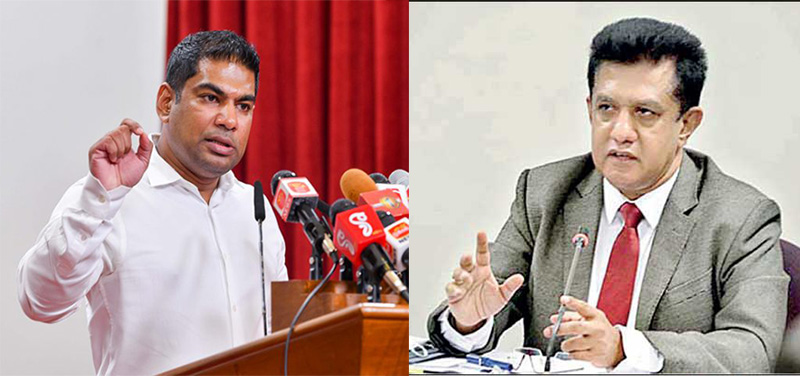
Prof. Charitha Herath’s letter to Minister of Power and Energy Kanchana Wijesekera
Having reviewed the recently published Sri Lanka Electricity Bill in the gazette, I wish to express my appreciation for the improvements made compared to previous drafts. It’s evident that considerable effort has been invested in refining this version of the bill, making it notably more comprehensive and effective.
Nevertheless, I have identified some fundamental issues in this draft as well. I believe that the forthcoming discussions on this draft will provide an opportunity to address these concerns. Given that the drafting committee appears to have finalized their positions on the matter, I suggest that the proposed changes to the bill should be subjected to scrutiny first in the Supreme Court and subsequently in the Parliament. I anticipate that certain comments and issues regarding the bill will be raised during the legal submission to the courts and in the policymaking exercise within the Parliament.
In the meantime, I wanted to share some of the issues I’ve noticed at the forefront of the bill with you. I believe your consideration, as the incumbent Minister of Power and Energy, is crucial regarding these matters. Thus, I aim to bring these issues into the national discussion surrounding this significant legislative process.
Reforms are Needed
As many would concur, I share the belief that reforms in the Power and Energy sector are paramount. This necessity has been a focal point in policy-level discussions over the past two decades. The current regulations governing the Power Sector, established under the Ceylon Electricity Board Act No. 17 of 1969 and the Electricity Act No. 20 of 2009, have highlighted numerous lapses and legal complexities. These issues have resulted in delays and, in some cases, hindered the development within the sector.
In my view, the reform requirement mentioned above was not adequately addressed by the gazetted bill on 17/4/2024. Instead, it appears to provide excessive leeway for political actors to intervene in the regulatory mechanism of the Power sector. In essence, the proposed bill could exacerbate existing difficulties in certain areas and potentially delegate decision-making power entirely to political entities.
When examining international experiences, Power sector reforms typically unfold in three stages:
1. Unbundling and corporatization, often adopting a single buyer model.
2. Establishment of a wholesale market.
3. Establishment of a retail market.
These stages represent a structured approach to reform aimed at enhancing efficiency and promoting competition within the sector.
The overarching goal of reform experiences is to transform initially highly regulated existing markets, where the regulator decides on allowed Revenue and Returns of Investment (ROI) except Power Purchasing Agreements (PPAs). Consequently, reforms typically advance towards deregulation, wherein prices are determined through competition. This progression aims to foster greater market efficiency and encourage innovation within the sector.
The gazetted Bill, dated 18/04/2024, outlines an initial proposal for unbundling and corporatization, operating within a single buyer model. Under this framework, the National System Operator (NSO) is tasked with purchasing electricity from Generation Companies (Gencos) and subsequently selling it to Distribution Companies (Discos). Additionally, the bill aims to establish a wholesale market model, wherein prices are determined through competition between Gencos and Discos. This approach signifies a pivotal step towards fostering market efficiency and promoting competition within the sector.
Given that approximately 85% of the cost of electricity in Sri Lanka is attributed to generation, it is imperative to prioritize the establishment of competition within the generation sector. Therefore, in alignment with the overarching reform expectations, it is crucial to thoroughly examine the gazetted bill. This careful scrutiny will ensure that the proposed reforms effectively address the need for competition in the generation sector, ultimately contributing to greater efficiency and affordability in the electricity market.
Some Observations
·
In order to effectively implement new reforms in the Power sector, there are two crucial aspects to consider at a conceptual level. Firstly, it is imperative to consult and involve the main stakeholders of the industry in the proposed legal and institutional reforms. It is essential to ensure that their voices are heard and that they are actively engaged in the process, regardless of whether all stakeholders are in agreement with the Bill. Secondly, it is vital to ensure that the proposed reforms adequately address the core issues at hand. Unfortunately, it is my belief that the Government has failed to address both of these highly important issues.
· The proposed bill signifies a notable shift towards increased Politicization of the Electricity Sector. It is clear that key institutions to be established under this bill will be subject to substantial political influence. For example, following the bill’s passage, entities like the Long Term Generation Expansion Plan (LTGEP), National System Operator (NSO), Power Sector Reform Secretariat (PSRS), and certain functions of the Public Utilities Commission of Sri Lanka (PUCSL) will come under direct political control.
· The independence of successor companies and corporate good governance will no longer be maintained, as management control will now rest with the Minister in Charge.
· The Electricity Reform Act no 28 of 2002(that was not implemented due to political reasons)had proposed the establishment of an independent agency known as the “Monitoring and Advisory Committee” to spearhead the reform project. This committee was intended to have the authority to advise the Minister on the appointment and dismissal of directors of the proposed successor companies. However, the recently gazetted new Bill (17/04/2024) does not include this independent mechanism, giving the Minister the power to appoint the Board of Directors of the successor companies. Furthermore, the Minister’s consent is now required for the appointment of the CEO of NSO, as outlined in Section 10 (1)(b) & (c) of the new Bill.
· The “Long Term Power System Development Plan” is formulated by NSO and then forwarded to the Minister for assessment, followed by submission to the Cabinet for approval (as outlined in the recently gazetted Bill, Section 10 (7) (b)).
· Weakening of the Regulator, PUCSL
· The PUCSL no longer holds the power to approve the “Long Term Power System Development Plan” as it has been transferred to the cabinet of Ministers, as per the newly gazetted Bill, Section 10 (7) (b).
· According to Section 3(1)(a) of the Sri Lanka Electricity Act 2009, the PUCSL has the authority to provide advice to the government on matters within their jurisdiction. Nevertheless, the recently gazetted Bill has revoked these powers and transferred them to the National Electricity Advisory Council, which will be appointed by the Minister (new Bill, Section 3 (3)).
· According to Section 20 (2) of the Bill that was gazetted in December 2023, the Regulator is required to simply “inform the Minister” when granting licenses for generation, transmission, and distribution. However, in the recently gazetted Bill, the Regulator now needs to seek the “concurrence of the Minister” before granting licenses.
· The Bill’s Section 4 (10) includes provisions that enable the bypassing of competitive tendering through the provision of incentives to select technologies.
· Illogical Timeline – proposed approach to rescind the current Acts in 6 months without any preconditions, unveiling the Transfer Plan after the specified date, and more.
· As per the new Act, the functions currently executed by CEB will be transferred to the newly formed successor companies within a maximum duration of six months. Section 1 (2) of the Act ensures automatic appointment within this timeframe.
· The process of setting up new successor companies includes drafting detailed Memorandums and Articles of Associations, reallocating assets, liabilities, and human resources, preparing new balance sheets, creating financial models for tariff development, and finalizing the incorporation of other supporting functions. The unrealistic timeline proposed in this new Act is a significant issue.
·It’s not just the impracticality, the legality of forming companies according to a transfer plan which has not been approved and gazetted is also another serious issue.
·Electricity Pricing – guaranteeing fair returns, measures to establish private monopolies, minister directs policy guidelines to encourage specific projects/technologies, no safeguards for regional trade below domestic market prices, permitting current generation licensees to engage with distribution licensees before entering the Wholesale market.
· The increase in electricity prices is tied to the requirement for a justifiable return on investment as outlined in the recently published Bill, Section 29 (5) and (9)(a). This will cause prices to rise, with the Regulator being legally required to ensure that profits are kept at a reasonable level. In times of high inflation or interest rates, electricity prices may see an uptick. The assurance of a reasonable ROI can be accomplished through tariff policies, which are not legally mandated, giving the Regulator the ability to lower profits during tough economic times.
·Granting free access and allowing Captive Generation without comprehensive study as stipulated under Section 12 could lead to the general public being unable to access cost-effective power plants, ultimately causing prices to escalate.
· Section 30(4) permits distribution licensees to engage in power purchase agreements with generation licensees before the Wholesale Electricity Market is established. The competition between distribution licensees for access to inexpensive power plants will drive up prices.
· In the December 2023 gazetted Bill, there was a provision that prohibited the acquisition of combinations of licenses without any qualifications (Section 19 (6)). However, in the new Bill, this prohibition only applies if a company owns more than 50% of the ownership. For instance, if a company owns 49% of the National Network service provider, it can still acquire a Distribution license and shares of multiple other companies as long as its ownership remains below 50%. Additionally, with the introduction of Additional Transmission Licenses, it is possible for a few companies to have control over more than 50% of the National Grid.
· Private companies have been granted Additional Transmission Licences under the new Bill, as stated in Section 14 (2). Nevertheless, Section 10 does not grant the NSO the authority to utilize transmission lines owned by these Additional Transmission Licensees in order to ensure a consistent electricity supply.
· The new Act does not include any provisions to address monopolies, anti-competitive practices, collusion, abuses of dominant position, and merger situations that could impact competition in the Electricity Industry. Rather than enacting specific laws to combat these issues, Section 28 grants the Minister the authority to issue policy guidelines.
· Additionally, as per Section 10(13)(b), it is stipulated that the terms of Electricity trading with foreign nations must receive approval from the Cabinet of Ministers. Given that this trading has a direct impact on the sovereignty of the nation, these terms should be ratified by Parliament, especially for fundamental conditions.
· The exportation of low-cost renewable energy to other countries may result in the deprivation of citizens from accessing affordable electricity. Regional trading lacks protection against prices below the local market costs.
As mentioned earlier, stakeholders and policymakers will have limited avenues for correcting the draft bill once it has been gazetted and tabled in parliament. One option is to seek determinations from the Supreme Court, while the other is to propose amendments during the Committee Stage of the parliamentary debate. However, given the current government’s approach to passing acts in parliament, there are doubts about the feasibility of making amendments through the parliamentary process. The considerable majority power of SLPP MPs is likely to heavily influence and potentially override discussions on the issue within parliament.
I urge the Honourable Minister to carefully consider the observations outlined above and take necessary steps to amend the bill accordingly from the government side. Furthermore, I strongly encourage the Honourable Minister to convey these observations to your advisory council for their expert input and recommendations in rectifying the identified issues. This proactive approach will ensure that the bill is revised comprehensively to address concerns and uphold the principles of fairness and effectiveness in the reform process.
Lastly, I would like to reference an important excerpt from Sally Hunt’s influential book, “Making Competition Work” (2002), which directly relates to the subject under discussion here: “In the US energy industry, it is fairly clear that the major problems with the old structure lay in the generation part of the industry – the efficiency of the investment decision, its regulation, and the tendency for decisions on generation to become politicised” (p. 28).
What I have observed throughout the process of drafting the new Electricity Act is a concerning trend towards politicization of decisions regarding generation. I strongly urge you to take decisive steps to halt this trend and address the issues present in the bill accordingly. It is imperative that we uphold the integrity of the legislative process and prioritize the best interests of the public and the energy sector as a whole.
Charitha Herath (MP)







Review
by Colleen Figg, Editor
and Reviewer – Amazon, New Voices Publishing
“Fernando echoes Macbeth with the line, “There is judgment here.” It captures the question running through the novel: can anyone participate in corruption and remain untouched by it? Beneath this satire is a dark story about power and the danger of believing, that someone else will always pay the price.”
Shavindra Fernando’s Outpost of Empire is a political novel set in the fictional country of Lackadasia. At its heart is a strong idea: an exploration of world politics, terrorism and the ways in which powerful countries manipulate smaller ones. Fernando is clearly writing about political issues that matter deeply to him.
The names immediately establish the book’s satirical character. Lackadasia, Burgherbugaria and the various Klowns suggest a world in which the people and places are exaggerated, but the issues beneath the exaggeration are recognisable. The playful language allows Fernando to approach terrorism, religious conflict and political corruption from an unusual angle.
Henry Stockwell is a central character: an ambassador who arrives in Lackadasia presenting himself as a friend of the country. He believes he understands how power works and treats the country, its politicians and its people as pawns on his personal chessboard. In his arrogance, he never doubts that he controls events rather than being controlled by them. This confidence makes him a compelling figure and in him, we explore the workings of political influence and the potential traps contained therein.
As the story develops, Fernando reveals a political world where causes are adopted when they are useful, people are exploited and discarded, and the truth becomes whatever those in power need it to be. Ordinary people suffer the consequences of decisions made far beyond their reach or knowledge, while those making those decisions continue to justify their actions. Even the people who help keep this world running may not be as important or as safe as they imagine.
Stockwell brings this idea into focus. He recognises corruption in others and willingly takes part in it himself, yet he cannot see that he might also suffer its consequences. Ultimately, he thinks his position will keep him safe. He is intelligent enough to understand the game, but not insightful enough to grasp the limits of his place within it. This blindness gives the novel a strong sense of irony.
The satirical approach gives Fernando room to criticise political hypocrisy without turning the novel into a direct political argument. By using fictional countries and exaggerated names, he creates some distance from specific governments and events while still making the larger targets of the book clear. The humour does not take away from the seriousness of the subject; instead, it makes the cruelty and self-interest beneath the political performance stand out more sharply.
Near the end, Fernando echoes Macbeth with the line, “There is judgment here.” It captures the question running through the novel: can anyone participate in corruption and remain untouched by it? Beneath this satire is a dark story about power and the danger of believing that someone else will always pay the price.
I came away feeling that Outpost of Empire is a valuable and thought-provoking book, particularly in today’s political and social climate. It has a distinctive voice, and the questions it raises about power, responsibility and foreign interference remain relevant far beyond the fictional borders of Lackadasia.
About the Author
Shavindra Fernando has worked as a reporter. He read English & Classics at the University of Peradeniya in Sri Lanka, and took International Relations & Ethnic Politics as a Reuter Fellow at the University of Oxford in England. The Vague Poetess (1999)was his first novel.
The Opposition, in its wisdom (or perhaps stupidity), has submitted yet another No-Confidence Motion (NCM) against the Speaker of Parliament. Perhaps it hopes to score some brownie points in the eyes of the public, which is hardly indifferent to such developments. Yet, knowing full well that the motion is unlikely to succeed, the exercise may well prove futile — akin to banging one’s head against a solid rock.
Nevertheless, the nearly fifty allegations levelled against the Speaker, whether justified or mere mudslinging, cannot simply be brushed aside. Such allegations may well have a bearing on the individual concerned, particularly where it matters most — his conscience — and few would dispute that possibility.
From a protocol standpoint, the Speaker occupies one of the highest positions in the country, ranking third in the hierarchy of state. He consequently belongs to the uppermost echelons of public life, with acquaintances and associates extending across a wide spectrum of society, including diplomats and other distinguished personalities. Such a position carries with it not merely prestige and privilege, but also an onerous responsibility to uphold the dignity and integrity of the office.
As the guardian of Parliament, the Speaker is expected to maintain standards of conduct, impartiality and discipline that are beyond reproach.
Whether the allegations are justifiable or not may be of little consequence to members of the ruling party, who will undoubtedly defend their colleague to the hilt. Nevertheless, the stigma arising from such allegations may prove difficult to erase, particularly in the eyes of his family, close associates and, ultimately, the voters who placed their trust in him. Of course, it is common knowledge that politics can be a dirty game and that, as Lord Acton famously observed, “power tends to corrupt, and absolute power corrupts absolutely.”
Yet, nothing could be more devastating than a person losing his own soul in the process. On the one hand, stepping down could be construed as an admission of responsibility for the allegations levelled against him. On the other, allowing the No-Confidence Motion (NCM) to proceed could expose him to further public scrutiny and potentially inflict lasting damage on his character, dignity and reputation. Thus, he finds himself caught between two unenviable choices, each carrying consequences that may extend far beyond the immediate political fallout.
The Speaker is therefore confronted with a classic Hobson’s choice, with neither option likely to be without consequences. After all, in politics, there are no permanent friends or enemies—only permanent interests.
WILLIAM


I write this with a sense of profound disappointment, rather than as a critic of the government or any individual public official. For several months, I have been drawing public attention to what I consider one of the most serious long-term challenges facing Sri Lanka—the country’s rapidly changing demographic structure, declining fertility, population ageing and the consequent contraction of the working-age population.
I have written several articles on this subject, believing that informed public discussion could encourage policymakers, academics and relevant institutions to examine the issue before its consequences become irreversible. I went a further step by addressing a detailed letter to the President on 28 August 2026, seeking consideration of a National Demographic Action Plan.
That letter was not merely an expression of concern. It contained practical proposals: long-term demographic projections, assessment of the consequences for labour supply and productivity, examination of declining fertility and delayed family formation, reassessment of education and employment policies, consideration of migration, and the establishment of continuous demographic monitoring.
I deliberately addressed the matter to the highest level because demographic change is not the responsibility of one ministry. It cuts across Finance and Planning, Education, Labour, Health, Higher Education, migration, social protection and national human-resource planning.
Yet, after sending that registered letter, I have not even received an acknowledgement.
This is what troubles me most. I fully appreciate that government has numerous urgent problems to address. Economic recovery, disaster management, employment, education and many other immediate concerns understandably demand attention. But demographic change is different. It operates slowly, almost silently, while steadily narrowing the choices available to future governments.
By the time the shortage of workers, accelerated ageing, increased dependency and the economic consequences of very low fertility become impossible to ignore, remedial action may be enormously more difficult and expensive. What is equally disappointing is the apparent silence of the institutions that should be at the centre of this discussion.
The latest Census has provided the country with an invaluable body of demographic evidence. My own published work has attempted to connect those findings with national development, productivity, education, employment and human-resource planning. On the top of these endeavours, I have seen voluminous articles written by Professor Manori Weerathunga, of the Population Department of the Colombo University, President Population Association of Sri Lanka, and Director Centre for Ageing Studies of University of Colombo. Yet I have seen little evidence of a visible national policy response from the relevant planning and statistical authorities.
Given the multiplicity of the roles and the credentials she possesses, I would strongly urge her to take the bull by the horns and formulate a draft national demographic policy with the expertise of the demographic scientists. This task cannot be delegated to the SLAS or Planning panjandrums. The government should seriously think why the thinktanks are abdicating their mandatory responsibilities and playing a passive role when the country is confronted with burning issues. Are there any sinister plans by disgruntled senior officers to derail the development plans is the question that begs an answer? Alternatively, the government should seriously enlist the support of the IMF or the World Bank, before the demographic bomb explodes!
Are we treating the Census merely as a statistical exercise, rather than as an early-warning the system for national planning? This question deserves a public answer.
I went even further by writing on “Educational Delays, Biological Clock and Sri Lanka’s Fertility Crisis.” My purpose was not to blame the education authorities. I sought to draw attention to the possibility that prolonged delays in university education, examinations, admissions and graduation may interact with delayed family formation and the biological realities of childbearing. I had hoped that this would stimulate examination by the Education sector and other relevant stakeholders.
Unfortunately, I have yet to see any meaningful response. My concern is therefore not whether my own articles have been acknowledged. That is completely irrelevant. The issue is whether the substantive national questions raised in those articles are being examined by anyone in authority.
A citizen who spends considerable time studying a national problem, writing about it publicly and then submitting a constructive proposal to Government should not necessarily expect agreement. But surely an acknowledgement—or better still, a response indicating that the matter is being examined—is not too much to expect.
There is also another dimension which I recently highlighted in discussing Sri Lanka’s transition from an “Age of Longevity” towards an “Age of Experience”. Sri Lanka is simultaneously facing a shrinking younger workforce and an expanding reservoir of older citizens possessing decades of professional and institutional experience.
The demographic challenge, therefore, should not be viewed only through the lenses of pensions, healthcare and elderly care. The country must also ask how the accumulated knowledge, expertise and institutional memory of its experienced citizens can be mobilised for national development.
This is precisely why I find the present silence so difficult to understand. I have no personal or political agenda. I have spent decades working in human resources, productivity and management specialist, and I have chosen in the later stage of my professional life to devote my writing to contemporary national issues which I believe deserve national attention.
Perhaps my concerns are misplaced. Perhaps the government already has a comprehensive demographic strategy under preparation. The relevant institutions have already initiated studies that are not yet public.
If that is the case, I would be delighted to be proved wrong. But if no such comprehensive process exists, then I respectfully ask: how much longer can Sri Lanka afford to remain silent?
The demographic clock does not stop while governments deliberate.
My appeal is therefore not for recognition of my efforts. It is for recognition of the problem. I hope the relevant authorities will prove that the silence I have encountered is not indifference, but merely the silence before meaningful action.
Sri Lanka cannot afford to discover, ten or twenty years from now, that the warnings were visible, the evidence was available, the proposals were made—and nobody acted.
The time to respond to the demographic crisis is now, while choices still remain.
Over to you, the President, the Prime Minister, the Minister of Finance and National Planning, Vice Chancellor of Colombo, Director General of Census and Statistics.
Athula Ranasinghe
Productivity Specialist and Management Consultant

Former Zimbabwe player and umpire Sarah Dambanevana dies aged 36

Deflated Sri Lanka look to prevent whitewash against dominant Pakistan

Heavy showers (100-150) mm likely at some places in the Western, Sabaragamuwa, Central, Uva and Southern provinces showerss above 75 mm are likely in the other areas of the island.

Presidential pardons: Govt. studying Justice Thurairaja’s recommendations – Minister

Mahinda and Shiranthi hospitalised

Monks must be allowed to wear robes when produced in court: Mahanayake Theras

‘Dates have the highest sugar content to fight Coronavirus’

Sunday Island 27 December – Headlines

#SundayIsland 17th December – Headlines

Sunday Island – 28th March

Sunday Island Headlines – 21 March

Sunday Island – 21st February – Headlines
-

 Features5 days ago
The Sri Lankan who made Scottish history
-

 Sports5 days ago
Nissanka absence opens door for Sri Lanka’s young guns
-

 News6 days ago
Gnansara Thera to be assigned to prison printing section: Officials
-

 News4 days ago
NDB fraud Rs 60mn more than reported
-

 News4 days ago
Removing monk’s robes matter for Sangha to decide: Mahanayake Theras
-

 Features5 days ago
Future of Sri Lanka’s state university system: Should it be shut down and reopened?
-
 News6 days ago
OIC of FCID summoned before Maligakanda Magistrate
-
 News5 days ago
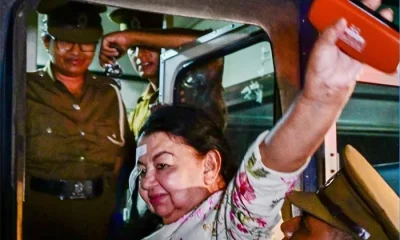
Shiranthi R remanded until 13 Oct.