
News
MR asks Ranil to suspend privatisation projects


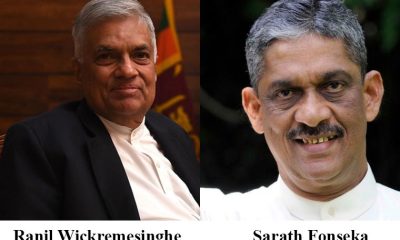
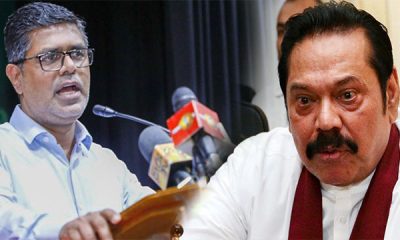
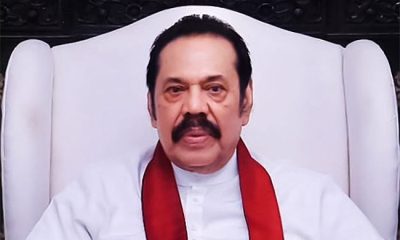
SLPP leader Mahinda Rajapaksa, MP, has asked President Ranil Wickremesinghe to suspend ongoing privatisation projects, pending the conclusion of the presidential polls scheduled for Sept/Oct this year.
Former President Rajapaksa has said in a media statement: “The present government is an interim arrangement formed to run the country for the remainder of former President Gotabaya Rajapaksa’s term. Even the pro-privatisation lobby should realise that the hasty divestiture of state-owned assets at a time like this will not produce the best outcome for the country. Furthermore, the next Presidential Election is only a few months away.
Hence, as a measure to ease the widespread discontent over the government’s divestiture drive, I wish to propose that all moves to sell off stateowned assets or enterprises be postponed until a new government is formed after the next Presidential Election. The new government will then be able to deal with state-owned properties and enterprises in accordance with the mandate they obtain at the election.”
Full text of the statement:
“The government’s plans to sell off certain national assets and state owned enterprises have given rise to discontent among trade unions, political parties and the general public. The present divestiture drive is ostensibly aimed at minimizing govt. expenditure on loss-making state-owned enterprises and meeting certain IMF conditions in that regard. I ruled the country for more than nine years, from November 2005 to January 2015, without ever selling a single state-owned enterprise. In fact, my government actually re-acquired some state-owned enterprises, such as the Insurance Corporation, and Lanka Hospitals, that had been sold off by previous governments, and these enterprises continue to make profits for the state to date.
My government had a pragmatic approach towards state-owned assets and enterprises. If a state-owned enterprise was making profits and providing a good service to the public, we saw no reason to privatize it. At times, a government may take a strategic decision to manage the prices of certain goods or services produced by state-owned enterprises for the overall benefit of the economy or to help low-income earners. The energy sector is a good example of this. There is no government in the world that does not subsidise certain earmarked economic activities.
During my tenure as President, even if some state-owned enterprises made losses due to a government decision to manage prices, our management of the economy resulted in an unbroken nine-year economic boom. We had no difficulty in paying off our debts or meeting the costs of the subsidies we maintained and nobody even spoke of privatisation when I was President. Since the divestiture of certain sectors can have far reaching consequences for the country, especially when foreign parties are involved, this is an issue that has to be approached with caution.
As was resolved at the SLPP May Day rally, any restructuring of state-owned enterprises should take place with maximum transparency, according to a national plan, in a manner consistent with national security and in consultation with the employees.
Having said that, I wish to stress that the trade union sector, for its part, should take a more nuanced approach towards private sector participation in state-owned enterprises. Going by the dictionary definition of privatisation, any involvement of the private sector in the ownership structure or the control of a state-owned asset or enterprise can be characterized as privatisation. However, trade unions should not oppose every attempt to obtain foreign or private sector investment in a government owned enterprise. A pragmatic and non-dogmatic approach to such matters is required.
If there are unutilized government properties or underperforming government enterprises, it makes sense to obtain private sector participation to turn such enterprises around. If a profitable state-owned enterprise needs further investment to add a new feature which cannot be financed by the government, it makes sense to award a share of that enterprise to a private investor in exchange for the investment. If an investor is willing to build a new enterprise from scratch, it makes sense to award shares in that enterprise to the investor so that a new state asset comes into being.
Some political parties have an ideology driven, dogmatic approach to privatization and seeks to privatize anything and everything that can be privatized. Many trade unions also have a similarly dogmatic attitude and tend to oppose any involvement of the private sector in state-owned enterprises. Both these extremes are harmful to the country. Trade unions should regard proposals to obtain private or foreign participation in a state-owned enterprise on a case by case basis and look at the overall benefit of such collaboration to the country.
The only real way national assets and strategically important state-owned enterprises can be safeguarded is by having a government that takes a pragmatic and non-dogmatic approach to such matters. This is why it is important to take note of the fact that when I ruled the country for more than nine years, the economy flourished and there was not even a discussion on the subject of privatisation.”







The Ministry of Industries and Entrepreneurship Development has recommended the establishment of Sri Lankan Standards, i.e. the import testing methodology for imported tires used for passenger cars and pneumatic tires for three-wheelers with the aim of ensuring a fair competitive environment for local
manufactures and ensuring consumer safety and security.
Taking into the said recommendations, “Import and Export (control regulations N0.08 of the 2026)” has been enacted to amend the existing regulations by means of the Extraordinary Gazette Notification No. 2508/27 dated 2026-10-01, prescribing Sri Lanka standard 1212 for the import of passenger types (HS Code 4011.10.90) and Sri Lanka standard 1347 for the import of
pneumatic tires for three – wheeled vehicles (HS Code 4011.90.10).
Accordingly, the Cabinet of Ministers has approved the resolution furnished by the President in his capacity as the Minister of Finance, Planning, and Economic Development to submit the aforementioned regulations to Parliament for approval.
Approval of the Cabinet of Ministers was granted at their meeting held on 02.06.2025 to introduce a new act to promote and providing legal provisions for facilitating the Public Private Joint Enterprises within Sri Lanka as well as the establishment of the National Agency for Public Private Partnership Joint Enterprises.
Accordingly, the Legal Draftsman has formulated the relevant draft bill and the Attorney General has given his clearance to the said draft bill.
The Cabinet of Ministers approved the resolution furnished by the President in his capacity as the Minister of Finance, Planning and Economic Development to publish the said
draft bill in the government gazette notification and thereby submit it to the Parliament for its concurrence.
Regulation, development and control of indigenous medical sector in Sri Lanka comprised of Ayurvedha, Sidhdha, Unani, Local Therapies are carried out under the provisions of Ayurvedha Act No. 31 of 1961.
Although amendments were made to the act from time to time as per the requirements, the necessity of further amending the Ayurvedha Act has been identified to enable efficiently maintaining all activities of local medical field productively, further formalizing the regulation of the sector, taking actions to providing licenses applicable to export of local medicines, and achieving the progress and sustainable development goals in the local medical sector.
Based on the said factors, the Cabinet of Ministers granted approval to the resolution furnished by the Minister of Health and Mass Media to direct the Legal Draftsman to formulate a draft bill to amend the Ayurvedha Act No. 31 of 1961.

Import and Export (Control) Regulations No. 08 of 2026
Draft Bill of the Public Private Partnership Enterprises Act to be gazzetted
Amendment of the Ayurvedha Act No. 31 of 1961

Cabinet nod to amend the Sri Lanka Development Administration Institute Act No. 9 of 1982
Establishment of the National Higher Performance Centre
State patronage for the cremation ceremony of the late deputy prelate (Anu Nayaka Thero) of the Sri Laka Ramangya Maha Nikaya, Gatambe Rajopawanramadhipatha, Siri Chandawimala Wanshalankara, Chandrakeerthi Sri Amarawansha, Sadhdharmawageeshwara, Shasanashobhanna Most Venerable Keppetiyagoda Siriwimalabhidhana Thero

‘Dates have the highest sugar content to fight Coronavirus’

Sunday Island 27 December – Headlines

#SundayIsland 17th December – Headlines

Sunday Island – 28th March

Sunday Island Headlines – 21 March

Sunday Island – 21st February – Headlines
-

 Features3 days ago
Kotahena:A Small Enclave, An Extraordinary Legacy
-

 News7 days ago
Sri Lanka, India caught in US-Iran ship crisis
-
 News4 days ago
Asgiri Mahanayake calls for immediate release of Gnanasara Thera
-

 Latest News7 days ago
Missiles intercepted near Riyadh after Saudi coalition hits Yemen fuel depot
-

 Latest News7 days ago
Kusal Mendis’ unbeaten 87 hands Sri Lanka consolation win
-

 News3 days ago
Record 1,600 students take Russian Classical Ballet examination in Sri Lanka
-
 News6 days ago
AC President recuses himself from hearing prison attire case pertaining to Gnanasara Thera
-

 Latest News7 days ago
Heavy showers above 100 mm are likely at some places in the Western, Sabaragamuwa, Southern, Central, and North-western provinces and in Anuradhapura district.