
News
Morbid musings of an octogenarian


by Vijaya Chandrasoma
When most human beings pass the Best By date, when they overstay their welcome on this planet, when their miserable lives, with all the aches, pains and near-unbearable conditions are kept tolerable with the miracles of modern medications, they generally fantasize about the lives they have led.
We have all heard of the old theory that, at the moment of your death, your whole life flashes before your eyes. Many of us cynical non-believers have dismissed this theory as just another fantasy, like all those creations of imagination surrounding near and after death experiences. But I was surprised the other day while reading an article on a paper called “Time, Story, and Wisdom: Emerging Themes in Narrative Gerontology”, published in 2006, by William Randall and Gary Kenyon, which gives a fresh insight into “the inside” of aging. A central perception that human beings are “narrative beings”.
This omnipresent “narratization”, even post mortem, was discovered when an 87-year-old epileptic was rushed to an emergency room after a fall in 2016, bleeding in his skull. During an EEG (Electroencephalogram), the man had a heart attack and died. “What happened next is what’s eye-popping. The scan found that the man’s brain seemed to replay memories in the 30 seconds before and after his heart stopped beating”.
Some scientists believe that the brain might continue to be subliminally active for some time – even up to seven minutes – after death, which may be the time when you relive your memories, and find a way to bid a final farewell to the world you knew and to those you loved – and perhaps even give a final middle finger to those you hated. “Or maybe it’s a process of the brain rewinding itself, revisiting the information it has accumulated in a lifetime”.
The study concludes with the importance of creating a unifying narrative of your existence, as “it may be the last thing we do when we’re alive – and even the first thing we do after we are dead”.
At my age, I tend to read up on such morbid studies, knowing full well that my Best By time is long past. In fact, I was kept alive by the aforementioned miracles of modern medication, and more importantly, by filial intervention, when I should have cashed in my chips a couple of years ago. I have since forgiven my son for prolonging this miserable existence with his constant care and attention. I believe I reached rock bottom of humiliation the other day when I visited the clinic at the local hospital. The clinic was, as usual, full, standing room only. A kindly old lady, 70-years-old if a day, grey haired, toothless, saw me, got up and said, “Aiyo, Uncle, you look very tired, please take my seat”! it sounded infinitely more pathetic in Sinhala.
Instead of such suffering such constant and shameful blows to my ancient but still vibrant ego, I could have been enjoying at least one of those glorious after-death experiences offered by the many great religions, be it savoring a single malt manna in a variety of heavens in the skies, being reborn as a scion of one of the great modern political dynasties like the Trumps or the Rajapaksas – anywhere but the paradise offering a “reward” of 72 virgins; that is my idea of the other place.
I am, of course, assuming that I will be duly rewarded for the exemplary life I have led in my long existence on this planet. This version may be questioned, even laughed at in disbelief by many, but I am sticking to my story. As I said, many of those who know the real truth are safely dead. Dead men – and women – tell no tales.
As recommended by the above study, I have been putting some order and embellishments into my past experiences, so that when my time comes and my life flashes before my eyes, and in the seven minutes after I die, they will flash in some organized structure; in a manner that is entirely my version and complimentary to me. After all, it is my brain, and no one else should have any control of my version of my past in the last moments of my life.
I had a pretty normal childhood, being fortunate enough to be born into an elite Sri Lankan family. My father was a Civil Servant, and after he completed his stint of duties in the outstations and qualified for an administrative job in Colombo, we settled in the environs of Royal College, where my mother owned a house. My father was an old boy of many Colombo schools (Wesley, Nalanda and Ananda) after his excellent primary education in the village school in Hikkaduwa.
He would have preferred that his sons attend his final alma mater, Ananda College, where he had been an outstanding student. However my mother, ever the snob, gave the excuse of proximity and persuaded my father to send us to Royal. As usual, she got her way, but with the grace that made my father believe that the decision was his, a subtly domineering quality that many Sri Lankan ladies possess.
I loved my years at Royal, enjoying wisdom of its secular system of education and the dedication of an array of brilliant teachers who equipped us with an academic background in the English medium that was second to none – globally.
In fact, I would like to share a story about my younger brother to prove this point. His schooling at Royal was interrupted at a very young age, when my father was on assignment with his employers in London. He spent a few months in a primary school in Highgate, North London. When it was time for him to return to Ceylon (as our nation was then known), the headmaster of the Highgate school visited our home, and tried to prevail upon my father to let him continue his studies in England, rather than return to the primitive backwoods of the colonies. He said my brother had showed great academic promise in the few months he spent in the Highgate school, and his potential would be best served if he continued his academic career in England.
I guess his idea of a school in Ceylon was a mud hut with students seated on the ground and the teachers chattering native gibberish. My father politely refused this kind offer with a smile of sardonic condescension, the expression he constantly wore throughout his long life, the expression that is permanently etched in my memory.
My brother returned to Ceylon and had an outstanding academic career at Royal and at the Colombo Medical College. After teaching Pathology at the Medical College for a couple of years, he went on to emigrate to the United States of America, where he has been, for decades, the Professor of the Faculty of Medical Pathology at the University of Southern California, one of the finest private universities in the nation, if not the world. All this was the “icing on the cake, baked at home” at Royal, as referred to by the late, great Lakshman Kadirgamar.
My brother was also a non-smoker, teetotaler, never gambled in his life (except, on one occasion, when he, a lifelong Republican, backed Mitt Romney for the US presidency in 2012, to defeat incumbent President Barack Obama, against my advice) and married the first attractive woman he met. My father used to introduce him to his friends as the black sheep of the family.
My career at Royal was above average at best, though I had my moments. I was reasonably proficient in schoolwork, and went through a truncated academic career with some success. I tried my hand at every sport available in College, except for Rugby, because I have a terrible fear of physical abuse. I showed more enthusiasm than skill in the other sports I played, cricket, tennis, rowing, athletics. I think the only way to describe my prowess in sports was that I was mediocre in my versatility – or perhaps a better description would be that I was versatile in my mediocrity.
Apart from a world-class education that Royal provided, I made many lifelong friends, many of whom remain my closest friends today. A vast majority of my schoolmates have sadly left this mortal coil, hopefully to greener pastures. Many in my group made outstanding achievements in politics, commerce, academia and other careers of their choosing, which added to the already distinguished reputation of the Old School.
I was only a part of this illustrious group by association, having achieved no distinctions of my own in any sphere. However, I hope to out-achieve them by outliving them all – out of the 100 boys who gained admittance to Royal in 1952, I believe only about 20 are still alive. The odds are getting better by the month. I’m joking, of course. I wish all my schoolmates long, happy and healthy lives. Just not longer, happier and healthier than mine.
My school career at Royal was cut short, when my father accepted the aforementioned assignment with his employers in England. Space and discretion prevent me from listing the extraordinary means – the demon drink, slow horses and fast women would be the favored trifecta – which prevented me from reaching my full potential in every aspect of my life, be it my university, marriage or career. Suffice to say that I couldn’t have disappointed my parents, and myself, more.
So I will conclude this rather narcissistic narrative, which is the one I hope will flash before my eyes when the time comes, with the consolation of an ancient adage of the sport which has given me great pleasure over the years – horse racing:
“The test of a true thoroughbred is not to run fast, but to transmit the genes”. I may not have run fast, and may have run in hedonistic circles, but I have successfully transmitted my genes, in no small measure. Dumb luck and coincidence, maybe, but isn’t that what life really is all about?

Latest News
Cabinet approves relief meaures to persons affected due to the War situation in the Middle East

Approval has been granted at the Cabinet Meeting held on 30-03-2026 to provide relief by granting up to rupees 20/- per litre of 92 Octane Petrol, and up to rupees 100/- per litre of Auto Diesel utilized for public transport to minimize the impact on the day today life of the people and the entire economy as a result of escalation of fuel prices due to the war situation in the Middle East region.
Apart from that, the Cabinet of Ministers approved the resolution furnished by the President in his capacity as the Minister of Finance, Planning and Economic Development to grant the following relief for low – income generators, electricity consumers, farmers, fisheries community, and small tea planters who have been exposed to the direct impact of the energy price hike:
(i) Provision of an additional special allowance for April 2026 to low-income generating categories registered under the ‘Aswesuma’ Programme, irrespective of family size: • Providing rupees 7,500/- to a family in the extremely poor category
Providing rupees 5,000/- to a family in the poor category
Providing rupees 2,500/- to a family in the transitional category
(ii) Instead of transferring the additional cost borne for engaging thermal power plants for generating electricity due to the fuel price hike and prevailing dry weather circumstances to the electricity consumers, the additional cost is to be borne by the Government for a period of 03 months so that a relief can be provided to the electricity consumers utilizing below 90 units.
(iii) Increasing the fertilizer subsidiary of rupees 25,000/- per hectare given at present up to rupees 30,000/- per hectare for the Yala season and increasing the fertilizer subsidiary of rupees 15,000/- per hectare given for additional crops that are cultivated in the paddy fields up to rupees 18,000/- per hectare for the Yala season.
(iv) Provide a 50 kg sack of Urea required for the Yala season at a fixed price of Rupees 10,200/- for farmers through Agrarian Services Centres.
(v) Provide a subsidiary of Rupees 50/- per liter for up to 25 liters per day per single-day fishing vessel, for a maximum of 25 days per month, for a period of three (3) months.
(vi) Provide a one-time payment of Rupees 150,000/- per multi-day fishing vessel engaged in fishing activities during the next three (3) months.
(vii) Provide an additional one-time fertilizer allowance of Rs. 5,000 per 50 kg bag of fertilizer to small tea cultivators, in addition to the existing Rs. 4,000 fertilizer subsidy provided by the Sri Lanka Tea Board.
Under the Finance Act No. 35 of 2018 a tax has been imposed on the telecommunication towers and accordingly an annual tax amount of Rs. 200,000/- is levied from mobile network operators who possess telecommunication towers. However, it has been proposed in the Budget for 2026 that the said tax shall not be levied for a period of five (5) years in respect of telecommunication towers newly erected on or after 2026-01-01.
Accordingly, the Legal Draftsman has formulated a draft bill to amend the Finance Act No. 35 of 2018 including the provisions for taking necessary action, and the Attorney General has granted the clearance in the regard.
Hence, the Cabinet of Ministers approved the resolution furnished by the President in his capacity as the Minister of Finance, Planning and Economic Development to publish the said draft bill in the Government Gazette Notification and thereafter submit the same to the Parliament for its concurrence.
The cabinet of Ministers has approved the resolution furnished by the President in his capacity as the Minister of Finance, Planning, and Economic Development to publish the Value Added Tax (Amendment) Bill in the Government Gazette and thereafter submit it for the concurrence of the Parliament.

Cabinet approves relief meaures to persons affected due to the War situation in the Middle East

Amendments to the Finance Act No. 35 of 2018 to be Gazetted

Value Added Tax (Amendment) Bill to be Gazetted

H.M.J.M.Herath appointed Commissioner General of Registration of Persons

Water Resources Board Act, No. 29 of 1964, to be amended

Securing public sector employment opportunities for Athletes demonstrating National-Level sporting excellence

‘Dates have the highest sugar content to fight Coronavirus’

Sunday Island 27 December – Headlines

#SundayIsland 17th December – Headlines

Sunday Island – 28th March

Sunday Island Headlines – 21 March

Sunday Island – 21st February – Headlines
-

 Features3 days ago
Ranjith Siyambalapitiya turns custodian of a rare living collection
-

 News6 days ago
2025 GCE AL: 62% qualify for Uni entrance; results of 111 suspended
-

 News3 days ago
Global ‘Walk for Peace’ to be held in Lanka
-

 Business7 days ago
Hour of reckoning comes for SL’s power sector
-

 Editorial6 days ago
Search for Easter Sunday terror mastermind
-
 Opinion5 days ago
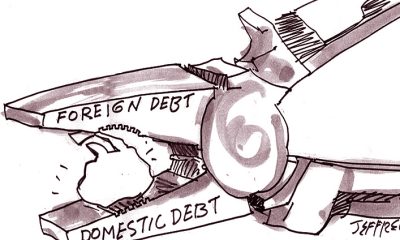
Hidden truth of Sri Lanka’s debt story: The untold narrative behind the report
-
Editorial7 days ago
Ideological confusion and identity crisis
-

 Opinion6 days ago
Is there hope for Palestine?