
Editorial
May Day signals


May Day falling last week, as is very well known, has long lost its Labour Day intent and flavour certainly in this country, degenerating into the political carnival all Lankans are familiar with. With a presidential election due later this year, predictably the various contending parties made the occasion one of trying to demonstrate their pre-poll strength by transporting their supporters by bus and train for the various rallies organized in Colombo. This, of course, has always been done, but the incentive to make the show bigger was more so last Wednesday. While it was easy enough to see that a great deal of money had been spent for this purpose, it was less easy to judge who put up the biggest show although there were many claimants for that achievement.
The hurrah boys of some of the contenders for the presidency had promised all kinds of revelations on May Day. But very little surfaced with a single, little known MP from the Moneragala district switching allegiance from the SLPP to the UNP. There was also the already stale news that Justice Minister Wijeyadasa Rajapakshe will be the SLFP candidate for the presidential crown. We all know he will not wear it, at least the next time round, but former President Maithripala Sirisena announced his candidature at the SLFP’s muted May Day show at Gampaha.
What Rajapakshe’s intentions are, we don’t know. But the comedy continues and we can easily guess that he’s probably looking at the next parliamentary election rather than the presidency at least at this moment – whatever may happen in the future. He’s been serving many masters since his entry from the legal profession into parliament in 2004 on the national list of the SLFP and later by election. He’s thereafter held several cabinet ministries and chairmanship/membership of different parliamentary oversight committees. He’s now been named acting chairman of the SLFP but since restrained from assuming that position by the courts. The determination of an appeal on that judgment is pending.
The UNP which has been claiming many SJB defections to be announced on May Day pulled in a single minnow from back of beyond, not from the SJB but from the SLPP, into its ranks. Party hacks didn’t bother to even talk about it, leave alone make any noise. But the Wickremesinghe cheering squad keeps saying there are several months to go before the big election and are asking the country to await developments. So also the SLPP, out of the woodwork since the aragalaya, which while repeating they will field a candidate at the presidential poll remains shy of revealing that worthy’s identity. Though his father has said that Namal Rajapaksa has more time, the latter continues to champ at the bit.
One small clue from the SLPP May Day platform was the presence of billionaire businessman Dhammika Perera. Clad in his trademark blue suit and red tie, he looked a fish out of water among the political hoi polloi. Although he had barely spoken in parliament since he succeeded Basil Rajapaksa in an SLPP national list seat and briefly held cabinet office, his DP Education initiative offering free IT distance education remains alive and kicking. Observers believe this signals that Perera is not yet old hat as far as his presidential ambitions are concerned.
The anticipated May Day announcement of his own candidature by the president did not come to pass, some say to the disappointment of the Nimal Lanza-led group of SLPPers waiting to toss their hats into the Wickremesinghe ring. This made them keep off the UNP rally this May Day until the candidature is formally announced by the real McCoy rather than his acolytes. There was no clue last week on why Wickremesinghe chose to remain personally silent of his candidature although there are a multitude of signals that he plans to run. The latest among these was the president’s announcement on the CWCs (Ceylon Workers Congress) Kotagala May Day platform of the long promised Rs. 1,700 daily wage for plantation workers.
Newspaper correspondents resorted this May Day to identifying who was present where, and who was not at particular events to read the political barometer. Field Marshal Sarath Fonseka was present at the SJB rally which he left early probably because he was not given a speech. Observers attribute this to the ongoing squabble between Fonseka and SJB leader Sajith Premadasa.
In May Days of long ago when the old left, affiliated to many trade union federations, was alive and kicking, newspaper correspondents resorted to the not very accurate practice of timing which procession (often called demonstration) took the longest time to pass a given point. Given the pace of the marching and spacing between different sections of the processions, it is doubtful whether this was a reasonably accurate measuring device. But it was often practiced.
Galle Face green was then the most preferred venue, often hogged by whoever was in office, but public meeting are no longer permitted there. Many of this year’s May Day events were confined to the streets with the SLPP choosing the more open Campbell Park – and making much of it – while others chose smaller open spaces and the streets where participants were packed into narrow confined spaces with obvious attempts to outdo each other in terms of crowd show. Mahinda Rajapaksa projected his party as the kingmaker in this year’s presidential contest claiming that nobody could win without their support. The JVP/NPP had four rallies, big ones in Colombo and Matara, one in Anuradhapura and the smallest in Jaffna.


Saturday 6th June, 2026
Tuesday’s tragedy at Anguruwatota, where a fire engulfed an elders’ home, claiming 13 lives and seriously injuring several others, has shaken the conscience of the nation. Equally shocking are the allegations that the residents of the care centre had been mistreated; among them were persons with disabilities, and some of them had been restrained with chains, according to eyewitnesses. The police have said they found the charred body of a resident in chains. It has now been revealed that the care home was not registered. The question is why the authorities did not take any legal action against it.
The Director of the gutted elders’ home has been remanded and the police will press charges against him. However, the Anguruwatota tragedy is not a problem that should be addressed in isolation. It should be examined in the context of a wider socio-economic issue.
There are other elders’ homes across the country, and they number about 250, according to media reports. They are run by a mix of government institutions, provincial councils, religious organisations, NGOs, and private operators. Some of them are reportedly under-resourced, and poorly-regulated. These institutions can accommodate only a fraction of the country’s elderly population needing assistance. Most of them, however, are basic residential care facilities rather than fully developed geriatric care centres, often functioning more as shelters than as medically supported long-term care institutions, which the country badly needs.
Sri Lanka has already reached a rapidly ageing phase of its demographic transition, with the proportion of citizens above 60 years increasing. About 18 out of every 100 Sri Lankans are aged 60 or above. This proportion has risen sharply from about 12.4% in 2012. It is doubtful whether successive governments have addressed this issue adequately, much less formulated a strategy to face challenges arising from an ageing population. This shift has placed increasing pressure on many families that are struggling to make ends meet and therefore cannot provide full-time care for their elderly members and relatives. Hence the need for policymakers to intensify their focus on structured elderly care for those without family support or social security.
While action is taken to ensure that the existing elders’ homes are run properly, it is incumbent upon policymakers to devise ways and means of facing the problems associated with an ageing population. Experts have pointed out that a national elderly care strategy to address these issues need to integrate several components. First, it should strengthen community-based care models that allow elders to remain in their homes for as long as possible, supported by home visits, mobile health services, and social workers. Second, it should develop a graded system of care homes, ranging from basic shelters to medically supported nursing facilities, all under proper regulatory supervision. It was a chronic lack of oversight and poor regulation that led to the Anguruwatota tragedy. Third, local government authorities should be formally involved in identifying vulnerable elders, coordinating welfare benefits, and ensuring minimum care standards at community level. Fourth, financial protection mechanisms such as social pensions, subsidised care, and public-private partnerships should be expanded to reduce the burden on low-income families.
It is hoped that Tuesday’s tragedy will jolt politicians and policymakers into addressing the long-felt need for a coherent national strategy to enable the elderly to spend their twilight years in comfort and dignity.

Friday 5th June, 2026
The Opposition’s propaganda mill is in overdrive, manufacturing various stories about a split in the JVP-NPP government. Mighty governments collapse not because their political enemies regain lost ground and turn the tables on them. They fall largely because the arrogance of power blinds their leaders to reality while their members dare not speak truth to power. Government members sing hosannas to their leaders and even defend the latter’s wrongdoing, committing collective political hara-kiri in the process. The incumbent JVP-NPP government has its fair share of acolytes who try to defend the indefensible.
Former Public Security Minister Sarath Weerasekera (SW), in his response to a recent editorial in this newspaper, has sought to lay the blame for the failure of the Gotabaya Rajapaksa (GR) government on others. In his letter published on the opposite page, today, he insists that the Rajapaksas had the national interest at heart. He implies that they never engaged in dynastic politics, and the 2022 economic crisis was due to factors other than the mismanagement of the economy.
The economy went into a tailspin during the GR government not solely due to the economic consequences of the Covid-19 pandemic and the repayment of foreign loans obtained by the Yahapalana government. Economists have pointed out that the pandemic did not cause bankruptcy on its own, but it acted as a major trigger that exposed pre-existing weaknesses such as high debt, weak foreign reserves, and overdependence on exports and tourism. All governments pay back loans obtained by their predecessors.
The GR government should have sought IMF help at the first signs of trouble. One may recall that acting on Central Bank (CB) advice, the Mahinda Rajapaksa (MR) government (2005-2010) secured IMF assistance and managed an emerging forex crisis, which would have derailed the war effort. If the GR government had heeded CB advice and taken action to increase tax revenue and shore up the country’s foreign currency reserves with IMF help, the 2022 economic crisis could have been averted.
Sri Lanka had to opt for a soft default and seek IMF assistance in 2022. The choice it had was between a soft default and a hard default, which would have ruined its chances of borrowing from external sources again. Sri Lanka was bankrupt, and that fact had to be announced.
The UPFA and SLPP administrations during MR’s second presidential term (2010-2015) and GR’s presidency (2019-2022) were in fact governments of the Rajapaksas by the Rajapaksas for the Rajapaksas. In the GR government, the number of key ministries held by the Rajapaksas increased to five. The share of government expenditure linked to the ministries controlled by them was more than 50% between 2010 and 2015 and between 2019 and 2022, according to political commentators. The other members of the MR government (2010-2015) became so disgruntled that a group of prominent UPFA MPs including ministers voted with their feet in 2014, and General Secretary of the SLFP Maithripala Sirisena went on to challenge MR in the 2015 presidential contest and secure the presidency. As many as 41 SLPP MPs broke ranks with the GR government in early 2022.
Aragalaya,
which crippled the Rajapaksa rule, began as a genuine, leaderless protest campaign against economic hardships, especially prolonged fuel shortages and power cuts. Some political forces infiltrated it subsequently, but it was losing steam when a group of SLPP goons set upon peaceful protesters at Galle Face in May 2022, and triggered a spree of retaliatory violence, which led to the ouster of the Rajapaksas, and paved the way for the 2024 regime change.
As for reconciliation, a retired Major General known for his distinguished military career and respected leadership, writing under a pseudonym––‘Old Soldier’––recently had this to say in his letter critical of the way the government handled this year’s War Heroes’ commemoration, which was the topic of the editorial comment under discussion: “Reparations are claimed by the winners in wars between nations. After civil conflicts there should be reconciliation. There should be no humiliation. When will commemoration of the dead be national in Sri Lanka?”
If the SLPP is to make a comeback, its leaders and their apologists must shed their aversion to self-criticism. The same applies to their equally self-righteous counterparts in other Opposition parties.


Thursday 4th June, 2026
The government has locked horns with private bus operators, who are demanding a fare hike amidst soaring fuel prices. The former has rejected the fare hike demand out of hand, claiming that it is unfair. President of the Lanka Private Bus Owners’ Association Gemunu Wijeratne has threatened to launch a bus strike unless a fare increase is granted forthwith. He has claimed that there is legal provision for the annual bus fare revision due in July to be advanced. The government and the irate private bus owners are now playing a game of chicken.
School vehicle operators have warned that they will have to increase fees. Trishaw owners have also demanded a fare hike. Container truck operators have already increased freight charges by 5% to offset surging operating expenses, primarily driven by higher diesel prices, inflated costs of tyres and spare parts.
A brutal one-two combination—fuel price hikes and rupee depreciation—has sent all vehicle owners, save a few, to the canvas, so to speak. The prices of spare parts, lubricants and tyres have also skyrocketed. It is only natural that transport operators are demanding fare revisions. The government should stop making political statements and address the issues facing the transport sector. The public cannot take any more shocks, and another fare hike is something everyone needs like a hole in the head. It may not be feasible to grant the bus operators’ request for a fuel subsidy, but the government may be able to help them lower costs in some other way.
It will not be possible to overcome Sri Lanka’s balance of payments woes, strengthen the rupee and shore up foreign currency reserves without a proper strategy to reduce the national fuel bill, which accounts for more than 20% of the total value of imports. President Anura Kumara Dissanayake has pointed out that the country’s monthly fuel import expenditure has surged nearly six-fold. Driven by escalating tensions in West Asia, the fuel import bill rose from USD 98 million in February to USD 522 million in May, according to him. There is no gainsaying that drastic measures need to be adopted to reduce fuel consumption urgently. However, increasing fuel prices is not the only way to achieve this goal.
A country does not need a government to curtail the demand for fuel through price hikes. The JVP-NPP administration should be able to strategise to reduce fuel consumption through other means if it is to be considered worth its salt. Minister Anura Karunathilake and Ceylon Petroleum Corporation Chairman D. J. A. S Rajakaruna have gone on record as saying that action will be taken to have the QR-based fuel rationing system strictly regulated. Why didn’t the government care to do so earlier? If the fuel quota system is to be effective, the practice of motorists sharing the QR codes must be brought to an end. If the national fuel consumption has reached an unmanageable level, as President Dissanayake has said, will the government explain why fuel quotas were increased.
President Dissanayake and his government should learn from India’s efforts to reduce fuel consumption and adopt a top-down national austerity approach to conserve foreign exchange amidst external economic pressures. India’s strategy emphasises reducing official fuel use, adopting digital alternatives to travel, and promoting public transportation to manage energy consumption. After all, the JVP-led NPP came to power, promising austerity measures, which it must now adopt to curtail state expenditure while reducing the burgeoning import bill.
The JVP-NPP government is slow in responding to emergencies. Its disaster response following the landfall of Cyclone Ditwah was woefully tardy. It ignored warnings and waited until the country’s fuel reserves were almost depleted to introduce the QR-based rationing. It cannot wish away the threat of a private bus strike. It must get the bus owners around the table and have a serious discussion on how to resolve the transport sector woes instead of bellowing rhetoric.

Rusty West Indies face upbeat Sri Lanka with series on the line

Pakistan naval trio leaves Colombo after goodwill visit

PEOTV secures media rights for FIFA World Cup

Anthropic urges AI labs to pause, warns humans risk losing control

Iran footballers issued US visas for World Cup, says White House

Showers will occur at times in the Western, Sabaragamuwa and North-western provinces and in Galle, Matara, Kandy and Nuwara-Eliya districts

‘Dates have the highest sugar content to fight Coronavirus’

Sunday Island 27 December – Headlines

#SundayIsland 17th December – Headlines

Sunday Island – 28th March

Sunday Island Headlines – 21 March

Sunday Island – 21st February – Headlines
-

 News4 days ago
Lankan duo emerge winners in Latin dance championship held in Blackpool, UK
-

 Business5 days ago
IMF’s unstated rate:Sri Lanka’s $695m loan costs about 5.33% per annum
-
 Latest News2 days ago
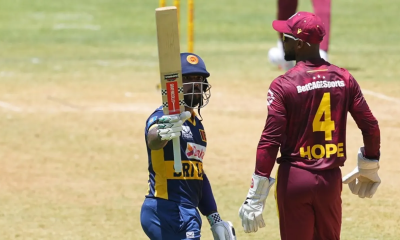
Kusal Mendis, Pathum Nissanka, bowlers put Sri Lanka 1-0 up
-
 News2 days ago
New US tariffs proposed on 60 countries, including Sri Lanka
-

 Business5 days ago
Sri Lankan scientist-innovator Milinda Edirisinghe introduces AI-integrated gem testing system to gemological world
-

 Features6 days ago
Are threats to Buddha Sasana external or from within?
-
 News5 days ago
UNP challenges NPP move to amend Vihara – Devalagam Act
-

 News4 days ago
Sri Lankan teen killed in Chennai clash; three arrested