
Latest News
Karunaratne toils his way to a place among Sri Lanka’s greats

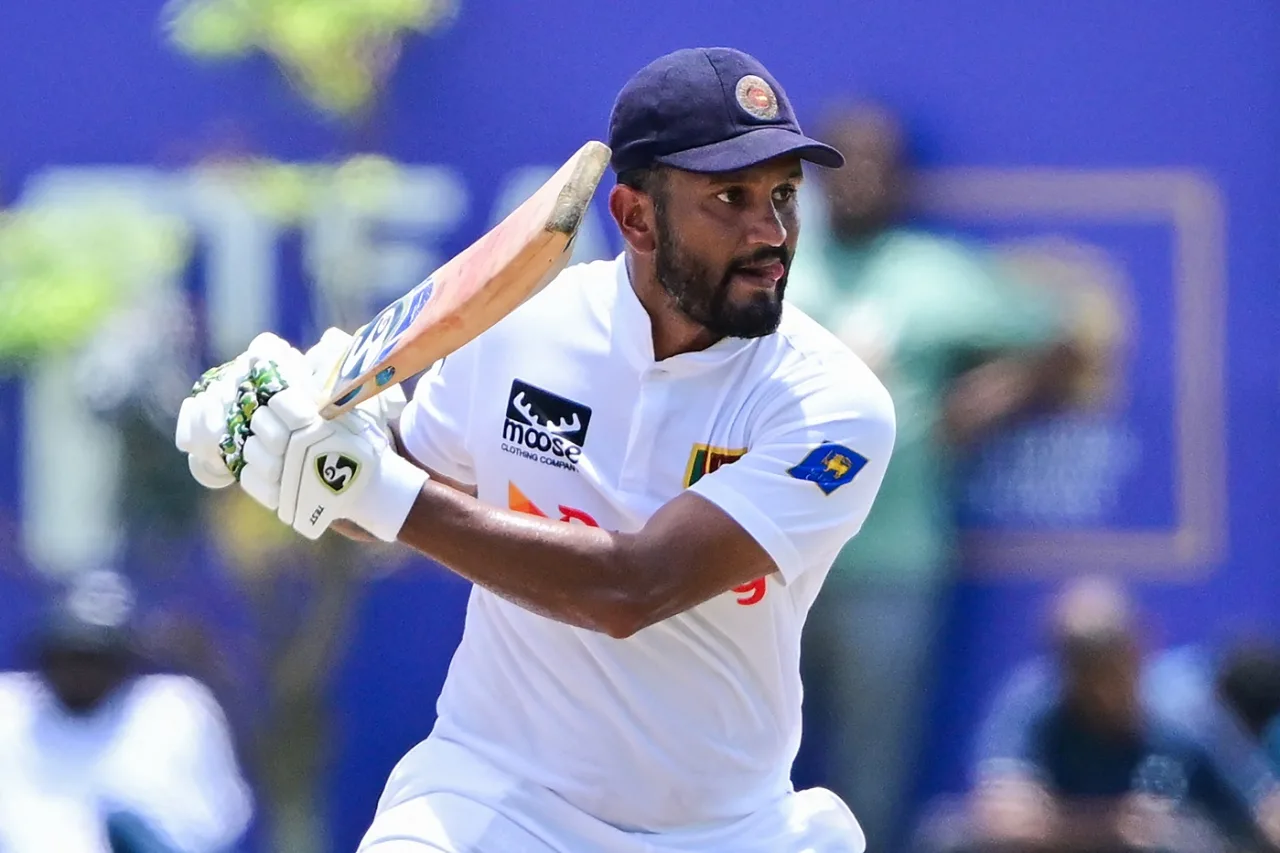
Since the start of 2015, no Test opener has scored as many runs as Dimuth Karunaratne. He has 15 hundred, which is the equal highest among openers. He has struck 34 fifties, easily the best – that tally in some senses making him the most consistent opener to be continuously active through the last ten years. Over the course of this, he has also made the ICC Test XI three times, which no other opener has managed.
This week, as he plays his 100th Test, there is reason to give the man his flowers, because when else was cricket going to find the time? His is a career that has floated on the fringes of the sport’s consciousness. You can still make a serious name for yourself as a Test opener in this age, but you have to crash a lot of boundaries to get that kind of attention, and ideally your country belongs to one of cricket’s bigger economies. Grinding out half-centuries on dustbowls, hunkering down for the new-ball spells, manipulating spin so you’re tracking at roughly three runs an over without risks – these are all nice things to be good at. But as far as the modern cricket ecosystem goes, this is like saying you’re the world’s top air-conditioner repair mechanic. Other people are doing way more glamorous things.
For much of Karunaratne’s career, opening has been especially difficult. Since the start of 2015, men’s openers around the world have averaged 33.71 – significantly lower than they did in the aughts (3.17), and less than in the nineties ( 35.50, and eighties (34.76). You were always at the greatest risk of falling to the swinging and seaming ball as an opening batter, but in the last 10 years of Test batting, fresh terrors have snuck into nightmares, with the wisdom that spinners gain more bite out of a hard new seam taking hold stronger than it ever has before. In the 2020s, a 140+kph quick and an experienced finger spinner sharing the new ball is a pretty standard challenge for an opener, especially in Sri Lanka, where new balls can swing through humid air almost as well as they can explode off dry surfaces. Take away Karunaratne’s runs, and openers have averaged 33.6 on the island since 2015.
There are also few who have lit so steady a fire for Sri Lanka’s place in the Test world. This is, after all, a country that has let its Test-match win-loss ratio slip from 1.31 between 2005 and end of 2014, to 0.81 since the start of 2015. Much of this has been about Sri Lanka’s failure to replace great players. There are no spinners to rival Muthiah Muralidaran and Rangana Herath, no seamers to match Chaminda Vaas or Lasith Malinga, no top-order batters that are on the level of Kumar Sangakkara, Mahela Jayawardene and Aravinda de Silva. But when it comes to openers, there is a case to be heard. Sanath Jayasuriya and Tilakaratne Dilshan did it with more verve, and Marvan Atapattu was more technically correct. But none of them did it as prolifically as Karunaratne, or scored anywhere near his 7079 runs at the top of the order.
With most other positions in the XI, you can look back to the Lankan men’s team of the late aughts and early 2010s – the golden generation – and mostly conclude that Sri Lanka do not produce cricketers of the same quality. Karunaratne gives you reason to pause.
And at no point, by the way, was he ever Sri Lanka’s golden boy. Where it had been suggested of others that they were the next great Sri Lanka batter, Karunaratne was ever the jobbing opener, and rarely believed to be deserving of the care that batters marked out for stardom tend to receive from coaches and staff, though he has outlasted virtually all of them. Karunaratne’s has been a short leash, and he’s got the struggling thirties, and the dirty half-centuries to prove it. No one will call it a pretty career. But fifties didn’t need to be pretty – they just needed to be fifties. And Karunaratne was adept at providing them. Those prods outside off stump, those strong lbw shouts, and inside edges into pad were all in strong supply. But so were Karunaratne’s runs.
There is an obvious skew to his record. He is exceptionally good against spin, which explains why 81% of his hundreds have come in Asia, though he’s also got hundreds in South Africa and New Zealand.
If Ravindra Jadeja and R Ashwin presented the greatest spin-challenging of this last era, then few batters have denied them as effectively, with Karunaratne hitting hundreds at the SSC in 2017 1nd Bengalaru in 2022. These were classic Karunaratne innings, in that he obviously scratched his way through portions of them, rarely struck the kinds of authoritative boundaries that suggested he was dominating the bowling, and yet he found ways to avoid getting out, while pinching another 10 runs. He has added a few new shots, and refined his defence, but this, essentially, has been his mode of operation for 12 years. There is also a strikingly ego-free quality here. For bowlers, beating a batter’s edge is a small victory; for Karunaratne, it is an opportunity to face the next ball.
It is a career worth celebrating all the more, for it being in its last days, almost inescapably. Karunaratne has not said anything about retirement yet, but the signs are there. He averaged 29.66 across 2024, and was terrorised by Kagiso Rabada in South Africa, just as he is again being hounded by Mitchell Starc – a bowler who has now dismissed him nine times in Tests. But his own performance is almost irrelevant. Even if Karunaratne throws off a career’s worth of precedent and clubs 100-ball double-centuries in his next Test encounters, Sri Lanka will only still be playing four Tests in 2025. Their next World Test Championship schedule will still feel sparse.
If a little navel-gazing is permitted, you do have to wonder how many more Sri Lanka cricketers will get to 100 Tests. Another Sri Lanka opening batter? This could be a last chance to see.
Karunaratne is the seventh Sri Lanka cricketer to this milestone, to follow Jayasuriya, Muralidaran, Vaas, Sangakkara, Jayawardene, and Angelo Mathews. He is probably the least-celebrated of that crowd. But no one could say he does not deserve his place among them. Others have had the benefit of hype, legend, and aura. Karunaratne’s only medium has always been hard, pragmatic runs.
[Cricinfo]


The National Business Facilitation Centre (NBFC), which is being established under the Presidential Secretariat with the aim of removing administrative and regulatory barriers that exist among government institutions in relation to investment and industry and expediting these processes, will be opened tomorrow (22).
The centre is being established on the President’s initiative with the aim of bringing about a positive transformation in the industrial sector. The centre will provide solutions to issues that arise in dealing with the government machinery when starting and operating a business, while also coordinating with the relevant government institutions to provide the necessary facilities.
The “ViYASA” National Business Facilitation Centre (NBFC) has been established at Building C-80, Hector Kobbekaduwa Mawatha, Colombo 07, and is headed by Senior Additional( Secretary to the President, Seevali Arukgoda.
The centre will be opened under the patronage of Minister of Labour and Deputy Minister of Finance and Planning Dr Anil Jayantha Fernando and Minister of Industry and Entrepreneurship Development Sunil Handunnetti, with the participation of Secretary to the President Dr Nandika Sanath Kumanayake.
The website https://nbfc.presidentsoffice.gov.lk is also scheduled to be officially launched on the occasion.
President’s Media Division)
Latest News
Court of Appeal Judge M. Sri Mevan Anthony Edirimannasuriya Corea appointed as Acting President of the Court of Appeal
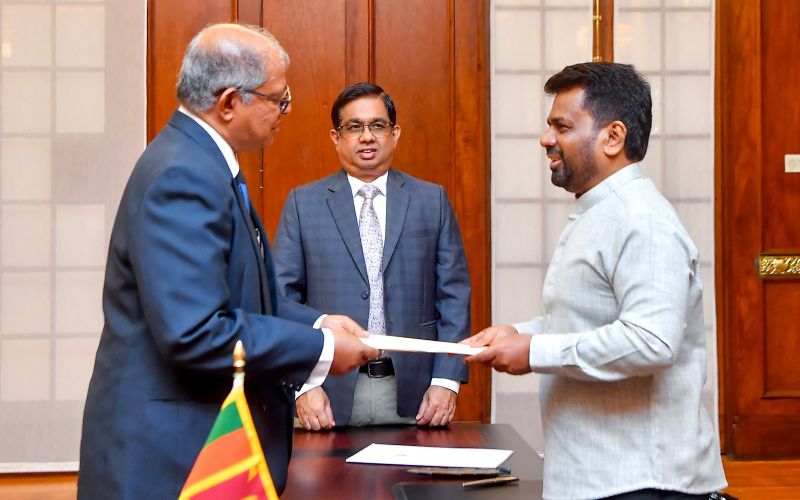
President Anura Kumara Dissanayake has appointed Court of Appeal Judge Mayadunna Sri Mevan Anthony Edirimannasuriya Corea as the Acting President of the Court of Appeal.
The appointment has been made as President’s Counsel Nalin Rohantha Abeysuriya, who currently serves as President of the Court of Appeal, will be overseas until the 24th.
Accordingly Judge Mayadunna Corea was sworn in as Acting President of the Court of Appeal before President Anura Kumara Dissanayake at the Presidential secretariat this morning (21).
Secretary to the President Dr Nandika Sanath Kumanayake was also present at the occasion.
(President’s Media Division)
Latest News
President instructs expediting further measures concerning Sivarasa Anojan, sentenced to death in Saudi Arabia
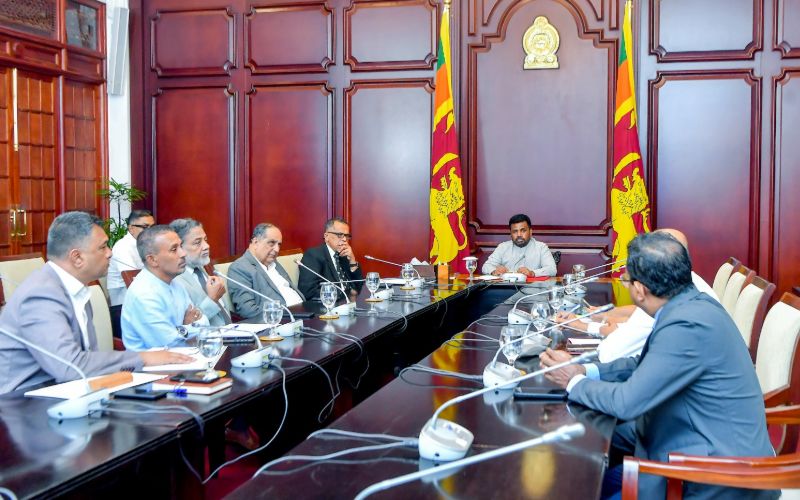
A discussion to review the further measures that could be taken regarding Sivarasa Anojan, a young Sri Lankan national who has been sentenced to death in Saudi Arabia, was held at the Presidential Secretariat this afternoon (21), under the patronage of President Anura Kumara Dissanayake.
The discussion focused on the measures taken to date concerning Sivaraasa Anojan and the further diplomatic and legal steps that could be pursued. Attention was also given to expediting the necessary further measures that could be taken to secure his release.
President Anura Kumara Dissanayake instructed officials to continue the necessary diplomatic engagement with the relevant authorities in Saudi Arabia and to maintain close and continuous involvement in all further measures concerning the case.
Reaffirming the Government’s continued attention to the safety and welfare of Sri Lankans living and working overseas, the President also stressed the need for the relevant ministries and institutions to work in close coordination and pursue all possible measures that could be taken in connection with the case.
Deputy Speaker Rizvie Salih, Deputy Minister of Religious and Cultural Affairs Muneer Mulaffer, Governor of the Western Province Hanif Yusoof, Secretary – Ministry of Foreign Affairs, Foreign Employment and Tourism Aruni Ranaraja, Secretary to the Ministry of Defence Air Vice Marshal Sampath Thuyacontha (Retd), Attorney General Parinda Ranasinghe and officials of the Ministry of Foreign Affairs, Foreign Employment and Tourism were also present at the discussion.
(President’s Media Division)

“ViYASA” National Business Facilitation Centre (NBFC) to be opened tomorrow (22)

Court of Appeal Judge M. Sri Mevan Anthony Edirimannasuriya Corea appointed as Acting President of the Court of Appeal

President instructs expediting further measures concerning Sivarasa Anojan, sentenced to death in Saudi Arabia

It’s Shafali vs Athapaththu as Sri Lanka seek to stop India juggernaut

Trophy row unlikely to repeat in Japan

Powerful explosions at Syrian army site near Aleppo injure at least four

‘Dates have the highest sugar content to fight Coronavirus’

Sunday Island 27 December – Headlines

#SundayIsland 17th December – Headlines

Sunday Island – 28th March

Sunday Island Headlines – 21 March

Sunday Island – 21st February – Headlines
-

 News5 days ago
US embassy won’t comment on IGP’s probe into joint drug raid
-

 News4 days ago
Bid for Basil’s extradition nears final stage: Police
-

 News3 days ago
Shanakiyan urges urgent action over reported death sentence for Lankan in Saudi Arabia
-

 Features7 days ago
The emptying university: why are academics leaving?
-

 Business5 days ago
All-new Bolero MaXX unveiled in Sri Lanka
-
 Opinion7 days ago
Who committed genocide and created mass graves in Sri Lanka?
-

 News2 days ago
Namal Rajapaksa Buddhist gambit fails, bail denied
-
 Opinion5 days ago
A journalist who wrote across the divide