
Features
Janet Yellen Proposes to Revolutionize Corporate Taxation!

by Selvam Canagaratna
President Biden is proposing a substantial increase in the rate of corporate taxation as part of his infrastructure plan, bumping the headline rate up from 21 percent to 28 percent. This is actually below where it was before 2017, when the headline rate was 35 percent, but given the number of loopholes in the tax code, very few corporations actually paid full whack back then. If Biden’s idea is passed, the effective rate of US corporate tax will depend on what happens with those loopholes in Congress, which is not yet clear.
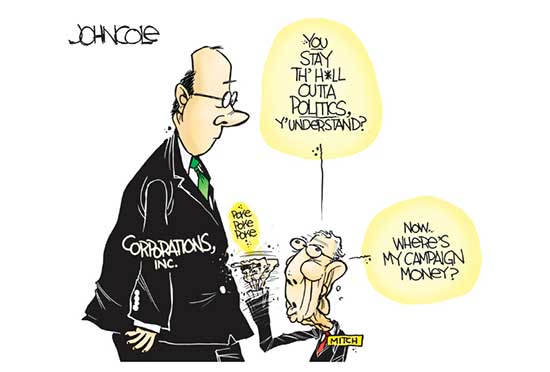
More importantly, writes Ryan Cooper, Treasury Secretary Janet Yellen is leading an effort to implement a global minimum corporate tax. This would be one of the most revolutionary economic agreements in history — blowing up the model of tax havens around the world, and drastically shifting the balance of power between corporations and national governments (especially small ones).
The last several decades have seen a race to the bottom in corporate tax rates around the world, as economists Emanuel Saez and Gabriel Zucman describe in their book Triumph of Injustice: How the Rich Dodge Taxes and How to Make Them Pay.
America, for example, used to have very steep taxes on the rich — a 53 percent tax on corporate profits, a 75 percent tax on the biggest inherited estates, and a 94 percent top marginal income tax rate.
Figures from economist Thomas Piketty show similar rates in France, Germany, and Britain in the period after the Second World War. But these have been gradually whittled away over the years through a combination of legal innovation from tax lawyers and accountants, and learned helplessness on the part of governments — especially after the neoliberal turn in the 1980s, when taxes came to be viewed as an economic drag if not legalized theft. In 1980 the average corporate tax rate in Europe was about 45 percent; in 2020 it was about 20 percent. “Looking at most of the great retreats of progressive taxation, we find the same pattern: first, an outburst of tax dodging; then, governments lamenting that taxing the rich has become impossible and slashing their rates,” they write.
Thanks to all the succeeding rounds of tax cuts, today ultra-billionaires pay less in tax than any other group in the US. According to data compiled by Saez and Zucman, people on the Forbes 400 list of the richest people in the country pay just 23 percent of their income in tax, as compared to about 40 percent for the upper-middle class or 28 percent for the very poorest:
It is of course wildly outrageous for the most well-off people to be contributing so little to support the country that makes their wealth possible, and the gigantic concentration of money in so few hands is manifestly corrupting politics around the world. Low corporate taxes are a big reason for this — as you can see with their handy tool, increasing the effective corporate rate to 40 percent would bump up the Forbes 400 tax rate by about 7 percentage points.
But perhaps more insidious still is the politics of tax havens created by all these cuts.
One of the key legal strategies that corporations use to avoid tax is by stashing their money overseas. Google, for instance, books much of its profit in Ireland, where the headline corporate tax rate is 12.5 percent (and in practice lower than that) and Bermuda, where the corporate tax is zero. As Saez and Zucman explain, companies do this basically through trickery. By selling assets that have no market price (above all intellectual property) to foreign subsidiaries for cheap, they can then book profits relating to those assets there and pay little in tax.
In an economic sense, this is tantamount to fraud. There is not anything like the level of business activity that would justify all those profits being “made” in Ireland or Bermuda. They are overwhelmingly profits made elsewhere that are sheltered from tax authorities through accounting gimmicks.
But the ability to book profits in tax havens provides corporations with a powerful weapon against national tax authorities. By moving profits overseas (or threatening to do so), they have induced nations to continually cut their domestic corporate tax rates, inaugurating a race to the bottom as countries struggle to undercut each other.
In 1980, the average corporate rate was 40.11 percent, but today it is just 23.85 percent. There have always been countries that charged little in corporate tax, but as Saez and Zucman demonstrate, before the 1970s they were not used to book fake profits, for fear of a crackdown from the IRS or other tax authorities. But once authorities in rich countries gave up trying to rein in tax cheats, evasive behaviour exploded: Between 1980 and today, the percentage of foreign profits booked by US-based multinational corporations in tax havens has tripled, from less than 20 percent to almost 60 percent. There is no sign of the trend stopping, either — in 2020 alone, nine countries cut their corporate rate.
Now, America is so big and powerful that it could probably destroy tax havens by itself. Biden’s tax plan would double the tax rate US companies pay on their foreign profits, which would strike a substantial blow by itself. But America could also legally forbid the use of tax shelter accounting strategies for American companies, and require that any international company doing business here do the same — forcing them to book British profits in Britain, German profits in Germany, and so on. Any serious multinational must have access to the vast American domestic market, and they would basically have no choice but to comply. In the extreme, the US could apply economic sanctions to tax havens or even threaten them with military force.
But Yellen is pushing a different argument. The corporate tax race to the bottom is a poisonous zero-sum game — the benefits to Ireland or Bermuda must come at the expense of other countries, and erode the global rate of corporate tax over the long term. It follows that it is in the interest of all nations to set up a universal minimum standard so that nobody is tempted to go for beggar-thy-neighbour development strategies. That holds even for Ireland, where the flood of corporate money has badly corrupted national politics, and the average Irish person barely sees any of those fake profits anyway.
“This is not sustainable, either politically or economically,” Zucman told The Week. “A high global minimum tax would address the issue — and ultimately allow the world to reconcile globalization with tax justice.” The rate of the minimum tax is still being discussed, but if set at a reasonable level, it would be a huge blow against corporate power. In effect, nations would regain a great deal of economic sovereignty — allowing them to choose corporate policies based on what they think is best, rather than being forced to follow the herd and prostrate themselves before the corporate elite.
It is an interesting question as to why Democratic establishment types like Biden and Yellen are pushing this kind of fairly aggressive policy. The complete failure of the Trump corporate tax cuts to perform as promised probably has something to do with it. According to neoliberal economic theory, such cuts should spark investment because companies will get to keep a greater share of the revenues resulting from that investment. That did not happen because of inequality — the mass of American consumers did not have the money to buy the products that new investment would have produced and corporations were already sitting on record hoards of cash. Corporate investment is only surging now thanks to all the money put into ordinary people’s pockets through the various pandemic rescue packages, which has spiked demand for all sorts of things.
At any rate, it remains to be seen whether Biden’s tax plan can get through Congress. But Yellen could still accomplish a great deal without that happening. If a critical mass of countries can agree to stand together against big corporations, politics around the world would take a sharp turn for the better. Ultimately, corporations depend utterly on state laws and structures to exist at all. It’s only fair to make them pay their fair share.



For decades, Sri Lanka has been marked on the world map as the “Pearl of the Indian Ocean”—a tropical paradise for travelers. However, recent data and chilling revelations suggest that a dark cloud is forming above that beautiful image. Evidence is emerging that horrific cyber crime networks, previously centered in Southeast Asian countries like Myanmar, Cambodia, and Laos, are now shifting their operational hubs toward Sri Lanka. Today, the island is increasingly becoming a secret makeshift headquarters for international “Telecom Fraudsters” and syndicates operating “Pig Butchering” (financial investment fraud) schemes.
Based on raids conducted in the country from 2023 to April 2026, technical data, and information obtained under the Right to Information (RTI) Act, this investigation examines how these networks operate and the threat they pose to both the country and the global community.
Global Crackdown and Sri Lanka as the “Entry Point”
Following intense crackdowns by China and Southeast Asian nations on criminal zones like Myanmar’s “KK Park” and areas in Dubai, these criminals have dispersed in search of new safe havens. Sri Lanka has become a primary target for several key reasons:
- Economic Vulnerability: In light of the country’s economic situation, a relaxed scrutiny regarding any foreign investment or cash inflow has benefited criminals.
- Visa Loopholes: The ease of engaging in business activities while on tourist visas and the opportunities to overstay.
- Infrastructure: Sri Lanka boasts high internet speeds and communication facilities—essential factors for cyber operations.
- Technical Literacy Gap: A lack of digital awareness and negligence among local internet users makes them easy prey, often leading to their bank accounts being used for money laundering (mule accounts).
Recent Raids and Revelations
Since mid-2024, several raids by the Sri Lanka Police and the Criminal Investigation Department (CID) have revealed the scale of these networks:
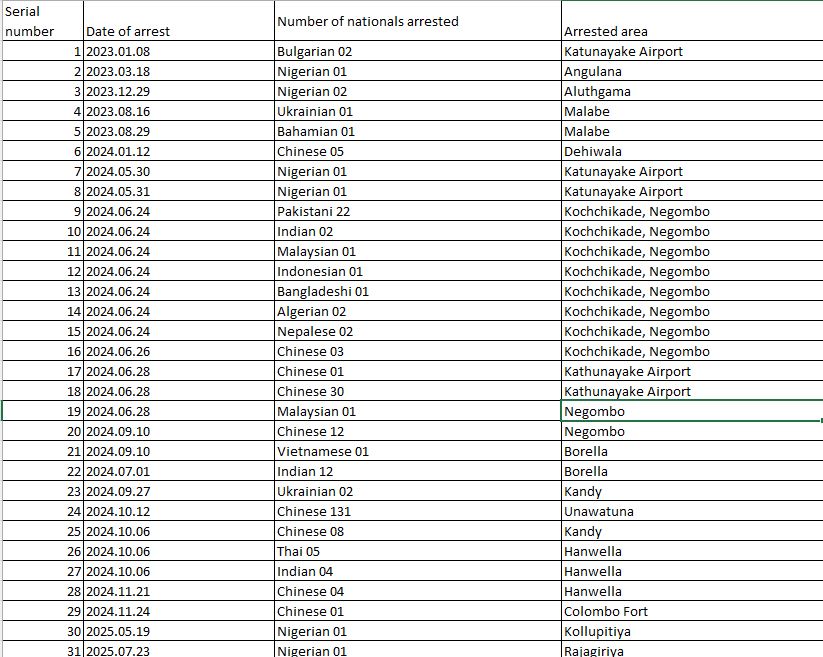
- Kandy (2024): A luxury hotel and several houses in the Hanthana area were raided, resulting in the arrest of 126 Chinese nationals. Over 200 computers and 500 mobile phones were seized.
- Panadura & Negombo: Over 200 foreigners were arrested during raids on a three-story house in Panadura and tourist guest houses in Negombo.
- Iranavila, Chilaw (April 3, 2026): This marks one of the largest recent raids. 150 individuals, including 133 Chinese nationals, 13 Vietnamese, and one Malaysian, were arrested at a luxury hotel in Ambakandavila.
A common feature in these raids was the presence of “SIM Boxes”—devices capable of operating hundreds of SIM cards simultaneously to send thousands of fraudulent calls and messages.
Modus Operandi
These criminals operate under a sophisticated multi-layered structure:
- Trafficking & Forced Labor: They post ads for “Online Marketing” or “Data Entry” jobs on Telegram, Facebook, and LinkedIn. Foreigners (Chinese, Thai, Indian) are lured with high salaries, after which their passports are seized, and they are held like slaves in “Scam Centers” to carry out frauds.
- “Pig Butchering”: This is the primary revenue stream. Scammers build a romantic relationship or deep friendship with victims online before convincing them to invest in fake platforms. They allow small initial profits to build trust, only to vanish once the victim deposits a large sum.
- Anonymity: They use VPNs to show IP addresses in Europe or America while operating from Sri Lanka. They also hack social media accounts (WhatsApp, Facebook) to solicit money. Our investigation revealed many cases where hacked WhatsApp accounts were used to trick victims into depositing money into local private bank accounts via “Phishing” links.
Geographical Hotspots in Sri Lanka
| Zone | Primary Locations | Nature of Activity |
| Zone A – Colombo & Suburbs | Wellawatte, Bambalapitiya, Colombo 07 | High-speed internet in luxury apartments. Conducts ATM fraud and high-end financial scams. |
| Zone B – Hill Country | Kandy (Hanthana, Peradeniya) | Isolated large bungalows and boutique hotels. Holds hundreds of workers away from public view. |
| Zone C – Coastal Belt | Negombo, Panadura, Galle | Operated as “Call Centers.” Easy to blend in due to high tourist traffic. |
| Zone D – NW Coast | Chilaw, Iranavila | A newly identified zone using isolated beach side luxury hotels as operation hubs. |
The Growing Threat: Data and Statistics
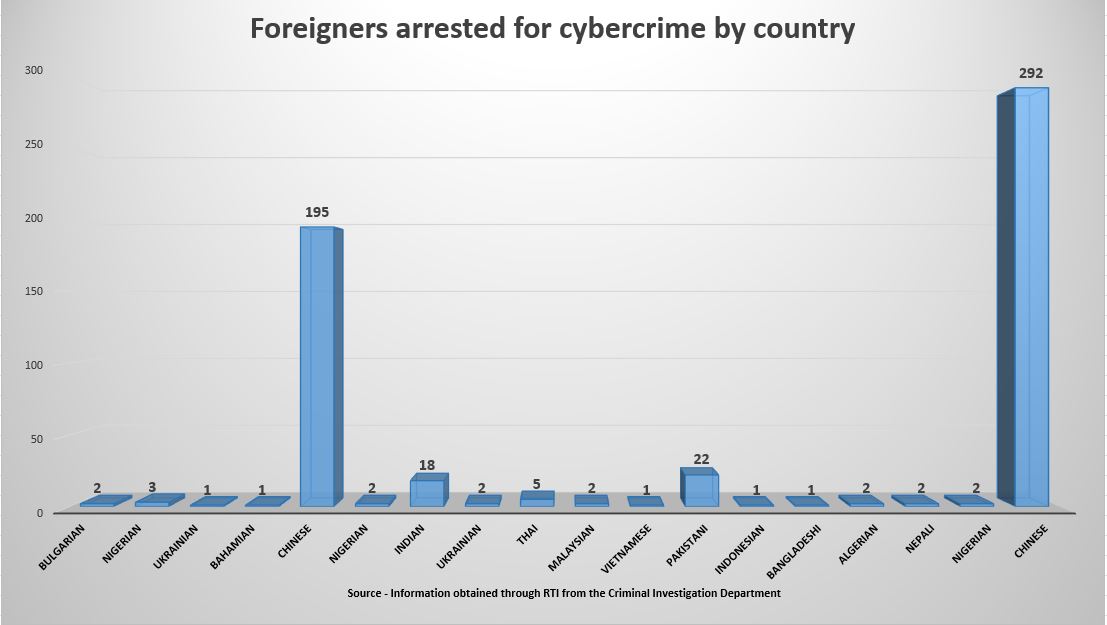
According to data obtained from the CID via RTI, there has been a massive surge in arrests over the past three years. Between 2023 and April 3, 2026, approximately 412 foreigners were arrested for online fraud alone.
- 2023: 7 arrests
- 2024: 253 arrests
- 2025: 2 arrests
- 2026 (up to April 3): 292 arrests
- Total arrests during this period: 554
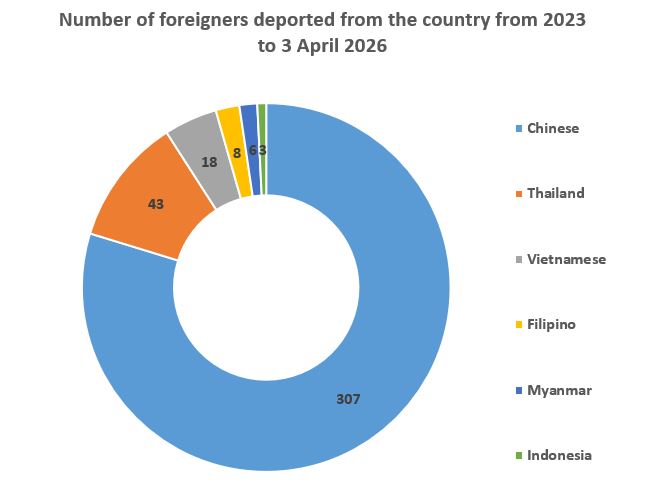
Furthermore, data from the Department of Immigration and Emigration shows that between January 2023 and December 2025, 270 foreigners were deported for visa violations. In 2026 alone, another 125 Chinese nationals were deported. In total, 385 foreigners (including 307 Chinese, 43 Thai, and 18 Vietnamese nationals) were deported during this period.
These raids confirm that Chinese and Nigerian nationals are the primary operators of these networks. Reports from a Chinese special police team suggest these centres are directly linked to international criminal syndicates in Myanmar and Cambodia.
(A Chinese national who was involved in an illegal travel advisory service that meticulously and secretly repatriates money received from foreign tourists visiting the country to other countries was arrested in Kandy.)
Hidden Links and Network Analysis
This is not a random collection of individuals but a highly organised structure. “Masterminds” in Myanmar or Dubai register Shell Companies in Sri Lanka’s IT sector to bring in operators on Business Visas.
Local Facilitators: Critical players include real estate agents who rent out houses for exorbitant rates (LKR 500,000 to 1,000,000 per month) without informing the police, and individuals who provide thousands of SIM cards using fake data.
Money Laundering: Defrauded funds bypass the banking system and are converted into USDT (Stablecoin). They are then moved through digital wallets (Layering) to accounts in Southeast Asia or tax havens.
How to fraudulently collect money through hacked WhatsApp accounts
Challenges and Legal Gaps
- Technical Capacity: A significant gap exists in the ability of average police officers to identify the complex data encryption used by criminals.
- Jurisdiction: While ground operators are caught, the “controllers” remain abroad, making it difficult to uproot the network entirely.
- Legal Delays: Obtaining approval to prosecute specific technical crimes under the Code of Criminal Procedure is time-consuming. Existing laws do not fully cover emerging cybercrimes. And some officials are not conducting raids on existing connections with these networks, and are only deporting arrested accomplices, mainly Chinese nationals, without referring them to judicial proceedings.
The Way Forward
To prevent Sri Lanka from becoming a cybercrime hub, the government must consider:
- Stricter Housing Regulations: Mandatory police reporting of the visa type and employment of foreigners renting houses or apartments.
- SIM Control: Limiting the number of SIM cards an individual or entity can obtain and strictly controlling the import of “SIM Boxes.”
- International Cooperation: Setting up joint cyber investigation units with Chinese and Indian security forces and Interpol.
- Legal Reform: Rapidly amending laws related to cybercrime and financial fraud to match modern technological requirements.
Sri Lanka has reached a critical crossroad, evolving into a “Digital Sweatshop” for international criminals. This is not just a financial issue; it is a grave threat to national security, the stability of the financial system, and the country’s international reputation. Unless authorities act immediately, the world will recognize our island not as a traveler’s paradise, but as the next “Cybercriminal Paradise.” It is a collective responsibility to ensure our motherland does not become a sanctuary for criminals.
A Special Investigation into International Telecom Fraud Operations in Sri Lanka
By Rahul Samantha Hettiarrachchi

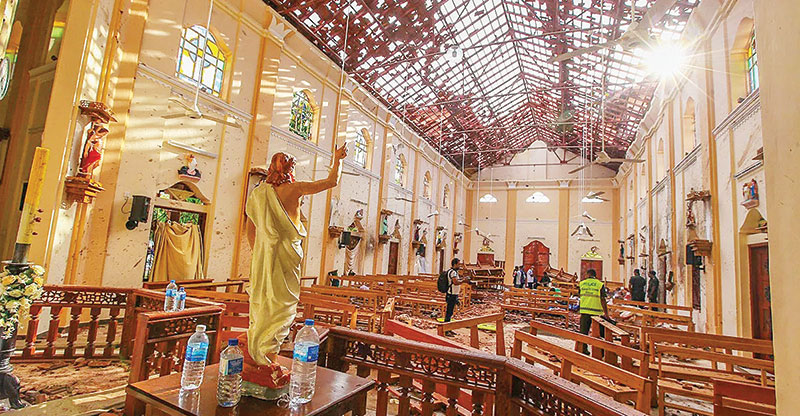
Sri Lanka has long been called a welfare state. Some of the welfare attributes were compromised in the less regulated open economy after 1977, but the welfare core of the state has remained intact. Between 1977 and 2009, Sri Lanka was also a warfare state. Although the war ended in 2009, the state has retained some of its warfare attributes. Yet the state’s warfare defenses could not prevent the devastating Easter Sunday attacks that came
10 years after the war, on Easter Sunday, 21 April 2019. The continuing fallout from the Easter attacks even after six years are forcing the state to wear a new mantle – and become a lawfare state in addition to being a welfare state.
Put another way, the NPP government is facing a new challenge – navigating the ship of state on an even keel between Easter lawfare and economic welfare. Politically, an act of tightrope walking, addressing Easter lawfare demands while attending to the country’s welfare expectations. I use the term lawfare in its most positive sense, which is the application of the laws of a country against its own miscreant state officials, both elected and unelected. It is an appropriate term to describe the spate of Easter litigations that have been initiated from the day of the attacks, mostly in fits and starts and remaining in various stages of inconclusiveness.
Post Easter Lawfare State
In addition to their shocks and sorrows, the 2019 Easter attacks have created the most numerous and the most lengthy legal proceedings in the country’s judicial history. More than 90 court cases have been spawned by the horror that was perpetrated on that single Sunday, and most of them are said to be still in their initial stages. The oldest of them that began in January 2022, with the indictment of 25 suspects (now reduced to 24 after the death of one suspect in hospital) over 23,270 charges, is still on going on as a High Court Trial-at-Bar case. At its latest hearing on 23 June, the Court ruled that the confession give to police by Naufer Maulavi, the first accused in the case and identified as a ‘mastermind’ in Sri Lanka, was voluntary and admissible.
The NPP government has given a new impetus and better organization to what has been a rather reluctant and disorganized litigious process under its three predecessors – the Sirisena, Gotabaya Rajapaksa and Wickremesinghe Administrations. The NPP government’s lawfare goes well beyond prosecuting Easter Sunday crimes and tries to cover all known and unknown instances of state and government corruption, including those involving some of its own members and officials.
The recent high-profile arrests of Rakitha Rajapakshe, son of former minister Wijeyadasa Rajapakshe, and Charith Abeysinghe, the SJB organizer for Horana are symptomatic of the new lawfare state. The allegations against them also underscore the public perceptions of well established linkages between the country’s criminal underworld and its sociopolitical upperworld. The across the board spate of arrests that go far beyond Easter lawfare are triggering questions and speculations about the ‘police masterminds’ behind the state lawfare and whether are they also close to solving any of the City’s unsolved emblematic murders – extending from the murder of Lasantha Wickrematunge (2009), through Wasim Thajudeen (2012) to Dinesh Schaffter (2022), among others.
The politics of the current lawfare process is still unfolding. The government’s calculation would seem to be that its lawfare is popular with the people. To that extent, the government is unconcerned about the chattering classes who may be having difficulty in holding their noses at the swift arrests of once powerful people. The challenge for the government is two fold. First, the lawfare thrust should yield results and they should come not too late for electoral rewards. All arrests and no conviction will not be a good political story for this government or any government.
Second, and more important, the government must consistently find a balance between the lawfare and the welfare objectives of the state. All lawfare and no welfare will be a disastrous story for the government in an election, whichever of them the government may choose to call and when – provincial, parliamentary, or even presidential.
In fairness to the NPP government, unlike its predecessors, it has also taken the responsibility to bring humane closures to legacy tragedies such as the mass graves at Chemmani and other locations, as well as the Batalanda torture house. The Minister of Justice, Harshana Nanayakkara, deserves mention and praise for visiting Chemmani last month and announcing in parliament the government’s undertaking to engage international forensic assistance for DNA identification of the human remains after the current excavation phase is completed.
So far, 412 human skeletons have been recovered in what is the country’s largest mass grave, where previous governments insisted that there was nothing more to look for after the first few remains were accidentally discovered. Minister Nanayakkara went to say: “When I visited the site last week, I understood the process is very extensive and very emotional for the local community there. People are waiting for justice. We will reveal the truth soon; there is no need for us to protect anyone or conceal the truth.”
Revealing the truth, and not concealing it to protect someone, is what defines lawfare in the Sri Lankan context. To its credit, the main opposition party SJB is not opposing the spate of arrests, except to warn the government that it should not use arresting people as a political ruse for economic inaction. The real opposition to NPP’s lawfare is located in the little universe of three former presidents, Ranil Wickremesinghe, Mahinda Rajapaksa and Maithripala Sirisena, their families, followers and cheerleaders. Whatever political clout the three former presidents might be having is clearly not scaring the NPP government.
As for the fourth former President, Gotabaya Rajapaksa, the accidental one, and also the immediate post Easter President, he is fighting his own battle in court to avoid happening to him what has happened to his former Director of the State Intelligence Services (SIS), Retired Major General Suresh Sallay. Sallay was arrested on 25 February and has since been named a suspect in the probe into the Easter attacks. Mr. Rajapaksa has not been identified as a suspect but the courts have banned him from travelling abroad. The two men have become the biggest targets of the NPP’s Easter lawfare.
The NPP government’s reopening of the investigation into the Easter attacks has raised questions in interested circles about the need for the new reopening when there is an already completed international investigation by the American Federal Bureau of Investigation (FBI). Editorial opinions have asked the government to declare its position on the FBI report and its conclusions. The FBI report is taken to be the last word on the matter, and so, why start another investigation? This argument goes round in circles, but more on that later.
Former President Ranil Wickemesinghe has reportedly inquired if the NPP government has approached Washington to get a copy of the FBI report. Such a question is typical of RW, but it also betrays the cavalier attitude of the four former presidents towards finding the truth and the whole truth about the Easter attacks.
The more political question that is being asked is whether the reopening is only meant to placate the leaders of the Catholic Church who have been insistent on a full and transparent investigation of the Easter attacks. The social media has been deployed to attack the Church leaders. Specific concerns about bias and fairness have been raised about role of senior police officers Shani Abeyesekara and Ravi Seniviratne in the reopened investigation in light of their past involvement in the investigation and their apparent association with the NPP’s election campaign.
The government seems confident in the lawfare approach it is taking and in the individuals who are masterminding it. Their confidence would appear to be supported by the chronology of events, their political context, the varying efforts as well as the lack of them by President Sirisena, President Gotabaya Rajapaksa and President Ranil Wickremasinghe to investigate the attacks and their preparations, the restrictively scoped investigation of the FBI, and the open ended state of the investigation and litigation inherited by the NPP government.
Background to Lawfare
There are two parts to the facts about the 2019 Easter Sunday attacks. The physical execution part, as well as the prior official awareness about the attacks and the official failure to prevent the attacks. The execution of the attacks and its perpetrators are now well known and there is no controversy about the facts involved. Yet, except for those who killed themselves, the legal proceedings against the organizing perpetrators are all in a state of inconclusive suspension. On the other hand, there has been no sustained, thorough and conclusive investigation of the failure of the elected and unelected government officials who knew about the impending attacks and did nothing to prevent them. The arrest of Suresh Sallay and the travel ban on Gotabaya Rajapaksa point to a new third dimension – and that is, in addition to the failure to act on available intelligence, there may have been real collusion between the perpetrators of the attack and elected/unelected officials in the government.
The Easter attacks were immediately blamed on the government’s failure to act on the intelligence provided by Indian government agents, as well as preceding failures of previous governments to take action against the organizations and individuals who executed the attacks, and who were all known to the Sri Lankan government. At the time of the attack, President Sirisena was on a weekend sojourn in Singapore. His administration was already dysfunctional and more so in the aftermath of his lamebrained constitutional coup, a few months earlier, to get rid of Prime Minister Ranil Wickremesinghe.
The intelligence failure preceding the attack was in part due to this dysfunctionality. I say in part because of the recent courtroom submissions by government lawyers that there was also collusion. Prime Minister Wickremesinghe charmingly claimed that he had been kept out of national security briefings by the President, and therefore he was not to be blamed. As the old Milton’s line goes – he too serves who only stands and waits. After the attacks, President Sirisena initiated investigations which were more intended to conceal his own failures and to blame others.
Sirisena first appointed a Presidential Committee of inquiry that turned out to be bad in law and worse in its findings. The Presidential Commission of Inquiry that he appointed later turned out to be more productive but its findings have become known more secret channels than in the public domain. Sirisena steadfastly opposed the work of the Parliamentary Select Committee (PSC) that inquired into the attacks and even tried to prevent intelligence officers from appearing before the Committee. The Committee named names of senior security and intelligence officials for their failure and the PSC Report became the basis for court challenges and fundamental rights petitions.
Apart from the presidential and parliamentary inquiries, police investigations of the attacks and the apprehension of suspects began no sooner than the attacks were over. Hundreds were arrested in a matter of days that led to the obvious questions about the failure of the government to apprehend them earlier. Prominent Muslim leaders complained that they had been warning the government about extremist activities in their community but their warnings were ignored and nothing was done about them.
Ironically, it was only after the attacks that local Muslim connections to global Islamic extremism became the dominant narrative even as it was used as a convenient pretext to obfuscate the otherwise obvious domestic ingredients. This is the context in which the FBI investigation of the Easter attacks and its reported conclusions have been made to loom large to the point of suppressing all ‘local truths’ that are pertinent to the Easter attacks and all of its antecedents. Anyone who reads the 11 December 2020 Affidavit filed by FBI Special Agent Merrilee R. Goodwin in the US District Court in California, would recognize that the scope of the affidavit and all the facts thereto are limited to establishing that the three perpetrators named in the affidavit (Mohamed Naufar, Mohamed Anwar Mohamed Riskan and Mohamed Milhan Hayathu Mohamed), besides those who killed themselves in the attacks, were guilty of violating specific US laws in collaborating with a “foreign terrorist organization”, namely, the Islamic State of Iraq and Syria (ISIS). Nothing more, nothing less.
There is no mention in the affidavit about the Sri Lankan intelligence failure before the attacks. In other words, the FBI findings not the last source to determine the whole local truth about the Easter attacks. Add to that, the investigations into finding the truth that begun soon after the Easter attacks were thoroughly stymied after Gotabaya Rajapaksa became President in November 2019. Then CID Director Shani Abeyesekara who was spearheading the investigations was demoted, transferred, arrested and detained apparently on false charges. Abeyesekara’s allegations included in his fundamental rights petition to the Supreme Court were supported by then Senior DIG Ravi Seneviratne.
By the time the Channel 4 revelations came in September 2023, Gotabaya Rajapaksa was gone and Ranil Wickremesinghe was the interim President. Channel 4 did not reveal anything new that was not already known and suspected in Sri Lanka. But it jolted the powers that be once again for some action. President Wickremesinghe responded, not by helping to clear the waters but by appointing two more inquiry commissions to add to the murkiness. Neither of them shed any new light and a potential conflict of interest has been alluded to one of them. This was the state of affairs when elections came and the NPP was elected with the promise to get to the truth, and all of it, behind the Easter attacks.
by Rajan Philips
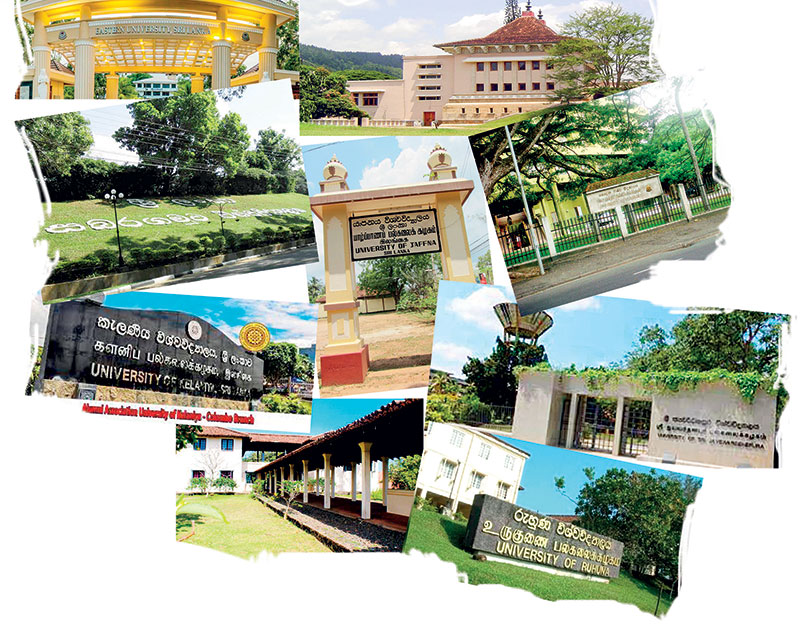
This article deals with the subject of centralizing and decentralizing universities in Sri Lanka and discusses the advantages of one against the other. What are the appropriate conditions and the factors governing the choice? Who decides – politicians or academics? The Sri Lanka experience seems to suggest neither.
The two most important landmarks in the history of university education in Sri Lanka, other than the setting up of the University of Ceylon in 1942, were the amalgamation of the then existing universities in 1972 by the Universities Act No. 01 of 1972 and the enactment of the Universities Act No. 16 of 1978 to form autonomous universities with the University Grants Commission to carry out far more than the mere disbursement of funds.
This study will describe the factors leading to the amalgamation of the existing universities in 1972 and then the decentralization of the federal university in 1979 to form five autonomous universities.
Though the Ceylon Medical College was in existence from the latter part of the nineteenth century, university education really began in January1921when the University College was formally opened in Colombo as a government institution affiliated to the University of London. The University College was transformed into the University of Ceylon in July 1942 by the University of Ceylon Ordinance No.20 of 1942, after some negotiation between the British Governors and the Principal of the University College. Thereafter, a single University of Ceylon was established by amalgamating the existing Ceylon Medical College and the University College.
The University of Ceylon continued as the only university in the country until 1959 when the SWRD Bandaranaike government upgraded two established seats of Buddhist learning to set up the Vidyodaya and Vidylankara Universities.
The UNP government of 1965 effected a further change in the system a year later by passing the Higher Education Act No. 20 of 1966 setting up the National Council of Higher Education (NCHE) to oversee the functioning of the universities. This body was like a University Grants Commission but had a little more power. In 1967, the then University of Ceylon was split into the Universities of Colombo and Peradeniya and there were four universities in the country until February 1972.
The amalgamation
All political parties in the country were preparing for the general election in 1970 and the Sri Lanka Freedom Party (SLFP), led by Mrs. Sirima Bandaranaike which was in the opposition had, in its election manifesto, outlined the changes they would effect in the field of higher education if they came to power.
The advisors to the SLFP on higher education had drawn up a blueprint to achieve economies in higher education and to do away with the NCHE, controlling the universities, which they had long opposed. The Chairman of the NCHE was a former professor of Pali, Prof. GP Malalasekera with six other members, mostly well-known educationists. The former Vice-Chancellors of the universities also participated in the meetings of the NCHE.
The main reason for the desire to effect a change in the higher educational set up were to achieve economies by the rationalization of courses, reductions in staff, etc. rather than ridding the system of the ‘dictatorial’ NCHE. As soon as the SLFP assumed control, a committee was appointed by the Minister of Education, Dr. Badi-Ud- Din Mahmud, to study and make recommendations which would help to achieve the desired goals.
The committee consisted entirely of university teachers from various disciplines ranging from medicine and engineering to history and comprised Dr. Osmund Jayaratne (Chairman), Dr. VK Samaranayake, Dr. Shelton Kodikara, Dr. Upali Kuruppu, Dr. Keerthi Dissanayake and Dr. K Jayasena. Members were drawn from all the universities and the College of Technology. The committee held sittings and recorded evidence, both oral and written, for almost one year and they drew up the plan for a unification or amalgamation of the universities to form a single federal university.
It recommended the establishment of a single university on the pattern of the University of London. There was to be a Senate House at the centre with the Vice-Chancellor at the helm and the existing universities would be the campuses of the single university. Each of the campuses were to have a President as the Head responsible to the Vice-Chancellor. With the establishment of the single university the committee envisaged achieving economies by cutting down on staff as there was no need to have a Vice-Chancellor in each campus; rationalization of courses to avoid duplication; and creating centres of excellence in various disciplines in the various campuses. Economies could have been achieved if the single university had been established and the recommendations of the committee implemented. But, in reality, these things were never achieved.
The government accepted the recommendations of the committee in principle and went ahead with the drafting of the required legislation and the University of Ceylon Act No. 01 of 1972 duly enacted. The new university had a Senate House and the Vice-Chancellor’s office at its core and the former universities formed campuses subordinate to the Senate House with a President as the head of each campus. The College of Technology was absorbed as the fifth campus.
Results of the amalgamation
It is of interest to note that with the establishment of the single university all but one of the members who served on the committee were appointed Presidents of the campuses. Dr. Osmund Jayaratne in Colombo, Dr. VK Samaranayake in Vidyodaya, Dr. Shelton Kodikara in Peradeniya, Dr, Keerthi Dissanayake in Vidyalankara and Dr.Upali Kuruppu in Katubedda. The other member, Dr. K Jayasena, was appointed as the Registrar of the University of Sri Lanka.
How far were the factors envisaged by the committee achieved in reality? In respect of rationalization of courses, very little was achieved. The Departments of Education at Peradeniya, Vidyodaya and Vidyalankara campuses were brought to the Colombo campus and a Faculty of Education was established in 1976 almost four years after the university came into being. Some of the teachers were transferred against their wishes as those in Peradeniya enjoyed housing and better medical facilities and, therefore, did not want to leave. The single education faculty was achieved during the tenure of the second Vice-Chancellor, Mr. LH Sumanadasa.
The first Vice-Chancellor, Prof. BA Abeyawickrama, was able to bring about only a very mild form of rationalization. What was achieved was not exactly rationalization, but creation of centres of excellence in the various campuses in respect of various disciplines. The centre of excellence for languages was created in the Vidyalankara campus, and most of the teachers in the Departments of languages were transferred to that campus. Here, too, some of the teachers were transferred under protest for the reasons cited earlier.
In most of the disciplines there was absolutely no rationalization, even as a public relations gesture. What happened was the opposite. There was duplication of certain disciplines and more than duplication of others since the campuses did not want to lose what they already had and they opposed any disciplines being taken away from them. Instead, what the campuses wanted was to expand and obtain disciplines they did not have.
So it is evident that the rationalization of courses did not work as planned and, therefore, it was not possible to achieve the planned economies of having fewer teachers and maximum utilization of scarce resources. Instead, what happened was that some of the departments in the campuses expanded and had a larger number of staff members than before.
Neither were economies achieved in respect of the top-level staff. Though there was only one Vice-Chancellor, the Presidents of the campuses were also drawing the same salary as the Vice-Chancellor and, therefore, there was one person extra at this level than under the previous system. There was only one Registrar for the whole University of Sri Lanka, but the campuses had additional Registrars, so that in that category too, there was one person additional to the cadre than in the previous system.
The Act of Parliament which established the single university determined the structure of the university, gave it legitimacy and indicated how vital matters such as the control of the university, the authority, rights and responsibilities of different governing bodies at different levels were determined.
The federation was created to achieve two main objectives; to reduce the expenditure on university education, and to rationalize courses. Both were economic reasons. It was found that having more universities meant higher costs in respect of governing boards and staff. If many of the matters could be handled by a central office, the non-academic staff of the campuses could be reduced in number.
There was also more duplication of courses because often, three of the universities had the same courses. It was planned to avoid this by rationalization, and this would result in the reduction of the academic staff needed and thereby achieve economies.
It was also felt that having one central body controlling all activities of the campuses would result in uniformity in all campuses with regard to all examinations, curricula and admissions., and in respect of appointments and promotion of staff (both academic and non-academic).
It was felt that the costs would be reduced considerably with central control since the government grant was distributed among the campuses according to student numbers and the capital vote according to the priorities. Once disbursed, the central body was responsible for seeing that the monies granted were spent according to plan.
The central body was responsible for maintaining standards of all examinations in the campuses through a system of examination boards. The curricula of all campuses were decided at the centre by Boards of Study, so that throughout the campuses the standards were maintained on a uniform basis. All admissions of students to the various faculties in the campuses were determined by the Admissions Committee at the centre.
Under the earlier organizational structure, some universities were not in a position to recruit the best graduates to the academic staff because some universities were considered inferior to others earlier. So, they had to be content with academics with poor qualifications. With the establishment of the single university all appointments had to be sanctioned by the central governing authority, the Board of Governors. This prevented campuses from recruiting personnel with poorer qualifications and also the competition among campuses to recruit staff was eliminated.
The unified university did not live up to expectations because administration became unwieldy with campuses located far from Colombo. Senate House was not able to have proper control over all activities, and some matters were necessarily attended to by the campuses without reference to the Senate House.
The campuses were also dissatisfied with the system, complaining that there were long delays in the implementation of certain decisions, and that the Senate House was indifferent to the campuses.
On the other hand, when problems arose, there was buck passing between Senate House and the campuses. Inability to put an end to problems as soon as they arose led to student unrest, strikes and demonstrations, violence and destruction of university property on many campuses on a number of occasions. This resulted in the removal of a President in one instance and the killing of a student in another followed by the closure of the university and the appointment of a Commission of Inquiry.
One salient feature in this federal structure was that the Act was not enforced. The Board of Governors met only as an advisory body and the Senate was never established. The Vice-Chancellor was all powerful – he reigned over his kingdom during a transition period extending to almost seven years. He had to carry out the directions of the Minister from time to time or sacrifice his position.
These shortcomings led to agitations among the staff on the campuses for a change. The agitation was so widespread that some of the political parties had changes to be effected in the higher education system embodied in their election manifestos. The UNP, in its manifesto for the general election in 1977, had indicated that it would set up once again fully autonomous independent universities in place of the existing campuses.
Decentralization
A former professor in one of the campuses, who was holding a professional appointment in a foreign university, was appointed by the President of the Republic to make recommendations regarding the new system to be established. He interviewed representatives of various associations, individuals, considered written submissions, and submitted his recommendations to the Minister of Education. The recommendations were accepted by the government, which set about drafting the legislation for the purpose.
The Universities Act No. 16 of 1978 established the new university education structure on January 1, 1979, thus repealing the Universities Act No . 1 of 1972. The former campuses were made independent universities. A University Grants Commission (UGC) was established to oversee the work of the universities. Though the UGC was modeled on its counterpart in the United Kingdom, it actually resembled the UGC in Britain only in name.
The autonomous universities were established. However, the limitations of the universities with regard to certain functions were laid down by the law itself.It would be worthwhile to compare the powers of the UGC vis a vis the universities, as laid down by the Act of Parliament establishing these universities. On the face of it, it seems that the powers, duties and functions of the UGC and the universities are clearly defined by law but, actually, nothing could be done by the universities without obtaining prior approval of the UGC.
There have been quite a few instances where the UGC has encroached on the functions of the universities and has dictated terms to the universities. Actually, in the working of the new system, there has not been very much difference between the earlier federal structure, as far as control is concerned. As in the case of the earlier organization, all the functions of the universities are being controlled by circular instructions from the UGC.
With the establishment of the new university structure, a new Ministry of Higher Education was created, with the Minister of Education holding this portfolio as well as that of Education. The Secretary to the Ministry was the same person who was functioning as the Chairman of the UGC. This added more power to the UGC and especially to its chairman. Now the Ministry of Education functions under the Prime Minister.
The present arrangement has caused most of the university teachers and other employees to be satisfied because there is a great deal more independence now than under the previous set up. The Vice-Chancellors have to take decisions without passing on responsibility. Therefore, though the expenditure is far greater than earlier, more people are kept satisfied now than under the earlier structure.
A significant feature after the establishment of the autonomous universities was the creation of the Open University of Sri Lanka (OUSL) functioning under the Ordinance No. 03 of 1980.
The objectives of the OUSL may be indicated as the advancement and dissemination of learning and knowledge by teaching and research, correspondence tuition, residential courses and seminars, and in other relevant ways. It seeks to provide education of university and professional standard to its students, to promote the educational well-being of the community generally, and to meet the demand for manpower skills, especially through training at the middle level.
The OUSL achieves its objectives through programmes at different levels and continuing education programmes. These programmes are being provide using the techniques of distance education through the printed word and through the mass media.
(The writer of this article served both as Registrar of the University of Colombo and the Open University. He had previously served as Senior Assistant Registrar of the Colombo University)
by HM Nissanka Warakaulle

England no match for ruthless Australia

Djokovic breaks Federer’s Wimbledon record to reach quarters

Australia bowl in final, both teams unchanged

Evacuations in Guam as super typhoon Bavi approaches

India A win series after Gurnoor Brar demolishes Sri Lanka A

China and Russia to hold annual joint naval drills

‘Dates have the highest sugar content to fight Coronavirus’

Sunday Island 27 December – Headlines

#SundayIsland 17th December – Headlines

Sunday Island – 28th March

Sunday Island Headlines – 21 March

Sunday Island – 21st February – Headlines
-
 News7 days ago
LAWASIA warns against ad hoc initiative to increase judges’ retirement ages
-
 Features6 days ago
Climate action to bring South Asia together
-
 News6 days ago
Chamuditha to seek removal of injunction on Youtube programme
-

 News2 days ago
Freedom 250: US Embassy celebrates America’s 250th Independence Day through magic of American cinema
-

 News19 hours ago
Singapore-based Buddhist monk marks nearly four decades of humanitarian service
-
 News3 days ago
CIABOC to question Harak Kata on Rs. 200 mn bribery allegation
-
 News3 days ago
SLAF conducts successful rescue mission under UN command in Central African Republic
-

 Midweek Review5 days ago
H’tota port’s strategic status remains focal point of geopolitical scrutiny