
Features
International Law Implications of Canadian Parliament’s Motion on ‘Tamil Genocide’


By Dharshan Weerasekera
On 18 May 2022, the Canadian House of Commons adopted without opposition a motion introduced by Rep. Gary Anandasangaree recognising 18 May of each year as “Tamil Genocide Remembrance Day” (www.parliament.ca). This follows a Bill adopted by the Ontario legislature in May 2021 calling for the week following May 18th of each year to be celebrated as “Tamil Genocide education week.” However, the Ontario legislature is a provincial body and its actions do not carry the same weight as a national legislature.
The fact that purported ‘Tamil genocide’ in Sri Lanka has been recognised by the Canadian national legislature carries international implications. Most critics of the motion dismiss it as an attempt by the Canadian lawmakers to pander to a vocal minority. However, recognition by the national legislature of a foreign county that genocide is taking place in Sri Lanka has very serious consequences to this country. Unfortunately, there has been little or no discussion on this issue in local newspapers or academic journals and it is in the public interest to begin one.
In this article, I shall briefly discuss, i) the lack of evidence for Tamil genocide, ii) the gravity of what the Canadian legislature has done , iii) the illegality of the act, iv) address two objections and draw the relevant conclusions
The lack of evidence for Tamil genocide
I have discussed at some length the lack of evidence for Tamil genocide in Sri Lanka in an article titled, “Ontario’s Bill 104: Tamil Genocide Education or Mis-education Week?” (The Island, 9 December 2021) and refer the reader to that for more details. However, here I shall focus on a report titled, “Canada’s Inadequate Response to Terrorism: The Need for Policy Reform” (2006) by Martin Collacott, a former Canadian High Commissioner to Sri Lanka and also eminent academic. I wish to draw certain inferences from some of Collacot’s observations.
He says: “According to the records of the consular section of the Sri Lankan High Commission in Ottawa, more than 8,600 Sri Lankans with refugee claims pending in Canada applied for travel documents to visit Sri Lanka in a single year.” (Martin Collacot, “Canada’s Inadequate Response to Terrorism: The Need for Policy Reform,” Fraser Institute Digital Publication, February 2006, p. 34)
He continues: “In comparison with Canada, other countries have accepted relatively few refugee claims from Sri Lankan Tamils as they do not consider them to have been persecuted. In 2003, Canada accepted 1,749 Sri Lankan claimants (UNHCR, 2003, table 8) while the rest of the world combined gave refugee status to only 1,160. Canada’s acceptance rate was 76.3 percent, while the average for other countries was 15.8 percent.” (p. 34)
It would be absurd to suppose that people would visit Sri Lanka if they or their relatives are being subjected to genocide here, or at any rate, it casts doubt as to whether such a thing is happening. Meanwhile, the drastic difference in the number of refugee applications of Sri Lankans being accepted in Canada as opposed to other countries, if true, indicates that there is a difference of opinion on the issue of persecution. It should prompt a reasonable person to review and reassess his or her views as to whether Tamil genocide is taking place here.
The point is that information such as that provided by Collacot is readily available in the public domain and it is reasonable to suppose that Canadian lawmakers are familiar with at least some of it. However, there is no evidence that such information has registered with Canadian legislators because there was not a single voice raised in opposition to the impugned motion. In these circumstances, the inference is irresistible that the Canadian House of Commons has adopted the motion with scant regard to the truth or falsity of the allegation of Tamil genocide.
The gravity of the act
The impugned motion is not just a local or domestic concern of Canadians but is pregnant with consequences for Sri Lankans, because of the following reasons. Genocide is the intentional destruction or attempt at destruction of an entire people. Among other things, it is one of the conditions that would permit an ethnic group within a particular country to invoke the right to external self-determination (i.e. secession) under international law.
For instance, in the seminal Canadian case Reference re Secession of Quebec [1998] 2 SCR 217, widely cited in other countries, the Supreme Court of Canada identifies three conditions that would warrant an ethnic/religious/linguistic group within a country to invoke the right to external self-determination: colonialism, alien subjugation or domination and denial of meaningful access to government to pursue one’s political social and cultural development. (Reference, para 138)
Genocide could be brought under the second or third categories. The Canadian House of Commons represents the entire people of Canada, not different interest groups. So, such a body has now placed on record that conditions exist in Sri Lanka for the Tamils to arguably invoke a right to self-determination under international law. It sets a precedent for other countries to also adopt motions or even resolutions unilaterally alleging Tamil genocide in Sri Lanka with scant regard for the truth.
If a significant number of other countries endorse an invocation of the right to self-determination by an ethnic minority in Sri Lanka, this country will eventually have to capitulate to the demand for a separate State. Sri Lanka is a relatively poor country heavily dependent on foreign aid. It cannot afford to alienate the international community, especially its main donors. Therefore, the impugned motion potentially sets the stage for interested parties to advance their ambitions of creating a separate State within Sri Lanka, with the collusion or connivance of other countries.
The illegality of the act
The UN Charter is the basis of international law. Article 2(4) enshrines one of the principles of the UN It states: “All Members shall refrain in their international relations from the threat or use of force against the territorial integrity or political independence of any State, or in any other manner inconsistent with the Purposes of the United Nations.”
The above provision has two parts: a) refraining from the threat or use of force against other States and b) acting in any other manner inconsistent with the purposes of the U.N. I wish to focus on the second limb. Articles 1(1) – (1 (4) of the Charter set out the purposes of the U.N. Article 1(2) states: “To develop friendly relations among nations based on respect for the principle of equal rights and self-determination of peoples, and to take appropriate measures to strengthen universal peace.”
The standard interpretation of the above is that the UN cannot intervene unduly in the internal affairs of nations. More importantly, on the concept of ‘self-determination,’ to the best of my knowledge the international Court of Justice (ICJ) has never yet extended the said concept to cover a right to secession. The court has only held that the concept applies in colonial contexts, non-self-governing territories and that it cannot be used in order to undermine existing state boundaries (See Western Sahara, Advisory Opinion, 1975; Namibia, Advisory Opinion, 1976; and Frontier Dispute case, 1986, ICJ Reports 554, respectively.)
There is a profound difficulty in interpreting the ‘right to self-determination’ to include a right to secession, namely, it could lead to a veritable explosion of demands for statehood by various ethnic minorities. The U.N. is well aware of this problem. A panel of U.N. legal experts point out, “If every ethnic, religious or linguistic group claimed statehood, there would be no limit to fragmentation, and peace and security and well-being for all would become even more difficult to achieve.” (“An agenda for Peace,’ UN doc. A/47/277)
In sum, the UN is not permitted to promote the secessionist ambitions of ethnic minorities. The impugned motion does just that, or at any rate sets a precedent that has the potential to lead to an international endorsement of a right to self-determination of a particular ethnic minority in Sri Lanka. It is inconsistent with the letter as well as spirit of Article 1(2) and hence illegal under international law.
Objections
A critic might object that i) the national legislature is not the government of a country and it is only the government that would come under the purview of international law and ii) the impugned act can be justified under the Responsibility to Protect (R2P) doctrine.
In regard to the first, to the best of my knowledge the Canadian government has not dissociated itself from the act of the legislature or issued a single statement critical of the said act. The well-known legal maxim states, “He who is silent appears to consent (Qui tacit consentire videtur)”. Accordingly, one must presume that the Government is either complicit in the act or tacitly approves of it.
In regard to R2P, the doctrine contends that members of the international community have an obligation to intervene in the internal affairs of nations regardless of the U.N. Charter’s customary prohibitions against such action, if there are horrendous abuses taking place in a country and the citizens of such country have no other means of protecting themselves.
However, a prerequisite for the application of R2P is that the abuses in question must first be reported to the Security Council. No such thing as happened in the instant case. In fact, the Canadian legislature has failed to submit their allegations to any international forum whatsoever and give Sri Lanka a chance to respond. It should be noted that, Natural Justice, which includes the injunction, “Hear the other side!” is an overriding principle (jus cogens) of international law. In these circumstances, R2P cannot justify the impugned motion.
Conclusion
The national legislature of a country should not get a free pass to flout international law at will. If the national legislatures of other countries also start adopting motions alleging ‘Tamil genocide’ with scant regard to the facts, it would pose a danger not just to Sri Lanka but to all countries facing the threat of separatism. It is in the interest of Sri Lankans as well as all friends of international law to vigorously challenge this act and prevent it from setting a precedent.
(The writer is an Attorney-at-Law)


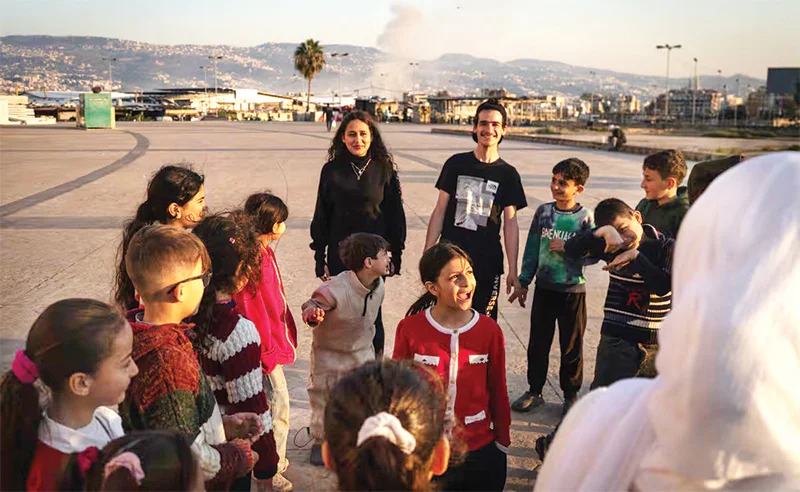
 It may be some time before the full impact of food inflation is felt in the West. Until such time the world would continue to keep itself in suspense over whether the Trump administration is in earnest when it seeks to convey the impression that it is backing a negotiated solution in West Asia.
As is usually the case, consumer stress would be one of the final determinants of political change. To the degree to which the average US consumer somehow ‘muddles through’ and puts the food on the table, to the same extent would the Republican sections of the US public in particular be tolerant of the Trump administration’s inconsistent handling of the West Asian war and the main issues stemming from it. That is, there would be no grave popular disaffection and a demand for political change in the short term.
However, the indications are that the Trump administration’s support base is suffering some erosion in the wake of the current economic crisis. While reports indicate that Democratic sections are firming-up their opposition to the political centre, Republican support for Trump is also showing signs of waning, we are given to understand.
The above developments are probably why Trump is on record as having given Israeli Prime Minister Benjamin Netanyahu a ‘dressing down’ recently on his seeming intransigence on the question of giving negotiations a chance in West Asia. The show of displeasure could be really aimed by Trump at containing the impatience of the American public.
However, the current ground situation in the Middle East, particularly the uncontained bloodshed, is likely to impress on the thinking sections of the world that more than temporary political change is needed in West Asia and the US.
A well thought out political solution that addresses all the contentious issues at the heart of the Middle East conflict is what enlightened opinion would demand, and very rightly. Right now, the ‘peace efforts’ initiated by the Trump administration give the impression of being piecemeal solutions at best.
There have been, of course, numerous initiatives in the past aimed at bringing permanent peace to the Middle East. These failed mainly because they did not address in full the root causes of the conflict.
At bottom the Middle East conflict is mainly about race and religious hate bred by socio-economic and material inequalities. For instance, if the Palestinian people were not displaced and deprived of land occupied by them at the time of the founding of the Israeli state, ethnic enmities would not have grown to the current unmanageable proportions.
When addressing the above questions, though, it must be remembered that the Israelis too were a displaced people who were entitled to land and a state of their own in the Middle East. Basically, out of these seemingly irreconcilable and conflicting demands have grown the Middle East imbroglio.
Middle East peace is considerably about reconciling these demands and arriving at a solution that would ensure the creation of two states that would opt for peaceful co-existence thereafter.
As long as the US does not see the need for a non-partisan solution that addresses the needs of both ethnicities and religions and goes all-out, as it were, to have it implemented, the Middle East would continue to bleed.
However, staunching the blood flow through the creation of two states would be only half the job done, though a very important part of it. More pernicious, pervasive and difficult to remedy are the inter-ethnic and inter-religious hatreds that have been unleashed over the decades.
However, if substantial, long-lasting peace is to be fostered in the region the latter ‘demons’ would need to be exorcised from the hearts and minds of the communities concerned. No doubt an uphill task but one that must be undertaken by those who wish the region well.
The UN would need to put its ‘best foot forward’ in such undertakings but it is time that it dawned on the international community and other caring quarters that Middle East peace, and all other such uphill challenges, require proactive peacemaking on the part of all civilized sections for their effective management. That is, public involvement in peacemaking too is a must.
Since hatreds are harboured in the human consciousness the enmities embedded in the latter need to be managed and defused judiciously alongside other undertakings in a peace process. In the case of West Asia, such enmities could be even spread globe-wide besides being multi-dimensional. For instance, it ought to be thought-provoking that Iran is insistent on a peace initiative that would also include Lebanon.
Besides security considerations it is also ethnic and religious affiliations that account for Iran making this demand. For instance, the Shias are a numerically important religious community in Lebanon and they provide a significant number of Hizbollah fighters, who are in a vital sense carrying out a ‘proxy war’ for Iran. It also needs to be factored in that Iran is a Shia-majority country.
Thus trans-border religious affiliations could add to the complexities and enormity of ethno-religious conflicts. However, the task of managing centuries-long enmities needs to be launched and prodded on with by peacemakers since a downing of arms alone would not guarantee substantive peace.
It is not realized sufficiently that the process of ending hatreds begins with mutual apologies by antagonists to a conflict for the harm inflicted on each other. This would be anathema in some ears but there is no getting away from the requirement. It is the vital first step to permanent peace anywhere.
In fact there could be no reconciliation worth speaking of without such mutual apologies. It is a point worth re-iterating in these times when even the government of Sri Lanka is voicing the need for national reconciliation. Well, without the words, ‘I am sorry’, there could be no permanent end to enmities – they would do well to remember.
The above requirements may not go down very well with governments, but they resonate in the hearts and minds of most people, since they are inheritors of religious traditions of some kind.
This is a principal reason why peacemaking works well when publics too are involved in them. The effectiveness of such campaigns increases several fold when they have a Mahatma Gandhi or a Jawaharlal Nehru at their helm. A strong proactive involvement by the public in peace could lead to the emergence of such leaders at some point in these campaigns.
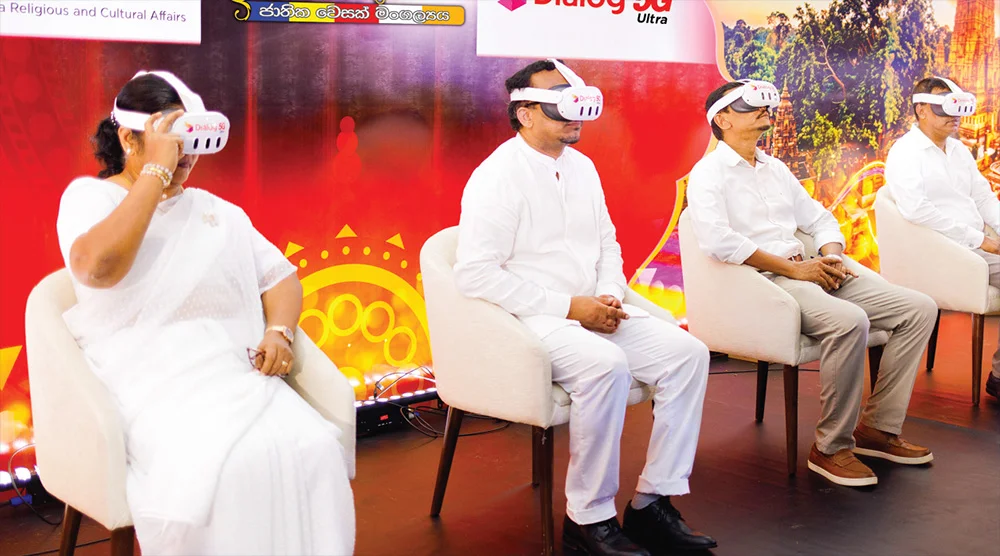
Official Digital Partner of the 2026 ‘Dakshina Prabha’ National Vesak Zone
Dialog Axiata PLC, Sri Lanka’s #1 connectivity provider, collaborated with the Ministry of Buddha Sasana, Religious and Cultural Affairs to bring one of Sri Lanka’s largest and most technologically advanced Vesak experiences to the ‘Dakshina Prabha’ National Vesak Zone. The three-day celebration, in Matara attracted more than hundred thousand visitors, who engaged with a series of innovative digital activities powered by Dialog 5G Ultra, including Artificial Intelligence (AI) and Virtual Reality (VR) experiences, digital pandols and a Data Dansala. The opening ceremony was attended by Hon. Sunil Handunnetti, Minister of Industry and Entrepreneurship Development and Hon. Saroja Savithri Paulraj, Minister of Women and Child Affairs, along with distinguished guests and Dialog’s senior management.
One of the key attractions at the venue was the Dialog 5G Ultra-powered Virtual Reality (VR) experience, which attracted more than 35,000 participants. The activation enabled devotees to virtually visit and pay homage to sacred Buddhist sites, including the Jaya Sri Maha Bodhi in India and the Atamasthana in Anuradhapura, directly from the Vesak zone in Matara.

Visitors receive complimentary mobile data through Dialog’s QR-powered Data Dansala.
Dialog also conducted an AI Digital Vesak Greeting Card Competition from 21 May to 01 June 2026, attracting numerous entries from across the country. The shortlisted designs were showcased across 20 large LED screens throughout the venue and across Matara City, and were also made available for download via mobile devices. Further, through the use of AI, traditional Jathaka Katha were reimagined in a digital format, demonstrating how technology can be used to preserve and enhance cultural and religious heritage. Together, these initiatives blended traditional Vesak celebrations with emerging technologies, offering visitors a unique and immersive way to engage with Vesak traditions.
Extending the spirit of Vesak through connectivity, Dialog conducted a special Data Dansala powered by its QR Reload platform, enabling visitors to receive complimentary mobile data by scanning QR codes placed across the venue. In addition to the Matara National Vesak Zone, similar Data Dansala activations were also conducted at the Gangaramaya and Bauddhaloka Vesak zones in Colombo.Visitors also had the opportunity to create personalised Vesak-themed digital photos through an AI Photo Booth, generating AI-enhanced portraits using their own photographs and adding a contemporary digital element to the Vesak celebrations.
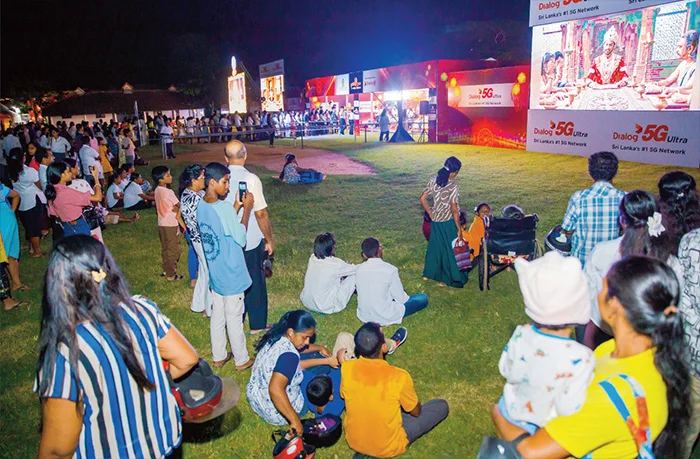
Visitors watch AI-generated Jathaka Katha
Commenting on the initiative, Hon. Sunil Handunnetti, Minister of Industry and Entrepreneurship Development, said, “The 2026 Dakshina Prabha Vesak Festival marked the first time AI-powered digital innovations were incorporated into a National Vesak Festival in Sri Lanka. Presenting Buddhist stories and teachings through technology created a new and engaging way for visitors to connect with these traditions. We thank Dialog for supporting this initiative and for working closely with us to bring our vision to life. Their contribution played an important role in making this first-of-its-kind event a reality.”
Lasantha Theverapperuma, Group Chief Marketing Officer of Dialog Axiata PLC said, “We thank the Government of Sri Lanka for the opportunity to support the 2026 Dakshina Prabha National Vesak Festival and for embracing technology as part of this year’s celebrations. As the Official Digital Partner, we were privileged to contribute through our Dialog 5G Ultra and AI capabilities, creating new ways for visitors to engage with Vesak traditions while preserving their cultural significance for future generations.”
Beyond supporting the National Vesak Zone in Matara, Dialog also enhanced the Gangaramaya and Bauddhaloka Vesak zones through a range of digital activations during the Vesak season. The company additionally continued its sustainability initiatives, including the Thirasara Aloka Poojawa, which illuminated rural places of worship through solar-powered lighting solutions.

Universal Woman is an international pageant focused on “beauty, elegance, and talent” for women, positioning itself as a platform to shape global ambassadors. The 2026 edition will be held in Cambodia, and Sri Lanka will be there, as well.
According to reports coming my way, contestants, at the international event, will work with industry trailblazers, under international standards.
Sri Lankan supermodel, runway and pageant trainer Chulpadmendra Kumarapathirana, is the National Director for Universal Woman Sri Lanka 2026.
With over two decades in the industry, Chula was crowned Miss Sri Lanka 2006, and has since shaped the next generation of titleholders through her Colombo-based Chulpadmendra Catwalk Studio, widely regarded as one of the country’s leading modelling academies.
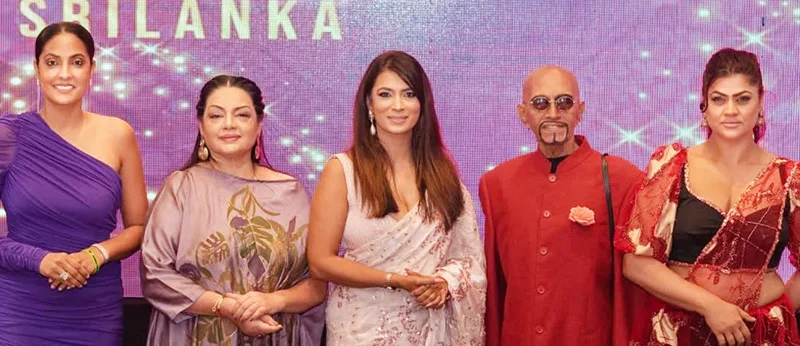
The team behind Universal Woman Sri Lanka 2026
A former host of Derana Miss Sri Lanka for Miss World 2008 and a judge for Miss Universe Sri Lanka 2025, Chula now serves as National Director for Universal Woman Sri Lanka 2026, leading the franchise’s search for Sri Lanka’s delegate to the international final in Cambodia.
Applications for Universal Woman Sri Lanka 2026 are being taken, via WhatsApp: 077 659 4994, says Chula.
The judging panel for Universal Woman Sri Lanka 2026 includes Senaka De Silva, Pageant Aesthetic Advisor & Chairperson of the Judging Panel, Angela Seneviratne, Caroline Jurie, Rozelle Plunkett, and Suraj Mapa.
Universal Woman Sri Lanka 2026 officially began its journey with a first round of auditions, held in Colombo, marking the start of an exciting new chapter in Sri Lanka’s pageant industry.

Launching the first round of auditions
The platform aims to empower women while selecting an intelligent, confident, and inspiring representative to compete at the Universal Woman International Pageant 2026 in Cambodia, this September.
Universal Woman Sri Lanka now moves forward with the vision of creating one of the country’s most prestigious and empowering pageants while preparing to crown a queen who will proudly represent Sri Lanka on the international stage.

SLC name squads for Tri-Nation ‘A’ series and Four-Day series
SLC name squads for West Indies Emerging Tour of Sri Lanka 2026

ICC delegation visits Bangladesh to ‘review developments linked to the BCB’

Indonesia’s rupiah falls to record low against US dollar

INS Airavat makes port call in Colombo

Netanyahu downplays US-Israel rift after Trump confirms criticism

‘Dates have the highest sugar content to fight Coronavirus’

Sunday Island 27 December – Headlines

#SundayIsland 17th December – Headlines

Sunday Island – 28th March

Sunday Island Headlines – 21 March

Sunday Island – 21st February – Headlines
-
 News5 days ago
IMF urges Lanka not to meddle with exchange rate
-

 News3 days ago
Lankan duo emerge winners in Latin dance championship held in Blackpool, UK
-
 Business7 days ago
Sri Lanka’s construction industry losing ground while no one watches
-
 Business4 days ago
IMF’s unstated rate:Sri Lanka’s $695m loan costs about 5.33% per annum
-
 News5 days ago
State of emergency extended
-

 Features7 days ago
The Division Bell Mystery
-
 Features5 days ago
Are threats to Buddha Sasana external or from within?
-
 News3 days ago
UNP challenges NPP move to amend Vihara – Devalagam Act