
Features
How AI fakes reality: The rising threat of AI-generated misinformation


A photo claiming to show the skeletons of a mother and child unearthed from the Chemmani mass grave in Jaffna recently went viral on social media and even appeared in some mainstream news reports. The image was also referenced by a parliamentarian during a speech. However, a FactCrescendo investigation confirmed that the image was AI-generated and not from the actual excavation site.
According to FactCrescendo, Lawyer Ranitha Gnanarajah, who represents the families of missing persons at the Chemmani site, clarified that no such conclusions can be drawn from visual inspection alone. She emphasized that laboratory testing is required to determine the identity or demographic details, such as age or sex, of the recovered skeletons. “At present, only excavation work is ongoing, and it is misleading to make assumptions based on the appearance of bones, especially when they are found intermixed in a mass grave,” she said.
This incident highlights how AI-generated misinformation can seep into trusted media channels, shaping public perception before the falsehoods are even identified. From manipulated headlines to convincingly written fake news, AI is now being used to blur the lines between truth and falsehood with striking speed. This article explores national strategies in place and highlights tools that can help you separate facts from fiction.
What Is AI-Generated Misinformation?
Artificial Intelligence (AI) refers to the ability of computer systems to perform tasks that typically require human intelligence, such as learning, problem-solving, and decision-making. According to a study presented at the NSBM International Conference on Business Innovation (2019), Artificial Intelligence (AI) is a specialized area of Information Technology that focuses on the simulation of human intelligence processes by machines, and has emerged as a central force in the ongoing global Fourth Industrial Revolution. Drawing from the Council of Europe’s framework on information disorder, misinformation is defined as information that is false but not shared with the deliberate intent to cause harm. Unlike disinformation, which involves malicious intent, misinformation circulates when individuals genuinely believe the false information to be true and disseminate it without the intention of causing harm to a person, social group, organisation, or country.
AI-generated misinformation refers to false or misleading content produced with the assistance of artificial intelligence tools such as large language models (LLMs), image generators, or deepfake technologies, often without deliberate intent to deceive. According to the article “Misinformation in an Era of Artificial Intelligence” published by the General Sir John Kotelawala Defence University (KDU), this type of misinformation frequently stems from the use of flawed or biased data, either directly input into AI systems or scraped from unverified online sources.⁵ As with traditional misinformation, AI-generated content spreads quickly due to its high realism, emotional appeal, and viral potential, making it increasingly difficult for individuals to distinguish between truth and falsehood. This evolving phenomenon poses serious threats to public trust, the integrity of media, and the functioning of democratic systems in the digital age.
How Widespread Is the Problem?
The threat of misinformation is prevalent across Sri Lanka’s linguistic communities. A 2024 survey by LIRNEasia found that 66% of Sinhala-language news consumers had encountered misinformation recently.⁶ Of those, 56% admitted to sharing it sometimes unknowingly, other times deliberately. Rather than turning to professional fact-checking services, many people said they relied on informal methods like asking friends or browsing social media comments to verify content.
A study conducted by the Eastern University of Sri Lanka found that a significant portion of Tamil-language social media content contained misinformation, with political and health-related falsehoods being most common.⁷ The susceptibility to AI-generated content was highlighted when a video appearing to show a Sri Lankan lookalike of the famous Indian actor and former Tamil Nadu Chief Minister, M.G. Ramachandran (MGR), went viral online. Fact-checkers later confirmed the video was created using AI technology to generate a false narrative, illustrating the need for greater vigilance across all language communities.
The technical ease of creating such deceptive content is a primary driver of this problem. According to Arzath Areeff, Co-Founder and Lead Trainer at digizen, an organization promoting digital citizenship, the threat has evolved far beyond simple text and images.⁹ He explains that with accessible tools like ChatGPT and Llama, anyone can generate convincing fake news articles and even fabricate academic research. The new frontier, he notes, is multimedia.
Realistic voice cloning can now “be done easily,” and video-generated fake content is a trending concern. He warns that advanced models like Google’s VLOGGER can produce fakes so convincing that they are difficult to debunk with the naked eye alone, lowering the barrier for widespread deception.
In another case, reports about a student in Sri Lanka inventing a water-powered vehicle went viral, appearing on TV and in major newspapers. However, FactSeeker later debunked the claim, confirming that no credible evidence supported the invention and that the circulating content had likely been manipulated or fabricated using AI tools. This incident underscores how even reputable media outlets can fall victim to convincingly crafted falsehoods when verification processes are bypassed.
Rajagopal Yasiharan, Team Lead at FactSeeker (SLPI), highlights that AI is increasingly being used to amplify misinformation, particularly on platforms such as Facebook and WhatsApp. He notes that malicious actors use AI to create fake images, false quotes, and entire posts designed to look like they came from real politicians or news outlets, especially during sensitive periods like elections or protests. “What makes it more concerning,” he says, “is that AI helps these people create a lot of content very quickly, even familiar lies are getting a second life.”
Government Response: Legal Frameworks and National Strategy
Sri Lanka has taken legislative steps to tackle the growing threat of misinformation, including that generated through artificial intelligence. Central to this framework is the Online Safety Act No. 9 of 2024, which establishes an Online Safety Commission empowered to identify and remove “prohibited statements,” deactivate inauthentic accounts, and prosecute individuals spreading false information online.While the Act aims to curb digital harms, civil society organizations such as the Centre for Policy Alternatives (CPA) and Hashtag Generation have raised concerns about its vague definitions, broad discretionary powers, and potential misuse against dissenting voices. International watchdogs like Human Rights Watch and Freedom House warn that these measures risk undermining freedom of expression, especially without strong oversight and appeal mechanisms.
The Personal Data Protection Act No. 9 of 2022 adds another layer of defence by regulating how personal data is collected, stored, and shared.¹⁷ In cases where AI-generated misinformation involves synthetic content based on personal data (such as deepfakes), this law provides individuals with rights to request correction or deletion.
In response to the growing risks of artificial intelligence, Sri Lanka introduced its National AI Strategy in 2024, titled “AI Sri Lanka 2028.” This plan aims to harness AI responsibly and safeguard digital integrity. While not exclusively focused on misinformation, several of its pillars help mitigate the risks of AI-generated falsehoods. The strategy is built on a commitment to ethical and trustworthy AI, aligning with global frameworks like the UNESCO Recommendation on the Ethics of AI and the OECD AI Principles. It proposes a Responsible AI Framework and an Advisory Council to ensure transparency, accountability, and human oversight, particularly for high-risk applications such as media content generation.
A key component of the strategy is the call for mandatory disclosure and explainability in critical AI systems. This would require AI-generated content, including text, videos, and images, to be labeled as synthetic, a crucial step in combating deepfakes and fabricated news. The government plans to lead by example, ensuring its own AI systems adhere to strict governance standards to maintain public trust. To build societal resilience, the strategy heavily invests in AI literacy and digital education through nationwide campaigns and updated school curricula, empowering citizens to critically evaluate AI-driven content. Additionally, it outlines a risk-based regulatory framework where high-risk AI applications will undergo closer scrutiny, including impact assessments and testing in controlled environments. Although in its early stages, the National AI Strategy is a proactive step toward creating a responsible AI ecosystem in Sri Lanka.
Comparative Perspectives: What More Could Be Done?
Other countries, such as Singapore, offer instructive models worth considering. For example, Singapore has integrated AI governance into its broader digital trust framework, combining regulation with public education and cross-sector accountability. Initiatives like the Model AI Governance Framework and AI Verify Toolkit aim to guide businesses in adopting responsible AI while supporting public transparency. Though Sri Lanka’s strategy outlines similar goals, it could benefit from placing greater emphasis on misinformation-specific challenges, such as building capacity for AI detection in local languages.
Building this technical trust is achievable. Arzath Areeff of digizen highlights that concrete safeguards already exist, pointing to compulsory watermarking, hidden metadata, and global standards like the Coalition for Content Provenance and Authenticity (C2PA) as ready-made frameworks Sri Lanka could adopt. However, Areeff adds a crucial note of caution: the existence of these tools is not enough. The real challenge, he suggests, lies in their adoption and consistent implementation.⁹
As misinformation increasingly affects elections, public health, and social stability, Sri Lanka’s AI strategy may need to evolve with more targeted interventions. Aligning legal reforms with awareness campaigns and international best practices could also strengthen trust in AI and digital communication.
Local Fact-Checking Initiatives in Sri Lanka
As AI-generated misinformation becomes increasingly sophisticated, Sri Lanka has seen the emergence of several local fact-checking initiatives. However, according to Arzath Areeff, the country’s capacity to fight AI with AI is still developing, with no single, widely successful homegrown detection tool yet available. This technological gap means the front line of defense is overwhelmingly human, with the following organizations leading the charge:
FactSeeker – Sri Lanka Press Institute (SLPI): A dedicated team that investigates and debunks misinformation20 with a particular focus on content such as deepfakes and fabricated images.
Watchdog – The Research Collective: A civic tech and OSINT group formed after the 2019 Easter Sunday attacks, using real-time verification tools to counter misinformation during crises.
Citizen Fact Check: An early independent effort by the Citizen Media Network to provide publicly accessible verifications of news and viral claims.22
FactCheck.lk – Verité Research: A platform focused on verifying claims made by public figures and institutions, especially in political and policy-related discourse.
Dissect – Sinhala-Friendly AI Tool: An AI-powered tool developed by LIRNEasia, Watchdog, and Appendix to help users assess the credibility of Sinhala-language online content.
Hashtag Generation: A youth-led initiative combining digital activism with traditional verification tools and providing digital security training to vulnerable communities.
What You Can Do to Stop the Spread of Misinformation
The fight against AI-generated misinformation isn’t just a responsibility of governments or journalists; it starts with you. As digital users, we each play a vital role in curbing the spread of false information. Here’s how you can help:
Cross-Check Claims with Trusted Local Sources: Use platforms like FactCheck.lk or official government portals to verify claims, especially on sensitive topics.
Watch for “AI Hallucinations”: Investigate sensational or oddly specific claims, as AI can invent statistics, names, or events.
Verify Timeliness and Relevance: Ensure data reflects current realities by checking recent news from reputable outlets.
Examine Source Credibility: Be wary of vague attributions and check if a source has a history of reliable reporting.
Detect Bias and Manipulation: Look for emotionally charged or one-sided narratives, especially around elections or national identity.
Use AI Detection and Fact-Checking Tools: Employ reverse image search tools like TinEye and text verification platforms to investigate suspicious content.
As Sri Lanka embraces artificial intelligence, the rapid rise of AI-generated misinformation poses a serious threat to public trust and social harmony. The Chemmani case and the water-powered car hoax demonstrate how easily AI fakes can shape narratives. However, this threat is not unbeatable. With national strategies, vigilant fact-checking networks, and engaged digital citizens, we can create a more resilient information environment. Staying informed and digitally literate is no longer optional; it is crucial for protecting Sri Lanka’s democratic values and digital future. (The writer is a research intern at the Marga Institute)
by Sameeha Risan ✍️



The world marked World Otter Day 2026 recently. Conservationists are warning that Sri Lanka’s rapidly disappearing wetlands, polluted waterways and unplanned development are placing increasing pressure on one of the island’s most elusive freshwater predators, the Eurasian otter (Lutra lutra).
The species, locally known as “Diya Balla”, is the only otter found in Sri Lanka and is regarded as a key indicator of healthy freshwater ecosystems. Yet despite its ecological importance, experts say the animal remains poorly studied and largely overlooked in national conservation planning.
Naturalist and conservationist Chaminda Jayasekara, who has spent years documenting otters in Sri Lanka, said the species is facing mounting environmental pressures across the island.
Speaking to The Island, Jayasekara said habitat destruction, chemical pollution, road kills, sand mining, and increasing human disturbance are fragmenting the waterways on which otters depend.
“Otters are extremely sensitive animals. When wetlands are degraded or rivers become polluted, they disappear very quickly. Their survival is directly linked to the health of freshwater ecosystems,” he said.
Jayasekara, who specialised in MSc Environmental Management at the University of Hertfordshire, noted that while the species has been recorded across Sri Lanka’s wet zone, dry zone and coastal wetlands, scientific data on population numbers and distribution remain limited.
According to him, the decline of wetlands has become one of the most serious environmental issues facing Sri Lanka. Marshes, mangroves, irrigation tanks and riverine habitats are increasingly being altered by urban expansion, tourism infrastructure, encroachment and agricultural runoff.
He warns that the loss of these habitats not only threatens otters, but also weakens flood control systems, freshwater security and biodiversity resilience at a time when climate-related disasters are becoming more frequent.
Jayasekara said otters play a vital ecological role by helping maintain balanced fish populations and healthy aquatic ecosystems.
“When otters thrive, it tells us the river system is functioning properly. Their presence is a sign that water quality, fish diversity and habitat conditions remain healthy,” he explained.
One of the best-known locations for otter sightings in Sri Lanka is Aranga Pond, within the Horton Plains National Park, where the species has adapted to the island’s cold montane ecosystem.
However, conservationists stress that even protected areas are not immune to broader environmental degradation occurring outside park boundaries.
Jayasekara’s own work on otters gained prominence through long-term conservation efforts at Jetwing Vil Uyana, where a former degraded chena landscape was restored into a functioning wetland ecosystem.
The restored habitat eventually attracted Eurasian otters, fishing cats, grey slender lorises and numerous wetland bird species.
Over 14 years, Jayasekara carried out field observations, camera trapping and awareness programmes involving hotel staff, surrounding schools and local communities.
“What happened at Vil Uyana clearly showed that habitat restoration works. If degraded ecosystems are given time to recover, wildlife can return naturally,” he said.
He added that wetland restoration should become a central component of Sri Lanka’s environmental policy, particularly as climate change intensifies droughts, floods and biodiversity loss.
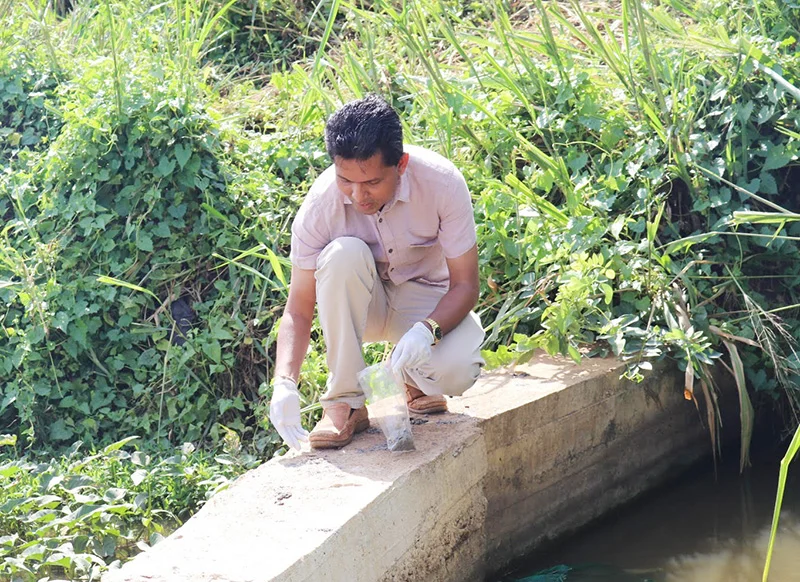
Chaminda collecting scat for research purposes in Sigiriya
He says wetlands are among the planet’s most productive ecosystems, functioning as natural water filters and carbon sinks while providing breeding grounds for fish, amphibians and aquatic mammals.
Yet globally, wetlands are disappearing at an alarming rate, and Sri Lanka is no exception.
Conservation groups have repeatedly warned that illegal waste disposal, pesticide contamination and poorly planned infrastructure projects are severely affecting freshwater ecosystems throughout the country.
Jayasekara also highlighted the importance of stronger environmental education and community participation in conservation.
“Awareness is still very limited. Many people living close to wetlands do not realise the ecological importance of otters or the threats they face,” he said.
According to him, involving local communities in conservation monitoring is essential if Sri Lanka hopes to safeguard the species in the long term.
He also pointed to the growing international interest in otter conservation.
In November 2025, Jayasekara represented Sri Lanka at the International Eurasian Otter Conservation Workshop held at Colchester Zoo and organised by the International Otter Survival Fund.
The workshop brought together nearly 100 researchers, conservationists and wildlife experts from 33 countries to discuss emerging threats facing Eurasian otter populations.
Jayasekara presented Sri Lanka’s experience under the theme Rewilding Through Hospitality, focusing on how habitat restoration and sustainable tourism practices at Vil Uyana contributed to otter conservation.
“The international response was extremely encouraging. Many delegates were surprised that a tourism property in Sri Lanka had quietly carried out wetland conservation work for more than a decade,” he said.
Discussions at the workshop also examined wider environmental concerns including river pollution, declining fish stocks, illegal killings and habitat fragmentation affecting otter populations across Europe and Asia.
New conservation technologies such as AI-assisted wildlife tracking and environmental DNA surveys were also highlighted as emerging tools for monitoring elusive species.
Jayasekara said Sri Lanka urgently requires more scientific surveys, stronger environmental law enforcement and greater investment in freshwater conservation research.
He warned that unless wetlands and waterways are protected, several lesser-known freshwater species could face severe decline in the coming decades.
Environmentalists say otter conservation should not be viewed in isolation but as part of a broader effort to protect entire freshwater ecosystems that millions of Sri Lankans depend on for drinking water, irrigation and livelihoods.
He further noted that healthy wetlands also strengthen climate resilience by absorbing floodwaters, reducing soil erosion and supporting groundwater recharge.
As Sri Lanka experiences increasingly erratic weather patterns linked to climate change, conservationists argue that protecting wetlands is becoming both an ecological and economic necessity.
Jayasekara believes Sri Lanka still has an opportunity to become a regional example in balancing tourism, biodiversity conservation and habitat restoration.
“The otter teaches us an important lesson,” he said. “If rivers are protected and wetlands are respected, nature has an incredible ability to recover.”
This year’s observance of World Otter Day 2026 is, therefore, serving not only as a celebration of one of the world’s most charismatic mammals, but also as a reminder of the urgent need to conserve the fragile freshwater ecosystems upon which both wildlife and human communities ultimately depend.

Eurasian otter
By Ifham Nizam
In their Vesak messages this year, President Anura Kumara Dissanayake and Prime Minister Harini Amarasuriya highlighted the values of reconciliation, coexistence and justice as essential to Sri Lanka’s future. President Dissanayake emphasised that Buddhism’s teachings remain deeply relevant to contemporary society and described Vesak as a symbol of “mutual understanding, unity and coexistence among all communities” and of reconciliation itself. Prime Minister Amarasuriya similarly called for the building of a society in which justice is assured to all irrespective of caste, race or religion. These messages were not merely religious aspirations, they were a direct challenge to the most serious failures in Sri Lanka’s post-independence history. These include the three-decade-long war, its human rights violations and the inability to implement a political solution.
These have been and continue to be the challenges that have prevented Sri Lanka from reaching its full potential. Added to this have been the persistence of social and economic inequalities that continue to marginalise communities at the bottom of the social hierarchy. One of the most enduring examples of such injustice is the experience of the Malaiyaha Tamil community. The scale of the original exclusion is worth understanding clearly. According to the 1946 Census, the Malaiyaha Tamil community numbered approximately 780,600 persons and constituted 11.73 percent of the country’s population making them the second largest ethnic community, larger than the Sri Lankan Tamil community who numbered 733,700 or 11.02 percent of the population at the time
The denial of citizenship and voting rights to the Malaiyaha Tamil community was the first major injustice inflicted on an ethnic minority in post-independence Sri Lanka. The consequences were devastating and long-lasting. A community that had contributed enormously to the country’s economy through its labour on the plantations was excluded from political participation and denied basic rights. This was a political and moral failure that cast a long shadow over the country’s post-independence history. Responsibility for that injustice needs to be shared widely. Political leaders across ethnic lines failed to resist it. The result was the marginalisation of a community whose contribution to national prosperity far exceeded the recognition it received. Today, nearly eight decades later, Sri Lanka has an opportunity to correct that historic wrong but only if economic reform is matched by genuine social inclusion.
Longstanding Grievances
The NPP government has repeatedly acknowledged the need to address the longstanding grievances of the Malaiyaha Tamil people. In its election manifesto, the NPP pledged to improve living conditions in plantation areas, strengthen land and housing rights, ensure equal access to education and public services, and integrate plantation communities more fully into national development. The NPP’s Nuwara Eliya Declaration of 2023 similarly recognised that the plantation community had suffered generations of exclusion and promised measures to address disparities in housing, land ownership, infrastructure, education and economic opportunity. The need for such action is plain to see. While citizenship issues have largely been resolved over time, the socio-economic consequences of decades of exclusion remain deeply entrenched and continue to shape daily life in plantation communities. A conference organised by the Institute of Social Development to mark International Tea Day on May 21 at the BMICH brought out this and many other salient issues. Headed by P Muthulingam the organisation has advocated for the rights of the Malaiyaha Tamil people for the past 35 years to be equal citizens who enjoy social and economic justice.
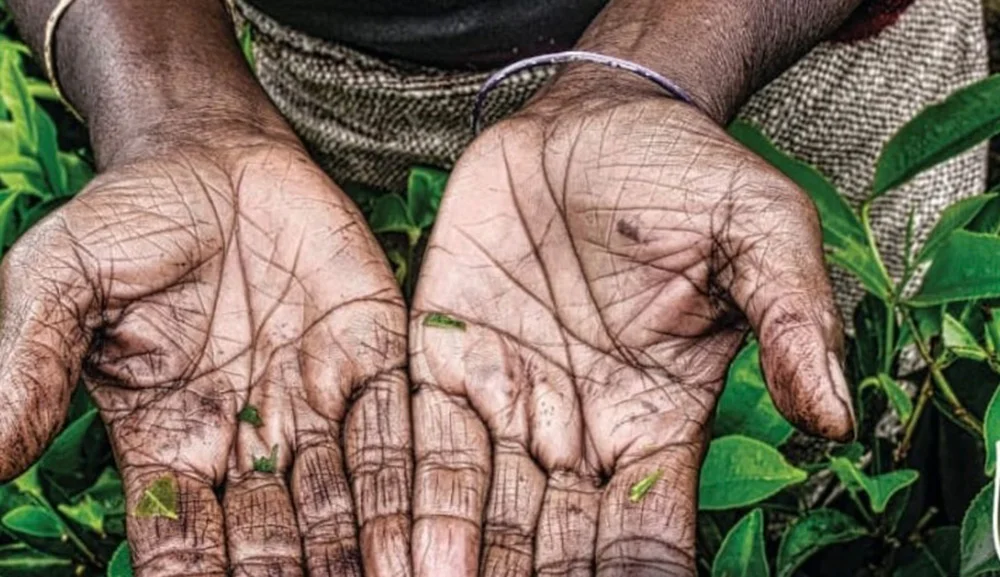
The central problem facing many plantation workers is the low level of income they receive. Daily wages remain among the lowest in the country relative to the difficulty and intensity of the work. Plantation labour continues to depend heavily on methods that have changed little over generations. Productivity remains low compared to competing tea-producing countries — not because workers lack capability, but because sustained investment in their welfare, skills and economic mobility has been withheld. Workers consequently remain trapped in a cycle of low wages and limited economic mobility. Their housing situation compounds these difficulties. Many plantation families continue to live in housing owned either by plantation companies or the state. Lack of secure ownership limits their ability to accumulate assets, access credit or make independent decisions regarding their future. When Cyclone Ditwah damaged plantation housing, it exposed the inability of those living in that housing to access state compensation as they did not own the housing in which they lived.
The problems extend beyond the central highlands. Plantation workers living in private estates and smallholdings in other parts of the country face similar challenges. A recent Amnesty International report documented serious abuses affecting Malaiyaha Tamil workers in private tea estates in the Southern Province. These include wage withholding, debt dependency, restrictions on movement and intimidation and practices the report argued correspond to internationally recognised indicators of forced labour. These findings are not peripheral. They reveal that the structural exclusion of the Malaiyaha Tamil community is not a relic of the past but an active, ongoing condition. Economic vulnerability and social marginalisation continue to leave many plantation workers without effective protection or access to justice. It is against this backdrop that the government’s recent plantation reform initiative assumes special significance.
Second Phase
The government has announced the second phase of a programme to make underutilised plantation lands and assets available for investment. The objective is to transform underperforming assets into productive enterprises capable of generating employment, attracting investment and revitalising regional economies. The programme seeks to modernise the plantation sector, improve productivity and create new opportunities in tourism, renewable energy and export-oriented industries. These objectives are necessary and welcome. However, economic reform alone will not be sufficient and Sri Lanka’s own history provides the warning. Previous rounds of plantation modernisation pursued productivity gains without addressing the structural disempowerment of the people at the centre of the industry. The result was investment that generated wealth without distributing it. The workers who produced the wealth were once again treated as labour inputs rather than as beneficiaries. If the current reform follows the same logic, it risks reproducing the same failure.
For reform to succeed, plantation workers must be recognised not merely as a labour force but as stakeholders with rights, aspirations and a legitimate claim to share in the benefits of development. Housing ownership, secure land tenure, quality education, vocational training and entrepreneurship need to be built into the reform process from the outset. The government’s commitments to the Malaiyaha Tamil community therefore need to be incorporated into every stage of the reform process. On the contentious question of land, the government should consider establishing an independent national land commission. Such a body should include respected government officials, professionals and representatives from all ethnic and religious communities. It should review land policy comprehensively, develop transparent principles for allocation and use, ensure fairness in decision making and provide a trusted mechanism for resolving disputes. A credible land commission would help build public confidence that land reforms are being undertaken in the national interest rather than for the benefit of particular groups.
The correction of historic injustices should not be viewed as a concession to one community. It should be understood as an investment in national unity, because societies do not become stronger by maintaining the exclusion of those they have wronged. On the contrary, they become stronger by ending it. The first great injustice committed against an ethnic minority after independence cannot be undone. But its consequences can be addressed, and doing so would strengthen reconciliation, enhance social cohesion and bring Sri Lanka closer to the vision of a country in which all communities live with equal dignity and equal hope. This is what the Vesak messages of the President and Prime Minister promised. The plantation reform now underway is the moment to make good on that promise not in words alone, but in sustained policy that endures beyond any single government and reaches the people who have waited longest for it.
by Jehan Perera
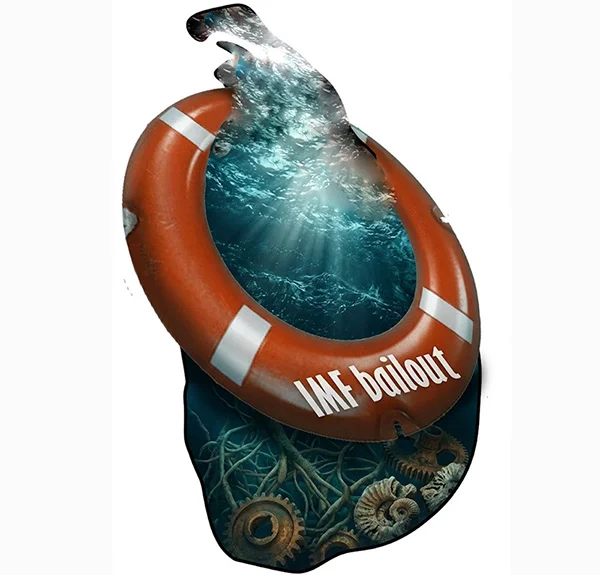
The IMF’s latest decision to release approximately US$695 million to Sri Lanka provides an important measure of financial relief, but it should not be mistaken for full economic recovery. While the approval reflects progress in stabilisation, fiscal discipline, and reform implementation, the country still faces deep structural weaknesses, social pressures, and external risks. The real test begins now: whether Sri Lanka can convert this temporary breathing space into lasting reform, productive growth, stronger institutions, and national resilience. This moment should not be used for political celebration, but for serious national reflection and responsible action. Sri Lanka must now resolve to support a clear policy direction, a practical reform programme, and a long-term national development path — not merely an individual, a party, or a political camp.
1. IMF Relief: A Necessary Step, but Not a Final Solution
The IMF Executive Board recently completed the combined Fifth and Sixth Reviews under Sri Lanka’s Extended Fund Facility, allowing the country immediate access to SDR 508 million, approximately US$695 million. This decision represents an important step in Sri Lanka’s ongoing economic recovery process following the severe crisis that led to sovereign debt default, shortages of essential goods, high inflation, and the collapse of foreign reserves in 2022.
However, this decision must be understood with great sensitivity. IMF relief is not the same as full economic recovery. It gives Sri Lanka temporary breathing space, helps rebuild a certain level of international confidence, and supports the continuation of the reform programme. However, this relief is not a magic solution that can automatically resolve the country’s deep-rooted economic problems. Fundamental challenges such as the debt burden, weak productive capacity, low export earnings, poor public revenue performance, weak fiscal management, excessive dependence on imports, corruption, and inefficient state-owned enterprises still remain unresolved. Addressing these challenges requires domestic reforms, disciplined policies, stronger production and export capacity, and a long-term national development programme. Therefore, the IMF decision should not be treated as a political victory or as proof of complete economic success. Rather, it should be seen as a reminder that Sri Lanka still has a long and difficult journey ahead.
2. Sri Lanka’s Progress Recognised by the IMF and Its Limits
The IMF’s approval indicates that Sri Lanka has made progress in several important areas. Inflation has been brought under control compared to the extreme levels experienced during the crisis. Foreign reserves have improved, the exchange rate has shown greater stability, and fiscal management has become more disciplined. The government has also continued to implement reforms in taxation, public finance, energy pricing, and debt restructuring.
According to the IMF assessment, performance under the programme has generally been strong. Several quantitative performance targets have been met, while many structural benchmarks have either been achieved or implemented with some delay. This shows that Sri Lanka has remained broadly committed to the reform path agreed under the IMF-supported programme.
Yet this progress remains fragile. Stability achieved through external support must now be converted into genuine economic strength.
3. Conditions and Responsibilities Attached to the IMF Programme
IMF support does not come merely as financial relief; it comes with a set of important reform conditions and responsibilities that Sri Lanka must fulfil. Key among them are maintaining fiscal discipline, improving government revenue, continuing cost-reflective pricing for fuel and electricity, strengthening public financial management, restructuring state-owned enterprises, protecting institutional independence, and preventing the accumulation of new external payment arrears.
The main objective of these conditions is to restore macroeconomic stability, strengthen fiscal credibility, and rebuild international confidence in Sri Lanka. However, these reforms also carry social and political consequences. Higher taxes, market-based utility pricing, and strict expenditure controls can place a heavy burden on ordinary citizens, especially low-income families, small businesses, pensioners, and salaried workers. Therefore, in implementing reforms, economic discipline alone is not enough. Fairness, transparency, and social sensitivity towards vulnerable groups must also be treated as essential priorities.
4.The Impact of IMF Conditions on People and the Economy
One major social consequence of the IMF programme is the increased pressure it can place on household incomes and living standards. When electricity, fuel, and other essential services are priced on a cost-recovery basis, people may have to face a higher cost of living. Although such reforms are necessary to reduce the losses of state-owned enterprises and maintain fiscal discipline, they can weaken the purchasing power of ordinary citizens if strong social protection programmes are not in place.
Another important consequence is the pressure placed on the operating costs and stability of small and medium-sized enterprises. Higher taxes, increased utility costs, fuel and electricity expenses, and the rising cost of borrowing can affect business survival, job creation, and new investment decisions. If reforms are implemented without sufficient attention to production, exports, and small businesses, the country may achieve short-term fiscal stability, but long-term economic growth could remain weak.
There is also a political risk that cannot be ignored. If people feel that the burden of reform is not being shared fairly, reform fatigue and public frustration may emerge. If ordinary citizens are expected to make sacrifices while corruption, waste, and political privileges continue, public confidence in the reform process will decline. Therefore, for IMF-supported reforms to succeed, fairness, transparency, and social sensitivity must be firmly ensured alongside economic discipline.
5. The Real Test Before Sri Lanka
Sri Lanka’s real test begins now. Beyond temporary financial relief, the country must now prove that it can build a strong economy that generates income and can withstand external shocks. Therefore, our objective should not be limited to securing the next IMF tranche. While an IMF tranche may provide short-term breathing space, it does not guarantee long-term economic independence or stability. The real objective should be to create an economy that does not have to return to the IMF repeatedly during every crisis, but can stand on its own productive strength, export earnings, and fiscal discipline.
This requires fiscal discipline. However, discipline alone is not enough; economic growth is also necessary. Taxation is necessary. But increasing taxes alone is not a solution; production, investment, and exports must also be expanded. Debt restructuring is necessary. But beyond reducing the debt burden, Sri Lanka must also build an economic foundation that does not depend excessively on borrowing in the future. Sacrifices may be asked of the people. But for those sacrifices to be fair, accountability, transparency, and exemplary conduct from leaders are also essential.
Economic recovery cannot be sustained in the long term through financial assistance alone. Such support can provide breathing space during a crisis, but a country is rebuilt on the strength of its own institutions, productive capacity, export competitiveness, and public trust. Therefore, what Sri Lanka needs today is strong institutions, income-generating industries, a broader export base, food security, energy security, and a system of governance that people can trust.
6. Policy Priorities for Sustainable Recovery
Sri Lanka must now move from crisis management to national transformation. First, fiscal discipline should continue, but it must be fair. Revenue mobilisation should not rely only on increasing taxes on the same groups of people. The tax base must be broadened, tax administration must be improved, and tax evasion must be reduced.
Second, social protection must be strengthened. The most vulnerable groups should be protected through well-targeted assistance. Reforms will be more acceptable if people feel that the poor, elderly, disabled, and low-income families are not abandoned.
Third, state-owned enterprise reform should be carried out with transparency and public accountability. The objective should not merely be privatisation, but efficiency, professionalism, financial discipline, and better service delivery.
Fourth, Sri Lanka must prioritise export-led growth. The country cannot build a stable future by depending mainly on borrowing, remittances, and consumption. Agriculture, tourism, manufacturing, IT services, logistics, education, and value-added exports must become central pillars of national development.
Fifth, governance reform is essential. Without reducing corruption, political interference, wasteful expenditure, and weak implementation, no IMF programme can create lasting recovery. Economic reform and governance reform must move together.
7. From Temporary Relief to Lasting Recovery
The IMF decision gives Sri Lanka an important opportunity. It provides the country with space to strengthen economic stability, rebuild international confidence, and move forward with essential reforms. However, it is not a guarantee of success. It is only a step that gives the country some breathing space. It is now Sri Lanka’s responsibility to use that space wisely, with discipline and accountability to the people.
The country must now decide whether it will continue the old cycle of crises, debt, temporary relief, and political blame, or whether it will build a new national programme based on discipline, productive capacity, fairness, and accountability.
At this moment, true success cannot be measured by the amount of money received. It must be measured by whether Sri Lanka can build an economy that produces more, exports more, saves more, is governed better, and protects its people more effectively. The real victory is not receiving IMF relief, but building a strong national economy that will not depend excessively on such relief in the future.
Public Appeal: Let Us Choose a Programme, Not a Personality
This US$695 million will not solve every problem in our country. It may provide temporary financial relief and support the continuation of reforms, but it cannot replace the hard work required to build a productive, disciplined, inclusive, and self-reliant economy.
Therefore, this is the right time for all Sri Lankans to rise above narrow political loyalties and support a clear policy direction, a practical reform programme, and a long-term national development agenda — not merely an individual, a party, or a political camp. What Sri Lanka needs today is not the victory of a personality, but the victory of a responsible national programme that can restore confidence, protect the vulnerable, promote production, strengthen exports, ensure accountability, and secure a better future for the next generation. The question before us is simple but decisive: are we ready to make that choice?
by Prof. Ranjith Bandara,
PhD (Qld.,)

Nuwan Thushara among 46 men’s cricketers to be awarded SLC contracts

Pakistan naval trio arrives at Colombo Port

Sri Lanka Cricket relieved at ICC’s mild response to Transformation Committee

ICC approves red-to-pink ball change to reduce bad-light impact in Test cricket

LPL introduces impact subs for 2026 season

Protesters call on Kenyan government to halt femicide crisis

‘Dates have the highest sugar content to fight Coronavirus’

Sunday Island 27 December – Headlines

#SundayIsland 17th December – Headlines

Sunday Island – 28th March

Sunday Island Headlines – 21 March

Sunday Island – 21st February – Headlines
-
 News4 days ago
IMF urges Lanka not to meddle with exchange rate
-
 Business5 days ago
Sri Lanka’s construction industry losing ground while no one watches
-
 News4 days ago
State of emergency extended
-
 Midweek Review7 days ago
Israeli-US aggression won’t go unanswered -Iranian Ambassador
-

 Business2 days ago
IMF’s unstated rate:Sri Lanka’s $695m loan costs about 5.33% per annum
-

 Features5 days ago
The Division Bell Mystery
-
 News2 days ago
UNP challenges NPP move to amend Vihara – Devalagam Act
-

 News6 days ago
RTI query of Ditwah funds: Presidential Secretariat mum on key questions