
News
Health sector strikes must not drag on – Nalinda

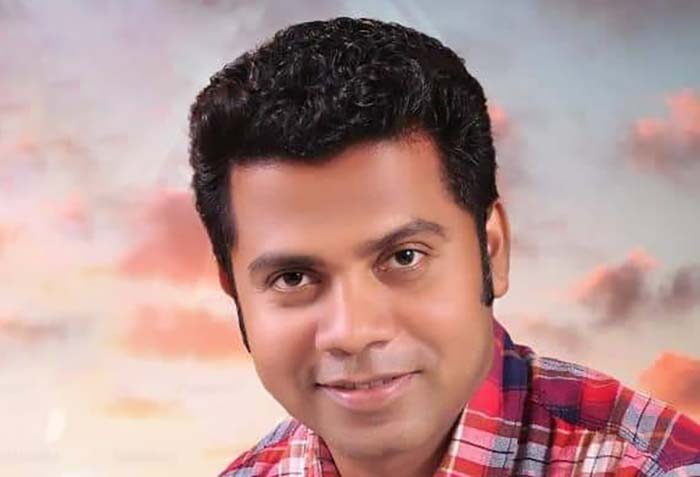
Government creating animosity between doctors and others
By Saman Indrajith
The Sri Lankan healthcare system has been allowed to atrophy since 1977 due to a lack of funding, National People’s Power (NPP) stalwart and former MP, Dr. Nalinda Jayatissa said.
He said that the country’s hospital system was established by the British as a necessity for its colonial economy, and by 1948, Sri Lanka had a robust healthcare system. And, until 1977, successive governments were investing about five percent of the GDP in health.
“Things changed dramatically after 1977. Since 1977, governments have washed their hands off of state-funded healthcare, and by 2020, out-of-pocket expenses on healthcare by people was about 60 percent.
“Then the economic crisis happened, and now we see a significant increase in people coming into government hospitals. The government hospitals can’t deal with this influx. There are no medicines, the quality of medicine available is suspect, healthcare professionals are leaving the country, and the equipment is broken.”
Dr. Jayatissa said politicians and bureaucrats are keen on buying expensive machinery but are less interested in maintaining the equipment.
“Most of these machines need to be operated in controlled environments. There should be trained staff, and the machines should be periodically repaired. None of this happens, and the machines break down. This is a serious situation, and the Health Ministry is virtually headless,” he said.
The NPP stalwart added that the government is also deliberately causing friction. It gave the doctors a 35,000 DAT increase, and other unions are up in arms about this.
“We are very concerned about the impact of union action on healthcare. At the end of the day, these strikes affect people. The government is also harassing people on a daily basis. However, the demands of the unions are just.”
He said that health staff are under tremendous stress and they deserve a salary hike, like everyone else in the country.
“We must also wonder if the government wanted to create problems between various staff categories. Now the animosity between doctors and other staffers is at an all-time high. There have been fisticuffs between doctors and other staffers. Unions must also understand the politics behind some maneuvers. We must try to win our demands with minimal impact on people.”
Dr. Jayatissa said that during the economic crisis, many nations offered to help the Sri Lankan healthcare system. Politicians and some senior officials used these opportunities to enrich themselves. What is happening in the health system is the best example of why the country needs a change in political leadership.
“About four years ago, Japan offered to develop angiogram units in five locations after identifying that about 45 percent of people die due to stroke and heart attacks. This was a 28 billion-rupee project, with 27 billion from Japan, to expand angiogram units in Kandy, Kurunegala and Anuradhapura hospitals and establish new units in Badulla, and Trincomalee. The Health Ministry recruited new people, and discussions were ongoing. The Japanese government then unilaterally cancelled the deal because there were allegations that one Minister solicited bribes from a Japanese company. The Minister was not penalized, but the project was halted. How many people were affected by this? Corruption is a main reason why we are not getting help,” he said.
Dr. Jayatissa said there is also a mechanism to predict the amount of medicine the country needs per year. There are also some in-built mechanisms to reduce corruption.
“We have the NMRA, SPC and medical supplies unit. We have three separate units as a way to keep tabs on each other. However, politicians have paralyzed these institutions to help them embezzle. The health ministry purchased a counterfeit human immunoglobulin consignment and paid a corrupt company a billion rupees. We have paid a billion rupees for coloured water. Imagine the level of corruption?” he said.
The former MP added that the Ministry of Health has an institution that was established to regulate private healthcare providers. However, the institution has done very little to ensure private healthcare producers provide a quality service.
“90 percent of resident patients are in government hospitals. However, 50 percent of OPD patients go to the private sector. An NPP government will regulate the private sector and strengthen government hospitals. Then people will choose where they want to go,” he said.








News
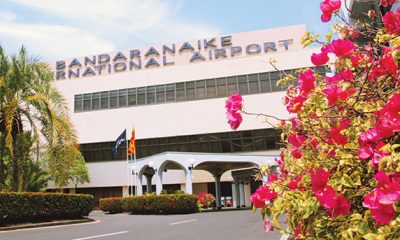
Cabinet nod to increase the number of new automated passenger clearance gates at the Bandaranayake International Airport to 12

Approval of the Cabinet of Ministers was granted at their meeting held on 19.05.2025 to purchase four (04) automated passenger clearance gates for Bandaranayake International Airport.
In addition, it is expected to extend the automated passenger clearance gates facility so far given only to the Sri Lankans
parallel to the e – passport issuance system to be introduced in the year 2027 also to the foreigners who travel to and from this country.
Furthermore, considering also the number of air passengers rapidly increasing with the fast – forwarding business and tourism field, the appropriateness to increase the total automated passenger clearance gates up to twelve (12) in number has been recognized.
Accordingly, the Cabinet of Ministers, approved the resolution furnished by the Minister of Public Security and Parliamentary Affairs to initiate the procurement and installation of 12
automated passenger clearance gates altogether with the already approved four (04) and another eight (08) automated passenger clearance gates adhering to the formal procurement procedure
Based on the observations submitted by the Task Force on Prevention of Money Laundering and Financing for Terrorism, approval of the Cabinet of Ministers was granted at their meeting held on 18.12.2024 to amend the Trust Ordinance No. 9 of 1917 including amendments proposed by the Financial
Intelligence Unit of the Central Bank of Sri Lanka.
Accordingly, clearance of the Attorney General has been granted for the Trust (Amendment) Draft Bill formulated by the Legal Draftsman.
Therefore, the Cabinet of Ministers approved the resolution furnished by the Minister of Justice and National Integration
to publish the said draft bill in the government gazette notification and thereby, submit the same to the Parliament for its concurrence.
Action was taken to provide a fuel relief for the fuel consumers during the months of April, May and June of 2026 to redress by minimizing the impact caused to the day today life of the citizens of this country as well as the entire economy due to the price hike of petroleum fuel in the global market resulting from the war situation in the Middle East.
Government mediation is essential for minimizing the impact on the day to today life of citizens in this country due to that war situation not being ended further. Therefore, it has been planned to redress on the sale price for Auto Diesel and Industrial Diesel for a period of 03 months by the Government to provide relief to the public as well as to maintain the prices at a bearable level to the consumers without escalating the fuel prices in this country compared to the escalation of fuel prices
in the international market.
Therefore, the Cabinet of Ministers granted approval for the resolution furnished by the President in his capacity as the Minister of Finance, Planning and Economic Development to
allocate provisions subject to the monthly limitations respectively as rupees 15 billion for the month of October, rupees 13.5 billion for the month of November and rupees 12.15 billion for the month of December to provide the said relief

Cabinet nod to increase the number of new automated passenger clearance gates at the Bandaranayake International Airport to 12
Draft Bill for amending the Trust Ordinance
Implementing further relief programme to Public sffected by the Middle East conflict situation
Establishment of a Spectrum Management and Monitoring System and a Quality of Service and Quality of Experience System for the Telecommunications Regulatory Commission of Sri Lanka
Appointment of a Committee for the Restitution of Sri Lankan Cultural Heritage Held Abroad
Ten-Year National Action Plan on the Social Protection Sector (2026–2035)

‘Dates have the highest sugar content to fight Coronavirus’

Sunday Island 27 December – Headlines

#SundayIsland 17th December – Headlines

Sunday Island – 28th March

Sunday Island Headlines – 21 March

Sunday Island – 21st February – Headlines
-
 News7 days ago
Mastermind Naufer Moulavi among 15 found guilty
-
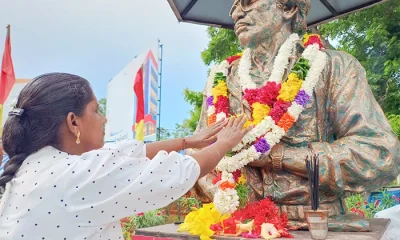
 Midweek Review7 days ago
Thileepan’s fast unto death: An authentic narrative that many missed
-

 Latest News6 days ago
Showers above 100 mm are likely at some places in the Western, Sabaragamuwa, Central and North-western provinces and in Galle and Matara Districts
-

 Editorial7 days ago
Big Bad Bills
-
Editorial6 days ago
Crimes punished and unpunished
-

 Features5 days ago
Beyond traditional jobs: Why Sri Lanka needs to facilitate the gig economy
-

 News7 days ago
No referendum needed for passage of 22 A: SC
-

 News7 days ago
One clause in Anti-Corruption (Amendment) Bill requires referendu: SC