
Features
Expanding and developing Wilpattu National Park, its many attractions


Excerpted from the authorized biography of Thilo Hoffmann by Douglas. B. Ranasinghe
Wilpattu is the largest National Park of Sri Lanka, with extensive parts in both the North Western and North Central Provinces. A large section of the present Park was established as a Game Sanctuary in 1909, and became the Wilpattu National Park in 1938.
Along its periphery were several Intermediate Zones and Sanctuaries, with a lower status of protection. By the mid 1960s Thilo strongly held the view that these were outdated and had to be incorporated into the respective National Parks, if they were not to be lost as conservation areas. Though they were effective buffer zones, in the eyes of most people they served only the interests of the small shooting fraternity.
Through the WNPS, as its Secretary, Thilo managed to convince the authorities, and in 1967 most Intermediate Zones, including those of Wilpattu South and Wilpattu East, were incorporated into the adjacent National Parks. Also absorbed into National Parks were most of the protected areas with the status of Sanctuary which bordered on them, as these had allowed free access.
Thilo believed that the large and very important Wilpattu West Sanctuary, bordering the sea on its further side, had to be amalgamated with the Park. During his term as President, the Society took up the idea and steadily agitated for it. The area could not be incorporated at first due to the presence in it of a few privately owned blocks of land, at Pomparippu, Kumburavi, Pallakandel and Vellamundel.
By the competent efforts of the then Director of the Wildlife Department, Mr S. D. Saparamadu, land in exchange was found at Vanativillu which satisfied the owners. (See also p.99.) Thilo’s proposal was thus put into effect. It has been described as one of the most important measures since the establishment of National Reserves.
This permitted the completion of Wilpattu National Park, by the relevant Gazette notification, dated December 9, 1973. Today, the total area of the park is 1,309 square km with a sea frontage of 48 km.
During that decade and the next Thilo proposed the extension of the Park into the sea to include Portugal and Dutch Bays and the Karaitivu Islands. This measure would have protected a valuable marine habitat, as well as the threatened sea animal, the dugong, now practically extinct in Sri Lankan waters.
This entire area has a very fragile ecosystem, which is unable to survive the massive human interference and touristic development which has recently been planned for it. Its protection should be strengthened, not weakened.The best known features of the Park are the villus, which contribute much to its beauty. Forty-four have been identified, of which 27 may be called small lakes. Thilo explains:
“The villus in Wilpattu are very shallow depressions of the land in which surface run-off water collects. Most of them have a natural overflow. For example, these flows are visible between Timbirivila and Borupanvila, and from Kumbukvila to Kokkari Villu. The only villus with no such overflow are Lunuvila and Kokkari, and at Dematavila it occurs only in very wet seasons.
“Rainwater, which when it falls is similar to distilled water, collects from the soil during run-off mineral salts containing calcium, potassium, sodium, etc. and carries the dissolved salts into the villus. During the drought much of the water evaporates. This occurs year after year. In the few villus which have no overflow the water becomes increasingly salty. In the others during the rainy season the surplus water washes out the excess minerals.
“Some time ago a foreign team of researchers wrote a paper on Wilpattu, in which they said that villus are caused by groundwater seepage, and that they are groundwater lakes. This wrong statement has entered the international literature.
“Just near Panikkar Villu there is a 40-foot-deep well, which in 1976 had only a handful of water collected in a depression at its bottom; we used it for drinking and washing during our weekend visits. At the villu there was yet some open water surrounded by deep mud. This shows that the water in the villu has no connection with groundwater. Villus are not more than two feet deep. Their bottoms are covered with a thick layer of soft mud, over an impermeable layer of clay, which prevents percolation in either direction.”
Thilo has a special liking for this Park, which he knows intimately. He was much concerned in 1976 when an unprecedented drought struck it. In consultation with the Wildlife Department the Society worked out an action plan to mitigate the effects. Again, Thilo explains:
“The drought at Wilpattu caused most of the villus to dry out completely. The large Kokkari Villu was reduced to a small pond with a fringe of deep black mud. I realized later that animals, especially sambhur, did not so much die from lack of water but from drinking toxic salt water when only the salty villus Kokkari and Lunuvila still held any water. Other animals died getting stuck in the deep mud which surrounded the drying-out villus.
“During any drought elephants and bears dig their own waterholes, elephants with the help of their trunks and bears by digging with their forepaws. Other animals such as barking and mouse deer, mongooses, etc. make use of these holes. Elephants can dig down to 2-3 feet. Bear dig to 4-5 feet down in sandy soils. But in 1976 the drought was so severe that the water table had gone down well below these levels.
“Therefore, we dug a number of water holes and managed to get water at seven to eight feet in sandy areas, e.g. near Manikapola Uttu. Holes were also dug by us at Dangaha and Etambagaha Uraniyas and at Kina Uttu which had gone dry. Water bowlers were brought up from Colombo and filled at Kala Oya. We then regularly filled oil drums cut in half lengthwise and buried all over the park in the dried-up villus. A. Baur and Co. Ltd contributed generously towards this project. Every Friday evening after work I drove up to Wilpattu and returned to office on Monday mornings. On Saturdays and Sundays we worked hard to provide relief I submitted a written report on each visit.”
Dr C. G. Uragoda in his book Wildlife Conservation in Sri Lanka (1994) writes:
“With the help of bowsers and tractors some 60,000 gallons of water were made available to animals in August, September and early October when fortunately the rain came. ‘The President Mr. Hoffmann personally supervised this major undertaking, spending almost every weekend in the Park.”
An interesting feature was the discovery at two places far apart, Nelum Wila and Mana Wila, of the remnants of many golden palm-civets. They are mainly nocturnal and thus rarely seen; they had been killed by leopards.
Thilo also noted that spotted deer can stand extreme droughts. In the Western sector of the Park these animals were in fine condition despite the total lack of water for weeks and miles around. Obviously they obtained sufficient water from the early morning moisture condensed on grasses and leaves.
During droughts elephants and buffaloes move to permanent sources of water, such as rivers.
Buffaloes were quite numerous in Wilpattu. The existence in Sri Lanka of the true wild buffalo is controversial; most are feral. Farmers in jungle areas would allow their animals to freely roam in the forests and open spaces, where they would mingle and mate with the wild stock.
They had wooden bells tied to their necks so that they could be found again. These were made of hollowed out blocks of the very hard and dark red palu wood (rarely also satin and other hard woods) with clappers of deer horn and the owner’s initials or brand marks carved in them. During the recent lengthy periods of abandonment of the Park the buffaloes of Wilpattu were nearly exterminated.
For decades, peril from man has threatened the Park. An ancient Dutch track, very rarely used, traversed the coastal section of the Wilpattu complex between the rivers Kala Oya in the south and Modaragam Aru in the north. This is an area of special importance. It provides a link to the sea for the rest of the Park, and is the abode of the elephants of Wilpattu.
In 1961 there was a proposal by the Army to rebuild the road. This would have severely affected the entire Wilpattu National Park. As a result of representations made by the Society the proposal was dropped. In 1982 a new wide Army road was built further west from Elavankulam to Mail Villu. The Society protested against it successfully.
The author learnt of the following detail not through Thilo but another person present on the occasion. This is an example of information forgotten or modestly omitted by him: see Chapter XI. The Society’s then President, Dr Ranjen Fernando and Thilo, its last, were called to a meeting of the Defence chiefs by President J. R. Jayewardene. The Army Commander spoke of the desirability of the road.
Thilo believed, then and afterwards, that a coastal road beween Mannar and Puttalam would help the LTTE more than the Army. With the President’s permission he put one question to the General: “Who controls the road between Mannar and Wilpattu?” The answer was: “The LTTE.” Jayewardene immediately ordered that the road through Wilpattu be abandoned.
In March 1985 Thilo and Mae drove to Wilpattu – as often before. When they did this they never neglected to pay homage to God Aiyanar in the customary manner. Mae insisted on it. The Deity’s domain is the northern jungles which are entered on crossing the bridge over the Deduru Oya north of Chilaw. By smashing a coconut at the little shrine here and by placing a freshly broken twig in the fork of a tree the God’s protection is solicited.
On two fateful days they were the only visitors in the Park. The first evening, Thilo saw and photographed on the beach at Karuwalakuda a group of men with fishing boats and nets. The episode is described in the Foreword to this book (page xi).
It was an LTTE killer squad, led by a man called Victor, which had come from Mannar by boat. During the night they moved through the Kala Oya estuary to Elavankulam where they hijacked the early morning bus. Driving through Puttalam the armed group reached Anuradhapura around 6 a.m. There they massacred a large number of civilians including Buddhist monks. They then sped back to Nochchiyagama, and across the Park to Pukulam in its northwestern corner, where around noon the same boats waited to take them back to Mannar, then in Tiger hands.
Within Wilpattu they murdered in cold blood over 20 staff and labourers. Range Assistant H. H. Bandara and Bungalow Keeper Tennakoon were forced to guide them, and both then shot dead on the beach.
The Hoffmanns were staying at the Talawila bungalow. Around lunch time on the second day the news of the massacres and the presence of the Tigers in Wilpattu reached it by radio. The staff and some Park workers there panicked, and pleaded that they should all flee in the Land Rover to Aliyawadiya, on the Kala Oya, many miles south.
After a difficult journey over long-abandoned jungle tracks, which Thilo fortunately knew, via Galge Viharaya and Makalanmaduwa, they reached their goal in the evening. They crossed the river, and found shelter for the night at the Kala Oya Hotel (now no more). A curfew had been declared in the District.
The following morning Thilo went back, now via the main road, to Talawila, to retrieve some overlooked items. At the Hunuwilagama entrance to the Park he had to await the arrival, 24 hours after the events described, of army and police personnel, and then he followed their convoy as far as the centre of the Park.
Mae was convinced that God Aiyanar had protected them.
(To be continued)
During the years that followed, the Park was closed and abandoned. Animals in it were slaughtered, especially buffaloes, wild pig, sambhur and deer. All the visitors’ and staff bungalows were ransacked and largely destroyed by roaming poachers, criminals and timber thieves.




Features
Combining local resources,traditional knowledge and science to build a food-secure Sri Lanka

World Food Day 2026: Innovating today for a better food future
by Dr. Kaushalya Wijayasekara
What will be on the Sri Lankan dinner table ten years from now? Will our children be able to get nutritious food at a price their families can afford? Will farmers be able to grow enough despite changing weather and rising costs? And how much of the food we produce will actually reach the consumer, instead of being lost or wasted along the way?
These questions can’t wait. A farmer faces unpredictable weather. A family faces rising food costs. Fruit goes unsold after a good harvest. Some children do not get enough nutrition. The future of food is tied to the future of Sri Lanka itself.
World Food Day 2026 is a chance to look beyond the immediate problems and ask whether we can build a food system that feeds our people well, gives farmers better opportunities, protects the environment and makes better use of what we already have. The answer can be yes, but we will have to think differently.
We are not starting from zero. Sri Lanka has diverse crops, fisheries, traditional food knowledge, indigenous varieties, research institutions, universities and a young generation able to create new solutions. What we need is to bring these together and act. Producing more will not secure our food future on its own. It will depend on how intelligently we produce, process, preserve, distribute and consume food.
Making more of what we already have
Innovation does not always mean inventing something new. Often it means finding better uses for the resources we have.
Sri Lanka grows traditional rice varieties, kurakkan, green gram, cowpea, jackfruit, breadfruit, cassava, sweet potato, coconut and palmyrah. All of them have great potential for modern, nutritious, value-added foods. Jackfruit and breadfruit can be made into flour and other convenient products. Traditional rice varieties can go into new foods that suit changing consumer needs. Palmyrah, with its strong cultural heritage, can create new income through better processing, packaging, quality assurance and market development.
The aim is to connect our traditional food knowledge with modern consumer needs and technology, while keeping our food heritage.
Stop wasting the food we produce
Reducing food loss and waste should be a major priority. Seasonal fruits such as mango, banana, papaya and pineapple can be lost in large quantities when production exceeds demand or when storage, transport and processing facilities are inadequate. With suitable technology, these fruits can become dried products, pulps, powders, beverages and other shelf-stable foods.
Agricultural and fisheries by-products are resources too. They could be turned into food ingredients, animal feed, bio-based products and other useful materials, which would move us toward a more circular food economy.
Technology alone is not enough. We need stronger local processing facilities, cold storage, efficient transport, collection centres and market information systems, especially close to where food is produced. Cutting food loss raises the value of what our farmers and fishers already produce.
Nutrition and food safety come first
Food security means more than having enough food. People also need food that is safe and nutritious.
Sri Lanka can develop affordable, nutritious foods from local pulses, grains, vegetables, fruits and fish. Children and other vulnerable groups should get particular attention. Schoolchildren in particular deserve a focus: safe, nutritious, locally sourced products for school feeding programs would support child nutrition, local farmers and domestic food industries at the same time.
Food safety must stay at the centre of food innovation. Good hygiene, quality control, laboratory testing, traceability and appropriate food safety systems are what make new products safe as well as attractive and nutritious.
A food system that can cope with climate change
Climate change is already affecting agricultural production, water availability, crop yields and food prices. We need food systems that can handle changing conditions. That means climate-resilient crops, efficient water use, soil and water conservation, better storage and resource-efficient food processing.
Traditional knowledge matters here. Generations of Sri Lankan farmers have developed practices suited to local climates and ecosystems. Combining that experience with modern science can give us solutions that fit local conditions and are sustainable. Technology alone will not build the future of food. Science, experience and local knowledge together can.
Give young people a bigger role
Sri Lanka’s universities have an important part to play in shaping our food future. Young people should be encouraged to identify real problems in the food system and work on practical solutions in areas such as food waste, sustainable packaging, nutrition, food safety, modernising traditional foods and digital technologies.
A good research project should not always end as a research paper. Where appropriate, research should be supported to move on to products, technologies, enterprises and community solutions. That needs stronger partnerships between universities and industry, along with mentoring, research funding, business support and market connections. If young researchers and entrepreneurs can turn their ideas into viable food innovations, both consumers and producers will benefit.
A pathway designed for Sri Lanka
We do not need to copy food-system models from other countries. We can build a pathway that suits our own resources, culture and needs. It would bring together local resources, traditional knowledge, scientific research, appropriate technology and entrepreneurship, with farmers, fishers, universities, research institutions, food industries, entrepreneurs and policymakers working side by side.
The goal goes beyond selling raw materials. We need to create more value, reduce waste, improve nutrition, generate jobs and strengthen rural livelihoods. This matters especially for small and medium-scale food enterprises, which can drive local economic development when they get the right technical, financial and market support.
The choices we make today
The food future will not create itself. It will be shaped by what we grow, what we research, what we process, what we consume and what we choose not to waste.
So, the question for World Food Day 2026 is this: what can we do today so that every Sri Lankan has safe, nutritious, affordable and sustainable food tomorrow?
The answers are already around us, in our farms, fisheries, food businesses, universities, laboratories and communities. We have the resources, the traditional knowledge, the scientific expertise and talented young people. What we need now is to connect them and act.
A better food future begins with the choices we make today.
Dr. Kaushalya Wijayasekara
Senior Lecturer, Department of Biosystems Technology, Faculty of Technology, University of Ruhuna

By Admiral Ravindra C Wijegunaratne
WV, RWP and Bar, RSP, VSV, USP, NI (M) (Pakistan), ndc, psn, Bsc
(Hons) (War Studies) (Karachi) MPhil (Madras)
Former Navy Commander and Former Chief of Defence Staff
Former Chairman, Trincomalee Petroleum Terminals Ltd
Former Managing Director Ceylon Petroleum Corporation
Former High Commissioner to Pakistan
The Digampathana suicide truck attack on 16th October 2006 remains the deadliest single strike in Sri Lanka Navy history, leaving scars that time cannot erase.
It was a seemingly ordinary Monday morning on 16 October 2006, but the calm of that day would soon be shattered in a way none of us could have imagined. As the Commandant of the Naval and Maritime Academy and Flag Officer Commanding Naval Fleet at Trincomalee, I was aware that a number of my cadets were travelling that morning, part of a convoy of fifteen buses carrying naval personnel from Trincomalee, Colombo, and other bases, heading toward Dambulla to rendezvous with another group. The convoy also included trucks and escort vehicles, a routine movement planned and coordinated with the army to ensure the roads were clear. The morning started quietly. Some personnel greeted friends, handed over their weapons, or strolled to a nearby tea shop. It all seemed so ordinary—too ordinary for what would come next.

Sri Lanka Navy sunk LTTE Ships carrying arms, ammunition and warlike materials thousand miles away from Sri Lanka in Indian Ocean in September and October 2007.
By late morning, both convoys had reached the small ground at Digampathana, near the Sigiriya junction, and personnel mingled briefly, unaware that a carefully orchestrated act of terror was waiting. Then, suddenly, an empty half-truck veered directly into the convoy. It exploded with a ferocity I can still recall as if it were yesterday. Nuts, bolts, and high explosives tore through the air. Pandemonium erupted instantly. I later learned that 107 of our naval personnel were killed on the spot and another 153 critically injured. The scene was indescribable—bodies scattered, vehicles mangled, personal effects strewn across the ground. I remember later hearing that the head of the suicide bomber was recovered more than 100 meters away from the blast, a grim testament to the sheer force of the explosion.
I was in my office at the Naval and Maritime Academy when my mobile phone rang. A young midshipman from the 21st intake called, his voice trembling: “Sir, there was a huge explosion at the convoy point! Many are dead … my batch mate Wijesundara is among them.” I immediately jumped into my jeep with my escort Chief Petty Officer and driver and rushed to Digampathana, relying on every ounce of my driving skill to reach the scene. The journey, which usually took little more than an hour, felt endless that day, each passing mile weighed down by dread.
When I arrived, I was confronted with a sight that no training can prepare you for. The injured were being rushed to Dambulla Hospital, where doctors and nurses worked tirelessly, improvising in ways that saved lives despite the overwhelming chaos. I went back to the site after visiting the hospital. The remains of our naval personnel were scattered across the ground, and someone had begun collecting weapons and protective gear. I immediately contacted Surgeon Rear Admiral Nico Jayasekara and received his instructions: collect all body parts in separate bags and transport them to the Trincomalee Naval Hospital mortuary. This gruesome work had to be done with care and dignity, and it filled the icebox in my vehicle. Through DNA testing initiated by Rear Admiral Nico, we were able to identify every naval personnel lost that day, bringing some closure to grieving families.
The Navy Commander at the time, Vice Admiral Wasantha Karannagoda, was devastated. I had worked closely with him and knew how deeply he cared for his men. He ensured that the fallen were honoured with full ceremonial naval funerals at Welisara Naval Base, attended by families and comrades. Sixty-seven funerals were conducted in a single day—a number that still haunts me.
The Digampathana attack remains the largest single loss of naval life in our history. It was a day of sorrow, but also a day that reinforced our resolve. The tragedy galvanized the Navy to target the LTTE Sea Tiger wing with renewed determination and reshaped our maritime operations forever. Every time I think of that day, I remember not just the lives lost, but the courage, professionalism, and dedication of those who survived, those who treated the injured, and those who ensured the fallen were honored properly. May the souls of our naval hero’s rest in peace, their sacrifice guiding us and inspiring generations of naval personnel to come.

Tales of Mystery and Suspense – 24
I was intrigued by the title of a book I found in a book drop at the condominium of a friend, Murder at Whitby Abbey, and I brought it home with me though I will not be able to return it in the near future. It was described on the cover page as ‘a standout in the crowded medieval mystery field’, though I fear I do not know of other books in this field, apart from the Cadfael series, which I have dealt with earlier.
The book, by Cassandra Clark, is set during the reign of Richard II and has as a backdrop his precarious position, which led to his being replaced, and murdered, by his cousin Henry, who reigned as Henry IV. It is a gloomy book, the action taking place in the twelve days of Christmas leading up to the Epiphany. And the gloom is pervasive, even though this is supposed to be a time of festivity, with mummers performing, and many of those in the guest house where the heroine stays going to town to enjoy themselves, with much drinking and much music, which also fills the guesthouse.
The heroine Hildegarde is a nun, sent to try to acquire a relic being sold by Whitby Abbey, though this was also a penance set by the Abbot of the monastery that governed her abbess because she had had sex with a man. Soon after she and her companions reach the Abbey set high on a cliff, she finds that there are other bidders, and soon suspects that the hierarchy, not perhaps the Abbot who seems a weakling, but his rapacious bursar, is determined to make money, and not above creating false relics to sell to several aspirants.
After Hildegarde and her Cistercian companions – Whitby is a Benedictine Foundation – two monks, Gregory and Egbert, and a young priest Mark, reach the abbey, they find that Aelwyn, a monk they had met on their way to the guesthouse had died. This was in the apple store, and they realize, when they find the surplices of novices stuffed into the air vents, that he had been left to suffocate in the overwhelming scent of apples.
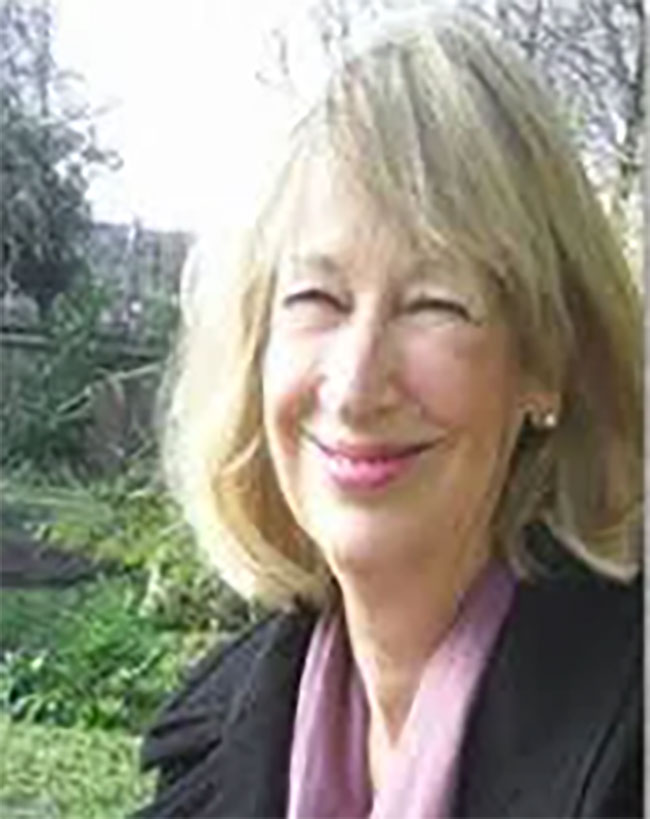
Clark
The Cistercians are asked to look into the death, perhaps because they are likely to get no cooperation from the Abbey folk, but perhaps because those in charge are keen to know what happened. And the infirmarer, an old monk, suggests Hildegarde talk to a man called Edred who worked for the bursar, and had been a friend of Aelwyn’s. But Edred too is killed, before he can keep an appointment he had made with Hildegarde, drowned in a pool near the farmhouse of the Abbey.
Meanwhile tensions arise between the fisherfolk and the abbey for the bursar wants to charge them for using the beach that technically belongs to the abbey to dry their fish and their nets. This leads to physical battles, when the guards used by the abbey, under the command it seems of the bursar whose determination to make money is not resisted by the abbot and the prior, try to storm the area where the fishermen live.
Hildegard finds out more about what had happened through two youngsters, one of whom Torold is the son of Aelwyn by a woman who worked as a prostitute for a cartel, and with whom Mark fell in love. The other works on the farm and had seen Edred meet someone near the pool, after which that someone left the place by himself. And the boy had also found in the pool a sort of dagger with the seal of the abbey.
He and his dog, and Torold who follows her, rescue Hildegarde from a man at arms who has waylaid her and tries to rape her earlier. Escaping into the abbey she was nearly been raped then by the bursar, but she managed to escape, in the process setting fire to him and the muniments room, which led, when he was rescued, to the discovery of a box with the money he said had been stolen, blame being cast on both Aelwyn and Edred.
Matters come to a head when the fisherfolk try to storm the abbey, being resisted by the men at arms stationed on the towers. But then Hildegarde realizes that behind the murders was the bursar’s clerk, whom she pursued to the cathedral. There is great drama then as she escapes from him when he tries to kill her, and then from the man at arms who had tried to both rape and kill her, but they both fall from the scaffolding she had climbed, the latter coming from a tower where he had been stationed.
Both of them think they run the rapacity of the abbey, the latter claiming to work for the nobles opposed to Richard, who is presented throughout the book as devoted to his subjects, not to power or money. But though the villains die, the bursar continues, having got over the hysteria the fire had caused and his acknowledgment then of guilt – and though the abbot and the prior seem less vicious, whether they will be able to assert themselves is questionable.
Before the climax, when the others in the guesthouse were leaving, Hildegarde found that two of them were in possession of the relic, for which they seem to have paid well. Hildegarde herself had made a derisory offer, but before she leaves the abbot gives her the relic, perhaps in gratitude for what she and her fellow Cistercians had discovered, the abbey having made as much money as it needed and more from the gullible other buyers.
Mark’s inamorata is saved from the stews because she moves in with Edred’s widow whom the bursar had thrown out of the rooms he occupied when her husband was found dead. Hildegarde had paid for lodgings, in a house run by the man who ran the brothels, but he had a kindly side and was going to finance them to make nets for the fishermen.
So, the Cistercians set off for their home as swiftly as they can to get there on the day of the Epiphany, having stopped en route to pray for King Richard whose birthday it was.

Rare pink diamond goes on display in France 100 years after amateur heist

Nursery owner in China jailed for life after hundreds of children poisoned

Pakistan, Sri Lanka look to find the right mix as World Cup countdown begins

Mumbai Indians and head coach Mahela Jayawardene part ways

Review of progress in reforms and modernisation of key state revenue-collecting institutions

Rose Bowl expanded to include Australia vs New Zealand T20Is

‘Dates have the highest sugar content to fight Coronavirus’

Sunday Island 27 December – Headlines

#SundayIsland 17th December – Headlines

Sunday Island – 28th March

Sunday Island Headlines – 21 March

Sunday Island – 21st February – Headlines
-

 News7 days ago
Sri Lanka escalates anti-graft drive with Shiranthi’s jailing
-

 News7 days ago
Iranian ships stranded, Lanka fears US sanctions
-

 Latest News6 days ago
Farhan and Sadaqat help Pakistan seal series in style
-

 Latest News4 days ago
Nissanka’s return headlines Sri Lanka’s Test squad against Pakistan
-
 Features6 days ago
Intake 16: 45 years of duty and honour
-
 News6 days ago
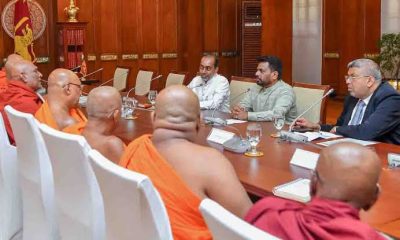
Malwathu Chapter issues statement on talks with President over Gnanasara Thera’s robes
-

 News7 days ago
Navi Pillay’s Lankan affairs in focus as she wins 2026 Nobel Peace Prize
-
 News6 days ago
CP alleges NPP has taken the blame for illegal US sanctions on Iranian vessels