
News
Ex-UN Assistant General Secretary won’t comment on ‘confidentiality clause’ preventing verification of war crimes allegations


By Shamindra Ferdinando
AFormer UN Assistant Secretary General and the author of ‘the report of the Secretary-General’s Internal Review Panel on UN action in Sri Lanka’ Charles Petrie has declined to explain why the UN deliberately thwarted verification of unsubstantiated allegations against Sri Lanka by way of a controversial confidentiality clause.
The Island raised the issue at a webinar titled ‘Sri Lanka: Quest for Justice, Rule of Law and Democratic Rights’ co-hosted by the Global Tamil Forum (GTF), Centre for Human Rights and Global Justice – New York University, Sri Lanka Campaign for Peace and Justice and the Canadian Tamil Congress (CTC). The webinar was part of a campaign against Sri Lanka undertaken by interested parties ahead of the 46th sessions of the Geneva-based United Nations Human Rights Council (UNHRC) scheduled to commence on Feb 22. The sessions will continue till March 23.
Asked whether the panelists could explain why a UN confidentiality clause prevented verification of war crimes allegations till 2031 and why a UN report prepared with the support of ICRC and Vanni based NGOs in 2008-2009 hadn’t been considered, former British diplomat Petrie said: “Just…the confidentiality issue… I’m not very…I would not be able to address.
Having declined to respond to the query, Petrie said that he would like to follow up on what former US Ambassador-at-Large for Global Criminal Justice A said in response to The Island query. Rapp who first responded to the query posed to the panelists through moderator Melissa Dring of Sri Lanka Campaign for Peace and Justice conveniently refrained from at least referring to the UN confidentiality clause or UN report that placed the number of persons killed at 7,721 (August 2008-May 13, 2009)
Petrie said that there were a lot of documents pertaining to war crimes accusations, including those of the UN. Petrie, one-time investment banker alleged that the then Sri Lankan government exploited an incident involving a UN convoy to set up No Fire Zone in the Vanni east region.
The group of panelists included Pablo de Greiff, a former UN Special Rapporteur, M.A. Sumanthiran, PC, MP, attorey-at-lawBhavani Fonseka of the Center for Policy Alternatives (PTA), Ameer Faaiz, Director of International Affairs of the Sri Lanka Muslim Congress, Ambika Satkunanathan, a former Commissioner of the Human Rights Commission of Sri Lanka and Shreen Saroor, a civil society activist.
Melissa Dring interpreted The Island query as denial of war crimes accusations, a strategy similar to that of the government of Sri Lanka.
According to the Panel of Experts’( Kangaroo court in any reasonable person’s rule book as Sri Lanka is prevented from, leave alone cross examining the accusers, but even to see their faces) Report released on March 31, 2011 even after the mandatory 20 year prohibition (2011-2031) on the releasing of material received of an assurance of absolute confidentiality, relevant information couldn’t be released without declassification review.
The following is the full text of the question forwarded to Dring: The alleged killing of 40,000 civilians (PoE report/137 paragraph/March 2011) remains the primary accusation against GoSL. The AI placed the number of deaths at 10,000 (a few months after PoE report), In between PoE report and the AI report, the UK Parliament was told 60,000 LTTE cadres and 40,000 civilians perished in the final phase of the assault ( Siobhain McDonagh, MP). In addition to those reports and various other claims, a UN study (Aug 2008-May 2009/POE/paragraph 134) estimated the number killed at 7,721 and wounded at 18,479. Can you please explain why UN failed to verify various reports/claims particularly against the backdrop of Lord Naseby’s disclosure in Oct 2017 (Lord Naseby’s claim was based on British HC diplomatic cables)
The following question addressed to Pablo de Greiff was not answered at all: You addressed issues relating to monitoring of international action and accountability. Can you, please explain the status/outcome of UN fact-finding mission on the Gaza conflict (Goldstone report) against the backdrop of the head of the mission contradicting his own report?
UK based Amal Abeywardena asked the panel about Sri Lanka not having confidence in the UN inquiring into LTTE atrocities and how could the international community probe violations on all sides, including those committed during JVP uprisings as well as the IPKF period and investigating the role of the supporters of the LTTE who supplied material resources to the Tigers when Human Rights violations were committed. Rapp who responded to the query conveniently side-stepped the accountability issues pertaining to the deployment of the Indian Army in Sri Lanka (1987-1990). A full recording of the live webinar can be found in this link: https://www.youtube.com/watch?v=0muPVjyF7E8


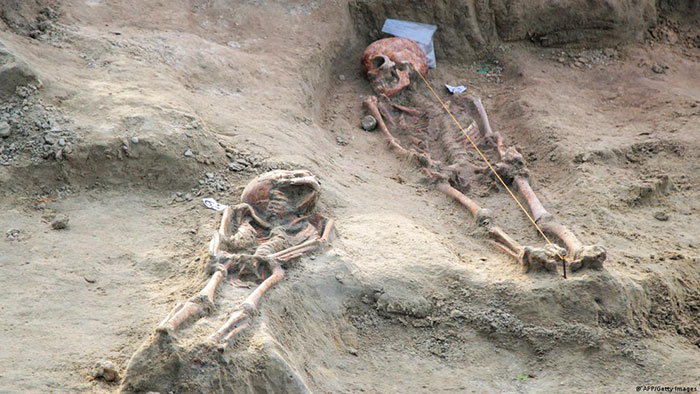
ECONOMYNEXT –International assistance for forensic analysis of the remains unearthed at the Chemmani mass grave will be sought when the need arises, Sri Lanka’s Minister of has Justice said after opposition legislators urged the government to seek help.
“We have spoken to embassies, we have made all the local finances necessary for excavation. But when it comes to DNA analysis, depending on the type and nature we will definitely have to go for internationally recognised places,” Harshana Nanayakkara said in response to a query in Parliament.
Nanayakkara said that request for international expertise is dependant on the direction the courts give on what needs to be done, after which they will decide which agency best suits the proceedings.
The minister also recognised that local expertise is lacking in the forensic department, and the need to train local staff with the help of international experts.
Opposition MPs argued that the present need is direct help in forensics from international entities, rather than the longer term need to train the staff on analysis.
Currently, the investigation is in the excavation and exhumation stage, conducted by archaeologist Raj Somadeva and his team.
The existence of the Chemmani mass grave was first brought to light in 1998, during the trial of the rape and murder of schoolgirl Krishanti Kumaraswamy.
In February 2025, construction workers found remains near the Sinthupathy Cemetery, and following investigations ordered by the Learned Magistrate, the mass grave was discovered.
412 bodies have been discovered, with 409 bodies recovered as of 23 June 2026. According to the Office on Missing Persons, this is the 17th recorded mass grave in Sri Lanka.

The Asian Development Bank (ADB) has approved a $57.4 million financing package to help Sri Lanka expand access to affordable clean energy and reduce greenhouse gas emissions through a large-scale rooftop solar aggregation and virtual net metering programme.
The financing comprises a $35 million concessional loan, $16.9 million in grants from the European Union and $5.5 million from the Japan Fund for the Joint Crediting Mechanism. With additional contributions from implementing agencies, the total estimated cost of the project is $80.5 million.
Under the Rooftop Solar Aggregation and Virtual Net Metering Project, two state-owned utilities — Electricity Distribution Lanka (Private) Limited and Lanka Electricity Company (Private) Limited — will introduce a scalable model to collect electricity generated from large rooftop solar installations and allocate the benefits virtually among eligible consumers.
The initiative will allow consumers to access solar power benefits without having to install individual rooftop solar systems.
ADB Country Director for Sri Lanka Shannon Cowlin said the project would broaden access to affordable renewable energy while strengthening the resilience and inclusiveness of the country’s power sector.
She said the initiative would also support grid modernisation and digital transformation, while creating employment opportunities and encouraging greater participation of women and youth in the clean energy sector.
The project is expected to benefit micro, small and medium enterprises and community organisations that face financial or space constraints in installing their own rooftop solar systems. Through a social compensation mechanism, eligible groups will receive reductions in electricity costs under the virtual net metering system.
The programme will support around 25 megawatt-peak of rooftop solar capacity while strengthening distribution networks, improving digital capabilities and preparing the national grid to accommodate higher levels of distributed renewable energy.
A dedicated training facility will also be established under the project to develop green skills, enhance women’s participation in the sector and build technical expertise in advanced low-carbon technologies.
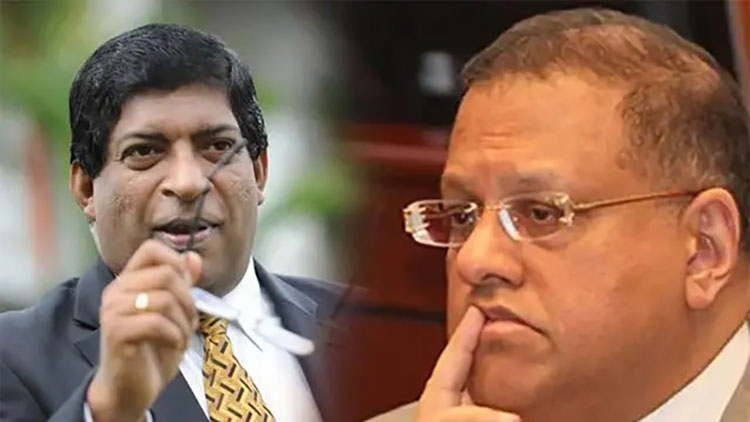
The Colombo High Court on Friday ordered that proceedings in the case filed against 11 defendants, including former Central Bank Governor Arjuna Mahendran and former Finance Minister Ravi Karunanayake, over alleged irregularities in the Central Bank bond auction be taken up again on July 22.
The case was called before Colombo High Court Judge Manjula Thilakaratne, who informed court that the Trial-at-Bar bench appointed to hear the matter had not been properly constituted.
Accordingly, the judge directed that the case be recalled on July 22 for further proceedings.
The Attorney General has filed indictments under the Public Property Act against 11 accused, including Mahendran, Karunanayake, Perpetual Treasuries Limited and its directors Arjun Aloysius and Geoffrey Aloysius.
The accused have been charged over alleged irregularities connected to a Treasury bond auction conducted by the Central Bank in March 2016.

Zafar, Feroza lead Pakistan to consolation win

Jangoo 233, Chase 194 put West Indies in commanding position

Showers will occur at times in the Western, Sabaragamuwa and North-western provinces and in Galle, Matara, Kandy and Nuwara-Eliya districts

Venezuelans dig for earthquake survivors as death toll rises to 1,430

Chemmani mass graves: Govt to seek international forensic help

ADB approves $57.4 million package to boost Lanka’s rooftop solar drive

‘Dates have the highest sugar content to fight Coronavirus’

Sunday Island 27 December – Headlines

#SundayIsland 17th December – Headlines

Sunday Island – 28th March

Sunday Island Headlines – 21 March

Sunday Island – 21st February – Headlines
-

 Features7 days ago
Sri Lanka developing independent hydrographic capabilities
-
 Opinion6 days ago
Ranasinghe Premadasa: The man who would not take ‘No’ for an answer
-
 News1 day ago
Another 1,132 Sri Lankan Personnel to be deployed for United Nations Peacekeeping Missions
-

 Latest News7 days ago
Sooryavanshi thumps fastest List A fifty as India A win tri-series
-

 Opinion5 days ago
Sri Lanka’s national security: Justice, reconciliation, and forward-looking vigilance
-

 News5 days ago
US Assistant Secretary of State for South and Central Asian Affairs meets President
-
 Opinion4 days ago
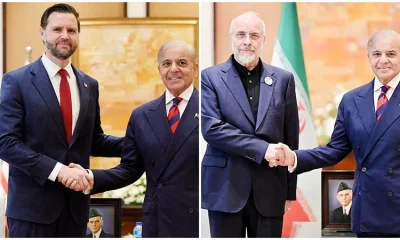
A triumph for Pakistan’s skilled diplomacy at Iran-US talks
-

 News3 days ago
Kelaniya emerges as highest ranked Lankan uni in Times Higher Education Sustainability Impact Ratings