
Business
Emirates ramps up global operations with restart of services to four destinations


Emirates has announced it will ramp up its global operations with the restart of services to four destinations, including: Bali (1 May), London Stansted (1 August), Rio de Janeiro (2 November), and Buenos Aires (2 November).
The airline has also announced it will boost services to Nigeria, Mauritius and Singapore to serve market demand. In line with the easing of travel restrictions worldwide, Emirates continues to rebuild and expand its global network to meet travel demand.
Emirates returns to Bali, London Stansted, Rio de Janeiro and Buenos Aires
Starting from 1st May, 2022 Emirates will operate five weekly flights to Bali, utilising a two-class Boeing 777-300ER aircraft. The airline will also scale up its operations from 1st July, 2022 to serve the island destination with a daily service. With its spectacular mountains, picturesque beaches and cultural appeal, Bali is considered to be a world leading tourist destination.
Starting from 1st August, 2022 Emirates will resume flight operations to London Stansted with five weekly flights, utilising Emirates’ Boeing 777-300ER aircraft fitted with the ‘Game Changer’ First Class product.
From 1st September, the airline will increase its services to offer a daily flight.
By October 2022, the airline will be serving the UK with 110 weekly flights, including: six times daily to London Heathrow; double daily A380 service to Gatwick; three times daily to Manchester, including a double daily A380 service (starting 1st October, 2022); double daily service to Birmingham; five weekly flights to Newcastle (with the fifth weekly flight starting from 1st July, 2022); and a daily service to Glasgow.

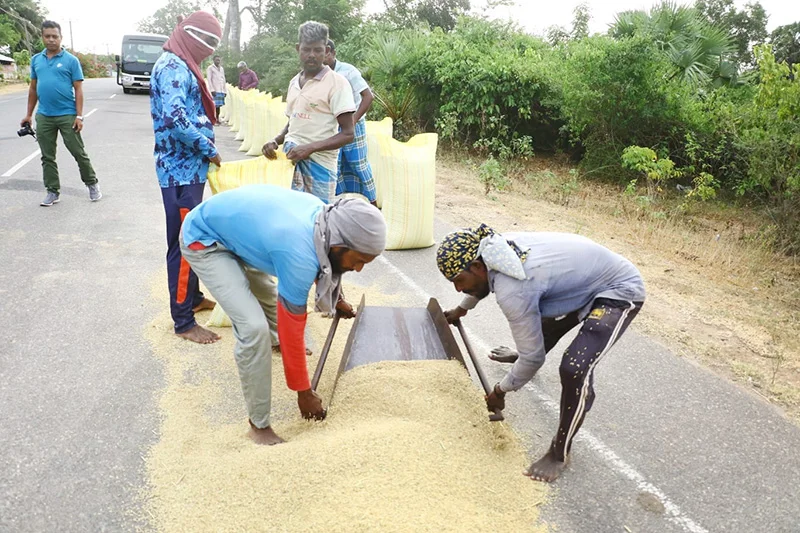
An economic analyst speaking to The Island Financial Review on the condition of anonymity, questioned the government’s structural priorities, calling the decision to purchase only two percent of the national buffer stock a glaring policy disconnect that leaves struggling paddy farmers vulnerable to a heavily consolidated private milling cartel.
The critique comes as the state celebrates an unprecedented domestic fiscal turnaround, registering massive budget surpluses and actively paying down its public debts. Yet, despite this robust fiscal space, the state’s direct intervention in the rural agricultural market remains profoundly meagre.
“When the government boasts an overwhelmingly strong fiscal position, it is entirely incomprehensible why it refuses to allocate sufficient capital to aggressively purchase paddy directly from the producers. The current allocation strategy artificially limits the state’s market-stabilising power, effectively abandoning debt-burdened farmers to the pricing whims of large-scale private millers who dominate the post-harvest supply chain,” he said.
This contentious market dynamic unfolds just as the Paddy Marketing Board (PMB) prepares to activate its Yala season procurement machinery. PMB Chairman Manjula Pinnalanda announced that state purchasing would commence today across early-harvesting zones including the Ampara and Ruhuna regions, alongside parts of the Mullaitivu and Trincomalee Districts in the Northern and Eastern Provinces. Operations across remaining cultivation areas are scheduled to launch on July 20.
The government has established baseline guaranteed rates for the harvest, fixing prices at Rs. 120 per kilogram for Nadu, Rs. 130 per kilogram for Samba, and Rs. 140 per kilogram for Keeri Samba. To facilitate the rollout, the Treasury has disbursed a direct cash allocation of Rs. 6 billion to the PMB, supplemented by a secondary Rs. 10 billion concessionary pledge loan scheme channeled through state banks to assist small and medium-scale mill owners and eligible co-operatives.
However, the analyst pointed out that while the set prices look reasonable on paper, the state’s limited capital allocation severely restricts its actual buying capacity. Because the PMB absorbs only 2% of the national yield, the official floor price will fail to act as a safety net, leaving a vast majority of smallholder farmers unable to access state granaries and will be forced to sell their crop to private commercial buyers below production costs.
“The tight-fisted approach to agricultural procurement stands in stark contrast to the stellar macroeconomic numbers flashing across the Central Bank’s latest reports. During the first five months of 2026, Sri Lanka’s domestic fiscal consolidation reached historic heights, driven by a 30.6 percent surge in government revenue and grants to Rs. 2,536.9 billion. Tax revenues alone ballooned to Rs. 2,323.7 billion, fueled by rigid enforcement and an expanded collection matrix. With the commercial bank middle rate settling at Rs. 335.90 per USD. For the farming community, this currency slide has manifested as an immediate escalation in the cost of fertiliser and pesticides. Although the wider economy maintains a degree of stability via strong workers’ remittances and healthy gross official reserves of US dollar 6,450 million, the microeconomic reality in the fields remains tense,” he said.
The analyst warned that treating the agricultural sector with fiscal austerity while the Treasury sits on a surplus is a dangerous gamble.
By Sanath Nanayakkare
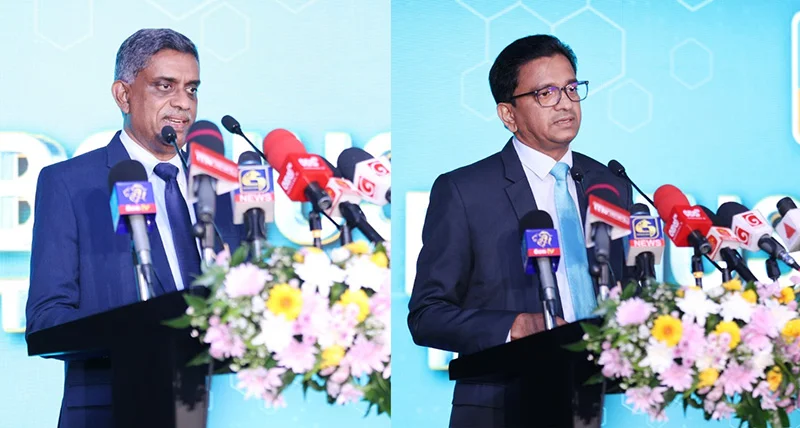
Sri Lanka Insurance Life (SLICLL) has set a new benchmark in the domestic insurance sector by declaring a record-breaking Rs. 14.68 billion bonus to its policyholders for the financial year 2025.
This milestone represents the highest annual life insurance bonus ever declared in the history of the Sri Lankan industry. It also pushes the company’s cumulative bonus distributions since 2006 to an unmatched Rs. 131.28 billion, reinforcing its market-leading position and financial reliability.
The unprecedented payout is backed by a robust financial performance in 2025, during which the insurer navigated evolving macroeconomic conditions with notable resilience. By the end of the year, SLICLL’s total asset base expanded to Rs. 275 billion, while its Life Fund grew to Rs. 247 billion, retaining its status as the largest life fund in the country. The company’s profitability remained strong with a Profit Before Tax of Rs. 4.3 billion.
Growth metrics were equally impressive; Gross Written Premium (GWP) rose 24% year-on-year to Rs. 32.6 billion, and New Business Premium Income surged 42% to reach Rs. 7.56 billion. Demonstrating its commitment to policyholder liquidity, the firm settled approximately Rs. 16.2 billion in claims and maturities throughout the year, averaging over Rs. 1.35 billion monthly.
Beyond financial metrics, SLICLL prioritized customer centricity and digital transformation alongside substantial community investments. Guided by its foundational corporate social responsibility framework, the company’s ‘Pasal Piriyatha Surakimu’ initiative has refurbished over 3,365 underprivileged schools since 2007. Furthermore, its ‘Suba Pathum Scholarship Programme’ has granted over Rs. 240 million to exceptional students since 2014, including 225 scholarships awarded in 2025 alone.

The Sri Lanka Institute of Directors (SLID) will host the Sri Lanka Corporate Director Summit 2026 on 22 July at Cinnamon Grand Colombo, placing future-ready boards at the centre of corporate governance reform.
Under the theme of building boards that can navigate disruption and drive sustainable growth, the one-day forum will move beyond traditional compliance discussions. It will focus on how directors can become strategic leaders in technology oversight, talent development, reputation management, and long-term value creation.
Key sessions include “Governing AI, Cybersecurity & Digital Risk,” “Trust is Capital – Why Reputation is a Boardroom Issue,” and “Talent and Culture — What Boards Can No Longer Ignore.” A keynote address will draw lessons from India and other emerging markets on transitioning from compliance to competitive advantage.
Chairman Dinesh Weerakkody stressed that boards must treat governance as a strategic tool for resilience and investment attraction. CEO Anitra Perera noted that the summit marks SLID’s 25th anniversary and its commitment to strengthening board leadership. Summit Chair Charaka Perera and Technical Chair Sutheash Balasubramaniam highlighted the need for directors to anticipate disruption and think further ahead.
The event, held in partnership with Deloitte Sri Lanka and knowledge partners CPA, Ma Foi, and the University of Buckingham, is expected to set new benchmarks for board effectiveness in Sri Lanka’s corporate sector.

Qatar’s Father Emir Sheikh Hamad bin Khalifa Al Thani laid to rest in Doha

Brendon McCullum removed from post as England Men’s Test coach

Yastika century, seamers put India on the brink of historic win at Lord’s

Showers will occur in the Sabaragamuwa, Western and North-western provinces and in Kandy, Nuwara-Eliya, Galle and Matara districts.

JSA opposes move to extend retirement ages of superior court judges

Next two weeks critical as dengue risk soars

‘Dates have the highest sugar content to fight Coronavirus’

Sunday Island 27 December – Headlines

#SundayIsland 17th December – Headlines

Sunday Island – 28th March

Sunday Island Headlines – 21 March

Sunday Island – 21st February – Headlines
-

 News3 days ago
Herath warns prospective migrant workers not to get fleeced by racketeers
-

 Midweek Review5 days ago
Unexpected focus on ‘pieces of tin’ worn by military men
-

 Features1 day ago
Prison riots and politics: NPP’s biggest challenge and Sri Lanka’s biggest opportunity
-

 Latest News6 days ago
Nyamhuri and Ngarava stun Bangladesh by defending 141
-

 Editorial2 days ago
What’s the world coming to?
-

 News4 days ago
Negombo Prison riot: Ensuring protection of prisoners fundamental responsibility of the state – UN
-

 Features3 days ago
Devanesan Annan – in Memoriam
-

 Foreign News3 days ago
Tensions erupt in Indian state after 11-year-old raped and murdered