
Sports
Danil Thisararachi’s rise to National Sports Festival’s best boxer

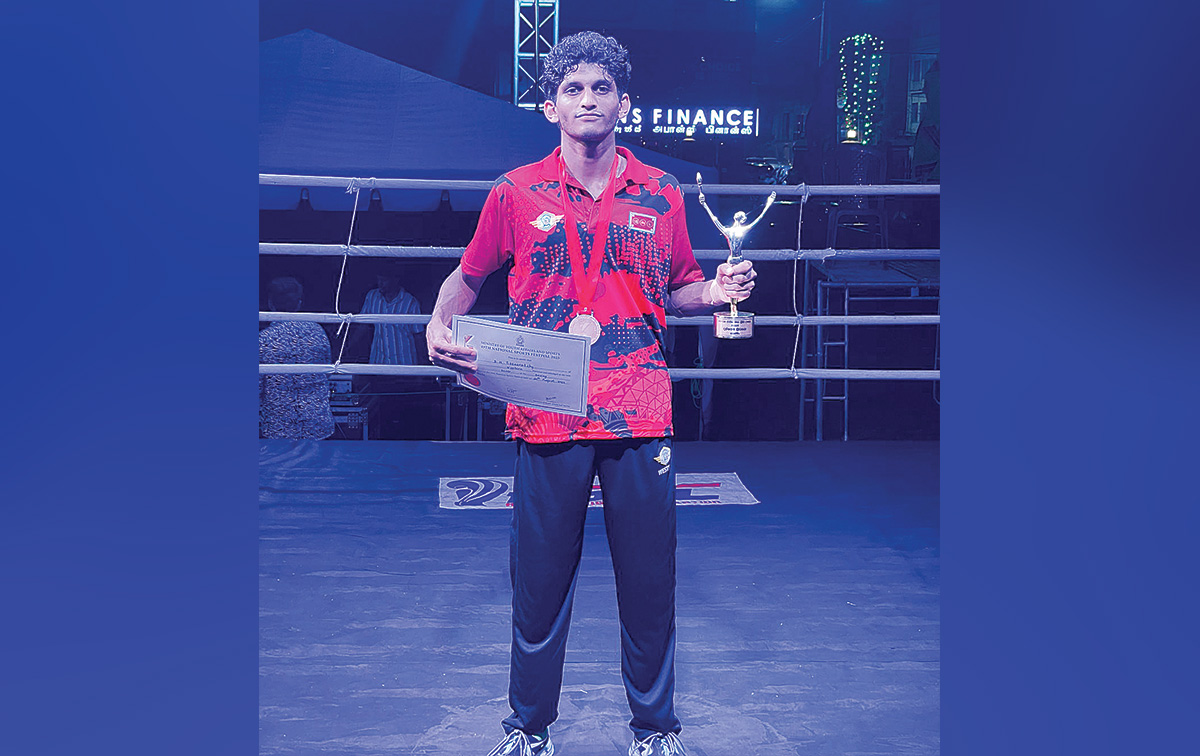
When Danil H Thisararachi had his hand raised as Best Boxer at the National Sports Festival 2025, winning gold in the minimum weight category, it felt like confirmation rather than surprise. The National Sports Festival is widely regarded as an elite stage for many sports in Sri Lanka, boxing included, and Danil owned it. For a young athlete who only laced up gloves at 20, his ascent has been brisk, deliberate and deeply impressive.
A product of St Peter’s College, Colombo, Danil’s first sporting love was football. The rhythms of midfield play and the camaraderie of a team defined his school years, until curiosity and a competitive itch drew him through the doors of ‘Back 2 Fit’, a private boxing club that has quietly rewritten assumptions about where champions come from. In a landscape where many title-winners emerge from service teams, ‘Back 2 Fit’ has shown that a high-performance culture can flourish outside the barracks.
Under coaches Gihan Maduwantha and Manul Lakshitha, both former boxers and graduates of the Sports Science and Management programme at the University of Sri Jayewardenepura, Danil found not only mentorship but method. Sessions were planned with a scientific eye: periodised conditioning, targeted strength work to complement speed, and endless rounds of drills that turned raw promise into ring craft. The result has been a résumé that lengthens almost monthly, and a style that blends economy of movement with a jab-first discipline.
The breakthrough year was 2023. Danil won gold at the Novices, then swept the Intermediate Championships with gold and the Best Boxer award, signalling to the wider community that he was not merely progressing, he was setting the pace. He also took silver at the Nationals, collecting the Best Loser distinction, a quirk of the competition that nonetheless underscored his place among the top tier.
Momentum carried into 2024: gold at the Clifford and gold again at the Nationals, evidence of consistency across formats and fields. In 2025 he capped the run with the National Sports Festival double, gold and Best Boxer, the cleanest possible statement on the biggest domestic platform. That string of results reads like a ladder with no missing rungs: Novices 2023 (Gold); Intermediate 2023 (Gold, Best Boxer); Nationals 2023 (Silver, Best Loser); Clifford 2024 (Gold); Nationals 2024 (Gold); National Sports Festival 2025 (Gold, Best Boxer).
What makes Danil’s story resonate is the route he took. He did not benefit from formal boxing at school; he switched codes as an adult and endured the humbling start that comes with it, learning to sit down on punches, to move off the line, to win exchanges with feet as much as fists. That transition is never simple, yet he embraced it with a craftsman’s patience. The result is a fighter who wastes little, keeps his shape under pressure, and wins rounds through tempo and timing rather than brawling.
There is, too, a broader significance. Danil’s success challenges the notion that elite Sri Lankan boxing is the preserve of service teams. Back 2 Fit’s model, academically informed coaching, disciplined culture, and athlete-centred planning, has expanded the sport’s talent pipeline. If that continues, boxing benefits: more pathways, more competition, higher standards.
Ambition now extends beyond national glory. Danil wants to become a Commonwealth and Olympic boxer, and the next 18 months will be decisive: stronger international sparring, targeted competitions, and qualification campaigns that reward both fitness and finesse. As Coach Maduwantha put it, “The journey is just beginning. Our goal is to bring a medal at the 2026 Commonwealth Games.” That objective demands marginal gains, from nutrition and recovery to data-led analysis of opponents, but Danil’s trajectory suggests he is comfortable living in the details.
For young athletes, Danil’s rise offers a clear lesson: it is possible to start late, to change lanes, and to climb quickly if the work is smart and the will is steady. For Sri Lankan boxing, it is a reminder that excellence thrives where opportunity and method meet, whether or not there is a uniform on the peg.


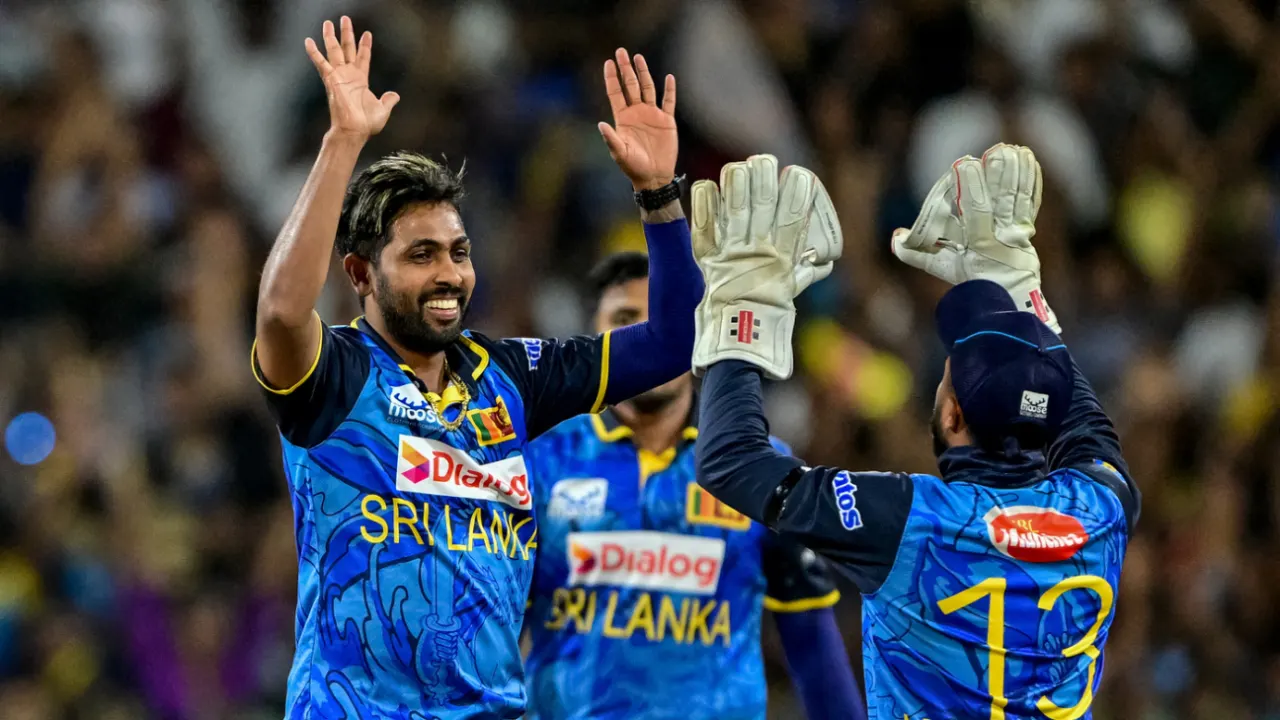
Medium pacer Nuwan Thushara is among 46 men’s cricketers awarded national contracts by Sri Lanka Cricket (SLC), after he withdrew the legal case he had filed against the board in April.
Thushara’s inclusion indicates a re-setting of his relationship with the board. The bowler had objected to SLC making a fitness test a requirement for the board granting him a No-Objection Certificate to play franchise cricket overseas. But since the board members whom he had been at a loggerheads with were ousted en-masse by the Sri Lankan government, Thushara decided to withdraw his case.
He had then written to the new administrators at SLC, announcing his eligibility for national selection, which the new Transformation Committee has since accepted.
Also in the contracts list are Jaffna legspinner Vijayakanth Viyaskanth, ambidextrous spinner Tharindu Rathnayake, batters Kamil Mishara and Lasith Croosepulle,and allrounders Isitha Wijesundera, Wanuja Sahan and Dilum Sudeera, who have all been included for the first time. Batter Bhanuka Rajapaksa was not awarded a contract, though he had played domestic cricket in Sri Lanka earlier this year.
There are otherwise no major surprises in what is a substantial roll of cricketers. The list features players such as Dinesh Chandimal and Kasun Rajitha, who primarily play Tests, as well as limited-overs specialists like Binura Fernando.
The SLC release said the players had been graded into six different categories, but did not divulge which players were in which category. The period of the contract runs from April 1, 2026 to March 31, 2027.
Men’s national contracted players
Kusal Mendis, Dhananjaya de Silva, Dinesh Chandimal, Wanindu Hasaranga, Pathum Nissanka, Charith Asalanka, Kamindu Mendis, Dushmantha Chameera, Asitha Fernando, Dasun Shanaka, Maheesh Theekshana, Janith Liyanage, Dunith Wellalage, Niroshan Dickwella, Jeffrey Vandersay, Prabath Jayasuriya, Vishwa Fernando, Matheesha Pathirana, Dilshan Madushanka, Pavan Rathnayake, Eshan Malinga, Milan Rathnayake, Lahiru Kumara, Kasun Rajitha, Avishka Fernando, Sadeera Samarawickrama, Ramesh Mendis, Kamil Mishara, Binura Fernando, Nuwan Thushara, Sonal Dinusha, Sahan Arachchige, Pramod Madushan, Lasith Croospulle, Lahiru Udara, Nuwanidu Fernando, Vijayakanth Viyaskanth, Isitha Wijesundara, Nishan Madushka, Akila Dananjaya, Chamika Karunaratne, Pasindu Sooriyabandara, Mohammed Shiraz, Wanuja Sahan, Dilum Sudeera, Tharindu Rathnayake
[Cricinfo]
No Sri Lanka Cricket (SLC) representative was invited to the ICC’s quarterly meeting in Ahmedabad over the weekend, but the fact that the ICC board has not slapped sanctions on SLC’s new Transformation Committee is being quietly celebrated by the new board in Sri Lanka, a board member said.
The Transformation Committee was appointed by the nation’s government in May, replacing the elected set of SLC office-bearers. The ICC had taken a dim view of government interference in SLC in 2023, as well as in 2015, imposing sanctions on each of those occasions.
But athough the ICC had sent deputy chair Imran Khwaja on what was effectively a fact-finding trip to Colombo in May, no sanctions attributed to government interference have followed, even after the latest ICC meeting.
“So far what we feel is that no news is good news,” said a Transformation Committee member. In late 2023, the ICC had suspended SLC from its board due to government interference. On that occasion, the country’s sports minister was accused of overreach.
The latest, sweeping administrative changes in Sri Lanka, which includes the ousting of the elected board and the installation of a committee tasked ostensibly with transforming Sri Lankan cricket, have so far only drawn ICC scrutiny rather than tangible consequences. The ICC statement said only this: “In Sri Lanka, ICC Deputy Chair Imran Khwaja and Devajit Saikia (BCCI) have visited and met with relevant stakeholders to assess ongoing developments.”
The Transformation Committee headed by Eran Wickramaratne has repeatedly expressed that its goal remains to rewrite an outdated SLC constitution, in order to better align the organisation with the requirements of Sri Lanka’s public.
“Even in the debates in parliament, which were not driven by party loyalties, it has been acknowledged that there has to be a change at Sri Lanka Cricket,” said Wickramaratne, chair of the new Transformation Committee and a former politician. “The job we have is to change the SLC constitution. The stakeholders in that change are the Sri Lankan people. The people can give their ideas. Other stakeholders can also express their ideas. We thought our first role is to listen to those ideas.”
SLC hopes Transformation Committee members will be invited to future ICC meetings.
ESPNcricinfo has reached out to the ICC for comment on SLC participation in meetings, but the ICC is yet to respond.
[Cricinfo]
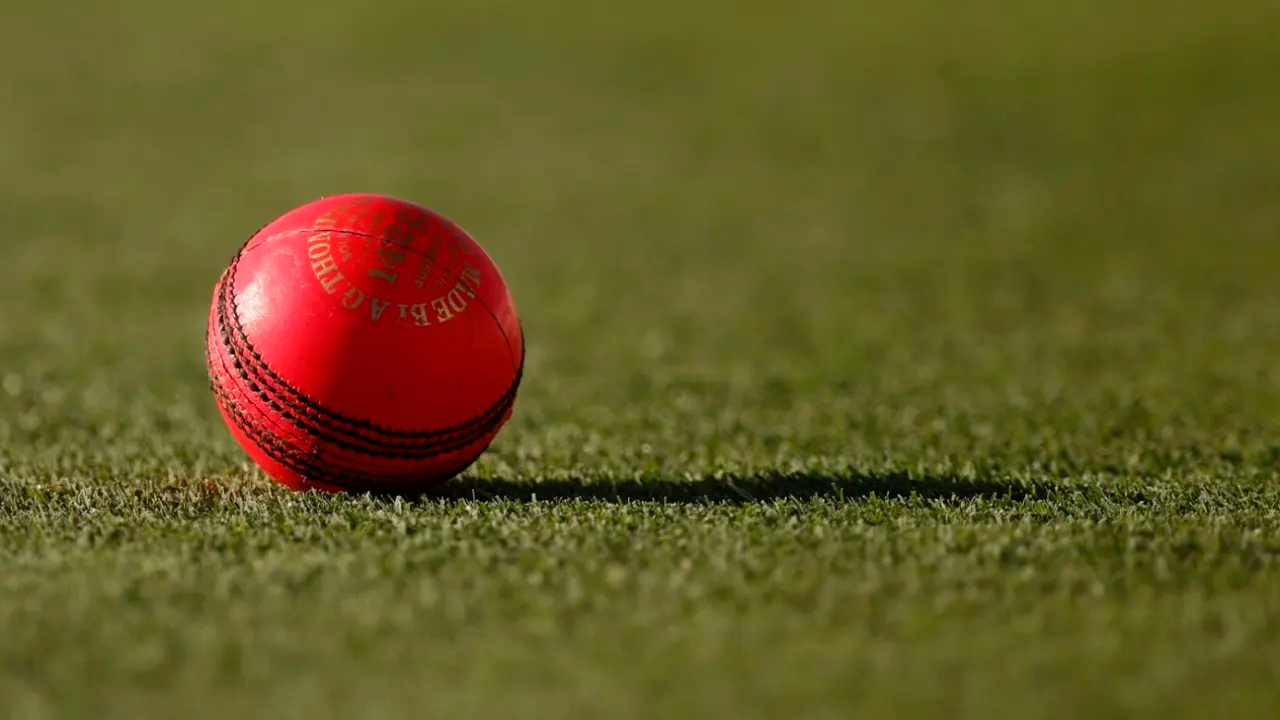
In an attempt to reduce the impact of bad light on Test matches, the ICC has approved a trial of switching from a red ball to a pink ball before the start of a Test that is likely to be affected by bad light, subject to the prior agreement of both participating teams.*
The decision was one of several recommendations from the Chief Executives Committee that were approved by the ICC Board at a meeting in Ahmedabad on Sunday. Until now pink balls were used exclusively in day-night Test matches, which are also regularly played largely in Australia and no where else, but the trial of changing from a red ball to a pink ball during a day Test seeks to allow play to continue under lights and minimise the time and overs lost to bad light.
It is understood that the process for the playing conditions to take effect won’t be in place in time for the series between England and New Zealand from June 4. The ICC also said it would undertake research “on lighting technology for match officials and venues to reduce lost play due to poor light, with ICC co-funding R&D projects alongside Marylebone Cricket Club (MCC).”
The ICC board also approved a recommendation that will allow head coaches – or designated staff – to enter the field of play during scheduled drinks intervals and consult with their players in ODIs and T20Is. This was not permitted in international cricket – messages could only be relayed by the players running drinks – but has been a feature in franchise T20 leagues like the IPL, where coaches interact with their players during strategic timeouts.
In T20I internationals, the ICC said the break between innings would be 15 minutes, and batters would be required to be ready at the resumption of play.
In 2025, the ICC had begun trials to give bowlers leeway down the leg side for wide calls, and it has decided to permanently adopt the practice of using guide lines to help umpires adjudicate wides down the line side, especially when a batter is moving around his crease.
And in the case of suspect bowling actions, the ICC said it would help match officials access Hawk-Eye data when considering whether to report a bowler.
[Cricinfo]

Nuwan Thushara among 46 men’s cricketers to be awarded SLC contracts

Pakistan naval trio arrives at Colombo Port

Sri Lanka Cricket relieved at ICC’s mild response to Transformation Committee

ICC approves red-to-pink ball change to reduce bad-light impact in Test cricket

LPL introduces impact subs for 2026 season

Protesters call on Kenyan government to halt femicide crisis

‘Dates have the highest sugar content to fight Coronavirus’

Sunday Island 27 December – Headlines

#SundayIsland 17th December – Headlines

Sunday Island – 28th March

Sunday Island Headlines – 21 March

Sunday Island – 21st February – Headlines
-
 News4 days ago
IMF urges Lanka not to meddle with exchange rate
-
 Business5 days ago
Sri Lanka’s construction industry losing ground while no one watches
-
 News4 days ago
State of emergency extended
-
 Business2 days ago
IMF’s unstated rate:Sri Lanka’s $695m loan costs about 5.33% per annum
-
 Midweek Review7 days ago
Israeli-US aggression won’t go unanswered -Iranian Ambassador
-

 Features5 days ago
The Division Bell Mystery
-

 News2 days ago
UNP challenges NPP move to amend Vihara – Devalagam Act
-
 News6 days ago
RTI query of Ditwah funds: Presidential Secretariat mum on key questions