
Latest News
Sri Lanka left chasing shadows after Asia Cup nosedive

BY REX CLEMENTINE
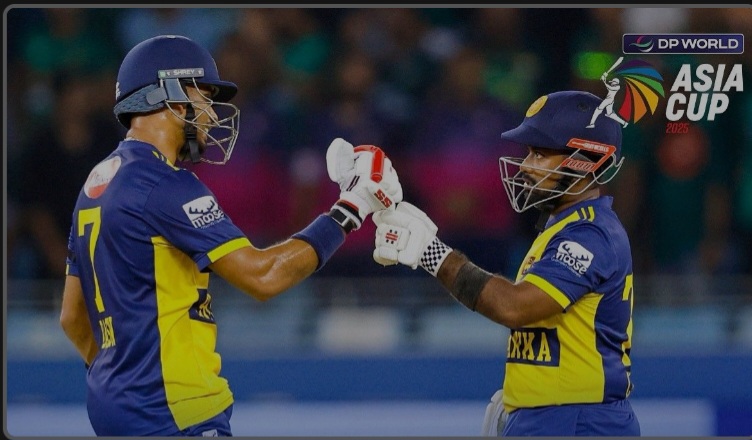
Sri Lanka’s Asia Cup dream came crashing down after back-to-back defeats to Bangladesh and Pakistan, leaving their final Super Four clash against India in Dubai on Friday a dead rubber.
Muddled Planning, Misplaced Reliance
Sri Lanka’s planning has been muddled for some time, particularly in T20 cricket, their weakest format. Too often, they field all-rounders who “bat a bit and bowl a bit”, rather than trusting specialists. On batting-friendly decks where the ball doesn’t grip, those options get exposed.
At home, where spin assists, the all-rounders chip in. Abroad, it unravels. Instead of four genuine bowlers and part-time support, Sri Lanka regularly field only three front-liners, piling pressure on the rest.
The batting blueprint is just as fragile. Reliant on openers to provide momentum, the middle order struggles once they fall early.
“Spin play must sharpen”
Former international Russel Arnold, now on commentary duty, pointed to Sri Lanka’s struggles against spin as a glaring weakness.
“In the group stage we handled Afghanistan’s spinners well. But overall our play against spin must sharpen. Against Pakistan, we managed only eight runs off Abrar Ahmed’s four overs — that simply won’t cut it.”
Lessons Ahead of Tougher Tests
Sri Lanka’s struggles extend beyond spin. Strike rates are a concern, with too few batters touching 130, while India boast multiple players cruising at 140 and beyond. The former champions return home on Saturday after facing India, with urgent soul-searching on the agenda. A bilateral series against England and a tri-nation event with Pakistan and Afghanistan loom as crucial preparation ahead of the World Cup.
For Sri Lanka, the first order of business will be to nail down the right combination and find batters capable of not just surviving spin, but milking it. Unless they get their house in order, they risk showing up at the World Cup with little more than hope.


India suffered a potential injury scare ahead of the Test series in Sri Lanka, with their No.3 B Sai Sudarshan retiring hurt on 7 while playing for India A against Sri Lanka A during the third day of the first four-dayer in Galle. After scoring a century in the first innings, Sai Sudharsan retired hurt in the fourth over of India A’s second innings. By the end of the day’s play, however, India A had stretched their lead to 170.
Chhattisgarh opener Aayush Pandey and Devdutt Padikkal were unbeaten on 20 each at stumps.
India A had claimed a first-innings lead of 122 after dismissing Sri Lanka A for 330 in their first innings. Resuming from an overnight 113 for 2, they were guided by half-centuries from captain Sahan Arachchige (72) and Ashen Bandara (70). Nuwandi Fernando, who had passed his own fifty on day two, had his innings cut short on 84 on day three.
For India A, Auqib Nabi, who was the top wicket taker in the previous Ranji Trophy season and was a net bowler during India’s one-off Test against Afghanistan in New Chandigarh, was the pick of the bowlers, returning 4 for 58 in 19.4 overs. Sri Lanka A lost their last five wickets for 30 runs, with Nabi taking four of those.
Left-arm fingerspin-bowling allrounder Harsh Dubey and Vidarbha fast bowler Yash Thakur picked up two wickets apiece. India A then closed out the day on 48 for 0.
Scores:
India A 48 for 0 in 17 overs (Devdutt Padikkal 20*, Ayush Pandey 20*) and 452 for 6 dec in 111.4 overs [Sai Sudarshan 132, Dhruv Jurel 141, Shaik Rasheed 63; Chamika Gunasekera 3-64, Dilum Sudeera 2-143] lead Sri Lanka A 330 in 101.4 overs (Nuwanidu Fernando 84, Ashen Bandara 70, Sahan Arachchige 72; Aaqib Nabi 4-58, YashThakur 2-51, Harsh Dubey 2-84) by 170 runs
[Cricinfo]
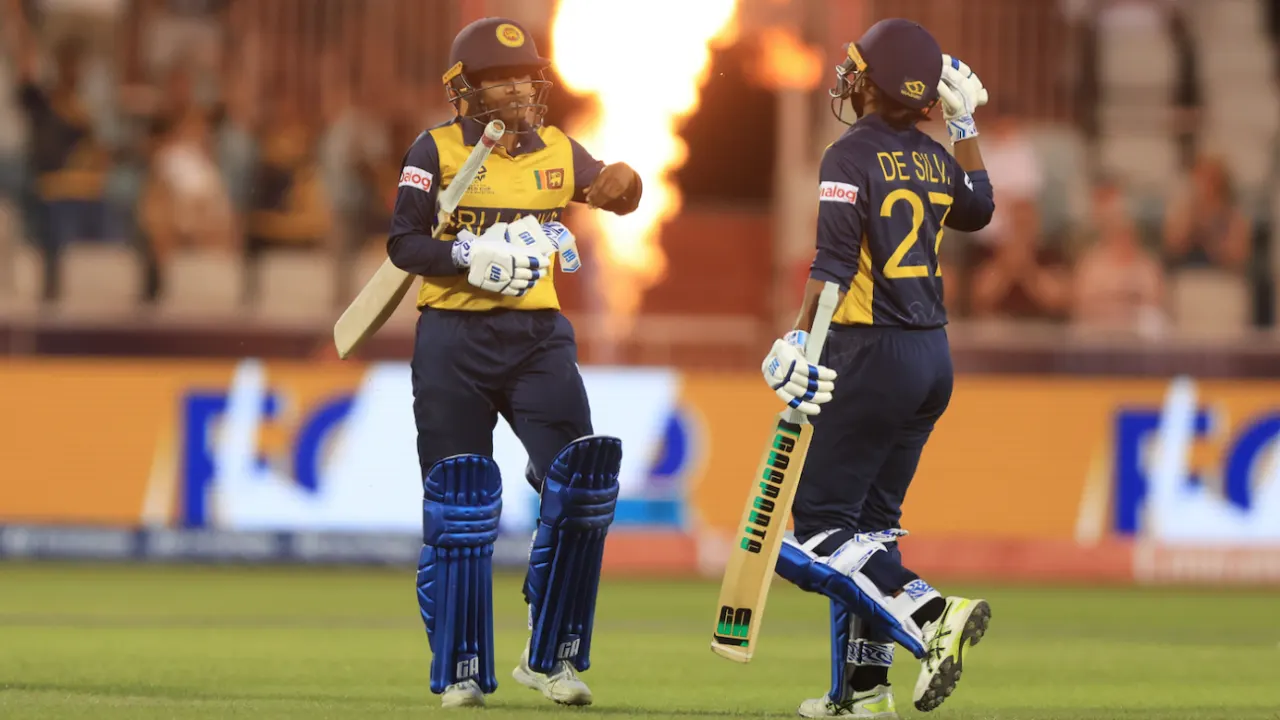
Teams that finished in the top four of each group at the ongoing T20 World Cup have secured their spots for the next edition of the tournament in 2028. From Group 1, Australia, India, South Africa and Bangladesh have qualified. England, West Indies, New Zealand and Sri Lanka join them from Group 2. Pakistan qualified as a result of being the tournament hosts; they finished fifth in the Group 2 table with just one win in five games.
Scotland missed out on a chance to directly qualify for the 12-team ICC event after losing to Sri Lanka on Friday.
The 10th spot will go to the next highest-ranked team on the T20I rankings table at the July 6, 2026 cut-off. As it stands, Ireland, ranked ninth, fill that spot. The remaining two places will be determined through a 10-team global qualifier, which will be supported by regional qualifiers.
Netherlands, ranked 14th, are likely to have to play in the qualifier to make the main event. So too Scotland (11th) and Ireland (9th) if they fall too far down the table.
The ICC also made a decision on the composition of teams at the inaugural Women’s Champions Trophy, to be held next year in Sri Lanka. The hosts will be joined by the top five teams on the T20I rankings at the same July 6 cut-off. As it stands, the teams at the tournament will be Australia, England, India, New Zealand and South Africa.
[Cricinfo]
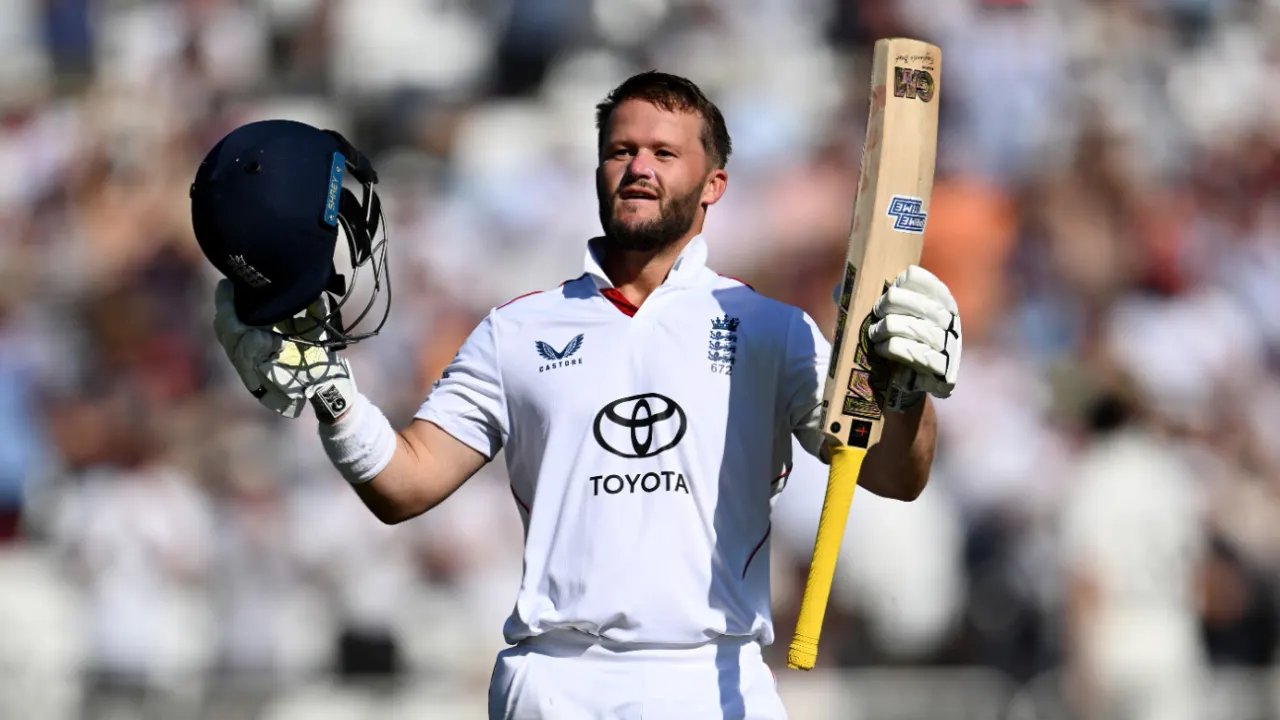
As well as things had gone for New Zealand on day one at Trent Bridge, they went badly on day two. England, led by a four-wicket haul from Ben Stokes, completed their turnaround with the ball to cap the visitors at 438 – having been 317 for 0 – and Ben Duckett then rattled off his first international hundred in more than a year to launch the reply.
Duckett was given a life on 8, dropped in the slips by Henry Nicholls, but went on to form a second-wicket partnership worth 179 at exactly a run a ball with Jacob Bethell, who was eyeing a hundred of his own by the close of another scorching day in Nottingham.
New Zealand’s problems were compounded by a concussion suffered by Blair Tickner, who was struck on the side of the helmet by Jofra Archer while batting and, despite initially being cleared to continue and delivering a three-over spell before tea, did not emerge for the evening session. He was eventually replaced by Zak Foulkes.
With Tickner, Mitchell Santner and Ben Sears – the three changes from New Zealand’s victorious XI at The Oval – all leaking runs at upwards of five an over, things began to unravel for the tourists. When Duckett brought up an 88-ball hundred midway through the evening session, the game had almost completely flipped in trajectory from 24 hours earlier, when Tom Latham and Devon Conway were amassing 150s during their triple-century opening stand.
Having taken two wickets with the last two balls on day one, England continued their fightback on the second morning. Stokes claimed three in the session during an eight-over spell, as New Zealand’s middle order struggled to build on the foundation laid for them, before two in an over from Shoaib Bashir helped wrap the innings up.
It meant New Zealand had suffered a collapse of 10 for 121 and their total of 438, while respectable, was nevertheless the third-lowest in Test history for any innings featuring a 300-run partnership – behind England’s 407 against India at Edgbaston last summer, and the 431 made by West Indies at Sabina Park in 1999 – and the lowest when those runs had been scored by the openers.
England’s momentum was briefly checked when Will O’Rourke had Emilio Gay caught down the leg side for a five-ball duck in the second over. They should have been 8 for 2 when Nathan Smith found Duckett’s outside edge, only for Nicholls to make a hash of the catch at third slip.
Duckett, who had twice drilled Smith for fours in his opening over, was in the mood to make New Zealand pay for such generosity. His next ball also disappeared through the covers, and he used the knowledge of his home ground to good effect, cutting, pulling and clipping his way to ten boundaries in a 40-ball fifty.
With Bethell recovering from a scratchy start against O’Rourke and the probing Smith, England went on to make New Zealand sweat in the field in much the same way they had through two-and-a-half sessions on day one.
Runs flowed in the passage after tea. Santner wasn’t allowed to settle, picked off for five boundaries in his first four overs by Duckett – although one of those, a thick outside edge, might have been held by Daryl Mitchell at slip had he not been stood so wide. From the other end, Sears was pulled and driven by Bethell, leaking 23 runs from three overs as England raced into three figures.
Latham was forced to go back to O’Rourke and, while Santner began to find some rhythm in his first Test appearance in ten months, Bethell worked him leg side for a single to bring up his first half-century in a home Test – and first such score in the first innings, having made all of his previous four in the second dig.
Duckett was by now in the 90s and quickly homed in on the milestone, his seventh hundred in Tests and first since the India series last year – ending a barren run of 22 innings in which he had only passed 50 three times. It was also his fourth 50-plus score in four innings at his home ground and although he was bowled shortly after, dragging on against Smith, Joe Root joined Bethell to steer England to the close two down.
New Zealand had added 77 to their overnight 361 for 4, Blundell’s 30 the only score of note as they fell well short of 500 – a total that looked all but inevitable when Latham and Conway were cashing in after opting to bat in baking conditions. Their frustration at being pegged back perhaps added to a sense of grievance around the dismissals of Mitchell and Santner, with both given out by the third umpire, Adrian Holdstock, after reviews.
The mercury was still rising on the second morning, with temperatures in the mid-30s C again forecast. New Zealand made a largely circumspect start in the knowledge that another long day in the field for England would only strengthen their hand in this deciding Test – only for Stokes to once again wrest the game his way during a tenacious spell with the ball.
O’Rourke, the nightwatcher, provided the main impetus for New Zealand inside the first hour as he advanced to his highest score in first-class cricket – beating the 17 not out he had made for Canterbury against Otago in March 2023. He managed boundaries off Archer, Josh Tongue and Stokes, comfortably eclipsing his previous Test best of 5 not out – and England then fluffed their first chance of a breakthrough as Jamie Smith dived across first slip in pursuit of a thick outside edge, but only managed to fingertip the ball out of Root’s grasp.
Stokes, already a shade of beetroot, threw his arms up in anger but bent himself to the task and extracted Mitchell an over later. Umpire Nitin Menon did not initially grant the appeal as Stokes nipped one past the bat, but UltraEdge detected a feather of an outside edge; Mitchell, however, seemed to think the sound was his bat hitting his front pad as he pushed forward.
O’Rourke was dismissed after the drinks break without having added to his score, and Stokes then chipped out his third of the session, and 250th in Tests, when Santner ducked into a bouncer and ballooned a catch to Bethell in the gully. Santner reviewed, gesturing that the ball had struck him on the arm guard. But Holdstock, in the TV umpire seat, took barely 30 seconds to examine one front-on replay before concluding that there was also contact with the strap of his glove, and upholding the on-field call.
After lunch, Bashir bounced back from dropping Blundell at deep backward square leg – a tough chance off Archer, but one he should have held having made up the ground. Archer’s chagrin appeared to extend to not joining the huddle to celebrate Bashir’s breakthrough a few balls later, when Smith drilled a return catch back – at least until Stokes made a point of calling the fast bowler up from fine leg.
Bashir made it two in four balls when Blundell missed a reverse-hoick at a delivery from round the wicket, which ball-tracking showed had pitched in line on review. With Nos. 10 and 11 at the crease, Archer had Tickner ducking and diving before delivering a full, straight one to pin Sears in front of leg stump first ball.
Scores:
England 223 for 2 in 45 overs (Ben Duckett 113, Jacob Bethell 74*) trail New Zealand 438 in 114.5 overs (Tom Latham 151, Devon Conway 157; Ben Stokes 4-70) by 215 runs
[Cricinfo]

Cape Verde break record as smallest nation to reach World Cup knockouts

India A stretch lead to 170 after Sai Sudharsan retires hurt

T20 World Cup: Scotland miss out as eight teams secure automatic spots for 2028

Maliban Biscuits and Peoples Leasing PLC qualify for CDB-MCA T10 Tier B final

Focus on developing the Coconut and Food & Beverage export industries into a USD 3 billion economy within the next two years

Another 1,132 Sri Lankan Personnel to be deployed for United Nations Peacekeeping Missions

‘Dates have the highest sugar content to fight Coronavirus’

Sunday Island 27 December – Headlines

#SundayIsland 17th December – Headlines

Sunday Island – 28th March

Sunday Island Headlines – 21 March

Sunday Island – 21st February – Headlines
-

 Features7 days ago
Nanda Pethiyagoda Wanasundara as three generations of family saw her
-

 Features6 days ago
Sri Lanka developing independent hydrographic capabilities
-
 Opinion5 days ago
Ranasinghe Premadasa: The man who would not take ‘No’ for an answer
-

 Editorial7 days ago
Fuel crisis: Beyond price debate
-

 Latest News6 days ago
Sooryavanshi thumps fastest List A fifty as India A win tri-series
-

 News4 days ago
US Assistant Secretary of State for South and Central Asian Affairs meets President
-

 Opinion4 days ago
Sri Lanka’s national security: Justice, reconciliation, and forward-looking vigilance
-

 Features7 days ago
The Sirisena – Ranil conflict and events leading to MR’s return as PM