
News
‘Country needs to stop runaway spread of virus to prevent rise of deadlier variants’


By Rathindra Kuruwita
The runaway spread of COVID-19 increased the danger of a new variant of the virus evolving in Sri Lanka, Prof. Suneth Agampodi, founder Professor and Chair – Department of Community Medicine, Faculty of Medicine and Allied Sciences, Rajarata University of Sri Lanka, said yesterday. If vaccines happened to be ineffective against such a variant, the whole vaccination process might become an exercise in futility, they warned.
“Some people think we can just reduce the number of deaths by increasing hospital capacity. They think that since most people don’t show severe symptoms, we could live with the COVID. What they don’t understand is that new variants are created when the virus spreads among a large number of people. That’s how the Alpha variant evolved in the UK and how the Delta variant came into being in India. Right now we are allowing the Delta variant to spread rapidly among the people and by this we are increasing the probability of a new dangerous variant evolving,” he said.
Prof. Agampodi also said that the chance of a COVID patient, over 70 dying, compared to a patient between 30 and 60, was 30 times higher. A person over 60 had a 2000% chance of dying compared to a patient between 30 and 60.
Prof. Agampodi said that during the pandemic, epidemiologists acted as the intelligence services of the state, and the government should listen to their warnings. If the government did nothing, despite the warnings of epidemiologists, it would be indirectly responsible for the deaths.
“We can’t expect people to do the right thing. If people do the right thing, we don’t need leaders or a government. There is no time to develop skills and change attitudes of the people. We are in the middle of a pandemic where there are over 150 daily reported deaths. We have seen how China and other countries have dealt with the pandemic when it was reaching critical stages; we know what to do. We must formulate policies and implement them strictly. If we impose a curfew now people will stop dying in large numbers between two to four weeks,” he said.
The Chair – Department of Community Medicine said it was ridiculous to expect people to follow the health regulations as regards gatherings. Given that there was no hope of self-discipline, people’s behaviour should be governed by law.
“When the government enforced a curfew in March 2020, I was in Yale. I was critical of the move then because I thought it was overkill. But after coming back I realised that curfew was the only way to put a stop to this. We can have a curfew but still maintain economic activity in vital sectors, through proper planning,” he said.
Dr. Chandima Jeewandara of the Allergy, Immunology and Cell Biology Unit, Department of Immunology Molecular and Molecular Medicine of the University of Sri Jayewardenepura, said that the number of new COVID-19 cases were at least 10 times the number of reported cases.
Dr. Jeewandara said that people should receive vaccines against COVID-19 as soon as possible. Sri Lanka already used the best vaccines in the world such as AstraZeneca, Sinopharm, Moderna, Pfizer and Sputnik-V, but he regretted that fewer than 20% of the people had been double jabbed.
“Getting one dose of a vaccine is not enough, at all. To get enough protection, you need to take both doses and wait two weeks. Jabs will prevent you from dying of Covid-19. But can still get infected and spread the disease to others. So don’t let your guard down,” he said.
Dr. Jeewandara added that there were 11,000 people over the age of 60 who had not received a single dose of the vaccine. It was a high risk group and anecdotal evidence suggested that most of them had not been inoculated because they feared that the vaccine would exacerbate existing conditions. Some people were afraid of vaccination.
“My advice is that if you are over 60 and have existing conditions, you must get vaccinated. You are in a highly vulnerable group. If you contract Covid-19, your lives will be in danger. Some people think that there is no need to vaccinate their elderly parents because they are always home. The elderly might be at home but the others go out every day. Most people show no symptoms, and they can easily bring the disease home.”
Dr. Jeewandara said that a number of people had contacted him about getting a booster shot and almost all of them were those in positions of influence. Given that 80% of Sri Lankans had not received their second dose, the main goal of the government was to give both doses to everyone, especially to those in the vulnerable groups.
“New variants are created in countries that have a lot of cases. The best examples are the UK and India. In Sri Lanka we can already see there are mutations of the Delta variant. When we do gene sequencing, we upload our data to a global database. Our international colleagues have told us that there are mutations in Delta samples we have submitted and there is a risk of these developing into dominant variants. Given that there are a large number of cases in the country, Sri Lanka needs to stop the spread of the virus as soon as possible,” he said.
Dr. Jeewandara added that Sri Lanka had not changed rules and regulations to meet changing circumstances. Although the current need was to test as many people as possible, the government had still not changed a circular issued in June banning the private sector from carrying out antigen tests.



Captain Chamari Athapaththu’s 94 helped Sri Lanka chase down 169 with ease against Pakistan. Athapaththu and Vishmi Gunaratne together started strongly, putting up a 159-run stand as Sri Lanka won with eight balls to spare.
With the ball, right-arm seamer Chethana Vimukthi, who was called up as the injured Shashini Gimhani’s replacement. for the T20 World Cup, made an impact for Sri Lanka, finishing with figures of 4 for 31. Vimukthi broke the 60-run stand between openers Muneeba Ali and Gull Feroza, following which Pakistan lost wickets regularly. Captain Fatima Sana top-scored for Pakistan from No. 7 with 37 to push the total past 150. In reply, Sri Lanka made easy work of the chase, with Athapaththu itting five sixes and nine fours in her 56-ball stay.
Scores:
Sri Lanka Women 169 for 1 in 18.4 overs (Chamari Athapaththu 94, Vishmi Gunaratne 63*; Fatima Sana 1-20 ) beat Pakistan Women 168 for 8 in 20 overs (Muneesha Ali 36, Gull Feroza 26. Ayesha Zafar 10, Saira Jabeen 12, Fatima Sana 37, Aliya Riyaaz 22; Sugandika Kumari 1-33, Chethana Vimukthi 4-31, Malki Madara 1-19, Nimasha Meepage 1-16) by nine wickets
(Cricinfo)


Open hearing of evidence into alleged irregularities in coal procurement is scheduled to begin in the first week of July, while the Presidential Commission of Inquiry continues recording statements from relevant officials, investigators said.
So far, the Commission has recorded statements from around 40 government officials, including members of procurement committees and other personnel attached to institutions involved in coal-related transactions.
Officials said that, depending on evidence gathered during the ongoing inquiry, statements may also be obtained from former ministers if required.
The Commission has also received 28 complaints in connection with alleged irregularities in coal imports and related procurement processes.
President Anura Kumara Dissanayake on April 17 appointed a three-member Presidential Commission of Inquiry under the Special Presidential Commissions of Inquiry Act No. 07 of 1978 to probe alleged malpractice in coal imports and electricity generation since the inception of coal-based power generation up to April 16, 2026.
The Commission is chaired by Supreme Court Justice Gihan Kulatunga, with Court of Appeal Judge Aditya Patabendige and High Court Judge Sanjeewa Somaratne serving as members. Former State Ministry Secretary P.V. Bandulasena acts as Secretary to the Commission.
The inquiry covers alleged procurement irregularities, possible financial losses to the State, import of substandard coal, quality inspection failures, contractual breaches and operational issues in power generation, including whether corrective measures were taken where necessary.
It will also identify responsible political authorities, officials of Sri Lanka Coal Company (Private) Limited and suppliers, while recommending legal or administrative action and measures to prevent future lapses.
Meanwhile, the Committee on Public Enterprises (COPE) is also preparing to table its report on coal procurement in Parliament, with officials from relevant institutions having been summoned during its proceedings. COPE Chairman MP Dr. Nishantha Samaraweera said audit findings had also been considered, and any matters requiring further investigation would be referred to law enforcement and anti-corruption authorities.
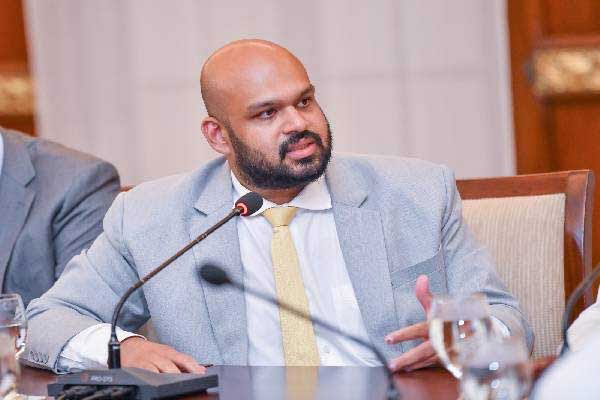
Trincomalee District TNA MP Shanakiyan Rasamanickam has submitted a motion to Parliament calling for the immediate repeal of the Prevention of Terrorism Act (PTA), arguing that the controversial law has enabled arbitrary detention, torture and the targeting of minority communities for more than four decades.
In his motion, now published in the Addendum to the Order Book of Parliament, the MP urged the Government to repeal the Prevention of Terrorism Act, No. 48 of 1979, in its entirety and refrain from introducing any replacement legislation containing similar provisions.
Rasamanickam contended that the PTA had been used for over 40 years to facilitate prolonged arbitrary detention and to obtain false confessions through torture. He further alleged that the law had disproportionately affected minority communities and civil society groups.
The motion states that there is no justification for maintaining a permanent counter-terrorism law that grants sweeping powers to the authorities.
The TNA legislator argued that existing legal provisions were sufficient to address security threats, noting that terrorism-related offences could already be prosecuted under the Penal Code.
He also pointed out that the Government retained the power to declare a state of emergency when circumstances warranted extraordinary measures, rendering a permanent anti-terrorism framework unnecessary.
Accordingly, the motion calls on Parliament to resolve that the Government take immediate steps to abolish the PTA without replacing it with legislation containing comparable powers.
The Prevention of Terrorism Act, enacted in 1979, has long been the subject of criticism from human rights organisations, civil society groups and international bodies, which have raised concerns over provisions relating to detention without trial and safeguards against abuse.

Huge crowds throng Madrid streets for Pope’s open-air mass

Women’s T20 World Cup 2026 warm-up: Kapp, Wolvaardt take SA past Ireland

Women’s T20 World Cup 2026 warm-up: Chamari Athapaththu’s 94 helps Sri Lanka beat Pakistan

Rahul, Gill hit centuries as India dominate Afghanistan on opening day

Persistent rain in Kingston washes out second ODI between West Indies and Sri Lanka

Heavy showers about 100 mm are likely at some places in the Western and Sabaragamuwa provinces and in Galle, Matara, Kandy and Nuwara-Eliya districts

‘Dates have the highest sugar content to fight Coronavirus’

Sunday Island 27 December – Headlines

#SundayIsland 17th December – Headlines

Sunday Island – 28th March

Sunday Island Headlines – 21 March

Sunday Island – 21st February – Headlines
-

 News5 days ago
Lankan duo emerge winners in Latin dance championship held in Blackpool, UK
-

 Business6 days ago
IMF’s unstated rate:Sri Lanka’s $695m loan costs about 5.33% per annum
-

 Latest News3 days ago
Kusal Mendis, Pathum Nissanka, bowlers put Sri Lanka 1-0 up
-
 News3 days ago
New US tariffs proposed on 60 countries, including Sri Lanka
-

 Business6 days ago
Sri Lankan scientist-innovator Milinda Edirisinghe introduces AI-integrated gem testing system to gemological world
-
 Features2 days ago
Power crept into the Sangha and is now tearing it apart
-

 News6 days ago
UNP challenges NPP move to amend Vihara – Devalagam Act
-

 News5 days ago
Sri Lankan teen killed in Chennai clash; three arrested