
Business
ComBank remittance promo to make 4 millionaires in first 4 months of 2022


40 more remittance customers to win cash prizes
The Commercial Bank of Ceylon has announced that it is starting 2022 on a rewarding note with the launch of ‘Win a Million’ – a remittance promotion that will make four instant millionaires in four months and reward another 40 recipients of remittances with a total of Rs 1 million in cash.
The prize purse of Rs 5 million will be shared by the Bank’s remittance customers chosen at monthly draws between 1st January and 30th April 2022 under this promotion, the Bank said. Each month, the Bank will pick one grand prize winner to receive Rs 1 million and another 10 lucky winners who will receive Rs 25,000 each in consolation prizes.
Recipients of money via ComBank RemitPlus – the remittance service of the Bank – will automatically be entered into the draw. Every customer who receives remittances directly to a Commercial Bank Account during the promotion period and those who collect the remitted cash from a Commercial Bank branch close to them will be eligible to enter the monthly ‘Win a Million’ draws.
In addition to the chance to win these cash prizes, every worker remittance sent via the Bank, will be eligible to receive an additional Rs 10/- over the prevailing exchange rate for every US Dollar converted until 31st January 2022, the Bank said.
The Bank said it will publish details of winners on its social media platforms as well as the Bank’s ‘RemitPlus’ App.
The Bank said the ‘Win a Million’ campaign will also encourage recipients of remittances to directly approach the Bank and remittance partners to promote direct remittances, help reach untapped markets, boost customer loyalty and retention, attract customers of global partners, and popularise its Remittance Card, RemitPlus app, and related value-added services.
Remit Plus is the instant money transfer service of Commercial Bank which enables Sri Lankan expatriates to make instant money transfers from many countries around the world. A sophisticated, low cost, real time, online money transfer facility, Remit Plus can be accessed by remitters through a network of agents. The Bank’s business partners for remittances in more than 130 countries provide remittance services through which the amount will be credited to relevant Commercial Bank accounts instantly at any time of the day, any day of the year.
In 2019, the Bank launched ‘ComBank RemitPlus’ – a remittance app to enable those who use the Bank’s remittance services to conveniently access remittance-related information and services. The mobile app which could be downloaded for both iOS and Android operating systems serves as an information app and connects both the remitter and sender for interactions about the tracking of the remittance. No joining fee or annual fee is levied on the usage of this app. Regular remittance receivers are eligible to open a Remittance Account and are eligible to obtain a Remittance Card, free of charge.
Commercial Bank is one of the most active players in Sri Lanka in the field of remittances. One of the Bank’s key strengths is its island-wide network of 268 branches, many of which remain open on public, bank and mercantile holidays, and its network of 931 ATMs, which is the largest automated cash dispensing system owned by a single private bank in Sri Lanka. Recipients of remittances sent to the Bank enjoy many benefits such Holiday Banking Centres and supermarket counters, a dedicated customer support call centre for remittances and SMS alerts facilities once the remittance is received and is ready to be paid out.
Commercial Bank is Sri Lanka’s first 100% carbon neutral bank, the first Sri Lankan bank to be listed among the Top 1000 Banks of the World and the only Sri Lankan bank to be so listed for 11 years consecutively. It is the largest lender to Sri Lanka’s SME sector and is a leader in digital innovation in the country’s Banking sector. The Bank’s overseas operations encompass Bangladesh, where the Bank operates 19 outlets; Myanmar, where it has a Microfinance company in Nay Pyi Taw; and the Maldives, where the Bank has a fully-fledged Tier I Bank with a majority stake.



The Asian Development Bank (ADB) has approved a $100 million results-based loan to help Sri Lanka transform its technical and vocational education and training (TVET) system, equip more young people with industry-relevant skills, and strengthen the country’s competitiveness and inclusive growth.
The Skills Development System Transformation Program will support the Government of Sri Lanka’s efforts in improving the quality and relevance of skills training, strengthening links between training providers and industries, and expanding employment opportunities for youth. The program will increase women’s employment opportunities in nontraditional jobs in fields including automotive technology, engineering, information and communications technology, construction, and renewable energy.
“A skilled workforce is essential to Sri Lanka’s long-term economic transformation and competitiveness,” said ADB Country Director for Sri Lanka Shannon Cowlin. “This program will help create stronger pathways from education to employment by making training more responsive to industry needs, expanding opportunities for young people and women, and ensuring that graduates have the skills required by a modern and evolving economy.”
Though Sri Lanka’s economy is recovering, it faces skills shortages in priority sectors, high youth unemployment, and low female labor force participation. Many employers report difficulty finding workers with the skills needed in a changing economy.
Aligned with the Government of Sri Lanka’s Technical and Vocational Education and Training Sector Strategic Framework 2026–2035, the nationwide program will be implemented from 2027 to 2031 and is expected to directly benefit more than 100,000 young people through improved access to quality, employment-oriented training.
By Ifham Nizam
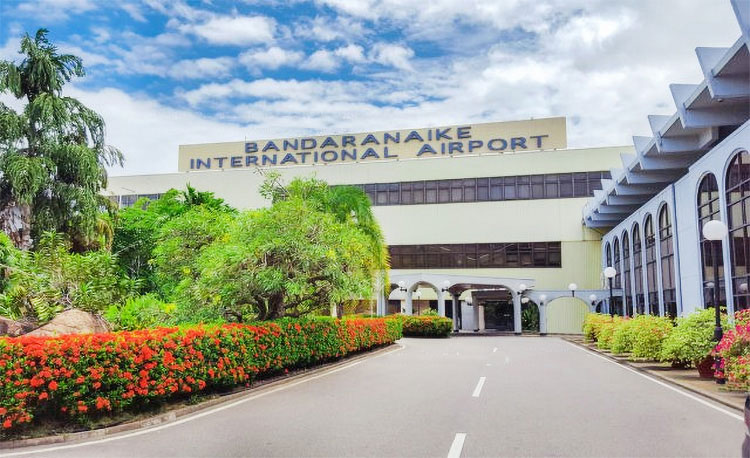
The government has cleared a USD 40.84 million and Rs. 8,548.75 million contract to build a dedicated aviation fuel pipeline from Muthurajawela to Bandaranaike International Airport (BIA), alongside a massive new fuel storage facility with a capacity of 92,000 cubic metres.
Energy Minister Anura Karunatilaka said the project represented a major investment in strengthening the infrastructure underpinning Sri Lanka’s aviation fuel supply and ensuring more reliable fuel availability at the country’s main international airport.
‘This project will provide the infrastructure required to strengthen the reliability and continuity of aviation fuel supplies to Bandaranaike International Airport, Karunatilaka said.
The contract has been awarded to China Petroleum Pipeline Engineering Company Limited, following an international competitive procurement process in which three bids were received.
The project will see a new aviation fuel storage tank complex constructed at Muthurajawela, together with the associated infrastructure required for handling and transferring aviation fuel.

By Hiran H Senewiratne
Trading activity on the Colombo Stock Exchange (CSE) gathered pace yesterday as global fuel prices began to show signs of easing, according to market analysts.In this context, both indices moved upwards. All Share Price Index up by 67.97 points while S and P SL20 up by 8.30 points.
Turnover stood at Rs 1.4 billion with seven crossings. Those crossings were reported in Sampath Bank 1.7 million shares crossed to the tune of Rs 238 million and its share price traded at Rs 140, Access Engineering two million shares crossed to the tune of Rs 159 million and its share price traded at Rs 79.50, LOLC one million shares crossed to the tune of Rs 129 million and its share price traded at Rs 129, HNB 100,000 shares crossed to the tune of Rs 38.4 million and its share price traded at Rs 384, JKH 1.9 million shares crossed to the tune of Rs 35 million and its share price traded at Rs 18.60, Hayleys 100,000 shares crossed to the tune of Rs 22.50 million and its share price traded at Rs 225 and Richard Pieris 847,000 shares crossed to the tune of Rs 22 million and its share price traded at Rs 25.50.
In the retail market top seven companies that have mainly contributed to the turnover were Sampath Bank Rs 114 million (813,000 shares traded), JKH Rs 100 million (5.3 million shares traded) LB Finance Rs 49 million (325,000 shares traded), HNB Finance Rs 30 million (27 million shares traded), HNB Rs 27 million (70000 shares traded), NTB Rs 25 million (82000 shares traded ) and Lanka IOC Rs 21 million (666,000 shares traded). During the day 65 million shares volumes changed hands in 10433 transactions.
The Banking and manufacturing sector counters performed well. In the banking sector Sampath Bank let the market while manufacturing sector especially JKH also significantly performed well. With the fuel revision Land IOC also a significant stock at the floor.
Meanwhile, First Capital Treasuries said that Ramesh Schaffter resigned as a Non-Independent Non-Executive Director with effect from October 1, to facilitate the restructuring of the company’s board.
Yesterday the Central Bank announced the US Dollar rate as against rupee. The rupee was quoted flat at Rs 330.65/80 to the US dollar in the spot market , while bond yields dropped, dealers said.

Showers or thundershowers will occur in most parts of the island after 1.00 p.m.

Unions resist tripartite EPF management plan

Two arrest warrants issued for Gnanasara thera

CA dismisses GR’s writ petition against arrest

ADB-backed virtual net metering project faces policy contradiction

Media action group flays NPP over new anti-terrorism law

‘Dates have the highest sugar content to fight Coronavirus’

Sunday Island 27 December – Headlines

#SundayIsland 17th December – Headlines

Sunday Island – 28th March

Sunday Island Headlines – 21 March

Sunday Island – 21st February – Headlines
-

 Editorial6 days ago
Birth of a bad law
-

 News4 days ago
Police remove Thileepan statue in Jaffna
-

 News6 days ago
TIN mandatory for key transactions from Nov. 1
-

 Features4 days ago
The 22nd Amendment, constitutional recovery and illiberal slippage
-

 Features4 days ago
Of foreigners as CEOs of Lankan ventures
-

 News4 days ago
Sajith rejects Jt. Opp. protest sabotage claim; SJB TU chief demands remedial action
-

 Latest News2 days ago
Gold winner Tharanga gets brand-new Honda Vezel from SLAAJ
-

 Features3 days ago
Thailand’s biggest new global star …