
Opinion
Change is good: Provided it is for better and not for worse


by Jayasri Priyalal
Many Sri Lankans may have joined in commemorating the 2568 years of Buddha Parinirvana with much discourse about the fundamental truth, the core teaching of Buddhism about impermanence, last week. As we all realise the fact, that there is nothing permanent in this world; everything is subject to change. Change is the only permanent constant in the universe. This essay focuses on change from socio, political and economic angle.
Sri Lanka is undergoing its worst ever economic crisis without any hope of getting it into a recovery track soon. There is a clarion call from the masses aspiring for a system change as a springboard towards chalking out a recovery path to overcome the crisis. Yet, no one knows or discusses what that system should be to put in place.
One fact remains as an acceptable analogy. Those who cannot cope with change will never be able to initiate change in any circumstances. This applies to all stakeholders including those who caused and contributed to the current crisis. Fair share of responsibilities falls on the electorate who got carried away with populism engineered by a few; with an ultimate aim of state and regulatory capture for their advantage leaving the country into a dire state grappling with debt. Therefore, capacity and capability to initiate that essential change is absent in the DNA of politicians who deceived their constituents.
This year 2024, is remarkable for those countries where representative democracy functions. Over 2 billion voters are expected to cast their votes at polls. As per predictions in 70% of the elections a change in government is anticipated. Some elections are already over and results are known. In Sri Lanka there are two main elections in the pipeline namely the Presidential and parliamentary polls. The UK gets ready for polls on 4th July 2024. Change is the campaign theme of the Labour Party led by Sir. Keir Starmer. Chase or change dilemma will be an option for the electorate in the USA to test in upcoming presidential elections in November 2024.
Change and the Chase Countercyclical in Sri Lanka
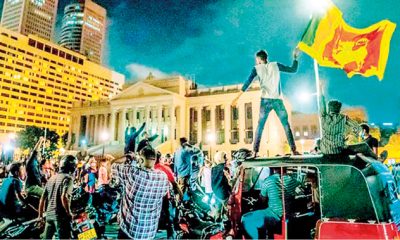
In the last presidential election in 2019 Sri Lankan electorate rallied with President Gotabaya Rajapaksa giving him an absolute mandate with 6.9 million votes, anticipating a change for the better. It was too late for Sri Lankans to realise that their bet was on the wrong horse. That change triggered the public to rally towards a chase. People’s power proved greater than those who come and hold political power.
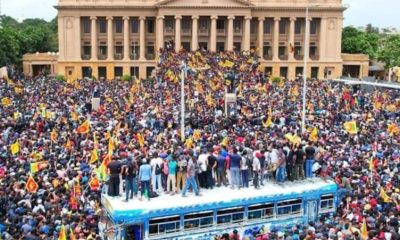
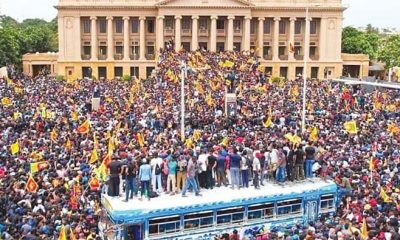
The so-called people’s movement Aragalaya forced the Prime Minister to resign with the ipso facto resignation of the cabinet of ministers. Amongst many wrong doings President Gotabaya Rajapaksa nominated an unelected PM to lead the cabinet without dissolving the parliament with the reluctance to test the pulse of the people to secure the right mandate to govern. Rest is history, and finally the people’s power chased out President Gotabya Rajapaksa culminating the grand achievement of the GoHomeGota campaign. Thereafter, people’s aspiration and hope for a change short lived and shortchanged, widening the mistrust between policy makers and electorate further.
Have we learnt from similar power struggles from the past?
Our present has direct links in many ways to the past. The island nation has been deceived by many egocentric figureheads -as they cannot be named as true patriotic leaders- misjudged the public sentiments and aspirations and surrendered the sovereignty of the country to Colonial Masters. Does history repeat itself? Have we forgotten the bitter lessons learnt from history is what is discussed in the next few paragraphs?
This writer is enthusiastically influenced by the historical knowledge shared by Prof. Raj Somadeva via Neth FM radio and the YouTube programme. Due credit should be given to the Professor for all his extensive historical studies and the efforts to share them with the rest of the Sri Lankans in and outside the country. Prof. Somadeva narrates the stories very well with an appeal to draw parallels to the contemporary political power struggles with a warning not to repeat the past mistakes.
Coronation of Sri Wickrama Rajasinghe, last King of Kandyan Kingdom 1798
Having defeated the British Army battalion sent by the Governor Frederick North badly in 1803, the powerful Kandyan Kingdom fell to the British by 1815. Internal power struggles between the Kandyan elites to capture the throne from the Nayakkar clan paved the way for colonials to step in effortlessly to end the 2300 of historical royal lineage, to govern. Finally, Ceylon became a colony of the British Empire under King Gorge III.
Maha Adikaram Pilimatalawe engineered the coronation of Kannasamy Naidu a nephew of Sri Rajadhi Rajasinghe over the legitimate claimant to the throne Muttusamy. Pilimatalawwe was ambitious of becoming the Kandyan King, worked closely with the British and installed Kannasamy in the throne assuming he can control the King to meet his egoistic goals.
The change he anticipated never happened. Then he conspired to kill the King. Pilimatalawwe and the conspiring gang were beheaded by the King. Pilimatalawwe engineered the change and had to work on a chase and he got eliminated by the person whom he elevated to power.
Power crazy Maha Adikaram installed a weaker character in the throne so that he could overthrow him with the help of the British. The whole strategy backfired ultimately sacrificing the nation on a platter to the British ending a royal lineage of over two millennia. The miscalculations of those close to political power to serve their selfish needs have ruined many countries bringing in misery, hardship and colossal loss of lives and property to its citizens. The island nation has many such cases throughout its history.
Putting a Wrong Guy in a Critical Position – Are we repeating the same mistake?
Throughout history we Sri Lankans have repeated the same mistake and disrupted the nation’s progress leaving the plight in the hands of outsiders. Although there aren’t any competing empires in the current context, there are clear indications that the local political expectations are gravitating towards the emerging geo-economic-political centres.
The current political leadership or the conventional thought processes are not spurred with an organic strategic growth trajectory with originality backed thought process. None of the political parties have identified the right causes that led to the current crisis.
Moreover, they are getting ready to deceive the electorate to secure the mandate to govern to continue to repeat ill-conceived policy tools without coming up with viable policy options to break the vicious debt trap. Adage goes on to remind that – right diagnosis is half of the solution. Instead, many are getting ready to prescribe the failed remedies with a strong dosage as prescribed by the defunct cold war institutions. It appears that the healer itself is the disease leaving the patient bewildered and leaving the disease into an uncontrolled debt pandemic. We Sri Lankans need to think locally and act globally and not the other way around. In the absence of original ideas and remedies, local politicians are happy to swallow the bitter medicines prescribed on the basis of diagnoses.
Since Independence the ideology of various political parties were developed based on systems and discourses practiced in other countries introducing a welfarist socio economic system. Now, it has turned towards the aspirations of the emerging geo-economic centres. Sri Lankans need to forge a unique turnaround strategy to serve the best interest of its people, and not to become subjects of other countries. Therefore, the Sri Lankan electorate needs to collate its political mandate in the hands of a leadership who will change the destiny of the country for the better and not for the worst.
Prisoner’s Dilemma
Colonial masters connived with the power crazy Kandyan elites and captured the last King of Ceylon, Sri Wickrama Rajasinghe, dethroned, imprisoned and deported to India. Once you fast track the historical events, we can extrapolate the current situation drawing many parallels. Unlike in the past, the leaders who mislead and mismanage the future of the nation without any original thinking and being subservient to foreign advice will never be deported. They will be facing a prisoner’s dilemma remaining on the island, having given away ports, harbours, airports and other critical infrastructure to foreigners to manage and own.









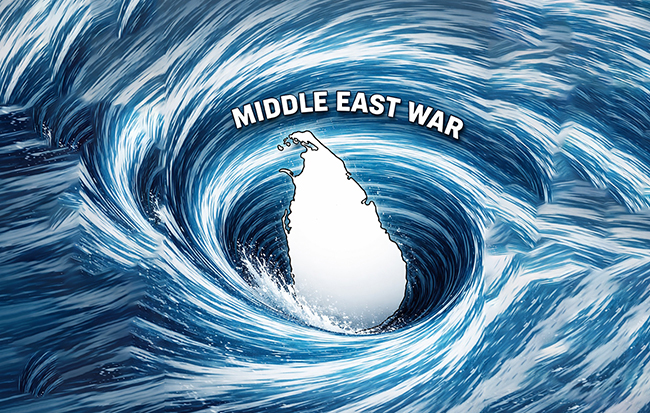
“As a small and open country, Singapore will always be vulnerable to what happens around us. As Lee Kuan Yew used to say: “when elephants fight, the grass suffers, but when elephants make love, the grass also suffers“. Therefore, we must be aware of what is happening around us, and prepare ourselves for changes and surprises.” – Prime Minister Lee Hsien Loong, during the debate on the President’s Address in Singapore Parliament on 16 May, 2018, commenting on the uncertain external environment during the first Trump Administration.
“When elephants fight, it is the grass that suffers”
is a well-known African proverb commonly used in geopolitics to describe smaller nations caught in the crossfire of conflicts between major powers. At the 1981 Commonwealth conference, when Tanzanian President Julius Nyerere quoted this Swahili proverb, the Prime Minister Lee Kuan Yew famously retorted, “When elephants make love, the grass suffers, too”. In other words, not only when big powers (such as the US, Russia, EU, China or India) clash, the surrounding “grass” (smaller nations) get “trampled” or suffer collateral damage but even when big powers collaborate or enter into friendly agreements, small nations can still be disadvantaged through unintended consequences of those deals. Since then, Singaporean leaders have often quoted this proverb to highlight the broader reality for smaller states, during great power rivalry and from their alliances. They did this to underline the need to prepare Singapore for challenges stemming from the uncertain external environment and to maintain high resilience against global crises.
Like Singapore, as a small and open country, Sri Lanka too is always vulnerable to what happens around us. Hence, we must be alert to what is happening around us, and be ready not only to face challenges but to explore opportunities.
When Elephants Fight
To begin with, President Trump’s “Operation Epic Fury”.
Did we prepare adequately for changes and surprises that could arise from the deteriorating situation in the Gulf region? For example, the impact the conflict has on the safety and welfare of Sri Lankans living in West Asia or on our petroleum and LNG imports. The situation in the Gulf remains fluid with potential for further escalation, with the possibility of a long-term conflict.
The region, which is the GCC, Iraq, Iran, Israel, Jordan, Syria and Azerbaijan (I believe exports to Azerbaijan are through Iran), accounts for slightly over $1 billion of our exports. The region is one of the most important markets for tea (US$546 million out of US$1,408 million in 2024. According to some estimates, this could even be higher). As we export mostly low-grown teas to these countries, the impact of the conflict on low-grown tea producers, who are mainly smallholders, would be extremely strong. Then there are other sectors like fruits and vegetables where the impact would be immediate, unless of course exporters manage to divert these perishable products to other markets. If the conflict continues for a few more weeks or months, managing these challenges will be a difficult task for the nation, not simply for the government. It is also necessary to remember the Russia – Ukraine war, now on to its fifth year, and its impact on Sri Lanka’s economy.
Mother of all bad timing
What is more unfortunate is that the Gulf conflict is occurring on top of an already intensifying global trade war. One observer called it the “mother of all bad timing”. The combination is deadly.
Early last year, when President Trump announced his intention to weaponise tariffs and use them as bargaining tools for his geopolitical goals, most observers anticipated that he would mainly use tariffs to limit imports from the countries with which the United States had large trade deficits: China, Mexico, Vietnam, the European Union, Japan and Canada. The main elephants, who export to the United States. But when reciprocal tariffs were declared on 2nd April, some of the highest reciprocal tariffs were on Saint Pierre and Miquelon (50%), a French territory off Canada with a population of 6000 people, and Lesotho (50%), one of the poorest countries in Southern Africa. Sri Lanka was hit with a 44% reciprocal tariff. In dollar terms, Sri Lanka’s goods trade deficit with the United States was very small (US$ 2.9 billion in 2025) when compared to those of China (US$ 295 billion in 2024) or Vietnam (US$ 123 billion in 2024).
Though the adverse impact of US additional ad valorem duty has substantially reduced due to the recent US Supreme Court decision on reciprocal tariffs, the turbulence in the US market would continue for the foreseeable future. The United States of America is the largest market for Sri Lanka and accounts for nearly 25% of our exports. Yet, Sri Lanka’s exports to the United States had remained almost stagnant (around the US $ 3 billion range) during the last ten years, due to the dilution of the competitive advantage of some of our main export products in that market. The continued instability in our largest market, where Sri Lanka is not very competitive, doesn’t bode well for Sri Lanka’s economy.
When Elephants Make Love
In rapidly shifting geopolitical environments, countries use proactive anticipatory diplomacy to minimise the adverse implications from possible disruptions and conflicts. Recently concluded Free Trade Agreement (FTA) negotiations between India and the EU (January 2026) and India and the UK (May 2025) are very good examples for such proactive diplomacy. These negotiations were formally launched in June 2007 and were on the back burner for many years. These were expedited as strategic responses to growing U.S. protectionism. Implementation of these agreements would commence during this year.
When negotiations for a free trade agreement between India and the European Union (which included the United Kingdom) were formally launched, anticipating far-reaching consequences of such an agreement on other developing countries, the Commonwealth Secretariat requested the University of Sussex to undertake a study on a possible implication of such an agreement on other low-income developing countries. The authors of that study had considered the impact of an EU–India Free Trade Agreement on the trade of excluded countries and had underlined, “The SAARC countries are, by a long way, the most vulnerable to negative impacts from the FTA. Their exports are more similar to India’s…. Bangladesh is most exposed in the EU market, followed by Pakistan and Sri Lanka.”
So, now these agreements are finalised; what will be the implications of these FTAs between India and the UK and the EU on Sri Lanka? According to available information, the FTA will be a game-changer for the Indian apparel exporters, as it would provide a nearly ten per cent tariff advantage to them. That would level the playing field for India, vis-à-vis their regional competitors. As a result, apparel exports from India to the UK and the EU are projected to increase significantly by 2030. As the sizes of the EU’s and the UK’s apparel markets are not going to expand proportionately, these growths need to come from the market shares of other main exporters like Sri Lanka.
So, “also, when elephants make love, the grass suffers.”
Impact on Sri Lanka
As a small, export dependent country with limited product and market diversification, Sri Lanka will always be vulnerable to what happens in our main markets. Therefore, we must be aware of what is happening in those markets, and prepare ourselves to face the challenges proactively. Today, amid intense geopolitical conflicts, tensions and tariff shifts, countries adopt high agility and strategic planning. If we look at what our neighbours have been doing in London, Brussels and Tokyo, we can learn some lessons on how to navigate through these turbulences.
(The writer is a retired public servant and can be reached at senadhiragomi@gmail.com)
by Gomi Senadhira

The introduction of the QR code–based fuel quota system can be seen as a timely and necessary measure, implemented as part of broader austerity efforts to manage limited fuel resources. In the face of ongoing global fuel instability and economic challenges, such a system is aimed at ensuring equitable distribution and preventing excessive consumption. While it is undeniable that this policy may disrupt the daily routines of certain segments of the population, it is important for citizens to recognize the larger national interest at stake and cooperate with these temporary measures until stability returns to the global fuel market.
At the same time, this initiative presents an important opportunity for the Government to address long-standing gaps in regulatory enforcement. In particular, the implementation of the QR code system could have been strategically linked to the issuance of valid revenue licenses for vehicles. Restricting QR code access only to vehicles that are properly registered and have paid their revenue dues would have helped strengthen compliance and improve state revenue collection.
Available data from the relevant authorities indicate that a significant number of vehicles—especially three-wheelers and motorcycles—continue to operate without valid revenue licences. This represents a substantial loss of income to the State and highlights a weakness in enforcement mechanisms. By integrating the fuel quota system with revenue license verification, the government could have effectively encouraged vehicle owners to regularise their documentation while simultaneously improving fiscal discipline.
In summary, while the QR code fuel system is a commendable step toward managing scarce resources, aligning it with existing regulatory requirements would have amplified its benefits. Such an approach would not only support fuel conservation but also enhance government revenue and promote greater accountability among vehicle owners.
Sariputhra
Colombo 05
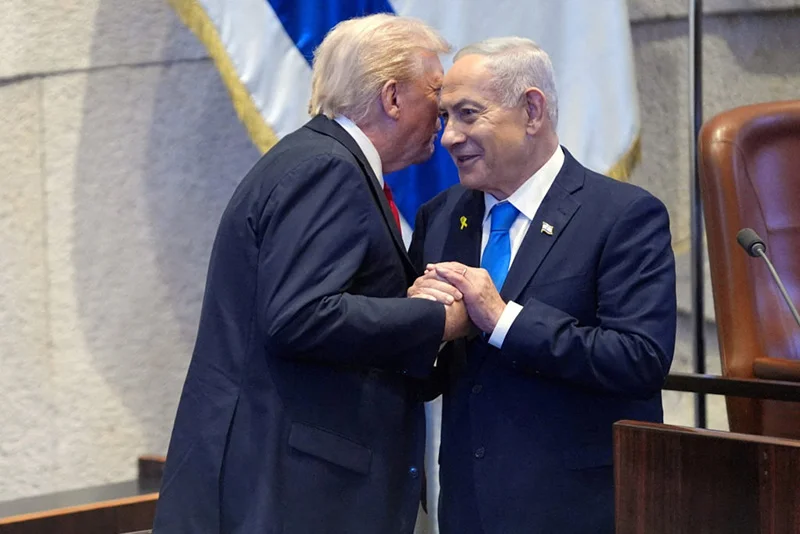
First, let us see why the war started by Israel and the US against Iran may be seen as a stupid undertaking. Israel was aiming for regional hegemony and US world dominance, which could be called an utterly foolish dream in today’s multipolar world order, which the theatre of war now reveals. They may have underestimated Iran’s capacity and also the economic fallout due to its ability to control the Strait of Hormuz.
In February 2026, reports emerged that General Dan Caine, the U.S. Chairman of the Joint Chiefs of Staff, privately warned President Trump about the significant risks of a major war with Iran, including potential U.S. casualties, depleted ammunition stockpiles and entanglement in a prolonged conflict. However, President Trump publicly dismissed these reports as incorrect. General Caine’s appointment by President Trump was considered controversial, as Caine was chosen over many active-duty four-star generals and lacks experience as a combatant commander or service chief. Under these circumstances Caine would have been expected to be subservient to Trump, yet he opted to disagree as he saw the danger. Trump countered his arguments saying it would be a quick job, take out the leadership, destroy the military structure and the people will take over the country. This did not happen and now most of the scenarios that Caine said was possible are gradually coming true.
Israel suffers damage
For Israel, too, damage is much more than expected and could prove to be decisive in its expansionist ambitions in the region if not its very existence. It had previously tried to drag former US presidents, Bush, Obama and Biden into a war with Iran, but they were aware of the underlying danger. The Gulf countries too were hit hard and the US could not protect them, and they may be regretting that they ever let the US set up military bases on their soil. Former US secretary of state Henry Kissinger once famously said, “To be America’s enemy is dangerous, to be its friend is fatal”.
The US may have succeeded in making states, such as Iraq, Syria and Libya, fail, but Iran is a different kettle of fish. Trump was jubilant after capturing the Venezuelan president and may have been planning to lay his hands on Cuba and Turkey and then try to annex Canada and Greenland. A man who promised a “no war” policy in his presidential campaign has converted his department of defence into a department of war in the real sense of the term. Trump must realise that he cannot act like a global policeman and undermine the sovereignty of other nations with impunity. Trump says “we have won” but has nothing to show as gains in the Iran war.
Trump’s concern about BRICS
Another factor in the equation is that Trump may have been concerned about the growing influence and membership of BRICS, which in effect appears to be anti-American if one were to go by its attempt to de-dollarise world trade. Of particular concern may have been the recent admission into BRICS, of several countries supposed to be staunch US allies, such as Saudi Arabia, UAE, and Egypt. Iran is an active member and was mending its fences with Saudi Arabia under the mediation of China. Further, two of the arch rivals of the US, China and Russia, are leading members of BRICS, which has become the meeting ground for the friends as well as foes of the US, under the stewardship of China. The US saw all this as a huge challenge to its dominant position in the world and Trump, who was trying to “make America great again”, saw that his dream may go up in smoke. He threatened countries which tried to adopt an alternative to the dollar with sanctions. He may have thought if Iran could be destabilised and structurally broken up, he would be able to kill two birds with one stone. He may have se an enemy of both the US and also its ally Israel and disrupt the BRICS organisation.
The war is affecting the economy of the BRICS countries quite badly. The fuel shortage due to closure of Strait of Hormuz has hit India hard and also China. The economies of the Gulf countries, whose oil is transported via the Persian Gulf and the Gulf of Oman, have also suffered immensely. South Africa, a founding member of BRICS imports oil mainly from the Middle East. Brazil, another founder member, though an exporter of oil, imports refined fuels from the Middle East. A large portion of food requirements also of the Gulf countries come through these sea routes. Thus, the BRICS organisation must be concerned about the consequences of the war if it drags on. It obviously augers ill for the BRICS, and it must act quickly to bring about a ceasefire and an amicable settlement as soon as possible.
Jeffrey Sachs’ opinion
Prof. Jeffrey Sachs, the eminent American economist, has argued that BRICS nations have a critical responsibility to play a leading role in stopping the war in the Middle East, particularly regarding the escalating conflict between the US/Israel and Iran. He contends that because the US is pursuing “global hegemony” and attempting to control the region, BRICS serves as the only effective “standing bulwark” against American domination.
Sachs has stated that if BRICS countries, particularly India, China, and Russia, stand together and demand an end to the war, “it will actually end”. He has described this collective action as the only way to make the world safe. Arguing that the Middle East conflict is a planned campaign by the US and Israel for regional dominance rather than a defensive action, he has called on BRICS to stop the US from running the world. He warned that a continued conflict, especially one that disrupts energy supplies, will cause enormous economic costs for Asia, Europe, and the US.
Sachs has argued that India should not have joined Quad, as he views Washington as using a “divide and conquer” strategy. He has characterised the BRICS countries as a fast-growing, multipolar bulwark that rejects the notion of a single “emperor” (referring to US influence). Sachs has warned that if the conflict is not stopped, it could lead to World War III and catastrophic regional consequences (India Today).
China and Russia, though rivals of the US, have the economic and military clout to exert pressure on the US. India is a friend of both the US and Israel and could act as a mediator to bring about an end to this meaningless war. Gulf countries, some of whom are BRICS members, could make a strong appeal to their friend and benefactor, the US, to see what its senseless aggression is doing to their countries.
Unity of BRICS essential
As of 2026, the expanded BRICS group (including Brazil, Russia, India, China, South Africa, Egypt, Ethiopia, Iran, Saudi Arabia, UAE, and Indonesia) represents approximately 49% of the world’s population. Moreover, its collective GDP is 35 – 40% of the global GDP when measured in PPP terms, which may be considered as higher compared to G7 countries which record 30%. Thus, BRICS is a force to be reckoned with provided its members stand together. However, they have not been able to do so though it is obvious that it would be beneficial to all of them. Bilateral conflicts within the BRICS, apparently intractable, are preventing any concerted action by these countries. In this regard, as Prof. Sachs says the onus is on China, Russia and India to come together to stop the war, which if allowed to drag on, will irreparably damage the economy and unity of BRICS and worse it would never be possible to attain any of its objectives. It is time the founder members Brazil, Russia, India, China and South Africa got together and review its goals, the need for such an organisation as BRICS, and the present danger it faces and take remedial steps as soon as possible if it is to remain a viable force with the potential to counter the hegemonic imperialist forces.
Further, the BRICS, as it consists of stakeholders of a new world order and also countries directly involved in the Middle East turmoil, may have an important role to play in working out an arrangement that could bring permanent and stable peace to the region. Once the dust settles on the military front, and the futility of war becomes apparent it may be time for the BRICS countries to raise a voice to demand a settlement based on the two-state solution that was adopted by the UN. Though Trump brushed this UN resolution aside and started taking over Gaza, once the war is over and he contemplates the economic cost of it to the US public – it costs US 1 – 2 billion dollars a day – he may realize the need for a solution acceptable to all. There have been several US presidents who were strong proponents of the two-state solution—an independent Palestinian state alongside Israel—as a core policy goal. Key proponents included George W. Bush (who first formally backed it in 2002), Bill Clinton, Barack Obama, and Joe Biden; they have viewed it as the most viable path to peace. Israel too after sustaining enormous damage may be forced to agree to a solution, if the US pressures it. Both Trump and Netanyahu, perhaps for personal reasons, wanted a war but they did not expect it to take the turn it has taken. Netanyahu’s days in power may be numbered and Trump may be forced by Republicans to change course as the majority of the US public does not approve of the war.
Therefore, time may be opportune for BRICS to stand together and call for a permanent solution to the Palestinian problem which is at the core of the Middle East conflict. Peace in the Middle East is vital for the further development of BRICS.
by N. A. de S. Amaratunga

Courtesy call by the Heads of Mission- Designate on Prime Minister

Three dead after helicopter crash in Hawaii

Woods charged with driving under influence after crash

Showers may occur at a few places in the Rathnapura, Kaluthara, Galle, and Matara districts during the evening or night

SC finds Keheliya, others, guilty of violating FRs of public through corrupt drug procurement deal

Sajith nudges govt. to follow India’s example in giving relief to consumers by slashing taxes on fuel

‘Dates have the highest sugar content to fight Coronavirus’

Sunday Island 27 December – Headlines

#SundayIsland 17th December – Headlines

Sunday Island – 28th March

Sunday Island Headlines – 21 March

Sunday Island – 21st February – Headlines
-

 News3 days ago
Senior citizens above 70 years to receive March allowances on Thursday (26)
-

 Features5 days ago
Trincomalee oil tank farm: An engineering marvel
-

 News1 day ago
Energy Minister indicted on corruption charges ahead of no-faith motion against him
-

 News2 days ago
US dodges question on AKD’s claim SL denied permission for military aircraft to land
-

 Features5 days ago
The scientist who was finally heard
-

 Business2 days ago
Dialog Unveils Dialog Play Mini with Netflix and Apple TV
-

 Sports1 day ago
SLC to hold EGM in April
-

 News3 days ago
CEB Engineers warn public to be prepared for power cuts after New Year