
Opinion
Leaders’ obsession with global approval hurts ordinary people


Sri Lanka’s Climate Targets
by Sampath Perera
As Sri Lanka approaches its presidential election, the crucial question for the incoming leader is how to reconcile the country’s economic struggles with the demands of international climate agreements.
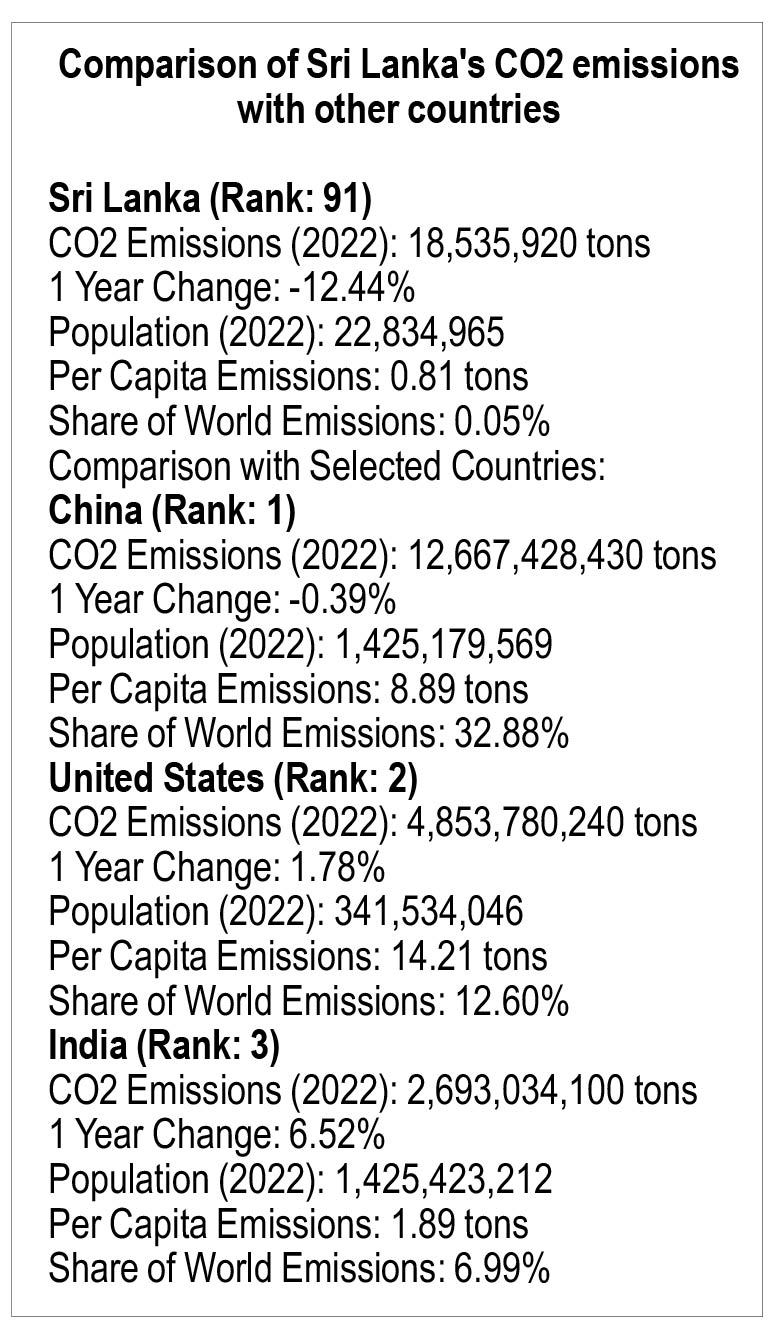
With the global climate framework often imposing disproportionate burdens on developing nations, including Sri Lanka, how can the new administration balance ambitious climate goals with the nation’s financial realities? Given Sri Lanka’s modest carbon footprint of 1.02 CO2e tonnes per person, the challenge of achieving net-zero emissions by 2050 seems daunting, especially when many citizens are already grappling with basic economic needs. How will the next leader navigate this complex landscape, ensuring that international commitments are feasible and fair, while also advocating for the unique economic challenges faced by developing countries?
Consider a family of four in Sri Lanka, with a sole breadwinner earning a modest Rs. 50,000 per month. For this family, daily survival is a challenge, let alone the luxury of choosing organic food over cheaper alternatives. The struggle to make ends meet highlights a broader economic reality faced by many Sri Lankan households. Their focus is on affordability and basic sustenance, not on the added expense of organic produce. This scenario encapsulates the difficulty for Sri Lanka in adhering to rigorous climate goals while battling economic hardship.
The next leader must ensure that any international commitments are carefully balanced against the country’s economic capabilities, avoiding undue strain on its already challenged economy. It is essential to advocate for fair terms that recognise the unique struggles of developing nations like Sri Lanka, ensuring that global climate goals are pursued in a manner that is both equitable and achievable.
Unfair burden
In the ongoing global debate over climate action, it is critical to question why world leaders continue to enforce stringent climate goals on developing nations while failing to address the economic disparities that make such goals impractical.
Developing countries, like Sri Lanka, are being pressured to adopt expensive green technologies and reduce carbon emissions, despite their limited economic resources and reliance on cost-effective, traditional energy sources. The insistence on immediate compliance with high-cost climate measures, without providing adequate financial and technological support, places an undue burden on these nations.
This approach not only overlooks their economic vulnerabilities but also ignores the fact that developed countries, which historically have contributed the most to global emissions, continue to rely heavily on fossil fuels. The world’s leading economies should consider shifting their focus towards economic conservation and allowing developing nations the flexibility to pursue more affordable, sustainable solutions. Such an approach would ensure a more equitable transition to a low-carbon future, acknowledging the varied economic capacities and needs of all nations involved.
Sri Lanka’s commitment to achieving net-zero carbon status by 2050, as outlined in its updated Nationally Determined Contributions (NDCs), is a noble but daunting task. The country is working towards this goal amidst significant economic pressures, including a recent contraction in GDP and ongoing inflation challenges. The push for a low-carbon economy includes ambitious targets like reducing greenhouse gas emissions by 14.5% by 2030, achieving 70% renewable energy in electricity generation by 2030, and increasing forest cover to 32% by the same year.
Global inequity
Nevertheless, major emitters like China and the United States persistently rely on fossil fuels. China, the world’s largest emitter of CO2, continues to invest heavily in coal power, drawing criticism for its perceived inadequate efforts to cut emissions. Meanwhile, the United States, despite progress in renewable energy, maintains a significant carbon footprint due to its continued dependence on fossil fuels and extensive industrial activities.
These major emitters not only contribute disproportionately to global greenhouse gas emissions but also benefit from relatively less stringent climate regulations compared to those imposed on developing countries. The economic models of China and the US are deeply entrenched in high-carbon industries, and their transition to greener alternatives is often gradual and selectively implemented.
The disparity between the emission targets of developing nations like Sri Lanka and the practices of major emitters highlights a significant global inequity. Developing countries, including Sri Lanka, are often pressured to adopt stringent climate measures while their economies are still emerging. The economic burden of transitioning to a low-carbon economy is substantial, given that these nations are still grappling with basic developmental challenges, such as poverty alleviation and infrastructure development.
Sri Lanka’s climate strategy, including the development of the Carbon Net Zero 2050 Roadmap and Strategic Plan, aims to address key sectors like energy, transport, industry, waste, agriculture, and forestry. However, the implementation of these measures requires substantial financial investment and technological support, which are often lacking in developing contexts.
For Sri Lanka, the challenge lies in balancing the immediate needs of its population with long-term climate goals. The pressure to conform to international climate agreements while ensuring economic stability and growth creates a complex scenario where immediate survival often takes precedence over environmental considerations.
Climate Vs. Economy
Sri Lanka’s development, economic stability, and price fluctuations are heavily influenced by its energy and transport sectors. However, the country’s commitments under international treaties and past pledges by former leaders, often made without fully accounting for Sri Lanka’s economic realities, have placed these crucial sectors under severe strain.
In the energy sector, Sri Lanka faces significant challenges due to its commitment to international climate agreements. The country is bound to achieve a 70% renewable energy target by 2030—a goal that is proving increasingly difficult given the current economic constraints. Traditionally, coal power has been the most cost-effective option for energy generation, but Sri Lanka is restricted from expanding its coal power capacity due to its climate commitments. This restriction places an additional financial burden on the country, making the renewable energy target appear almost unattainable. The Long-Term Generation Expansion Plan (LTGEP) of the Ceylon Electricity Board (CEB) aims to meet this target and maintain a high level of renewable energy beyond 2030, but the financial and logistical challenges are substantial. The government’s push for energy conservation through Demand Side Management could help, but the constraints imposed by international obligations continue to impede progress.
Similarly, the transport sector is critical for Sri Lanka’s economic stability and overall development. It handles 94% of passenger transportation and 98% of freight transportation, making it central to daily life and economic activity. The COVID-19 pandemic caused a significant drop in transport demand, with passenger-kilometers falling from a peak of 231.5 billion in 2019 to 185.5 billion in 2020, partially due to a shift away from public transport. By 2021, demand had only partially recovered to 191.8 billion passenger-kilometers. Public transport’s modal share has decreased from 40.6% in 2019 to 33.0% in 2021.
In such a backdrop, the government’s Standard Operating Procedure (SOP) for the automobile industry has further exacerbated issues. Under the SOP introduced by former President Gotabaya Rajapaksa, the assembly of affordable petrol three-wheelers—an essential and low-cost mode of transport for many Sri Lankans—has been banned. This policy, intended to promote electric vehicles, has overlooked the economic realities faced by the general public. Electric solutions are prohibitively expensive for most Sri Lankans, and the absence of three-wheeler assembly has led to the continued use of older, more polluting vehicles. As a result, the lack of affordable, environmentally friendly transportation options has forced many to rely on outdated and inefficient vehicles, further compounding environmental and economic issues.
Sri Lanka’s adherence to international climate commitments has placed undue strain on its energy and transport sectors. The restriction on coal power expansion and the ban on assembling affordable petrol three-wheelers highlight a disconnect between global climate goals and national economic realities.
The country’s journey towards achieving net-zero carbon emissions by 2050 is a testament to its commitment to global climate goals. However, this commitment is challenged by the economic realities faced by its population, exemplified by families struggling to meet basic needs. The contrast between Sri Lanka’s efforts and the continued high-carbon practices of major emitters highlights the need for a more equitable global approach to climate action. To ensure that all nations can contribute to and benefit from a sustainable future, it is essential to address these disparities and provide support where it is most needed.
(The writer is an Attorney-at-Law with an LLM in International Business and Commercial Law. He can be reached at pmwsampathperera@gmail.com.)

by Sena Thoradeniya
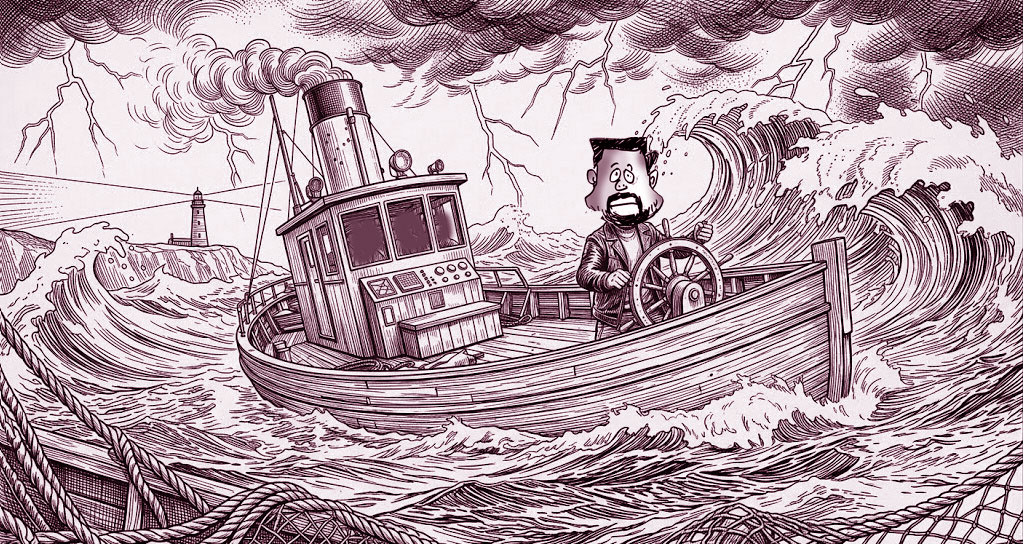
I Refer to the article published under the above title in The Island of 14 Sept. It was written by Dr. Uswatte-aratchi, whose insights into art, literature, and culture have long resonated with mine. In those domains, we have shared similar views; yet in matters of political theory, political leadership, and governance, our perspectives have not converged.
I do not intend to discuss the entire article by Dr. Uswatte, for he is entitled to his views on our politicians, even to the point of publicly attacking them when opportunity arises. I am neither an apologist nor an agent of any among those he has named. My concern here is solely to highlight Uswatte’s curious attribution of his knowledge of mathematics and physics to a person who, in his public addresses, has revealed no trace of intellectual capacity.
Dr. Uswatte says: “Unlike the earlier rulers Dissanayake (referring to the President) attended government schools in Tambuttegama and Kelaniya University. He studied science and mathematics. He can differentiate an equation for you and speak intelligently about Paul Dirac and Higgs Boson with the same felicity as accusations against former politicians”.
We are waiting for a theoretical or scientific publication by the current President that might justify such a claim. To ascribe scholarly depth to one whose record is not noticeable is absurd. It is a gesture that compliments without foundation and confers laurels where none have been earned.
This is what Dr. Uswatte says about the Prime Minister: “There is a Prime Minister who can talk to you impromptu about Auguste Comte and Claude LéviStrauss”.
A person who is said to have studied sociology should be knowledgeable about Comte, regarded as the father of sociology and the founder of positivism, and Claude Lévi-Strauss, a leading figure in structural anthropology; yet we remain uncertain whether she speaks of them with genuine familiarity and scholarly understanding, or is merely name-dropping them in an impromptu fashion. What on earth is she saying about these men on public platforms?
Since I possess no knowledge of either physics or mathematics, it was sheer curiosity that led me to consult AI only to discover what a marvelous President we have!
Paul Dirac was a pioneering English physicist, who helped establish quantum mechanics, co-founder of quantum electrodynamics and contributed to quantum field theory. In 1933, he shared the Nobel Prize in Physics. The Higgs boson is a fundamental particle discovered in 2012 that explains how particles acquire mass, solving a central mystery in physics. Peter Higgs, a British theoretical physicist won the Nobel prize for physics in 2013, decades after Anura Kumara obtained his degree.
Trying to rediscover theoretical physicists among ordinary science graduates who left university decades ago is indeed a futile exercise, like looking for a needle in a haystack. Theoretical physics thrives on continuity, requiring sustained engagement with evolving mathematics, new theories and experimental findings, and is a discipline that demands lifelong intellectual engagement.
Dr. Uswatte should listen to speeches made by his new found friends at public meetings and see the reaction of social media activists. As Chairman Mao observed, theory divorced from reality is useless. “No investigation, no right to speak (“Preface and Postscript to Rural Surveys” -1941).
For the time being, I refrain from commenting on some of the President’s promises, such as ‘producing graphite from graphene’ (which ought, of course, to be the reverse), producing sulphuric acid using seawater, fortifying the stem of the banana through advanced research, devising lifesaving remedies for cancer, or unveiling the world’s first app for locating shoals of fish. The list is too long to reproduce here. An exaggerated parade of claims and the sheer implausibility of such boasts are not the stuff of theoretical physics.

by Jehan Perera
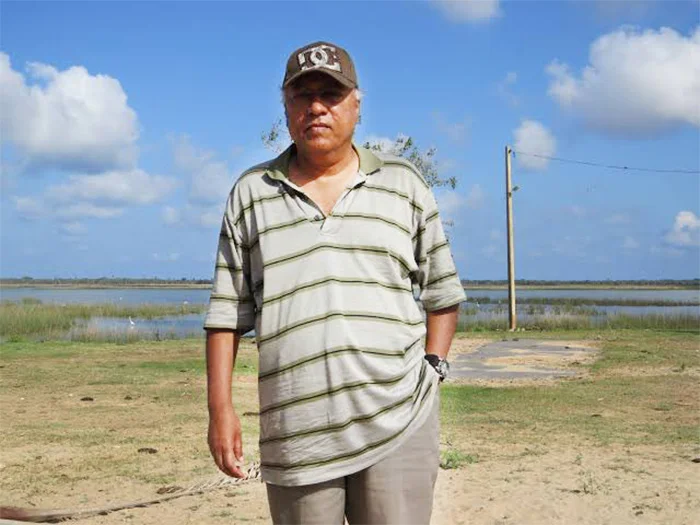
There are some journalists whose work we read and then move on. And there are others whose writing makes us stop, think and look at the country differently. D. B. S. Jeyaraj who passed away on 17 May 2026 was one of them. Whenever I saw an article by DBS, as he was widely known, appear in a newspaper, it was the first I read. He was primarily a columnist and political analyst, with a deep knowledge of the history of Sri Lanka’s ethnic conflict. But his columns were not simply analysis or opinion. They were rooted in what was happening in Sri Lanka and in what people involved in those developments were saying. We could see this in his frequent references to first-hand comments from people he had spoken to. He did this both when he lived in Sri Lanka and later, when he was living in Canada. That was no easy task.
In a 2013 interview, after returning to Sri Lanka for the first time in 25 years, DBS described how he had continued to report on Sri Lanka from Canada by maintaining contacts at home. He said that he broke his rest daily to communicate with contacts in Sri Lanka and that this dual existence of living physically in Canada and mentally in Sri Lanka took a heavy toll on his health and finances. But that commitment mattered and allowed him to write about Sri Lanka from afar without losing touch with what was happening on the ground. His writings gave readers a sense of what was happening in the north and east, as well as of politics more generally in Sri Lanka.
Speaking at the commemoration and book launch organised by the Tamil Media Alliance last week, Vijitha Yapa, the founding editor of The Island and Sunday Times, under whom DBS worked, captured an important quality of his journalism when he said, “DBS had no venom. That was his greatness.” He also recalled how DBS stood up to pressure and threats and continued writing about the Tamil community while insisting on fair play irrespective of race or religion. M. A. Sumanthiran, General Secretary of the ITAK, put another aspect of DBS’s contribution even more directly: “Truth is the first casualty of war. DBS fought to keep the truth alive.” He recalled that DBS always cross-checked his news and noted that even those who hated him read his columns to find the truth.
These observations capture two qualities that made DBS special. The first was his commitment to truth and, second, was his ability to write about a deeply divisive subject without venom. DBS was a Tamil writing about the north and east and the Tamil national question in a deeply polarised environment. Yet he wrote for the mainstream English-language press and was widely read not only by Tamils but also by people from other communities. His writing helped make the concerns, political aspirations and historical experiences of the Tamil community accessible to readers beyond it. His importance was not limited to his being a Tamil journalist. His writing mattered because it addressed the country as a whole. Issues and perspectives that might otherwise have remained within particular communities could become part of a wider national debate.
Another noteworthy feature of DBS was his ability to be realistic in his assessments. With his wide knowledge of history, he understood that each side in the national conflict had its own history, fears and perceptions of threat. He recognised that the conflict could not be properly understood through the narrative of one side alone. He understood that there could be no unilateral solution imposed by one side or the other. That realism is particularly important in a country where political positions have often been presented as if the concerns of one community could be resolved without addressing those of another. A journalist who understands this complexity needs to do more than simply take sides. He or she can help readers understand why the conflict has endured, why trust has been so difficult to establish, and why lasting peace requires more than one dominant story.
There was also something revealing about DBS’s return to Sri Lanka in 2013. In the interview he gave during that visit, he said he deliberately avoided politics. He wanted to experience the country from the perspective of an ordinary person rather than through the views of politicians or political associates. He observed a disconnect between the needs of the people and those of the political class. In retrospect, that observation was remarkably prescient. The disconnect he identified in 2013 would become dramatically visible in the Aragalaya of 2022.
In the same interview, he offered an observation that deserves to be remembered. A journalist may not be able to write all that he or she wants because of external constraints, he said. But no journalist should write what he or she does not want to write because of external pressure. His commitment to independent journalism came at a considerable personal cost. He was arrested and detained by the Sri Lankan Police in 1987 after his reporting on the war in Jaffna, and in 1993, while living in Canada, he was brutally assaulted by LTTE supporters who fractured both his legs.
For all these reasons, I consider DBS to have been a mentor of mine. I never said so to him. Mentors are not always people who formally teach us or with whom we have a close personal relationship. Sometimes they are people whose work we follow, whose judgement we respect and whose example helps shape our own understanding of what we should strive to do. DBS was such a person for me. His passing has left a gap. His journalism was informed by history but connected to the present, rooted in facts but open to interpretation, and concerned with the realities of all communities.
The collection of his writings launched in his memory by the Tamil Media Alliance is therefore more than a record of an important period in Sri Lanka’s history. It is also a reminder of what journalism can be at its best. DBS showed that a journalist could understand one community without becoming confined to it, analyse conflict without being partisan, and take a position without losing sight of complexity. Above all, he showed the value of journalism that seeks to keep the truth alive. For those who read him regularly, the greatest reminder of his absence is the absence of his next column.
by N. A. de S. Amaratunga
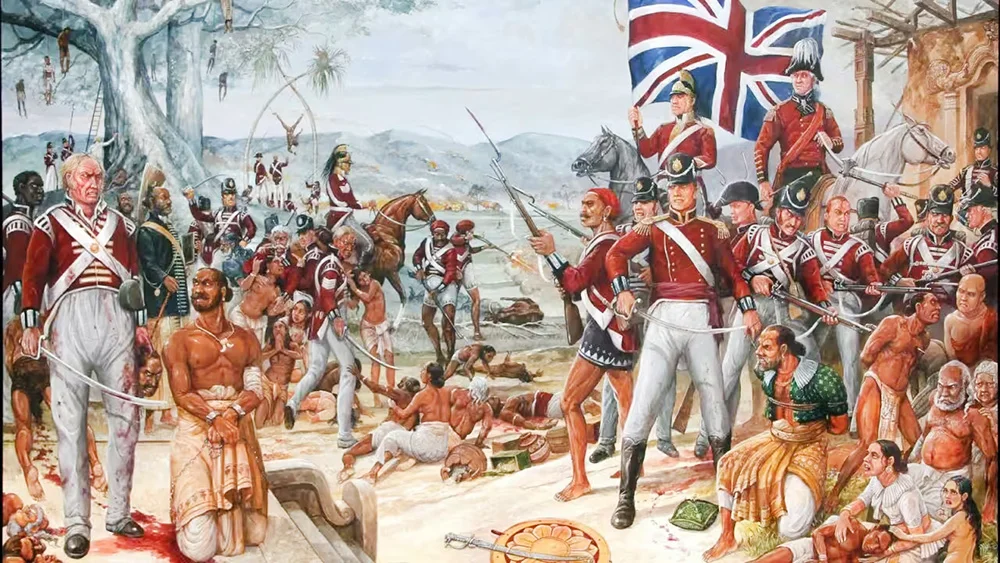
At a time when the word genocide is used with political motive and defensive war misconstrued as genocide, and a brutal genocide is taking place on a global scale with impunity, one should reflect on genocide committed by those who falsely accuse the Sri Lankan armed forces and the government for such crimes. The British who systematically annihilated people including “babies suckling”, in Uva-Wellassa in 1818 and the LTTE, which carried out numerous massacres to drive away the Sinhalese and Muslims in the so-called border villages are now shamelessly levelling unsubstantiated allegations of genocide against the Sri Lankan military. The British, jointly with the US, massacred about a million people, including children, in Iraq on a fabricated charge of possessing weapons of mass destruction. The British helped the LTTE continue their genocide of the Sinhalese and Muslims in the North and the East in an attempt to drive them away and grab their lands, and such crimes constitute genocide according to 1948 Genocide Convention.
“Slaughter every man, woman and child”
“Slaughter every man, woman, and child (including babies suckling at the breast)” was the order given by Governor Robert Brownrigg (3rd British Governor of Ceylon from 1813 – 1820) to Maj. Gen. Hay MacDowell in 1818. The British left the entire Uva-Wellassa region in a state of famine and starvation. The British used the scorched earth policy including mass murder and genocide of Sinhala civilians to crush the rebellion. British human rights campaigners now pointing accusing fingers at Sri Lanka have forgotten the Madulla Massacre, which led to razing and annihilating entire villages. In the entire Uva region members of the male population above the age of 18 were killed in revenge for resisting British imperial occupation under Governor Brownrigg.
Britain at present is leading a core group at the UNHRC Geneva, which bashes Sri Lanka for alleged human rights violations. Britain seems to have no remorse about its genocidal violence in Sri Lanka and happily leads the way in castigating Sri Lanka on unsubstantiated allegations of human right violations during the war against the LTTE. The US, which is the biggest war criminal in the world, is supporting these neo-colonial strategies to control and exploit the poor countries.
The Chemmani mass grave
The Chemmani mass grave has become a political tool liberally used by the pro-LTTE groups and their supporters in the West and also their local agents to pressure the government to take action against the war winning armed forces. Let the government be urged to get to the bottom of the mass graves found in the North and elsewhere. People of this country owe it to the armed forces who saved their country to ensure that the name of the national military is cleared. And if there are any war criminals among them, punish them after conviction. Sri Lanka is not Israel, the US or the UK.
The Genocide Convention was conceived largely in response to World War II, which saw atrocities such as the Holocaust that lacked an adequate description or legal definition. Polish-Jewish lawyer Raphael Lemkin, who coined the term genocide in 1944 to describe Nazi policies in occupied Europe and the Armenian genocide, campaigned for its recognition as a crime under international law. Lemkin also linked colonialism with genocide, mentioning colonial genocides outside of Europe in his writings. The Convention defines genocide as any of five “acts committed with intent to destroy, in whole or in part, a national, ethnic, racial or religious group.” These five acts include killing members of the group, causing them serious bodily or mental harm, imposing living conditions intended to destroy the group, preventing births, and forcibly transferring children out of the group. Victims are targeted because of their real or perceived membership of a group, not randomly.
Genocide in Gaza
However, Israel in collaboration with the United States, which has the worst record in genocidal warfare, has violated this Convention with impunity in Gaza, knowing that the rest of the world cannot act against it except condemn its actions. The UN has miserably failed to take any action against Israel, though it has the necessary tools like the Convention mentioned above. Its Commissioner for Human Rights Volker Turk visited the Chemmani mass grave and issued a strongly-worded statement calling for investigation under international supervision. He has not visited the place where genocide is currently taking place in broad daylight. Neither has the UNHRC made any worthwhile response in respect of Iraq, Syria, Libya and other parts of the world, where the US and Europe have been engaged in genocidal warfare. This type of double standards will further erode the credibility of the UNHRC, and if countries tend to ignore its writ, it has itself to blame.
We still don’t know the identities of the people whose skeletal remains have been found in the Chemmani mass grave. It was a prolonged war situation that created these graves. There were allegations of killings, including civilians, by both parties to the war.
The Office of Missing Persons has received about 10,000 complaints about missing persons from the north and east and investigations into these complaints are ongoing (source – reports of the OMP). Apart from verbal complaints there is very little incriminating evidence, if at all, against the armed forces. A few isolated incidents where excesses were committed have been investigated and action is being taken against the suspects.
Campaign by Pro-LTTE groups
Pro-LTTE groups are trying their utmost to connect the missing persons with the mass graves. They claim that the people who went missing were buried in the Chemmani mass grave. The Island journalist Shamindra Ferdinando dealt with this matter comprehensively in the Midweek Review on 9 September. He shows that the narrative built up by the pro-LTTE groups and the Western imperialists regarding the alleged disappearances could be more myth than fact.
The LTTE massacred hundreds of civilians in cold blood in many places, such as Sri Maha Bodhi, Aluth Oya, Aranthalawa (where the victims were Buddhist monks), Kattankudy mosque, Palliyagodella, Eravur, Gonagala and Kebethigollewa. Most of those killings, committed outside the war zone, were aimed at terrorising the ordinary people, and that amounts to genocide according to 1948 Genocide Convention. The LTTE carried out many bomb attacks on civilian targets, such as the Central Bus Station in Pettah, the Central Bank, crowded trains and buses. In the eastern villages people were bludgeoned and slashed to death so that ammunition could be saved.
Apart from killing and injuring, the LTTE chased away Muslims and Sinhalese from the Northern province, which amounted to ethnic cleansing, an act of genocide according to the above mentioned Convention. The people who were chased away have not yet returned to their homes and property, perhaps because of the memory of terror they had experienced in the North. Aren’t these acts of genocide ? The 1948 Convention defines genocide as any of five “acts committed with intent to destroy, in whole or in part, a national, ethnic, racial or religious group.”
Attacks on centres of worship like temples and mosques and killing of priests are unpardonable acts of terror aimed at destroying religious groups. Similarly murdering surrendered police officers is butchery of the worst kind. It was such acts of naked terrorism and insane mass murder that made the FBI label the LTTE “the most brutal terrorist organization in the world”.
Silence of UNHRC
Isn’t the UNHRC keen to ensure that justice is done for the victims of genocide committed by the LTTE? Perhaps, we should not make such a request to an organisation that keeps mum while genocide is rampant in the contemporary world ? Palestinians are being systematically murdered and driven away from their country with the UNHCR doing nothing to protect them. The US President is threatening the countries which support the Palestinians.
Sri Lanka must call for an international investigation into genocide committed by the LTTE.

Advisory for strong winds and rough seas for Multi-day boats in the Bay of Bengal

Showers in the Western, Sabaragamuwa and North-western provinces and in Galle, Matara, Kandy and Nuwara-Eliya Districts

Some NPP manifesto promises may be difficult to fulfil – CIABOC DG

Yoshitha and ex-Navy chief Karannagoda’s case fixed for PTC

Court orders probe into Wimal’s rally speech

Court to rule on Dilith’s writ petition on September 30

‘Dates have the highest sugar content to fight Coronavirus’

Sunday Island 27 December – Headlines

#SundayIsland 17th December – Headlines

Sunday Island – 28th March

Sunday Island Headlines – 21 March

Sunday Island – 21st February – Headlines
-

 News6 days ago
Gnanasara Thero absconding after SC ruling
-

 Opinion5 days ago
From Galkissa (Mount Lavinia) to Tambuttegama
-

 Latest News7 days ago
ITS Giuseppe Garibaldi’ departs Colombo
-

 Business6 days ago
HNB Finance strengthens Board with four independent directors
-

 News2 days ago
US embassy won’t comment on IGP’s probe into joint drug raid
-

 Sports6 days ago
Culture within cricket team worrying authorities
-
 Features4 days ago
The emptying university: why are academics leaving?
-

 Features5 days ago
Sri Lanka’s university crisis: Brain drain and union action demand urgent reform