
News
Broad support emerges for Faiszer’s sweeping proposals on long- delayed divorce and personal law reforms

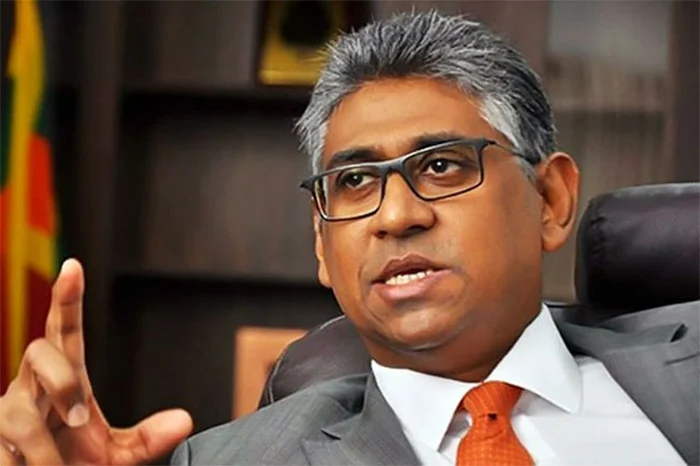
Clear break with hide-bound traditions
Opposition Parliamentarian and President’s Counsel Faiszer Musthapha has proposed a series of wide-ranging legal reforms to Sri Lanka’s divorce, marriage and personal law systems, drawing broad agreement from legal experts, civil society groups and women’s rights advocates who describe the proposals as timely, humane and aligned with contemporary social realities.
Among the key reforms suggested are the introduction of No-Fault Divorce, raising the minimum legal age of marriage to 18, and expanding women’s rights under Muslim and Thesawalamai law.
Sri Lanka’s current divorce framework is largely fault-based, requiring spouses seeking divorce to prove a recognised matrimonial offence. Legal professionals argue that this system is outdated, adversarial and often forces parties to make exaggerated or false allegations, while placing unnecessary strain on the court system.
Musthapha’s proposal would allow divorce on the basis of irretrievable breakdown of marriage, without attributing blame to either party.
Legal analysts say this approach better reflects modern social realities and offers a more dignified and efficient resolution to marital breakdowns.
“This is a humane reform that reduces conflict and emotional harm, particularly to children,” a senior legal practitioner noted, adding that no-fault divorce has already been adopted in many jurisdictions.
Attorney-at-Law Shihar Hassan, who is currently based in Canada, also stated that the proposal to introduce a Matrimonial Causes Act incorporating no-fault divorce is not new. He noted that it was expressly recommended by the Marriage and Divorce Commission Report of 2006, which called for a unified, modern framework recognising irretrievable breakdown of marriage as a ground for divorce across communities.
He further emphasised that by reviving the Matrimonial Causes Act proposed in 2006, the present reform effort reflects continuity with Sri Lanka’s own law reform agenda rather than a break from it. The Commission had warned that fault-based divorce laws were inefficient and socially damaging—concerns that remain unaddressed nearly 20 years later.
Strong support has also emerged for Musthapha’s proposal to amend the Muslim Marriage and Divorce Act (MMDA) to raise the minimum age of marriage to 18.
Under current law, girls below the age of 12 may marry with the approval of a Quazi, a provision, critics say, is inconsistent with modern child protection standards and Sri Lanka’s international obligations.
Women’s rights advocates and child protection groups argue that setting 18 as the minimum age of marriage is essential to safeguarding education, health and long-term wellbeing.
“Raising the marriage age is not about religion, but about protecting children,” a civil society activist said.
Another proposal gaining wide support is Musthapha’s recommendation to remove maintenance claims under Muslim law from the exclusive jurisdiction of Quazi courts, allowing them to be heard under the general Maintenance Ordinance in Magistrate’s Courts.
Legal experts say this change would make maintenance proceedings more accessible, efficient and equitable, particularly for women seeking urgent financial relief.
“This reform would ensure quicker remedies and reduce procedural hurdles faced by women,” a family law specialist observed.
Supporters of the proposals emphasise that the reforms do not seek to dismantle religious or personal law systems, but rather to modernise them in line with constitutional principles, human rights norms and present-day social conditions.
Musthapha has stressed that personal laws must evolve to reflect social change, while preserving their core values.
Legal scholars argue that meaningful reform will require broad consultation, but agree that the proposals have opened an important national conversation.
Observers note that the proposals have sparked renewed debate in Parliament and civil society on the need to balance tradition with fairness, efficiency and rights-based governance.
“There is growing recognition that family law reforms can no longer be postponed,” a senior attorney said. “Musthapha’s proposals reflect concerns that have been raised for years.”
By Ifham Nizam







Open hearing of evidence into alleged irregularities in coal procurement is scheduled to begin in the first week of July, while the Presidential Commission of Inquiry continues recording statements from relevant officials, investigators said.
So far, the Commission has recorded statements from around 40 government officials, including members of procurement committees and other personnel attached to institutions involved in coal-related transactions.
Officials said that, depending on evidence gathered during the ongoing inquiry, statements may also be obtained from former ministers if required.
The Commission has also received 28 complaints in connection with alleged irregularities in coal imports and related procurement processes.
President Anura Kumara Dissanayake on April 17 appointed a three-member Presidential Commission of Inquiry under the Special Presidential Commissions of Inquiry Act No. 07 of 1978 to probe alleged malpractice in coal imports and electricity generation since the inception of coal-based power generation up to April 16, 2026.
The Commission is chaired by Supreme Court Justice Gihan Kulatunga, with Court of Appeal Judge Aditya Patabendige and High Court Judge Sanjeewa Somaratne serving as members. Former State Ministry Secretary P.V. Bandulasena acts as Secretary to the Commission.
The inquiry covers alleged procurement irregularities, possible financial losses to the State, import of substandard coal, quality inspection failures, contractual breaches and operational issues in power generation, including whether corrective measures were taken where necessary.
It will also identify responsible political authorities, officials of Sri Lanka Coal Company (Private) Limited and suppliers, while recommending legal or administrative action and measures to prevent future lapses.
Meanwhile, the Committee on Public Enterprises (COPE) is also preparing to table its report on coal procurement in Parliament, with officials from relevant institutions having been summoned during its proceedings. COPE Chairman MP Dr. Nishantha Samaraweera said audit findings had also been considered, and any matters requiring further investigation would be referred to law enforcement and anti-corruption authorities.
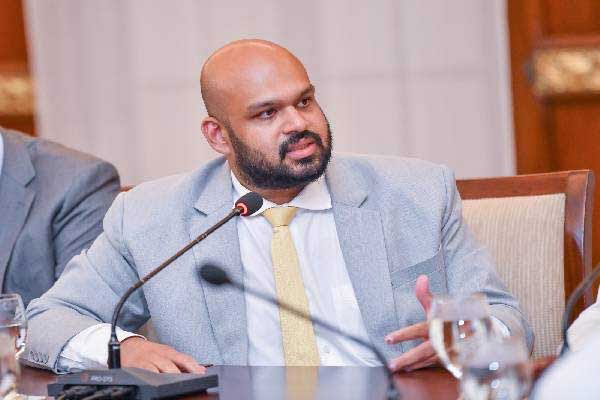
Trincomalee District TNA MP Shanakiyan Rasamanickam has submitted a motion to Parliament calling for the immediate repeal of the Prevention of Terrorism Act (PTA), arguing that the controversial law has enabled arbitrary detention, torture and the targeting of minority communities for more than four decades.
In his motion, now published in the Addendum to the Order Book of Parliament, the MP urged the Government to repeal the Prevention of Terrorism Act, No. 48 of 1979, in its entirety and refrain from introducing any replacement legislation containing similar provisions.
Rasamanickam contended that the PTA had been used for over 40 years to facilitate prolonged arbitrary detention and to obtain false confessions through torture. He further alleged that the law had disproportionately affected minority communities and civil society groups.
The motion states that there is no justification for maintaining a permanent counter-terrorism law that grants sweeping powers to the authorities.
The TNA legislator argued that existing legal provisions were sufficient to address security threats, noting that terrorism-related offences could already be prosecuted under the Penal Code.
He also pointed out that the Government retained the power to declare a state of emergency when circumstances warranted extraordinary measures, rendering a permanent anti-terrorism framework unnecessary.
Accordingly, the motion calls on Parliament to resolve that the Government take immediate steps to abolish the PTA without replacing it with legislation containing comparable powers.
The Prevention of Terrorism Act, enacted in 1979, has long been the subject of criticism from human rights organisations, civil society groups and international bodies, which have raised concerns over provisions relating to detention without trial and safeguards against abuse.

An assistant manager and a security officer attached to a state bank branch in Horana have been arrested in connection with the robbery of more than Rs. 30 million that was being transported to replenish automated teller machines (ATMs), Police said.
The two suspects were taken into custody on Friday after statements were recorded from them regarding the incident, which occurred on Wednesday afternoon at the Horana branch of the People’s Bank.
According to Police, a bank employee was carrying two bags containing cash through the rear entrance of the bank at around 2.45 pm when an individual who had arrived on foot allegedly snatched the bags and fled the scene.
The stolen money, amounting to approximately Rs. 30.5 million, had been prepared for distribution to ATM machines and transportation to other bank branches. Earlier reports had estimated the loss at around Rs. 35 million.
Investigators subsequently arrested a suspect believed to have been directly involved in the robbery and recovered Rs. 17 million of the stolen cash.
Police have not disclosed the exact circumstances that led to the arrest of the assistant manager and security officer but said investigations uncovered information linking them to the incident.
The Western Province North Crime Division is conducting further investigations to determine whether additional suspects were involved and to recover the remaining stolen money.
The daring daylight robbery has raised concerns over security procedures employed during the transportation of large sums of cash from banking institutions.Further investigations are continuing.
by Norman Palihawadane ✍️

Persistent rain in Kingston washes out second ODI between West Indies and Sri Lanka

Heavy showers about 100 mm are likely at some places in the Western and Sabaragamuwa provinces and in Galle, Matara, Kandy and Nuwara-Eliya districts

Open hearing on coal procurement inquiry set for July first week

TNA MP calls for complete repeal of PTA

Assistant manager, security officer held over Horana bank cash robbery

Korea, UNDP launch anti-corruption initiative assessment in Lanka

‘Dates have the highest sugar content to fight Coronavirus’

Sunday Island 27 December – Headlines

#SundayIsland 17th December – Headlines

Sunday Island – 28th March

Sunday Island Headlines – 21 March

Sunday Island – 21st February – Headlines
-

 News5 days ago
Lankan duo emerge winners in Latin dance championship held in Blackpool, UK
-

 Business6 days ago
IMF’s unstated rate:Sri Lanka’s $695m loan costs about 5.33% per annum
-

 Latest News3 days ago
Kusal Mendis, Pathum Nissanka, bowlers put Sri Lanka 1-0 up
-
 News3 days ago
New US tariffs proposed on 60 countries, including Sri Lanka
-

 Business6 days ago
Sri Lankan scientist-innovator Milinda Edirisinghe introduces AI-integrated gem testing system to gemological world
-
 Features2 days ago
Power crept into the Sangha and is now tearing it apart
-

 News6 days ago
UNP challenges NPP move to amend Vihara – Devalagam Act
-

 News5 days ago
Sri Lankan teen killed in Chennai clash; three arrested