
News
AI asks govt. to ensure adequate nutrition for all pregnant and breastfeeding women

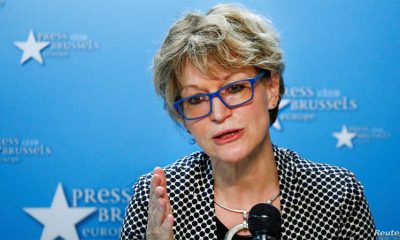
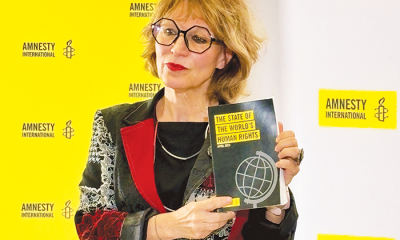
The Government of Sri Lanka must ensure access to adequate nutrition for all pregnant and breastfeeding women amid the ongoing economic crisis in the country, Amnesty International said yesterday (12).
The AI examined the impact of the economic crisis on access to nutrition for pregnant and breastfeeding women, with a particular focus on women living below the poverty line in Colombo. Falling incomes, loss of livelihoods and inflation have reduced women’s purchasing power while government-funded programmes aimed at increasing maternal nutrition have also been affected by the crisis.
“Due to the severity of the economic crisis in Sri Lanka, health and nutrition have taken a back seat. The situation has taken a grave toll on the health and well-being of pregnant and breastfeeding women. These individuals have also been disproportionately impacted by the crisis, which has seen poverty rates double in the space of a year due to the crisis,” said Dinushika Dissanayake, Amnesty International’s Deputy Regional Director for South Asia.
Amnesty International interviewed 45 people for this briefing, including healthcare workers, members of civil society, and pregnant and breastfeeding women from a variety of ethnic and religious backgrounds, all of whom live in informal settlements and tenement blocks in Colombo.
The women Amnesty International spoke to raise concerns about the unaffordability of food, the inconsistent supply of ‘Thriposha food supplements, and the inability to redeem food vouchers offered through government programmes.
Pregnant and breastfeeding women said they aimed to “fill their stomach” rather than consume recommended daily amounts of variety of nutrients due to the high cost of food. In order to have three meals a day, many opted to limit portion sizes, while some reduced their number of daily meals to two. One breastfeeding woman told Amnesty International: “We eat breakfast and dinner and try to skip lunch… We eat a biscuit for lunch with a cup of tea.”
In almost all households Amnesty International spoke to, consumption of meat, vegetables, fruit and milk had drastically reduced. Such deprivation increases the risk of nutrient deficiencies, which can affect the development of the foetus. Families that previously consumed meat or fish on a weekly basis now consume them just once a month or only when money is available. Another breastfeeding woman said: “We can’t afford milk-inducing food. You see fish is expensive. So, we buy what we can afford for the money we have.”
Most pregnant and breastfeeding women Amnesty International spoke to said that they were unemployed and their husbands did not have a regular income amid the economic crisis.
In February 2023, pregnant and breastfeeding told Amnesty International that government food vouchers, which are usually offered to pregnant and breastfeeding women, could not be redeemed due to a lack of state funds.
Amnesty International wrote to the Ministry of Women, the Ministry of Health and the Ministry of Public Administration to raise these concerns, but did not receive a response at the time of publication.
Sri Lanka’s public health system has also been affected by shortages of medicine and equipment. Health workers providing maternal care told Amnesty International that they had to stop, delay or postpone non-essential surgeries and procedures. One doctor, who said they have to ration drugs for emergency cases because future supplies are uncertain, told Amnesty: “We have to see patients suffering and we cannot do anything.”
Amnesty found that health workers reused equipment or told patients to purchase medicine or equipment from private pharmacies because state-run hospitals had run out. Meanwhile, medicines in private pharmacies remain unaffordable to most due to price hikes and the devaluation of the Sri Lankan Rupee.
Sri Lanka has ratified several international accords requiring it to ensure that pregnant and breastfeeding women have access to adequate healthcare and food, including the Convention on the Elimination of All Forms of Discrimination Against Women (CEDAW) and the International Covenant on Economic, Social and Cultural Rights (ICESCR).
“Prolonged food insecurity and inadequate nutrition can lead to serious long-term consequences for mothers and their children if left unaddressed. The Government of Sri Lanka must urgently meet its international human rights obligations, including by ensuring access to adequate, affordable and good quality nutrition for pregnant and breastfeeding women. The international community must also play a role in supporting the government to ensure pregnant and breastfeeding women are able to access adequate food and nutrition,” said Dinushika Dissanayake.







News
“We welcome investors and tourists visiting Sri Lanka who contribute to strengthening economic and cultural ties”– PM


Prime Minister Dr. Harini Amarasuriya stated that as Sri Lanka moves towards sustainable growth, the country welcomes investors and tourists who contribute to strengthening economic and cultural ties.
She made these remarks while addressing a special celebration and dinner reception organized by the Sri Lanka India Society to commemorate the 77th Republic Day of India and the 78th Independence Day of Sri Lanka, held on Thursday [February 26] at the Taj Samudra Hotel in Colombo.
During the event, the official magazine of the Sri Lanka India Society was launched, and the book “Port of Call” was presented to the Prime Minister and the Indian High Commissioner.
Addressing the gathering, Prime Minister Dr. Harini Amarasuriya noted that the Sri Lanka India Society since its establishment in 1949 has contributed to strengthening relations between the two nations, through cultural engagement, dialogue, and sustained interaction. The Society has supported ties not only between the two governments but also between the peoples of both countries.
She further stated,
“Over the past year, the strength of India–Sri Lanka bilateral relations has been evident. I express gratitude for the support extended by the Indian government in facilitating the exposition of the sacred Devnimori relics in Sri Lanka.
When Cyclone Dithva affected Sri Lanka, India responded promptly through “Operation Sagar Bandhu,” providing assistance in the rescue and relief efforts.
I appreciated the announcement of a long-term relief package amounting to USD 454 million in support of Sri Lanka’s recovery efforts. India continues to work closely with Sri Lanka in its journey towards sustainable development.
The Sri Lanka–India partnership spans multiple sectors, including economic development, energy, connectivity, trade and investment, digital transformation, health, education, maritime security, and people-to-people ties.
As Sri Lanka progresses towards sustainable growth, we welcome increased investments from Indian businesses and greater tourist arrivals from India, while further strengthening our economic and cultural ties”.
She reaffirmed that India is Sri Lanka’s closest neighbour and an important partner, Sri Lanka is committed to advancing cooperation for the benefit of the people of both countries and the wider region.
Speaking at the event, Indian High Commissioner Santosh Jha stated that the relationship between the two countries goes beyond formal diplomacy and is a strong and special partnership. He noted that the introduction of the first international degree offered outside India in Sri Lanka marked a new chapter in educational cooperation. He also highlighted the continued expansion of collaboration in connectivity and people-to-people relations, adding that India–Sri Lanka relations are experiencing significant growth in the current period.
The event was attended by ambassadors, diplomats, officials of the Indian High Commission, and government representatives.
[Prime Minister’s Media Division]

The “Gauravabhinandana” ceremonial felicitation was held in honour of the Chief Sanghanayake of the Sabaragamuwa Province of the Malwathu Maha Vihara Chapter of the Maha Vihara tradition of the Siyamopali Maha Nikaya; former Pirivena Examiner; Rajakiya Pandith; holder of Master; Scholar of classical texts; recipient of the Kala Bhushana title; Vinaya Keerthi Sri Dhammdinna Saranapala; the Most Venerable Kaeligama Vijithananda Nayaka Thero on Wednesday [25th of February] at the auditorium of the Rathnapura District Secretariat
The event was organized under the patronage of the Anunayake of the Malwathu Chapter of the Siyamopali Maha Nikaya, Most Venerable Acharya Agga Maha Panditha Niyangoda Dharmakeerthi Sri Sangharakkhitha Vijithasiri Abhidhana Anunayake Thero.
The presentation of the symbolic casket to the Most Venerable Kaeligama Vijithananda Nayaka Thero took place with the participation of Prime Minister Dr. Harini Amarasuriya and the Governor of Sabaragamuwa Province, Ms. Champa Janaki Rajaratne.
Addressing the gathering, the Prime Minister stated:
“It is a privilege for me to participate in this felicitation ceremony held in appreciation of the religious and social service rendered by the Chief Sanghanayaka of the Sabaragamuwa Province, Most Venerable Kaeligama Vijithananda Nayaka Thera.
When we reflect on his life journey, it serves as a profound inspiration to us all. Having entered monastic life as a disciple of the Sabaragamuwa prelate, the late Most Venerable Kelle Sri Saranananda Thero, the Nayaka Thera has now rendered over five decades of distinguished service following higher ordination.
After obtaining a Bachelor of Arts degree from the Vidyodaya University, he devoted several decades as a Pirivena teacher and examiner, enlightening thousands of students. He has also authored numerous scholarly works. His classical literary contributions, especially for students of Pirivena education, are of exceptional value”.
The Prime Minister further recalled with gratitude the commitment shown by the Nayaka Thera, centred around the Ratnapura Mahawala Sri Dharmayathana, to uplift the spiritual and social well-being of the local community, and extended her wishes for good health and long life for the continuation of his invaluable service to the Buddha Sasana.
The occasion was also graced by the presence of Most Venerable Karagoda Uyangoda Maithreemurthi Thera, Supreme Mahanayaka of the Sri Lanka Amarapura Maha Sangha Sabha; the Anunayaka of the Sri Lanka Ramanna Maha Nikaya, Waleboda Gnanissara Thera; Lecturer of the University of Peradeniya and Deputy Registrar of the Malwathu Chapter, Panditha Mahawela Dhammakkhanda Rathanapala Thera; the Chief Sanghanayaka of Ratnapura and Uva Wellassa and former Vice-Chancellor of Uva Wellassa University, Bethgamuwa Dhammadinna Thera; along with members of the Maha Sangha. The occasion was also attended by the Minister of Buddhasasana, Religious and Cultural Affairs Sunil Senavi, Governor of Sabaragamuwa Province, Ms. Champa Janaki Rajaratne, Member of Parliament Shantha Padmakumara, former Members of Parliament A. A. Wijethunga and Janaka Wakkumbura, Ratnapura District Secretary Chinthana Udaya Nanayakkara, Basnayake Nilame of the Maha Saman Devalaya Ishan Sanka Mapitigama, Mayor of Ratnapura Indrajith Katugampala, and many other distinguished invitees.


[Prime Minister’s Media Division]


Opposition and SJB Leader Sajith Premadasa yesterday raised serious concerns over the Government’s importation of substandard coal, warning that its use has resulted in inefficient electricity generation, increased equipment damage and significant financial losses to the State and consumers.
In a video statement, the Opposition Leader said the SJB had exposed details regarding the importation of inferior-quality coal, prompting what he described as an admission by Government representatives that the coal in question was of poor standard.
Premadasa charged that the continued use of such coal has reduced generation efficiency at the Norochcholai Power Station, while increasing the likelihood of damage to critical equipment.
He further claimed that ash content had risen sharply, from the accepted 11–15 percent range, to over 21 percent, doubling the volume of toxic pollutants generated. The disposal of the excess ash, he said, poses additional environmental risks.
The Opposition Leader also noted that a further 15 to 16 coal shipments are expected to arrive within the next two to three months. However, he alleged that the failure to procure high-quality coal has reduced megawatt output, necessitating greater reliance on fuel-powered plants to bridge the shortfall.
“This results in financial losses to the country, the Government, and, ultimately, to electricity consumers,” he said.
Premadasa cited Section 30 of the Electricity Act of 2009, maintaining that consumer tariffs can only be imposed, based on efficient electricity generation. He urged the Public Utilities Commission of Sri Lanka to safeguard the rights of the country’s 7.5 million electricity consumers, insisting that losses stemming from inefficient generation cannot lawfully be passed on to the public.
He further alleged that the Government’s promised “system change” had, instead, resulted in questionable coal procurement deals. The financial losses incurred through, what he termed, corrupt transactions, he argued, could have been channelled into essential public services, such as education, healthcare, poverty relief and support for entrepreneurs.
Premadasa called not for the appointment of a committee of experts, but for a full forensic audit into the transactions surrounding the coal imports.
He stressed that the SJB would continue to stand in defence of electricity consumers and asserted that the President and Cabinet must accept responsibility for the damage allegedly caused to the Norochcholai power plant, which, he described, as a national asset.

Hanoi’s most popular street could kill you

At least 11 killed after military plane carrying banknotes crashes in Bolivia

Six balls that changed the night

“We welcome investors and tourists visiting Sri Lanka who contribute to strengthening economic and cultural ties”– PM

A ‘delicate’ balance for Canada and a ‘win-win’ for Modi as Carney visits India

Pakistan face stiff but straightforward equation for semi-final qualification

‘Dates have the highest sugar content to fight Coronavirus’

Sunday Island 27 December – Headlines

#SundayIsland 17th December – Headlines

Sunday Island – 28th March

Sunday Island Headlines – 21 March

Sunday Island – 21st February – Headlines
-
 Features6 days ago
Why does the state threaten Its people with yet another anti-terror law?
-
 Features6 days ago
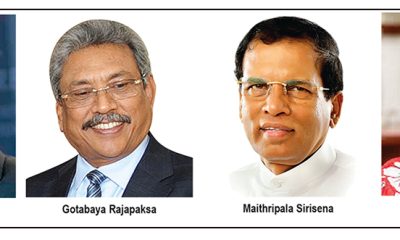
Reconciliation, Mood of the Nation and the NPP Government
-

 Features6 days ago
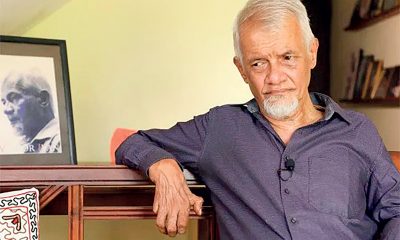
Victor Melder turns 90: Railwayman and bibliophile extraordinary
-

 Features5 days ago
LOVEABLE BUT LETHAL: When four-legged stars remind us of a silent killer
-
 Features6 days ago
Victor, the Friend of the Foreign Press
-
 Business5 days ago
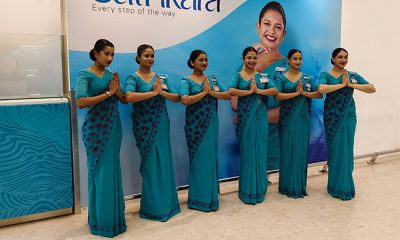
Seeing is believing – the silent scale behind SriLankan’s ground operation
-

 Business5 days ago
Bathiya & Santhush make a strategic bet on Colombo
-
 Features6 days ago
Barking up the wrong tree