
News
Impunity remains entrenched in Lanka: Amnesty International slams Sri Lanka’s human rights record

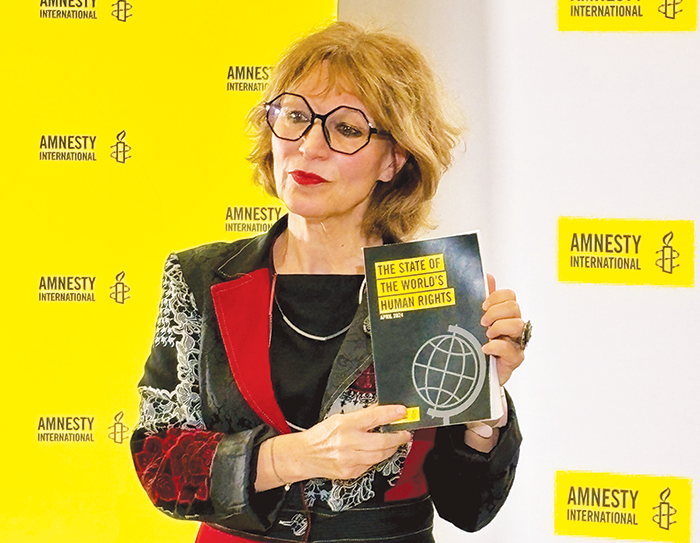
Amnesty International last Wednesday slammed the Sri Lankan government’s human rights record noting that “impunity remained entrenched with the Sri Lankan government making no notable progress around the right to truth, justice and reparation for those affected by war”.
Amnesty’s Annual Report 2023/24 detailed how the Sri Lankan continued to oppose measures to advance accountability for the war crimes committed by the Sri Lankan military; how the economic crisis has seen a doubling of the number of people beneath the poverty line; and the government concerted efforts to curb of freedom of expression, amongst other issues.
Commenting on the proposed “truth commission”, the report details that 9 international human rights organisations have criticised the plans in September. The report goes on to state: “Given the failure of domestic commissions of inquiry to ensure accountability, some victim communities rejected the plans outright. Others highlighted the need for trust-building measures before establishing any truth commission, noting concerns around continuing surveillance and the lack of space memorialisation.”
The report also details how other domestic transitional justice mechanisms (the Office on Reparations and the Office on Missing Persons) have made no notable progress over the year according to publicly available information. “Many cases –exemplars of impunity for human rights violations – dragged on in the domestic court system, again with no notable progress”.
Amnesty also details the government’s persistent rejections of international mechanisms such as the Sri Lanka Accountability Project, which was established in 2021.
Despite Sri Lanka’s assurances to the UNHRC of the steps the government had been taking, Amnesty noted that the Sri Lankan government ‘merely noted and did not support most recommendations made during the Universal Periodic Review in March on accountability for war-time serious violations of human rights and humanitarian law.”
Commenting on the state of poverty on the island, the report highlights the World Bank’s finding that the number of people living below the poverty line has doubled since 2022.Whilst the government has introduce a new “Aswesuma” welfare benefit payment scheme, Amnesty warns that the narrow target of the programme may mean that “only approximately 1.1 of the 2 million families living below the poverty level were eligible”.
It risked excluded many of the most vulnerable including those working informal sector, on daily wage incomes, from the Malaiyaha Tamil community, others with low or precarious incomes, and those whose incomes were lost due to unemployment.
Amnesty also slammed continued efforts by the Sri Lankan government to curb freedom of expression. The report cites an incident in November were nine Tamils were arrested under Sri Lanka’s draconian Prevention of Terrorism Act for a commemoration vigil in the eastern town of Batticaloa.
The report further details the persistent use of the PTA by the Sri Lankan government despite pledges to repeal the legislation. Amnesty notes that the proposed Anti-Terrorism Act, which seeks to replace the PTA, makes minor changes but the legislation’s capacity to enable human rights violations remained.
The human rights organisation also criticised Sri Lanka’s Online Safety Bill, which the OHCHR has slammed noting that; “many sections of the Bill contain vaguely defined terms and definitions of offences which leave significant room for arbitrary and subjective interpretation and could potentially criminalize nearly all forms of legitimate expression, creating an environment that has a chilling effect on freedom of expression”.
Amnesty also criticised the arrests of social commentors for their criticism of Buddhism.
The report also referenced the many protests which took place last year adding that the Sri Lankan government sought to ban protests and frequently resorted to excessive and other unlawful force against protesters ? deaths and many injuries resulted in both countries. In a different report released by Amnesty earlier this month, it called on the international community to “urgently review cooperation with the Sri Lankan government” including the training and provision of its security forces, as it released a new report detailing how the military and police engaged in violent suppression of protests.










Latest News
Physical development must be matched by the enrichment of people’s inner lives through aesthetics and culture – PM

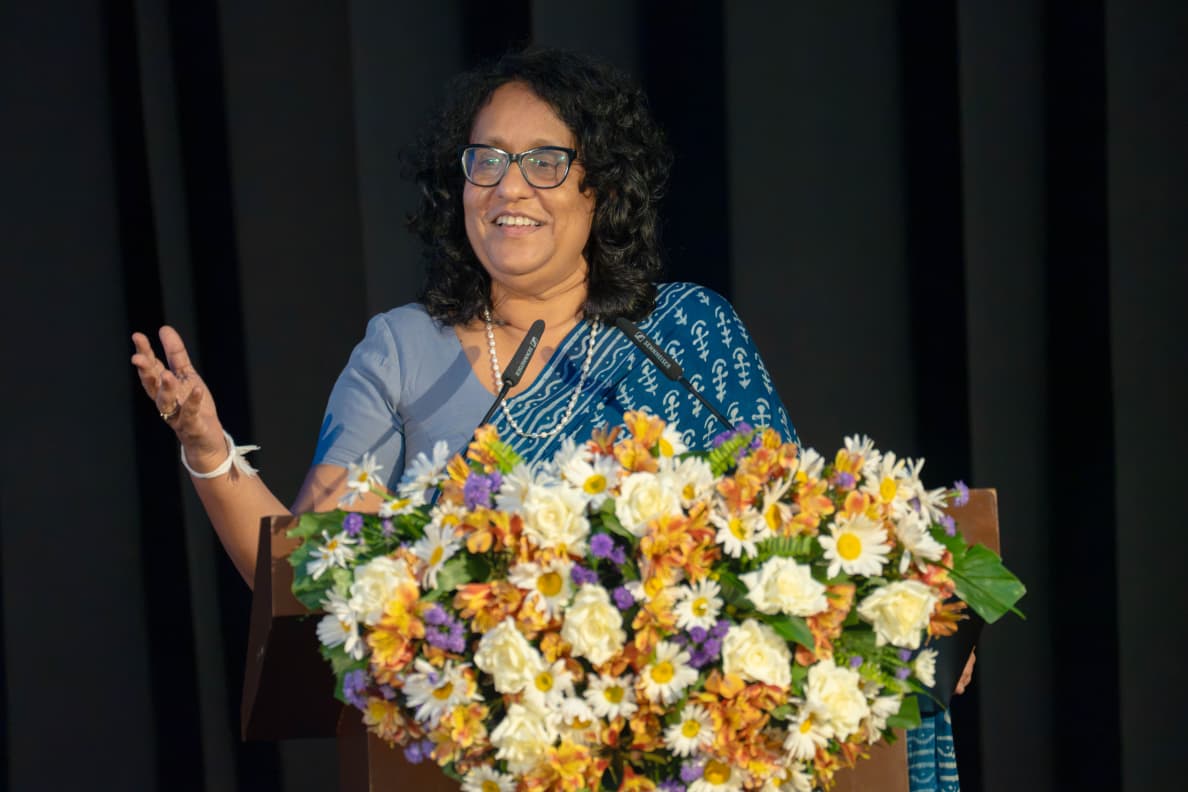
Prime Minister Dr. Harini Amarasuriya stated that while a country develops its roads, buildings and economy, the inner lives of its people must also be enriched through aesthetics, culture and creativity. Development cannot be measured solely by improvements in physical resources, and the empathy and the appreciation of the arts is a key aspiration of the new era of renaissance.
The Prime Minister made these remarks while inaugurating the ’Aluth Wessa’ Cultural Festival and Exhibition, organised jointly by the Kandy District Secretariat, the Department of Cultural Affairs and the Kandyan Cultural Center on 15 October at the Kandy District Secretariat.
During the event, the Prime Minister also presented awards to artists from the Kandy District in recognition of their outstanding contributions to the arts.
Addressing the gathering, the Prime Minister further stated: “Kandy is a place where we can best experience the value of our country’s historical, artistic and cultural heritage. The Temple of the Sacred Tooth Relic, the wood carvings of Embekka, the murals of Degaldoruwa, the Kandyan dance tradition, and the contributions of renowned artists such as Pani Bharath, Dr. Ananda Coomaraswamy and Minnette de Silva have helped shape a distinctive cultural identity unique to Kandy.
During the recent disaster, when the people of Kandy faced immense difficulties, people from districts such as Galle, Matara and Kalutara voluntarily came forward to extend tremendous support. Their empathy and commitment deserve our sincere appreciation. Following the disaster, several initiatives are already progressing rapidly to help Kandy recover and rebuild. These include restoring the Upcountry railway line, repairing damaged houses and rehabilitating historic temples that were destroyed through the Central Cultural Fund. Through our education reforms, we aspire to nurture a generation that goes beyond professional knowledge and skills, developing artistic sensitivity alongside human values and compassion.”
The event was attended by the Most Venerable Naramapanawe Ananda Thero, Anunayake of the Asgiri Chapter of the Siyamopali Maha Nikaya and Chancellor of the University of Kelaniya, along with members of the Maha Sangha and other religious leaders. Also present were Central Province Governor Dr. Suranga Fernando, Members of Parliament Jagath Manuwarana, Thanura Dissanayake, Thushari Jayasinghe and E. M. Basnayake; the Mayor and local councillors, Kandy District Secretary Indika Udawatta, Divisional Secretaries, public officials, artists, parents, and children.
(Prime Minister’s Media Division)
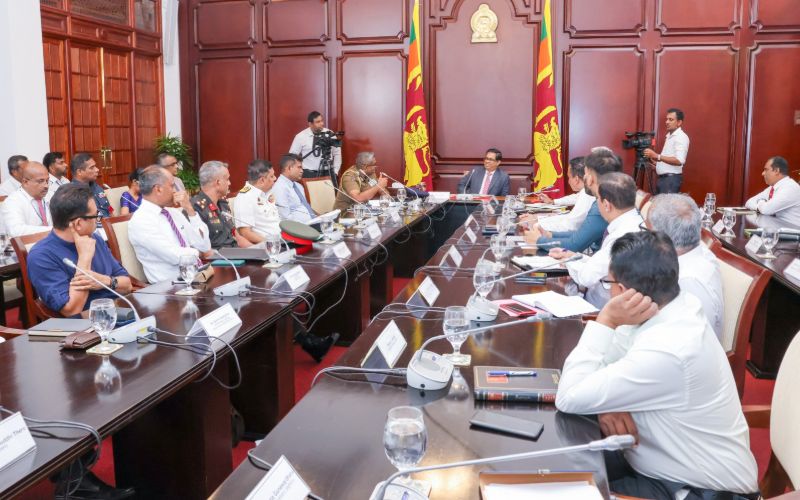
A discussion to review the operations of the 1818 hotline and progress made in its implementation was held on Thursday morning (15) at the Presidential Secretariat, under the chairmanship of Secretary to the President Dr Nandika Sanath Kumanayake. The hotline was introduced as part of the ‘A Nation United’ national operation to eradicate the illicit drug menace.
The hotline was established to enable the public to provide security authorities with accurate information on drug trafficking, distribution and any related suspicious activities taking place across the country. Members of the public anywhere in Sri Lanka can submit information through this service, with the confidentiality of informants fully protected. The information received is acted upon promptly. Operating from the ‘A Nation United’ Media Centre, the service is coordinated under the direct supervision of the Presidential Secretariat and the ‘A Nation United’ National Steering Committee. It enables members of the public to provide information to security authorities securely at any time.
The discussion also focused on the first anniversary of the ‘A Nation United’ national operation, which falls on 05 November and measures to strengthen its effectiveness in protecting future generations from the drug menace and building a safe, drug-free society.
Venerable Madovita Vajira Buddhi Thera, Director (Piriven) of the Ministry of Education, Higher Education and Vocational Education, Ravi Seneviratne, Secretary to the Ministry of Public Security and Parliamentary Affairs, Prince Senadheera, Secretary to the Ministry of Buddhasasana, Religious and Cultural Affairs, Roshan Gamage, Senior Additional Secretary to the President, Attorney-at-Law Priyantha Weerasooriya, Inspector General of Police, H. S. K. J. Bandara, Director General of the Department of Government Information, Gamini Senaratne, Commissioner-General of Buddhist Affairs, Chathuri Pintu, Director of the Department of Christian Religious Affairs, Y. Aniruthanan, Director of the Department of Hindu Religious Affairs and M. S. M. Nawaz, Director of the Department of Muslim Religious Affairs, also attended the meeting. A group of officials representing the tri-forces and other relevant government institutions were also present.
(President’s Media Division)

Marikkar claims coal losses more than twice Treasury bond scam
By Shamindra Ferdinando
The SJB has accused the NPP government of trying to create an environment conducive for the re-appointment of Kumara Jayakody who resigned on 17 April 2026 over a coal scam perpetrated in 2025.
Colombo District MP S.M. Marikkar Tuesday (13) alleged that Jayakody’s successor Anura Karunathilaka was spearheading the efforts at the behest of President Anura Kumara Dissanayake.
Addressing the media at the Opposition leader’s Office at No. 30, Sir Marcus Fernando Mawatha, Colombo 07, Marikkar said that the NPP was busy propagating a lie that the losses amounting to Rs 15.68 bn could be entirely recovered by way of penalties and funds held as deposits in line with the supplier. The Opposition MP placed the amount held by the government at Rs 16.48 bn.
Marrikar claimed that the NPP’s propaganda project to whitewash Jayakody was meant to bring Jayakody back into the Cabinet of ministers in January next year. The top SJB spokesman said that the findings of the Sectoral Oversight Committee (SOC) on Infrastructure and Strategic Development report on the losses suffered by the use of substandard coal had been used to back the government move.
The inquiry was held into procurement for 2025/2026 seasons made from Trident Chemphar, an Indian company whose selection was questioned by the National Audit Office in a special report submitted to parliament before the vote on no faith motion against Jayakody.
Marikkar said that the NPP in its haste to build a case for Jayakody’s return to the cabinet had conveniently forgotten that six of the 25 shiploads of coal ordered from Trident Chemphar were never delivered. In a desperate bid to cover the shortfall, the government paid Rs. 2,284 million above the market price in emergency procurement. As the SOC had rejected the tests conducted by an Indian company and ordered fresh tests on substandard coal, an additional Rs 26.6 mn had been paid to an Australian lab, MP Marikkar said, explaining other losses caused by the corrupt deal.
Marrikar explained how the procurement of substandard coal altogether cost the taxpayer nearly Rs 20 bn while the government engaged in a project to clear Jayakody. The former minister is also indicted in the Colombo High Court in an earlier corruption case.
Marrikar emphasized that the government should accept responsibility. Comparing the action taken in respect of 2015 and 2016 Treasury bond scams and the coal scam, MP Marikkar said that the losses caused by Trident Chemphar fraud was double the Treasury bond scam. A future government would investigate the coal scam and punish all those responsible. The NPP under any circumstances couldn’t bring back Jayakody to the cabinet as he was directly responsible for the fraud, the Colombo District lawmaker said.
At the time the UNP perpetrated Treasury bond scams, Marikkar represented the UNP parliamentary group which made desperate bids to protect the bond thieves.
The SJBer refused to answer questions regarding any other issue. Marikkar reacted angrily when a journalist sought to raise a group of SJB MPs meeting the Most Ven Thibbatuwawe Sri Sumangala Mahanayake Thera of the Malwathu Chapter in Kandy. Then the MP accused a section of the media of trying to suppress the coal scam by raising other issues. Marrikar vowed that they wouldn’t allow Jayakody’s return to the cabinet. The NPP government’s reputation had been devastated by the coal scam and current efforts to cover up the direct involvement of Minister Jayakody would not succeed, he said, warning the NPP should be prepared to face the consequences.

Physical development must be matched by the enrichment of people’s inner lives through aesthetics and culture – PM

Review of the operations of the 1818 Hotline introduced to report drug-related information

Showers in the Western, Southern, Central, Sabaragamuwa, North-Western and Northern provinces and in the Anuradhapura District

SJB: Govt. trying to reappoint Jayakody, who resigned from Cabinet amidst coal scam

India busts Pakistani salt smuggling via Sri Lanka

Monks brave heavy rains to press for Gnanasara Thera’s release

‘Dates have the highest sugar content to fight Coronavirus’

Sunday Island 27 December – Headlines

#SundayIsland 17th December – Headlines

Sunday Island – 28th March

Sunday Island Headlines – 21 March

Sunday Island – 21st February – Headlines
-

 News5 days ago
Sri Lanka escalates anti-graft drive with Shiranthi’s jailing
-

 News6 days ago
NPP govt. reminded of its responsibilities as US warship leaves Colombo
-

 Latest News7 days ago
Farhan, Sadaqat help Pakistan ace 183 chase to go 1-0 up
-

 Latest News4 days ago
Farhan and Sadaqat help Pakistan seal series in style
-

 News5 days ago
Iranian ships stranded, Lanka fears US sanctions
-

 Latest News3 days ago
Nissanka’s return headlines Sri Lanka’s Test squad against Pakistan
-
 News6 days ago
Interdicted top House official Kularatne receives special recognition in Mexican Parliament
-

 Features4 days ago
Intake 16: 45 years of duty and honour