
Opinion
A generation with an attitude


It is not uncommon to discuss an individual’s attitude, often in private; however, it is less common to hear discussions about the attitude of an entire generation in a public forum. A concerned group of Millennials (see Figure for definition and the span of their working lives) recently discussed the issues relating to attitude of the younger generation (see Srilankaleads.com or https://youtu.be/6YXGa0cR9Uo). This is commendable as identifying the issue is the first step toward finding a solution. The question that remains is how to address this issue before it gets worse.
Definitions of attitude differ across disciplines. In social psychology, it is viewed as ‘a cognition’ reflecting our evaluation of objects, people, places, and events with varying degrees of aversion or attraction. Simply put, it describes how we act and feel about anything and everything. Attitude comprises of three components: a) Affective, how we feel when we think or encounter something, b) Behavioural, how we act when we encounter or interact with something, and c) Cognitive, our thoughts and beliefs about something.
When referring to ‘one’s attitude,’ it generally means their overall perspective or settled way of thinking and feeling about things; in other words, it is their worldview. While a specific attitude might be held towards a particular thing, the term often implies a broader, more general way of approaching life. Therefore, one’s attitude is a composite of many attitudes. They come in various forms; good, bad, and indifferent. As a result, optimising the interplay of multiple attitudes for the good of a common cause, like the fate of a country, becomes a challenging task.
It is evident that all our social institutions have collapsed, and it does not require extensive data to convince us; it is the result of the nation’s attitude. We can argue that the country has faced numerous challenges, both external and internal, natural, or human-caused; but what is beyond debate is that we have not had the right attitude to avert disaster. We must acknowledge our improper attitude and address it directly to prevent further decline; shifting blame or ignoring it will not serve any purpose. This is why what the Millennials are trying to do is commendable, timely, and crucial, and why they deserve the wholehearted support of all well-meaning citizens.
The main reason for the phenomenal success of the human species is that we have evolved as social animals (see Harari 2011). Humans do not possess the strength, speed, claws, fangs, or venom that other animals use to their advantage. However, we have made tremendous advances that no other species could imagine and have assumed total dominance over all other species. All this was achieved through working together for common interests. To bring about coordination and harmony among groups striving for common goals, certain conditions must be established, mutually agreed guidelines that define what is good and what is bad. Science, or philosophy, on which such conventions are grounded, is called ethics, and being convinced of their purpose and value and behaving accordingly is morality. Ethics and morality are the measuring sticks that determine if attitudes are good or bad. Therefore, ethics become an integral part of any discussion of attitude.
Attitude is a learned phenomenon. Nobody is born with an attitude. That means attitudes can be changed. However, unlearning is a much harder process than learning; Generation Xers and Boomers take note. These are some of the major factors that influence attitude: a) Experience and observation, b) Cultural and social norms, c) Education, religion, and authority figures, and d) Conditioning, the duration and strength of influence. In other words, the attitude of an individual depends on the environment in which they grew up. If the attitude of the current generations is not right, then we must admit that the environment we grew up in was problematic. If we expect future generations to have the right attitude, we must understand what went wrong before remedying the situation. Another way of saying is that adults must adjust their own attitude before instructing the kids.
A: Experience and observation:
Despite some material gains in its economy, the post-independence period in Sri Lanka had been tumultuous, marked by communal riots, civil uprisings, a thirty-year civil war, and total economic collapse. The gradual but severe erosion of law and order, rampant corruption, and an elite bent on looting national treasures had resulted in the collapse of all social institutions, characterised by a lack of trust and elimination of social cohesion. Fortunately, there are reasons to believe that some of it has changed since 2024. Steps toward pragmatic leadership, effective bureaucracy, eliminating corruption, and providing equal opportunities for participating in the economy are being taken. While Millennials will work and retire during this transition period, Generations Z and Alpha will grow up in an environment different from what previous generations experienced (see Figure). Let us not forget that the success of humanity depends on social cohesion; therefore, current generations must prevent their attitudes shaped by sectarian policies and practices from influencing the next generation.
B: Cultural and social norms:
We have a long history and rich heritage, of which we are immensely proud. However, our unconditional veneration of culture blinds us to some negative aspects of inherited beliefs, norms, and practices, which prevents us from critically evaluating their relevance to life today. Many are outdated, outmoded, and hinder our progress; if the current generations are unwilling to let them go, to a minimum, they should stop forcing them upon future generations. Let the youngsters decide. Societies must evolve; otherwise, they become obsolete or irrelevant.
C: Education, religion, and authority figures:
Shaping one’s worldview begins as early as 18 months of age and continues through the teens. Consequently, these are the most profound aspects that shape children’s attitudes, but they are also the most entrenched and resistant to change. Our public education system has lost its purpose of equipping individuals with the knowledge, skills, and critical thinking abilities necessary to thrive in life and contribute to society. Instead, it has delegated its responsibilities to the tuition industry, the focus of which is to get through the next test. University education is not any different in which ragging does most damage to young lives. There is no argument that the entire education system must be revamped.
The role of religion in shaping our worldviews is also highly questionable. This is more so with the majority religion in the country, which started as an intellectual and ethical movement and enjoyed a strong presence throughout the nation’s history. If such profound teaching and a formidable force could not mold the nation’s attitude, how and why it failed to serve its intended purpose deserves serious attention.
Tragically, the impact of authority figures on shaping our collective attitude is the greatest tragedy in modern times. It was bad governance, supported by a corrupt bureaucracy, which made corruption, disregard for law and order, crime, suppression, cronyism, and other ills commonplace. Although the process of eliminating these issues has begun, they continue to influence segments of the population; that effect will be felt for some time.
D: Conditioning:
Some of the previously mentioned negative factors have been normalised due to their long-standing, large-scale presence, and endorsement by authorities. Consequently, the populace may not even suspect that they are problematic. Convincing them otherwise will be challenging.
Given this history, raising a generation with a healthy attitude is a formidable challenge. The current situation has developed over several generations, so it is not surprising that it may take several generations to resolve. It is incumbent upon the current generations to establish a well-conceived and enduring foundation upon which future generations can build.
A multifaceted approach will be needed: certain aspects can be addressed through legislation in consultation with experts in the field. Realigning the influence of religion on children’s attitudes must be the social responsibility of the clergy of all faiths.
Additionally, some aspects cannot be legislated, their implementation must be the responsibility of the general population, which should be mobilized through grassroots movements. All three approaches will be equally important in reaching the goal.
Such a grassroots movement must transcend all artificial divisions: race, religion, language, political affiliations, and class differences. Its vision, mission, and principles must be evidence-based rather than relying on tradition or mere philosophy. The language of the future tech-savvy generation will be science, and current generations must prepare for it.
The formative years of children are crucial in forming their attitudes, as a result, their home and neighborhood become crucial factors. Adults in the child’s life must be provided with the necessary skills and tools to shape their world view. The adult should prevent the propagation of baseless myths, beliefs, and practices to the next generation. Instead, children should be encouraged to scrutinise them based on facts. The tradition of elite veneration must end. The goal should be to encourage critical thinking instead of blind obedience.
A major focus should be ethics and morality, specifically the science behind them. It must be explained that ethics are neither dictated by some higher power nor a system of reward and punishment governing the next life. Their purpose is to enjoy peace, prosperity, and happiness as a society, here and now. It is not difficult to show them with data how a culture of ‘taking what is not given’ caused the economic collapse of the country. Or how the use of mind-altering substances disrupts the biology of body and mind and deprives the users of evolutionary gains.
Recognise that the next generation thrives on information. All media must actively participate in this endeavour, and they must earn their reputation and trust by disseminating facts. At the same time, children must be equipped with the skills to distinguish between facts and fiction.
The goal of such a movement must be to raise a generation that understands nature and humanity’s place within it. They should recognise, without doubt, that we are all interconnected and interdependent, and that a community-centered attitude is essential for success. Real-life examples must be presented to demonstrate how self-centered behaviour has led to the downfall of not only once-celebrated figures, reducing them to social outcasts, but also once vibrant civilizations as well.
(The opinions presented herein are those of the author alone and do not represent the perspectives of any affiliated organizations.)


Reimagining Sri Lanka’s Old Boys’ Unions into Lifelong Alumni Ecosystems A National Call for Ethical Citizenship, Educational Transformation and Social Renewal
For more than a century, Sri Lanka’s schools and colleges have produced generations of citizens who contributed immensely to the nation’s administration, education, medicine, engineering, law, agriculture, business, military service, arts, and leadership. Alongside these institutions emerged Old Boys’ Unions and alumni associations that represented far more than ceremonial organisations. They symbolised loyalty, institutional pride, brotherhood, continuity, and shared values that transcended generations. In many ways, these alumni associations became the emotional and moral extension of school life itself.
However, Sri Lanka now stands at a crossroads. While annual dinners, jubilees, and big matches continue to preserve nostalgia and tradition, many alumni organisations are increasingly struggling to remain relevant to younger generations. The modern world has changed rapidly, yet many alumni systems have remained largely unchanged. Today’s youth face digital disruption, migration pressures, economic uncertainty, social fragmentation, mental stress, and intense competition. As a result, younger alumni increasingly seek practical value from institutional networks through mentorship, career guidance, entrepreneurship support, emotional wellbeing systems, digital networking, and lifelong learning opportunities. Unfortunately, many traditional alumni associations continue functioning mainly as event-driven organisations rather than dynamic ecosystems capable of supporting individuals throughout life.
Globally, leading educational institutions in countries such as Singapore, the United States, the United Kingdom, Australia, Japan, and India have transformed their alumni organisations into sophisticated lifelong engagement ecosystems. These institutions maintain integrated digital platforms that support graduates from the moment they leave school until retirement and beyond. Their alumni systems provide mentorship, startup incubation, executive education, mental health assistance, professional networking, welfare support, diaspora engagement, retirement communities, and AI-driven alumni management systems. These modern ecosystems have evolved into strategic human capital development platforms that strengthen institutions, economies, and societies.
Sri Lanka possesses one of the strongest school identity cultures in Asia. The emotional attachment Sri Lankans maintain toward their alma mater remains exceptionally powerful even decades after leaving school. This cultural strength presents a historic national opportunity. If properly restructured, professionally governed, digitally transformed, and strategically managed, Sri Lankan alumni associations could become one of the country’s strongest long-term mechanisms for shaping ethical citizenship, reducing corruption, strengthening social cohesion, and nurturing morally grounded future generations.
One of the major weaknesses in modern society is that moral guidance and ethical accountability often decline sharply after formal schooling ends. During school life, students operate within structured environments shaped by discipline, institutional culture, accountability, and values. Yet, once individuals leave school, many gradually disconnect from those value systems and become increasingly exposed to political manipulation, unethical business cultures, social isolation, corruption, and declining civic responsibility. The absence of long-term moral ecosystems contributes significantly to the erosion of social ethics within society.
This is where modern Alumni Ecosystems can play a transformative role. A properly functioning alumni system should not merely preserve memories of the past. It should reinforce ethical citizenship and moral accountability throughout adulthood. Alumni communities can continuously remind individuals where they came from, what values shaped them, and what responsibilities they carry toward society. Such ecosystems can cultivate leadership ethics, civic consciousness, professional integrity, and social responsibility across generations. In this context, alumni associations become not merely educational bodies, but important instruments of national governance and social development.
A well-managed alumni ecosystem can therefore contribute meaningfully toward building a corruption-free society. Ethical peer influence, mentorship from respected senior alumni, intergenerational accountability, and strong institutional identity can discourage unethical behaviour and reinforce integrity in professional and public life. Sri Lanka should envision a future where every student entering adulthood remains connected to a structured lifelong support network. School leavers could receive career guidance and mentorship, entrepreneurs could access ethical business networks and investment opportunities, migrant professionals could reconnect globally through alumni platforms, and retired alumni could continue contributing through mentoring and community service. Elderly alumni could receive welfare support, companionship, and dignity during the later stages of life.
Another important concept is the “1950 Generation Acid Test” for alumni organisations. The true strength of an alumni association should not be measured merely by the number of events conducted or sponsorships obtained. Instead, institutions must ask how many of their oldest surviving alumni — particularly those born around 1950 or earlier — remain actively connected, respected, cared for, and meaningfully engaged by the institution. The demographic profile, wellbeing, engagement, and continued institutional connectivity of the oldest surviving members should be recognized as one of the most important indicators of the true strength, ethical legitimacy, and long-term sustainability of any alumni ecosystem.
Sri Lanka now urgently requires a National Alumni Transformation Framework under the Ministry of Education. Such a framework should modernise alumni constitutions, establish professional alumni offices, digitise databases, introduce transparent governance standards, integrate youth representation, strengthen diaspora engagement, establish welfare and wellness units, and create lifelong mentorship ecosystems. A structured tripartite partnership involving the College Alumni Association, the Principal of the respective college, and the Provincial Education Authorities could become a transformative governance mechanism to ensure continuity, accountability, intergenerational engagement, and value-based citizenship development.
Sri Lanka’s long-term transformation will not be achieved through infrastructure development alone. It will be achieved through people — and people are shaped not only during schooling, but through the lifelong communities they remain connected to afterward. The next decade may therefore determine whether Sri Lanka’s Old Boys’ Unions gradually decline into ceremonial nostalgia-driven organisations or evolve into intelligent, intergenerational Alumni Ecosystems capable of shaping ethical citizenship, corruption-free leadership cultures, and national transformation itself.
by Dammike Kobbekaduwe
FIPM (SL), Member-CIPM (SL), MBA (HRM)Founder Director of the Proprietary Planters Alliance (Pvt) Ltd

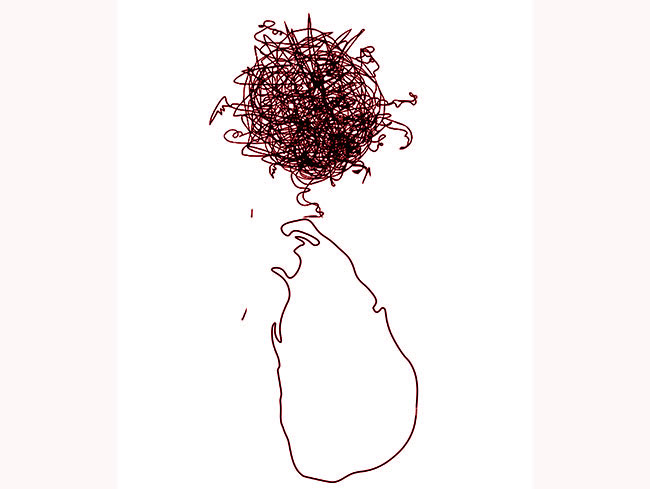
There is an abiding and tragic irony in Sri Lanka’s geography, as well as its history. We inhabit a land blessed with fertile soil, kissed by perennial sunshine, surrounded by the deep blue sea and wrapped in natural beauty that the rest of the world envies. Yet for all that, for decades, the story of this island has not been one of prosperity, but of a steady, agonising descent into unclassified chaos as judged by every possible dimension. Successive governments, populated by so-called leaders and politicians of every conceivable hue, have systematically brought this nation down, lower and lower, into a chasm of economic ruin and social despair. Today, despite grandiose promises of “system change” and “political resets”, the reality on the ground remains an indictment of a ruling class of politicians that has consistently put self-interest above statecraft.
Our woes are a miserable legion, and the vast majority of them are entirely man-made. The fundamental tragedy of Sri Lanka is that we have never had a true statesman: a leader of vision, integrity, and courage, who could drag us out of this hell hole and elevate our status to dizzy heights. Instead, we have been cursed with a rotating theatre of loud-mouthed politicians whose ideological and grandiose proclamations, which are quite different from their opponents’, evaporate even without a trace, the moment they taste unbridled power. Whether wearing the colours of old dynastic parties or wrapping themselves in the mantle of new populist alliances, the current set of politicians have absolutely nothing worthwhile to offer. The faces change, but the underlying mechanisms of stellar governance remain totally shattered. There are even many superlatives, grandiose adjectives and the highest accolades, used by the people and even the media, to describe our politicians of the past. Those words are not worth even the paper that they are written on.
The Blight of Rampant Corruption
At the heart of our national decay lies rampant, unchecked corruption. It is a cancer that has sent out its roots into every organ of the state. For decades, public office has been viewed not as a sacred duty to our nation, but as a gateway to personal enrichment. Irregularities mar multimillion-dollar contracts, public funds vanish into the ether of foreign bank accounts, and even international loans meant for national development are shamelessly preyed upon by hackers and bureaucratic thieves.
When a nation’s moral fabric is torn from the top, the rot inevitably trickles down, just as a fish starts to rot from the head downwards. The independent oversight bodies that should act as the state’s watchdog guard-rail systems, are routinely weakened, bypassed, or detrimentally politicised. We are repeatedly treated to the spectacle of high-profile arrests and anti-graft investigations, yet for all that, these exercises often feel more like political theatre than a genuine purification of the system. Politicians with handcuffs and wide smiles are bandied about in the media as if at a political rally, while hardcore criminals and murderers are allowed to cover their faces when they are featured in the media. True accountability remains elusive because the system is designed by the corrupt, principally for the corrupt. While the elite insulate themselves with their plundered wealth, the ordinary citizen is left to pay the bills for their profligacy.
The Betrayal of the Farmer and Food Insecurity
Perhaps there is no greater crime committed by our rulers than the systemic betrayal of our agricultural sector. Sri Lanka possesses the climate and the traditional knowledge to be completely self-sufficient in food production. Yet, our farmers are treated with scant respect and given minimal facilities or totally inadequate structural support. They are left at the mercy of climatic upheavals, volatile markets, inadequate storage infrastructure, a determined and fabulously rich mafia of unscrupulous and scheming middlemen, as well as erratic policy decisions that seem designed to fail, time and time, again and again.
It is an absolute travesty of justice that an island capable of feeding itself more than comfortably, is forced to spend its precious, hard-earned foreign exchange importing basic food articles. We are witnesses to the absurd spectacle of importing foods, fruits, confectionery, and sweets from abroad. Many of these items are what we already produce locally and which are of an exceptionally high quality and with the ability to stand on their own against any of the imports. Our homegrown endeavours based on agricultural produce such as tea, coconuts and spices, some of which have the reputation of being the best in the world, are stifled by a lack of state encouragement and a flood of imports favoured by policy loopholes and obeisance to political cronies. By failing to protect and subsidise our agricultural base, our leaders have not only impoverished the rural masses but have left the entire nation vulnerable to global supply shocks. A country that cannot feed itself from its own ever-so-rich soil can never truly claim to be sovereign.
The Crushing Burden of the Living
As a consequence of this economic mismanagement, the cost of living has soared to heights that are actively suffocating the average household. The price of basic commodities, fuel, and utilities has turned daily survival into an exercise in desperation. To appease international creditors and patch up the fiscal black hole dug by previous administrations, the state has resorted to implementing virtually punitive and totally suffocating taxes.
However, the high flyers are well-known to devise their own ways of circumventing these taxes. We do not hear of the Inland Revenue Department asking for details of how they acquired the wealth to import vehicles to the tune of tens and even hundreds of millions of rupees. In contrast, the tax people are well known to go after professionals who strive ever so hard to make a few honest bucks. These taxes do not target the wealthy elite who engineered the crisis. Instead, they fall disproportionately on the middle class and the absolute poor.
The burden of fiscal recovery has been placed squarely on the sagging shoulders of those least able to cope. At the same time, arbitrary economic restrictions, such as the prolonged and convoluted policies surrounding the importation of motor vehicles, have distorted the local market, making transport and commerce prohibitively expensive. The middle class is being systematically dismantled, held by the neck and squeezed, and forced to choose between economic stagnation at home or fleeing the country in search of better horizons.
The Collapse of the Social Safety Net: Education and Health
For generations, Sri Lanka has prided itself on its robust social indicators, anchored by free education and free healthcare, both free at the point of delivery. These were the twin pillars that allowed for social mobility and guaranteed a basic dignity of life. Today, those pillars are also crumbling.
Our public education system is failing, and has been failing for many a decade. It is blatantly starved of resources, and burdened by outdated curricula that do not prepare our youth for a changing world. Teachers are underpaid, schools lack basic infrastructure, and the universities have become battlegrounds of frustration rather than centres of excellence. There are no facilities at all to detect and foster our gifted children. If only our administrators and politicians remove their eye pads and look around the globe, the will be able to see the light of day that will usher in the sort of education that would change the entire landscape.
Simultaneously, the healthcare system is in a state of terminal decline. Public hospitals are plagued by critical shortages of essential medicines, surgical equipment, and specialised personnel. The “brain drain” triggered by the economic crisis has seen thousands of our finest doctors, nurses, and academics abandoning the country, leaving behind a hollowed-out and inadequate system.
When a citizen can no longer rely on the state to educate their child or save their life in an emergency, the social contract between the governor and the governed is entirely dead. The sheer grain of responsibility and accountability has been fractured forever, hardly ever, if not never, able to recover.
A Land Punished by Man and Nature
As if the misrule by politicians were not enough, nature itself seems to have turned its face away from us. In recent years, Sri Lanka has been repeatedly battered by an array of natural disasters, from severe droughts that parch our agricultural heartlands to supercharged monsoons, floods, and landslides that even sweep away entire villages. It certainly looks as if the Gods are against us.
Yet for all that, even these environmental calamities reveal the incompetence of our leadership. Climate change may be a global phenomenon, but the devastation caused by these disasters is magnified tenfold by local corruption and incompetence. Deforestation, unregulated construction on fragile hillsides, and the complete absence of modern disaster-preparedness infrastructure, ensure that every heavy rainfall transforms itself into a national tragedy. Nature has punished us…, YES, but our so-called leaders have stripped us of the armour needed to survive the blows.
The Elusive Search for a Glorious Humane Statesperson
We find ourselves in a totally miserable cul-de-sac, an impasse that is totally unfathomable, akin to a bottomless pit of despair. Our woes are a legion, and the historical ledger of our political class is a catalogue of failure, betrayal, and unfulfilled promises. The current political landscape offers no solace; it is populated by factions that excel at critique but are utterly bankrupt when it comes to execution of noble promises. They offer cosmetic adjustments to an economic framework that really requires a radical, ethical overhaul. Indeed, they can only excel at patchwork solutions.
What we need is neither a partisan autocratic politician nor another coalition born of electoral opportunism. We need a true statesperson, a man or a woman; a leader who has the moral authority, singular courage, and the aptitudes to enforce the rule of law, the vision to prioritise domestic production and agricultural sovereignty, as well as the honest valour to demand sacrifices from the wealthy rather than the vulnerable poor. Until such leadership emerges from the very soil of this country, we will remain trapped in this self-inflicted hovel, gazing pensively at the immense potential of our magnificent island, while living in the reality of its total and substantial ruin.
It is time for the citizens of Sri Lanka to stop waiting for spontaneous salvation from the current political hues, and demand a complete, uncompromised reconstruction of the state and our thrice-blessed Motherland. Towards that end, your guess is as good as mine as to whether our gullible, easily manipulated, and terribly short-sighted inhabitants of this isle of potential splendour would have even an iota of wisdom to do what is so desperately needed. Till that time, when the currently despondent and impulsive masses of this country, of all hues, castes, creeds and ethnicities, wake up from their nonchalant slumber, and rise up as a nation to clamour for their just desserts, we will continue to remain in this abyss of despair. At the end of the day, the celebrated architects of resurrection would be the people, very definitely, for the people.
By an Old Aficionado

Every year, the spiritual compass of the Muslim world turns towards the holy city of Makkah, where millions of pilgrims gather for Hajj — one of humanity’s oldest and most profound journeys of faith.
This year, too, the sacred valleys of Saudi Arabia are filled with the echoes of “Labbaik Allahumma Labbaik” — “Here I am, O Allah, here I am” — as Muslims from every continent respond to a divine call that dates back thousands of years to Prophet Ibrahim (Abraham).
Among them are thousands of Sri Lankan pilgrims, dressed in simple white garments, leaving behind worldly status, wealth and identity in pursuit of spiritual purification and closeness to God.
According to Muslim Affairs authorities, the Kingdom of Saudi Arabia has allocated a Hajj quota of 3,500 pilgrims for Sri Lanka for Hajj 2026, enabling devotees from across the island to undertake the sacred pilgrimage. The annual allocation is determined through agreements between Saudi Arabia and Muslim-majority and minority nations worldwide.
Since early this month at the Bandaranaike International Airport in Katunayake, emotional scenes unfolded as families bade farewell to departing pilgrims with tears, embraces and prayers.
Elderly parents clutched prayer beads, children waved anxiously, while relatives sought blessings from loved ones embarking on the once-in-a-lifetime spiritual journey.
For many Sri Lankan Muslims, performing Hajj is not simply travel — it is the fulfilment of a lifelong dream nurtured through years of prayer, sacrifice and savings.
In villages, towns and cities across Sri Lanka, preparations for Hajj often begin months or even years in advance. Some families save gradually over decades, while elderly pilgrims regard the journey as the culmination of a lifetime of devotion.
Hajj is the fifth pillar of Islam and is obligatory for every financially and physically able Muslim at least once in a lifetime.
Yet the pilgrimage is far more than a religious obligation.
It is a journey deeply rooted in the story of Prophet Ibrahim, known as Abraham in Christianity and Judaism, and revered across the Abrahamic faiths as a towering symbol of faith, obedience and sacrifice.
Islamic tradition recounts how Prophet Ibrahim was commanded by Allah to leave his wife Hajjar and infant son Ismail in the barren desert valley of Makkah. With unwavering faith in God’s wisdom, Ibrahim obeyed.
Left in the scorching desert with little water or food, Hajjar desperately searched for water for her thirsty child, running seven times between the hills of Safa and Marwa.
Her determination, courage and trust in God are immortalised in the rituals of Hajj today.
Pilgrims reenact Hajjar’s desperate search by walking between Safa and Marwa, symbolising perseverance, faith and hope even in moments of despair.
According to Islamic belief, Allah answered Hajjar’s prayers by causing the miraculous Zamzam well to spring forth beneath baby Ismail’s feet — a well that continues to provide water to millions of pilgrims centuries later.
Another defining moment in Ibrahim’s story is commemorated during Hajj and Eid-ul-Adha — the willingness of the Prophet to sacrifice his beloved son in obedience to God’s command.
As Ibrahim prepared to carry out the sacrifice, Allah replaced Ismail with a ram, signifying that faith, sincerity and submission were greater than the act itself.
The symbolic stoning of the devil during Hajj recalls Ibrahim’s rejection of Satan’s temptations that sought to discourage him from obeying God.
Thus, every ritual of Hajj carries profound historical and spiritual meaning.
The pilgrimage is not simply movement through sacred spaces; it is a reenactment of timeless lessons in obedience, sacrifice, patience and devotion.
One of the most remarkable aspects of Hajj is the extraordinary equality it represents.
Pilgrims, regardless of nationality, race, language or social class, wear the same simple white attire, known as Ihram.
Presidents, businessmen, labourers and farmers stand side by side in prayer, under the blazing Arabian sun, erasing worldly distinctions and affirming the Islamic belief that all human beings are equal before God.
Religious scholars often describe Hajj as the world’s greatest annual demonstration of unity and humility.
The spiritual climax of the pilgrimage occurs at the plains of Arafat, where pilgrims spend hours in prayer and repentance seeking divine forgiveness.
Many Muslims believe that a sincerely accepted Hajj cleanses a believer of past sins and marks the beginning of a spiritually renewed life.
Upon returning home, pilgrims are honoured with the title “Hadji” or “Hajji,” a distinction that carries immense respect within Muslim communities, including in Sri Lanka.
Traditionally, a Hadji is viewed as someone who has fulfilled one of Islam’s most sacred obligations and returned with heightened spiritual responsibility.
However, Islamic scholars emphasise that the title is not merely ceremonial.
“The true significance of becoming a Hadji lies in personal transformation,” a Colombo-based Islamic scholar said.
“A pilgrim is expected to return with greater humility, compassion, honesty and social responsibility. Hajj is not about status; it is about becoming a better human being.”
Across Sri Lanka, mosques have been conducting special prayers for pilgrims, while families gather to seek blessings before departure.
The pilgrimage season also creates a unique emotional atmosphere within Muslim communities, where neighbours visit departing pilgrims and homes become centres of prayer and reflection.
Saudi Arabia has introduced extensive arrangements this year to facilitate the pilgrimage, including digital crowd management systems, improved transport networks, upgraded accommodation and enhanced healthcare services.
Sri Lankan diplomats and officials, stationed in Saudi Arabia, have been coordinating closely with Saudi authorities to ensure the welfare and smooth movement of Sri Lankan pilgrims throughout the pilgrimage period.
Sri Lanka’s Ambassador to Saudi Arabia, Ameer Ajwad, recently inspected facilities in Mina, prepared for Sri Lankan pilgrims, and reaffirmed efforts to provide a safe and spiritually fulfilling Hajj experience.
As millions circle the Holy Kaaba in prayer, Hajj continues to stand as one of the most extraordinary gatherings on Earth — a timeless spiritual movement connecting humanity across borders, cultures and generations.
For Sri Lanka’s pilgrims, the sacred journey is not merely a passage to Makkah.
It is a journey into the soul — a return to the eternal lessons of Prophet Ibrahim, Hajjar and Ismail — lessons of sacrifice, endurance, obedience and unwavering faith that continue to inspire humanity centuries later.
By Ifham Nizam

Nuwan Thushara among 46 men’s cricketers to be awarded SLC contracts

Pakistan naval trio arrives at Colombo Port

Sri Lanka Cricket relieved at ICC’s mild response to Transformation Committee

ICC approves red-to-pink ball change to reduce bad-light impact in Test cricket

LPL introduces impact subs for 2026 season

Protesters call on Kenyan government to halt femicide crisis

‘Dates have the highest sugar content to fight Coronavirus’

Sunday Island 27 December – Headlines

#SundayIsland 17th December – Headlines

Sunday Island – 28th March

Sunday Island Headlines – 21 March

Sunday Island – 21st February – Headlines
-

 News4 days ago
IMF urges Lanka not to meddle with exchange rate
-
 Business5 days ago
Sri Lanka’s construction industry losing ground while no one watches
-
 News4 days ago
State of emergency extended
-

 Business2 days ago
IMF’s unstated rate:Sri Lanka’s $695m loan costs about 5.33% per annum
-
 Midweek Review7 days ago
Israeli-US aggression won’t go unanswered -Iranian Ambassador
-

 Features5 days ago
The Division Bell Mystery
-
 News2 days ago
UNP challenges NPP move to amend Vihara – Devalagam Act
-
 News6 days ago
RTI query of Ditwah funds: Presidential Secretariat mum on key questions