
News
Lanka sees new sex workers after currency collapse, rise in STI, HIV detections

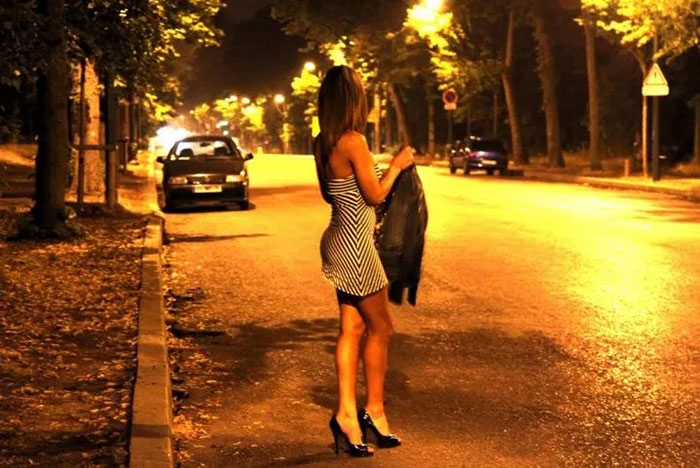
ECONOMYNEXT –Sri Lanka is seeing a rise in sexually transmitted disease detections as inexperienced sex workers enter the profession, health officials say.Traditional high-risk communities including drug users and homosexual persons with multiple partners continue to be factors in the rise of STIs, according to health officials.According to the National STD/AIDS Control Programme, 4,556 HIV patients have been recorded in the first quarter of 2022 up 11.8 percent from 4,073 in 2021 first quarter.
In the second quarter of 2022, 4,686 HIV patients have been identified, up 13.2 percent from 4,142 in 2021.The National STD/AIDS Control Program is working with several non-governmental organizations to reach out to sex workers for testing.
“And these NGOs which we work with, say an increase in sex workers can be seen in the field in the past few months,” says Geethani Samaraweera (Consultant Venereologist) National Coordinator of the Sri Lanka Sexual Transmitted Diseases Unit (STDU) told EconomyNext.
“It can be due to the economic situation in the country. Usually, sex workers in our country try to practice safe sex and a majority of them practice safety methods when they engage in sexual activities.
“The new ones are young and they are not knowledgeable about the safety methods. They are less experienced and do not know how to convince the clients to use safety methods.
“And most of them are coming to make quick cash to provide food for their families in these economic situations therefore they can’t demand the clients sometimes as well.”
In the first quarter of 2022, 2,221 patients with other sexually transmitted diseases were identified down from 2,676 last year. In the second quarter, 2,576 patients with other STDs were found, up from 1,753 in 2021.When currencies collapse after central banks print money to suppress interest rates, the public gets into difficulties in all countries.In Latin America professionals including teachers and doctors have turned to sex work after soft peggers printed money to keep interest rates down.
In the UK and Europe where large volumes of money were printed money by the Federal Reserve chief Jerome Powell, and European Central Bank Chief Christine Lagarde to ‘boost jobs’, the resulting high inflation was driving people to sex work according to reports.In Europe, the Powell-Lagarde bubble is referred to as the ‘cost of living crisis’
There is strong support in Sri Lanka from macro-economists for soft-pegging for flexible exchange rates, where mistakes in targeting interest rates are covered up by depreciating the currency.Sri Lanka’s rupee fell from 200 to 360 to the US dollar in 2022 after the central bank printed money for two years to suppress rates in a bid to boost growth.The intermediate regime central bank has busted the rupee from 4.76 to 200 in an earlier currency crisis created in the process of printing money to suppress rates.
There have been calls to change the central bank law to block economists from practicing flexible or discretionary policy, with a reserve collecting peg generally called a dual anchor regime.But critics say there is no hope for monetary stability with flexible inflation targeting, the latest dual anchor monetary regime peddled to the third world by Western mercantilists, also due to be legalized.Samaraweera said a significant share of the patients being identified are below 30 years, indicating an increase in the younger generation of the country.
Of the STI patients that were identified in the first half of 2022, 1688 patients were males between the ages of 15-49 while 2610 patients were females in the same age category.There could also be other contributing reasons for the rise, health officials say.In addition to the rise in new commercial sex workers, other factors could also be at play. Sex workers were not the only category seeing a rise.
“From the last quarter of 2021, we saw this increase, but we thought with the Covid-19 the testing was minimized and we are seeing that numbers being identified,” Samaraweera said. Coronavirus curfews may also have increased stress levels of sections of the public, resulting in them turning to commercial sex workers.
“Normally when these stressful times come the number of people that go to these massage parlors and sex workers increase,” Samaraweera said.
“Those can also be possible contributing factors as well for this increase in patients’ numbers.” Members of the homosexual and transgender communities with multiple partners are also high-risk communities for STIs. Their numbers were also up. It may be due to more willingness to be tested now than earlier.
“It can be because now these communities are being more accepted in the society and the new methods we are using in order to reach out to these communities to come and do tests, because it is better to treat that letting it spread,” Samaraweera said.
“When we go back around 10 years, of the total patients around 30-35 percent were homosexuals.
“But year by year it has increased and now of the total amount higher percentage belongs to that category, especially homosexual and transgender.”
“Of the total number of patients, now it has gotten close to 60 percent. It can be either more people are coming to test themselves or the approaches we have taken in order for these communities to come forward and test themselves can be the reasons for that.”
Drug use is also contributing factor.There may be an increase in drug usage has increased more among females as well and mainly abuse of Crystal methamphetamine (ICE) is observed.
“This has become more popular with young people making them more desirable for unprotected sexual activities,” Samaraweera said. “Even the people who usually use protection will tend not to use it after being infused with this drug.”
Increased testing and identification help contain the spread of diseases.Better sexual education is also needed to combat HIV and STIs in general.
Younger persons were increasingly exposed to sexual content online but lack of proper guidance and education makes them more vulnerable. There was useful content online as well according to some observers.
“The children become more vulnerable to these things because there is no proper sex education in the country, in school at home or anywhere,” Samaraweera said.
“In the education system of the country, no proper sex education including hygiene, protection or the hormonal changes in the body is being included.”
There has been resistance from sections of the political ruling class to expanding sexual education for students.An attempt to educate school children formally through a supplementary book called the Hathe Athe Potha, also led to a controversy.





Latest News
Sun directly overhead Neriyakulam, Punewa, Kebithigollewa, Pankulam and Sinhapura at about 12.10 noon today (31)


The sun is going to be directly over the latitudes of Sri Lanka from 28th of August to 07th of September due to its apparent southward relative motion.
The nearest places of Sri Lanka over which the sun is overhead today (31) are Neriyakulam, Punewa, Kebithigollewa, Pankulam and Sinhapura about 12.10 noon.

… highlights injustice caused to Justice R. Gurusinghe
The Bar Association of Sri Lanka (BASL) has alleged that due to the failure on the part of President Anura Kumara Dissanayake to fill the existing vacancies in the Supreme Court, a Senior Justice of the Court of Appeal, Justice Dhammika Ganepola, retired at the age of 63 without being considered for, or granted, a promotion to the Supreme Court, to which he was well entitled. The BASL pointed out at the time of Ganepola’s retirement there were four vacancies in the Supreme Court.
In a letter dated 17 August, 2026, addressed to President Dissanayake, the BASL declared that the failure to promote and recognise Ganepola’s distinguished judicial service, resulting in his retirement at the age of 63, is indeed a loss to the Judiciary.
A top BASL spokesman told The Island yesterday (30) that the Bar Council, over the weekend, had decided to release the hitherto confidential letter.
The official said that they also wanted to remind the President of his assurance given to BASL, on 12 August, 2026, that vacancies in the Supreme Court and Court of Appeal would be filled as soon as possible, within a month.
The following is the text of the BASL letter, signed by Rajeev Amarasuriya, President, BASL, and its Secretary Nalin De Silva: “We write further to our letters dated 29th December 2025 and 30th June 2026 in relation to the above, to which we have not received any response.
We also refer to our meeting with Your Excellency on 12th August. As discussed during the meeting, there have been vacancies in the Supreme Court since May 2025, and the number of vacancies has now increased to four (04). There are also four (04) vacancies in the Court of Appeal. These are all matters we have already written to Your Excellency about.
Your Excellency informed the BASL Delegation when we met that you would be taking steps to make recommendations to fill these vacancies as soon as possible, within a month.
We write to reiterate the importance of giving due consideration to the criteria set out in our aforesaid letter dated 29th December 2025. We also wish to emphasise that, in making judicial appointments and promotions, seniority should be given due priority, in keeping with longstanding practice, until such time there are objective and defensible guidelines governing the assessment of merit.
The only justifiable departure to this criterion would be where there exists a specific and recognized demerit in respect of the particular Judge concerned or such other known compelling circumstances that are objectively identifiable such as where a Judge has previously been overlooked for promotion unfairly or conversely, where a Judge has been unfairly previously granted promotions above others.
This approach will safeguard both the integrity of the Judiciary and the trust reposed in it by the public.
Further, while there has been considerable discussion and representation by the Government regarding the importance of retaining experienced judges, as reminded to Your Excellency at our said meeting that, only a few months ago on 8th May 2026, a Senior Justice of the Court of Appeal, Justice Dhammika Ganepola, retired at the age of 63 without being considered for, or granted, a promotion to the Supreme Court, to which he was well entitled, and in which there were four vacancies at the time.
The failure to promote and recognise his distinguished judicial service, resulting in his retirement at the age of 63, is indeed a loss to the Judiciary.
We also drew Your Excellency’s attention at the said meeting to the fact that the Senior-most Justice of the Court of Appeal, Justice R. Gurusinghe, who joined the Judicial Service in 1996, who also Acted in the Office of President of the Court of Appeal (appointed by Your Excellency) on 11th May 2026, is due to retire at the end of this month. In fact, we learnt through the Media that Her Ladyship then Chief Justice Justice Murdu Fernando, PC, had previously in July 2025 recommended to Your Excellency the promotion of Justice R. Gurusinghe to the Supreme Court, but the same is pending from that time.
He too is well deserving of promotion to the Supreme Court and has already been recommended by the former Chief Justice, and his case must also receive due and urgent consideration before his impending retirement.
We hope that Your Excellency will take due note of and give due regard to the concerns of the Bar, as well as to the established principles, practices and conventions governing judicial appointments, when taking steps to fill these vacancies.
On this, Your Excellency is already open to the accusation that these vacancies have been kept open, to fill with favourites of the Government which is yet another serious indictment on the independence of the judiciary which accusation would be confirmed if recommendations are made outside established practice.
Moreover, the BASL expresses grave concern that withholding promotions of Judicial Officers for extended periods of time places undue pressure on Judicial Officers in the discharge of their duties and constitutes both directly and indirectly, interference with the independence of the Judiciary, in addition to the strain obviously caused to the dispensation of justice in other Courts and the stifling and delay of career progression of Judges legitimately entitled to promotions.
We do hope that Your Excellency would take due note and cognizance of the foregoing when effecting these judicial promotions which have been long overdue and which have already adversely impacted the efficiency and effectiveness of the administration of justice.”
The BASL has copied the letter to Prime Minister Dr. Harini Amarasuriya, Speaker Dr. Jagath Wickremaratne, Opposition Leader Sajith Premadasa and all members of the Constitutional Council.

Opposition Leader Sajith Premadasa on Saturday (29) challenged the government to hold the long-delayed Provincial Council elections, saying the polls would provide an opportunity to gauge the level of public support enjoyed by the administration.
Addressing a farmers’ meeting in Tissamaharama, Hambantota, Premadasa also criticised the latest Rs. 17 per kilogram increase in wheat flour prices, warning that it would push up the prices of bread, bakery products and other flour-based food items and place further pressure on households already struggling with the rising cost of living.
He said Sri Lanka ranked 120th among 130 countries in an international comparison of minimum wages, arguing that wages remained inadequate to meet the escalating cost of living.
Premadasa also questioned official assessments of living standards, asking whether a person could survive for an entire month on Rs. 17,315, a figure he attributed to the Department of Census and Statistics.
He claimed that between 30 and 40 percent of the population was living in poverty and called for a clear programme to help affected families improve their economic conditions.
Turning to the proposed 22nd Amendment to the Constitution, which seeks to increase the retirement age of superior court judges, the Opposition Leader accused the government of attempting to undermine judicial independence and interfere with democratic institutions.
He also criticised the government’s handling of poverty, employment, agriculture, healthcare and investment, saying more effective measures were needed to provide relief to people facing economic hardships.Premadasa called for stronger policies to attract foreign direct investment and urged the government to formulate a national strategy for developing the tourism industry.

Sri Lanka lose Women’s Champions Trophy hosting rights

Iran attacks US bases in Jordan after US strikes Larak Island

Showers will occur in the Western, North-western and Sabaragamuwa provinces and in Galle, Matara, Kandy and Nuwara-Eliya districts.

Sun directly overhead Neriyakulam, Punewa, Kebithigollewa, Pankulam and Sinhapura at about 12.10 noon today (31)

BASL takes exception to Justice Ganepola being denied a place in SC

Sajith challenges govt. to hold PC polls

‘Dates have the highest sugar content to fight Coronavirus’

Sunday Island 27 December – Headlines

#SundayIsland 17th December – Headlines

Sunday Island – 28th March

Sunday Island Headlines – 21 March

Sunday Island – 21st February – Headlines
-

 News7 days ago
Missing doctor’s body found in Mahiyanganaya
-
 News7 days ago
Australia declines to release Finance Secy Suriyapperuma’s citizenship details
-

 News4 days ago
Eight politicians in drug kingpin probe
-
 News7 days ago
22A: BASL suggests CJ recuse himself from hearing petitions
-

 Features2 days ago
“Wrap Me Up in My Blazer”— A Gentlemanly Bradby Reminiscence
-

 Business4 days ago
Sri Lanka opens up: A new season of direct connectivity
-
 Features6 days ago
Insights from Chieftains of Uva: Genealogy of two Kandyan Families – Part II
-

 Features4 days ago
Redefining ageing in Sri Lanka