
News
NJC sets preconditions for abolition of Executive Presidency


The National Joint Committee (NJC) has said that the Executive Presidential system should not be abolished unless the 13th Amendment to the Constitution is abolished. The NJC also called for the introduction of ‘the first-past-the-post system.’ The nationalist group declared a set of preconditions.
The following is the full text of the NJC statement:
The SJB has proposed an amendment to the Constitution to abolish the Executive Presidential system without changing the current electoral system or repealing the 13th Amendment. The Bar Association proposal to abolish the Executive Presidential System is on similar lines.
The Need to Change the Electoral System.
The proportional representation system was introduced by the UNP to fulfil their political aspirations. Under the existing proportional representation system so introduced there is no space for honest and independent professionals and intellectuals to contest an election. Even though the popular demand is that all existing 225 members of Parliament should “go home”, with the expectation of electing honest men and women there is no way that an honest citizen can contest outside the existing party system at the next General Election. There is no internal democracy in any of these parties and only those who are supported by the corrupt leaders of these political parties could get nominations. The public have now unequivocally expressed the view that they have no faith in the existing party system. Therefore it is a sine qua non that we revert to the “First-Past-the-Post System” that existed prior to the promulgation of the present Constitution so that independent candidates not representing any political party could contest. At least 2/3rd of the Members of Parliament should be elected to represent electorates if we are to change the colour and culture of the legislature and ensure a cleaner Parliament.
Abolition of Executive Presidency
SJB and BASL proposes the abolition of the Executive Presidency, introducing a clause to the effect that the President should “always act on the advice of the Prime Minister” (not the Cabinet). What difference would it make by replacing the President with a Prime Minister? Although it may be said that when executive power is vested with the Cabinet of Ministers the Prime Minister implement the collective will of the Cabinet. We know however that the reality is that when a powerful party leader is appointed Prime Minister he runs the show. The Ministers of the Cabinet will be beholden to the Prime Minister for appointing them and it would be unlikely, that any Minister would go against the Prime Minister’s decisions.
In the seventies, over 20,000 youth got killed and, the country was governed under emergency without any press freedom not under a Presidential system but under a Cabinet form of Government. Many a country, particularly in East Asia, recorded remarkable economic and social advancement under various forms of Presidential systems. Therefore, it is evident that the autocracy, mismanagement and corruption in Government stem not from the Presidential system, but due to the lack of an appropriate legal framework to curb corruption, and concentration of power in one power centre, without appropriate checks and balances. The abolition of the Executive Presidency, in effect, is synonymous to concentrating all executive and legislative power in one power centre, namely the Parliament, which the NJC considers as inappropriate.
Besides, it is now obvious that, after the next General Election, it is likely that there would be a hung Parliament, with which, a future Prime Minister will be compelled to satisfy the political demands of his coalition partners and will not be acting in the national interest. This will be an ideal environment for extremists to flourish, and take control of the State as it has happened in the past. In this respect, it may be pertinent to underline that the Provincial Council System has given Provincial Councils powers with regard to 73 different subjects and functions of Government, including Police and Land powers. If any of these provincial administrators act in a manner detrimental to the national interest, it could not be possible to rectify any mischief with no Executive President and a hung Parliament manipulated by extremists.
Therefore, we are strongly of the view that the Executive Presidency should be retained.
A set of 13 proposals have been submitted by the BASL. We appreciate their initiative to bring the Opposition to the negotiation table to resolve the present crisis. We understand that at an emergency meeting of the Bar Council had been hurriedly called and these set of proposals, including the Proposal to abolish the Executive Presidency, had been adopted without adequate notice to the members. The proposals were issued under the signature of the President of the Bar Association Mr. Saliya Peries, President’s Counsel and former Chairman of the controversial office of missing persons established by the Yahapalana Government. Whether a country needs an Executive Presidential System or a Cabinet form of Government cannot be decided by the Bar Association. The general membership of the Bar Association had no opportunity of expressing their views on this question. Whilst we recognise that the Bar Association should be vigilant to safeguard the rights of the ordinary citizen it has no role to play in deciding disputed political issues in the country. We would not be surprised if the present management of the Bar Association would next agitate to convert Sri Lanka from a unitary form of Government to a federal form of Government, a project which the Yahapalana Government was carrying through so enthusiastically. The Bar Association should stop pursuing objectives of political parties their leaders sympathise with.
No Attempt to Seriously Address Corruption
The SJB through their proposed Constitutional Amendment has proposed the reintroduction of the provisions in the 19th Amendment. We have not forgotten the mess it created. The National Procurement Commission created by the 19th Amendment had no teeth they have no power to stop a corrupt deal. Corrupt deals continued under the 19th Amendments. The Hambantota port was handed over for 99 years without competitive bidding.
The conduct of the Election Commission and the Bribery and Corruption Commission was equally repulsive. Although allegation after allegation is made against the Rajapaksa administration not a single successful prosecution was done. The reason for its failure is because the 19th Amendment in fact created politically motivated Commissions replacing Public Officers from the SLAS. Their sole objective was to satisfy the political needs of their masters and not to address corruption.
Therefore the National Joint Commission wish to reiterate the following;
(i)
The Presidential System of Government should not be changed. Any constitutional reform to abolish it, should be adopted only if
(a) The 13th Amendment is abolished and
(b) The “First-Past-the-Post System” introduced to enable a Member of Parliament to represent an electorate. However not more than 1/3 of the Members of Parliament can be accommodated under the proportional representation system to accommodate minority interest.
(ii)
Police and Land powers should be removed from the Provincial Council List
(iii)
Provincial Statutes should be subject to laws enacted by Parliament.
Parliament should be able to repeal Provincial Statutes if they so wish.
(iv)
Alienation of State land to foreigners, foreign states and foreign companies should be prohibited.
(v)
No Government contract or agreement relating to strategic enterprises and land should be permitted without approval of the Supreme Court and the Parliament. However, when such contracts or agreements on
strategic assets or lands being considered would have effective duration beyond the unexpired legitimate tenure of an incumbent Government, such contracts or agreements should also obtain 2/3rd majority of the Parliament, in addition to the approval of the Supreme Court, where the latter may even instruct to refer the matter for a referendum, if the said deal/contract/agreement could possibly have national (economic or political) sovereignty implications.
(vi)
All Government procurement contracts which fall within the categories, referred to under (v), should be based on competitive bidding, but with a transparent margin of local preference given for Sri Lankan bidders, stipulated to encourage domestic industrialization and national economic value addition.
22nd Amendment of 11 Parties
We also observe that the 22nd amendment proposed by the Group of 11 parties (submitted on their behalf by Mr. Wijeyadasa Rajapakse) fortifying the 13th Amendment and to ensure that the Provincial Police Commissions introduced by the 13th Amendment is untouched. The PHU, JNP and Yuthukama
Sansandaya was against the 13th Amendment. It is unfortunate that they have forgotten these principles in such a short period.
Therefore, we urge the proponents of the 21st and 22nd Amendments to reconsider these proposals without taking this country towards further ruination.
In an address to the Nation yesterday the President said that he will take necessary action to abolish the executive presidency. However as for the present Constitution he does not have the mandate to do so.


It has been reported quoting police sources that the death toll from the renewed unrest at the Negombo Prison which this morning, has risen from nineteen to twenty five (25).
A clash initially broke out between two groups of inmates (a group of remand prisoners and a group of convicted inmates serving sentences) at the Negombo Prison at around 1.00 p.m. on Sunday (05).
Two inmates died in yesterday’s clash, while around 40 others sustained injuries and are receiving treatment at hospital.
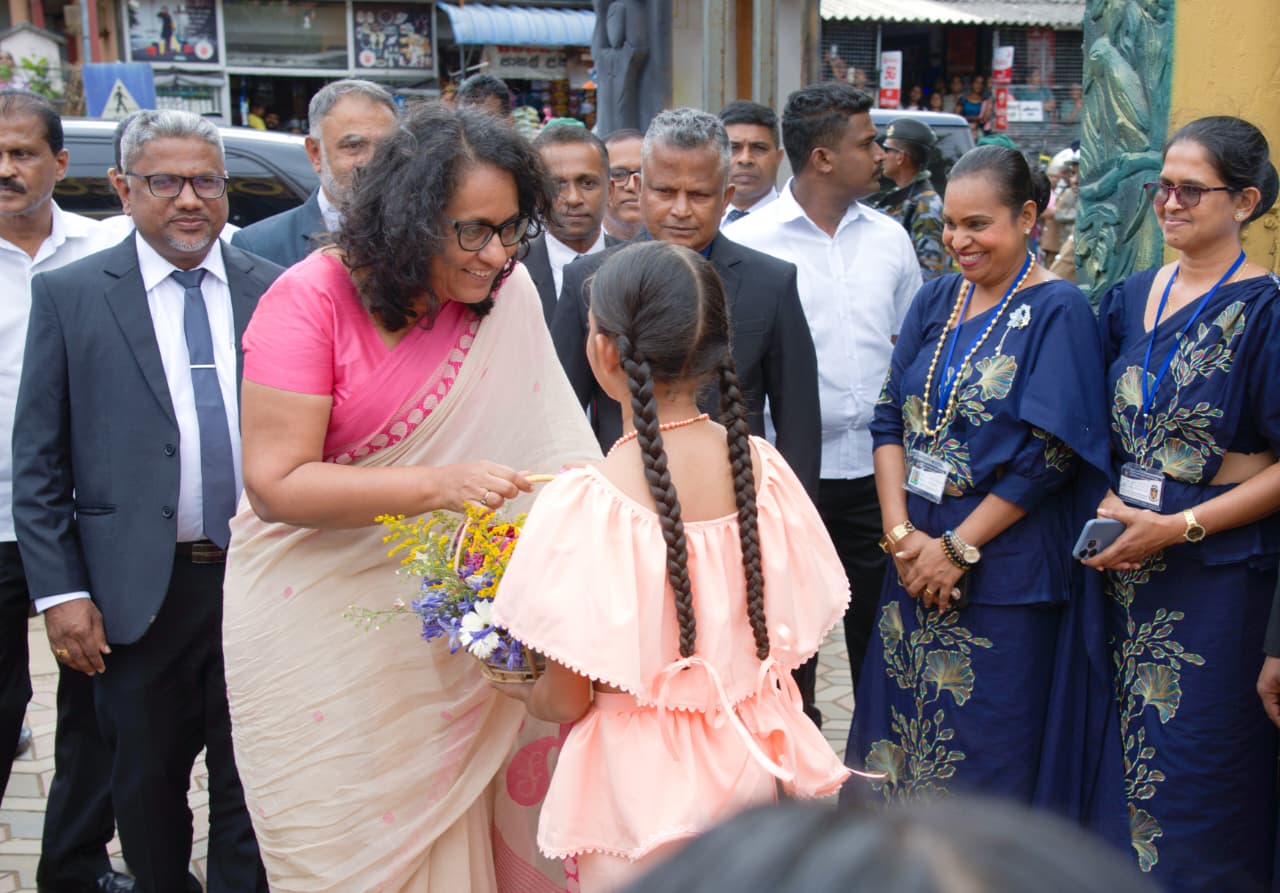
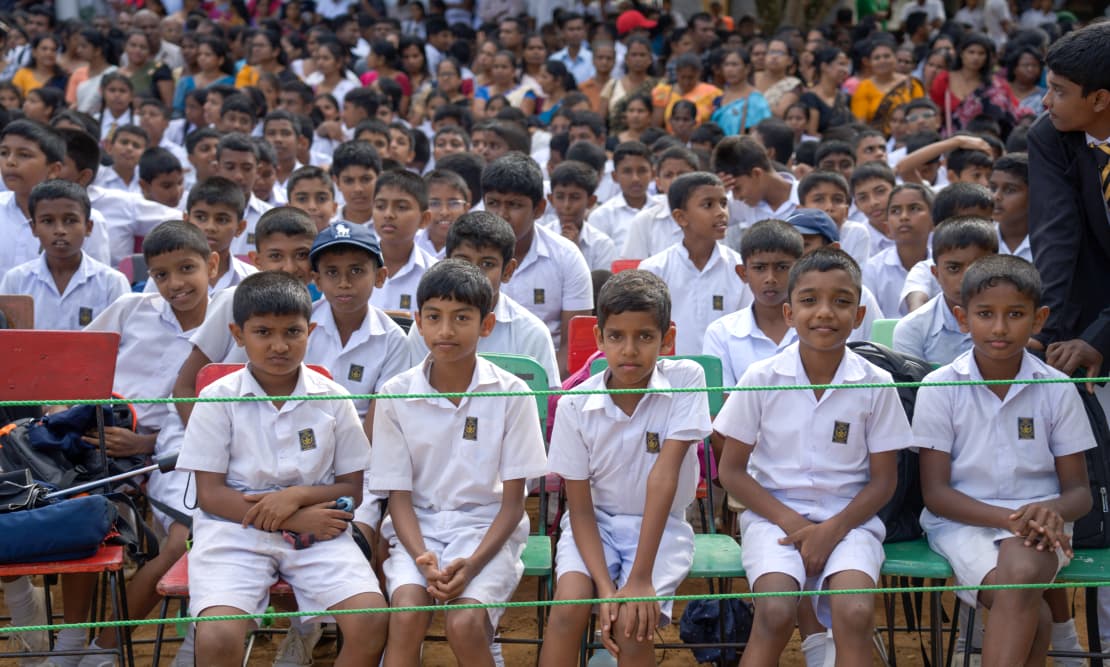
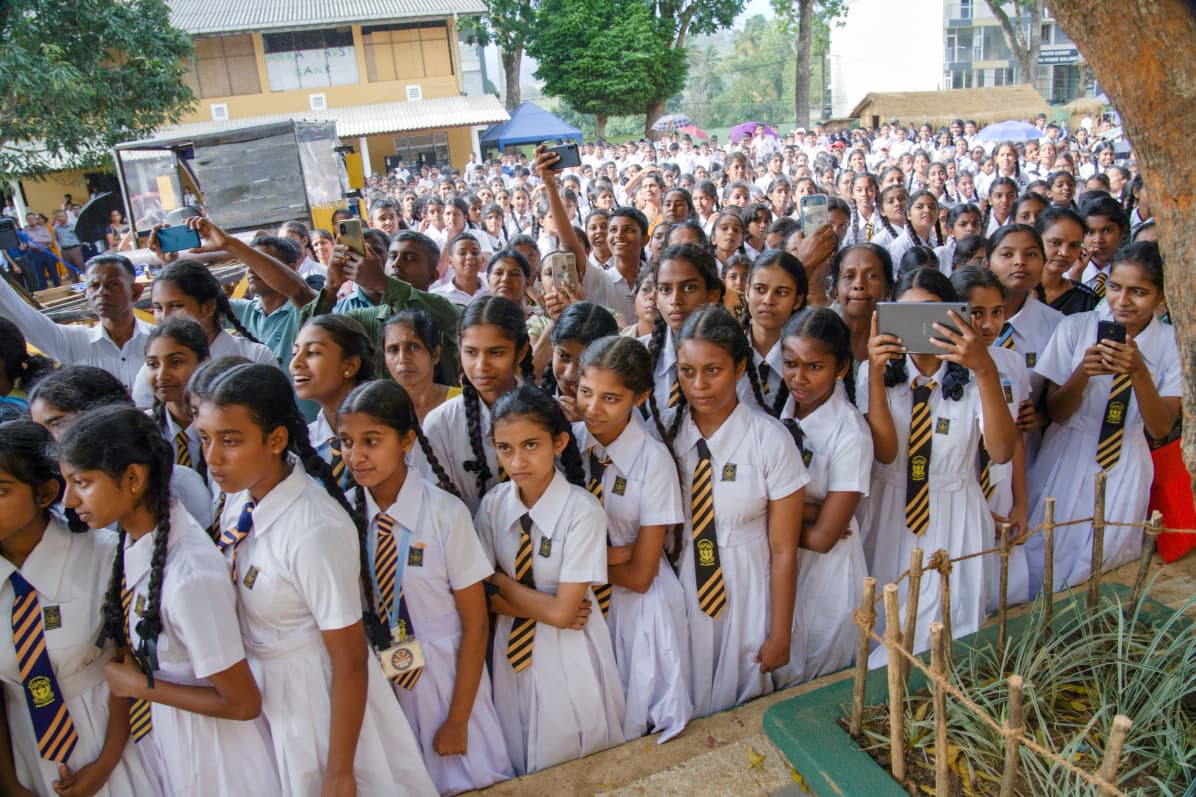
Prime Minister Dr. Harini Amarasuriya stated that the children of Sri Lanka are well capable of viewing the world with creativity and critical ways of thinking, and that the Government is committed to equipping them with the required knowledge and modern technologies necessary to realize their full potential.
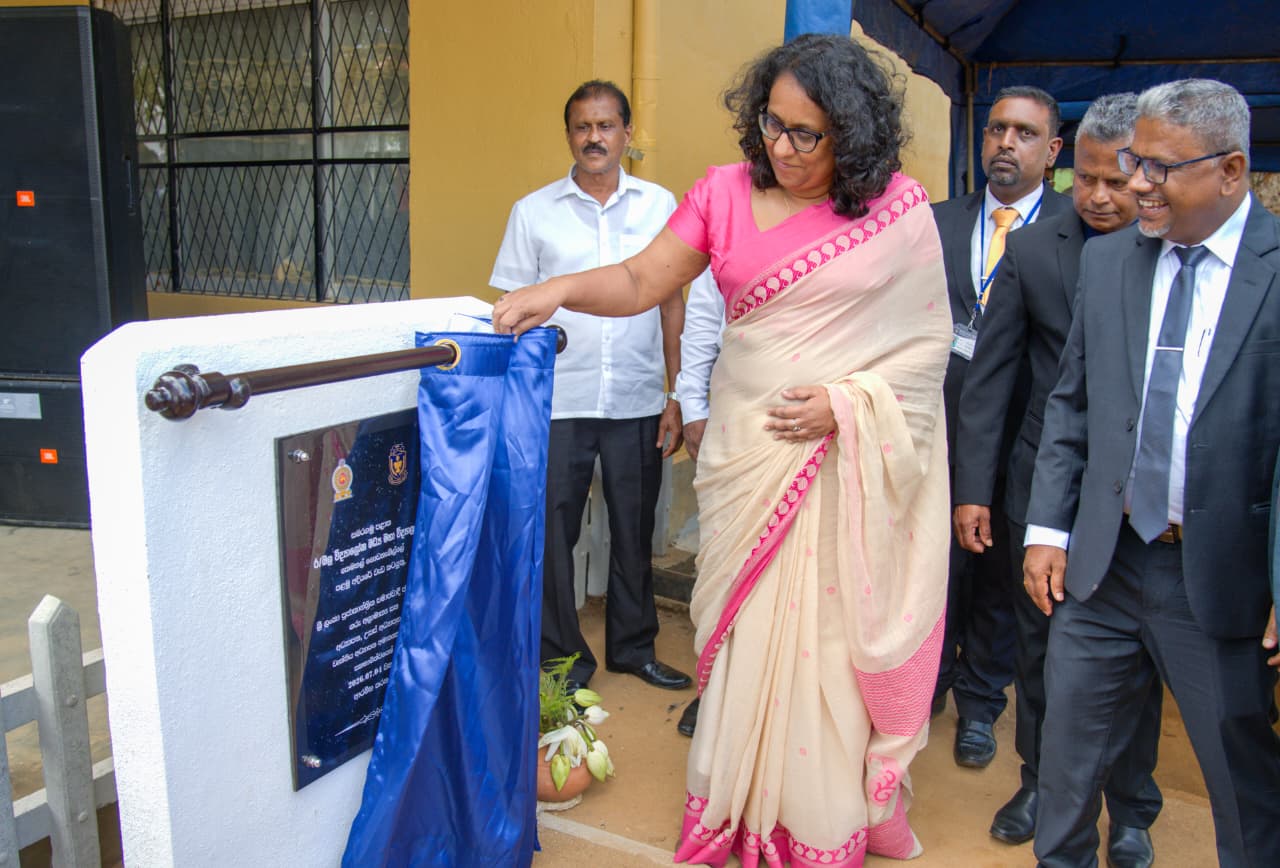
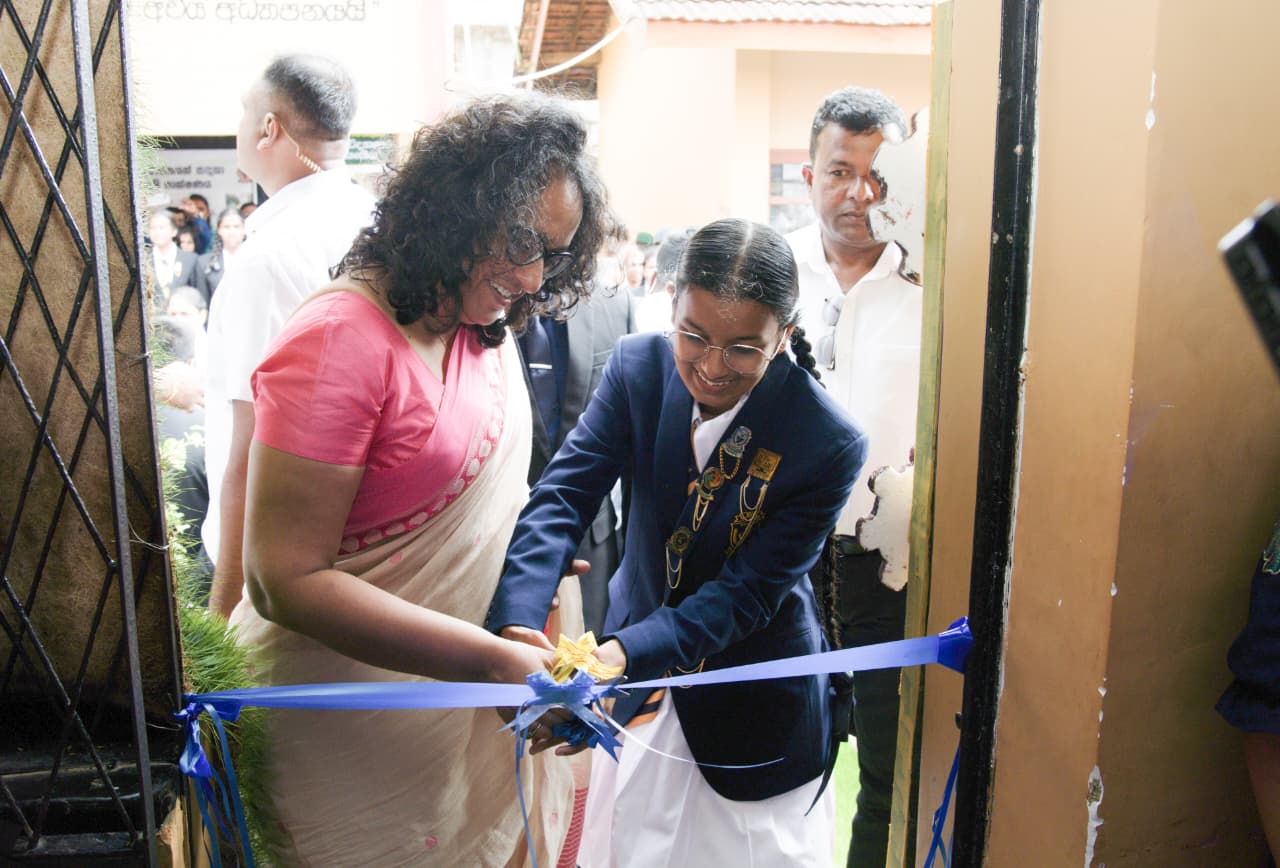
The Prime Minister made these remarks while attending the opening of the ’Arumasiya’ Exhibition and the occasion of laying the foundation stone for a new three-storey building at Balangoda Vidyaloka Central College, on the 4th of July.
During the visit, the Prime Minister officially declared open the exhibition showcasing the students’ innovations and creative talents and commended them for their remarkable achievements. The Prime Minister also participated in the ceremony of laying the foundation stone for the construction of the College’s new three-storey building.
Addressing the occasion, Prime Minister Dr. Harini Amarasuriya stated:
“It is a pleasure to participate in this special event at Balangoda Vidyaloka Central College, the school where Sri Lanka’s first female Prime Minister received her education
I had the opportunity to visit the exhibition featuring the outstanding creations and innovations of the students. What I witnessed was a group of talented young people who have moved beyond textbook learning and are capable of viewing the world with creativity and critical thinking.
We are introducing a new education reform process that moves away from a rote-learning, examination-oriented system towards a practical and skills-based one. The Government is now systematically completing all the necessary preparations to implement the new education reforms scheduled to commence in 2027.
Our objective is to ensure that every child leaving school has access to vocational and technical education that matches their individual talents and meets the demands of the modern labour market. We are committed to transforming vocational education into a field that enjoys the same dignity and recognition as university education.
Finally, I commend the Principal and the academic staff of Balangoda Vidyaloka Central College for organizing this exhibition, and to the students and parents whose dedication made this event a success.”
The event was attended by Members of Parliament for Ratnapura District Wasantha Pushpa Kumara and Sunil Rajapaksha, the Mayor of Balangoda and members of the Municipal Council, the Zonal Director of Education, the Principal and academic staff of Balangoda Vidyaloka Central College, parents, and students.
Prime Minister’s Media Division
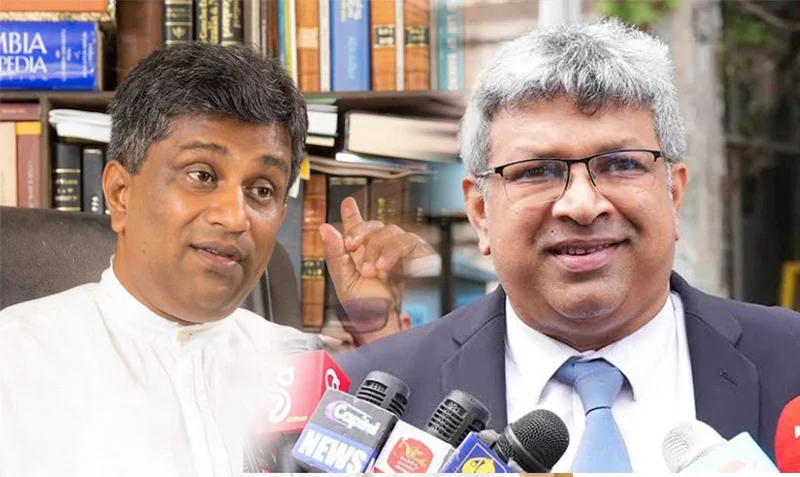
The appointment of a Special Parliamentary Ombudsman (SPO) to inquire into the complaints against the Attorney General, as promised in the NPP manifesto, is on hold, pending the establishment of an Independent Office of the Public Prosecutor and provincial Sub Officers.
Authoritative sources told The Island that the Justice and National Integration Ministry was awaiting the recommendations, regarding the new legislation for the establishment of such an Office, from a Committee of Technical Experts, chaired by Justice Yasantha Kodagoda, PC.
Responding to a query raised in Parliament by SJB lawmaker Ajith P. Perera about the delay in appointment of SPO, Justice and National Integration Minister Harshana Nanayakkara said the government couldn’t take a decision until the Kodagoda Committee made recommendations.
Nanayakkara said that the positioning of the SPO couldn’t be decided before they differentiate the powers of the Attorney General and the an Independent Office of the Public Prosecutor and provincial Sub Officers.
According to the NPP manifesto, provincial Sub Officers were to be established under a senior Additional Solicitor General.
Opposition sources pointed out that the relevant Cabinet decision was taken on 7 May 2025. According to the Cabinet Office, the government decided to establish an Independent Office of the Public Prosecutor and provincial Sub Officers in line with a proposal made by the United Nations High Commissioner for Human Rights, in her final report on Sri Lanka, submitted in September, 2024.
By Shamindra Ferdinando

Death toll in violent clashes at Negombo Prison rise to 25

The Government is committed to equipping children with new technology and knowledge – PM

Bellingham inspires 10-man England to beat Mexico 3-2 in last-16 thriller

Haaland scores twice as Norway stun Brazil 2-1 in World Cup 2026 last 16

A few showers will occur in the Western and Sabaragamuwa provinces and in Galle, Matara, Kandy and Nuwara-Eliya districts

Appointment of SPO to probe AG on hold until establishment of Ind. Public Prosecutor’s Office

‘Dates have the highest sugar content to fight Coronavirus’

Sunday Island 27 December – Headlines

#SundayIsland 17th December – Headlines

Sunday Island – 28th March

Sunday Island Headlines – 21 March

Sunday Island – 21st February – Headlines
-

 Features7 days ago
Climate action to bring South Asia together
-
 News7 days ago
Chamuditha to seek removal of injunction on Youtube programme
-

 News2 days ago
Singapore-based Buddhist monk marks nearly four decades of humanitarian service
-

 News3 days ago
Freedom 250: US Embassy celebrates America’s 250th Independence Day through magic of American cinema
-
 News4 days ago
CIABOC to question Harak Kata on Rs. 200 mn bribery allegation
-
 Opinion7 days ago
Matara Maha Keralla– Uprising against the Dutch
-
 News4 days ago
SLAF conducts successful rescue mission under UN command in Central African Republic
-
 Business7 days ago
The US occupation of the Indian Ocean ‘Zone of Peace’