
News
Bandula sings hossanas about Ranil led govt. of early 2000s

By Rathindra Kuruwita
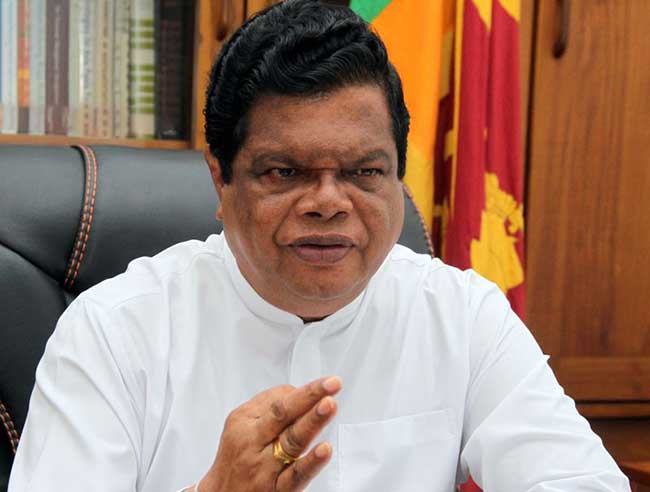
The 225 MPs feel the pain of increased taxes, Cabinet Spokesman, Minister Bandula Gunawardana told the post-Cabinet press conference yesterday.
“Yes, the taxes are high and the 225 MPs also feel the pain just like everyone else. They too are paying taxes. Even our fuel allowance is taxed. The President and the Finance Ministry are trying their best to give concessions,” he said.
Minister Gunawardana said that the government had been compelled to reach an agreement with the IMF on debt restructuring.
“Otherwise, we will not be able to operate for a week as a country. The IMF insisted that we increase our revenue and reduce expenditure. They want us to show real commitment because in the past we have not taken steps to increase taxes and reduce expenditure,” he said.
In 2001, when the economy saw negative growth following the LTTE attack on Katunayaka, the Ranil Wickremesinghe government came up with the Fiscal Management Responsibility Bill of 2003.
“I was a minister of that government. With this bill we promised to reduce the budget gap to less than five percent of the GDP, reduce all debt to 65 percent of the GDP by 2013 and to maintain it and to keep foreign debt under 4.5 percent. Unfortunately, the Wickremesinghe government was toppled, and the next governments changed the bill three times. The Finance ministry and Central Bank officials told the governments that were elected thereafter, the country could not function within these limits. However, if we had stuck to our guns, we wouldn’t be in this mess now,” he said.






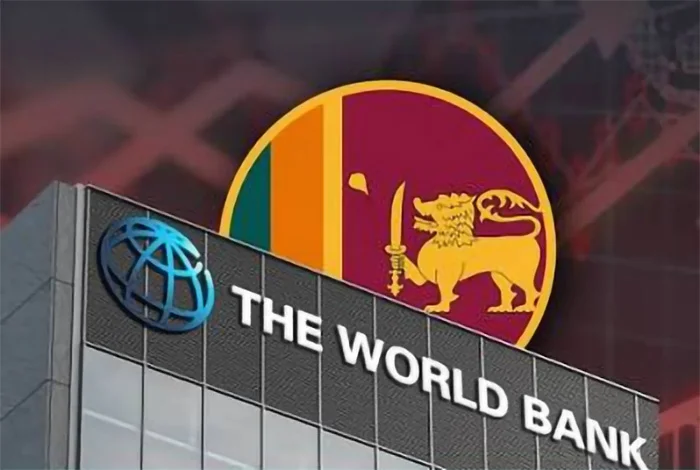
Sri Lanka’s economy reached a significant milestone, reaching pre-crisis levels. But the recovery remains incomplete and uneven, with household incomes and labour market outcomes still lagging the broader economic rebound, says the World Bank Group in its twice-yearly economic outlook.
Released yesterday, the latest Sri Lanka Development Update, From Recovery to Transformation, projects Sri Lanka’s GDP to grow by 4.4% this year, exceeding earlier projections, driven by strong industry performance and steady growth in services.
Growth is projected to slow to 4.2% in 2027 as the post-crisis rebound fades and productivity remains weak. Heightened downside risks, including prolonged volatility in global energy markets and the potential impact of El Niño, could affect productivity and food security.
“Sri Lanka’s reclassification as an upper-middle-income country, especially in a challenging global environment, is a testament to the hard work of its people and the government’s commitment to recovery. But reaching this milestone marks a beginning, not the end — the country needs to seize this momentum to transform its economy and create jobs,” said Gevorg Sargsyan, World Bank Group Country Manager for Sri Lanka. “Sri Lanka can capitalize on sectors with immense potential such as agrifood, investing in the policies, infrastructure, and enabling environment that allow farmers, businesses, and investors to drive the next phase of growth.”
Sri Lanka’s economy has expanded for twelve consecutive quarters, with real GDP increasing 4.7% in the first half of 2026 and returning to 2018 levels. Fiscal performance has also been strong, with the primary budget surplus rising sharply. However, inflation has picked up in recent months, driven by higher energy and food prices, and poverty remains well above pre-crisis levels at 16.9%.
Moving from recovery to transformation will require shifting the engine of growth away from government spending toward increased private investment, exports, and productivity growth, supported by better infrastructure, a stable environment for investment, and greater private sector involvement in key areas of the economy.
The report includes a special focus on agribusiness as a key driver of future growth, jobs, and poverty reduction. While primary agriculture accounts for about 8% of GDP, the broader agrifood system — spanning food processing, logistics, trade, and food services — contributes an estimated one-sixth of GDP and over 40% of employment.
Agribusiness also accounts for nearly 30% of goods exports, making it a vital source of foreign exchange and rural livelihoods. Sri Lanka also competes successfully in global markets in tea, coconut, cinnamon, seafood, and rubber.
Despite this strong foundation, analysis in the report shows that targeted reforms to trade policy, public spending, infrastructure, and access to finance could unlock a new wave of private investment and expand opportunities across Sri Lanka’s agricultural value chains, particularly for smallholders and rural communities.
The report recommends policy measures to establish a more predictable, export-oriented policy environment and to repurpose public spending from inefficient subsidies toward productivity-enhancing investments in agricultural research and climate-smart technologies.
These can be complemented by improvements to quality infrastructure, digital traceability, and cold-chain logistics, as well as reforms to land tenure and access to finance to unlock long-term private investment, especially for smallholders and agribusinesses.
The Sri Lanka Development Update is a companion piece to the South Asia Economic Update, a twice-yearly World Bank Group report examining economic developments and policy challenges across the South Asia region.
The October 2026 edition titled Adopting AI for Growth says growth in South Asia is expected to increase to 6.9% this year, with strong domestic demand keeping the region resilient to global shocks.
The report explores how AI adoption can help build new sources of growth for the region by boosting labor productivity, expanding export opportunities, and improving public service delivery.
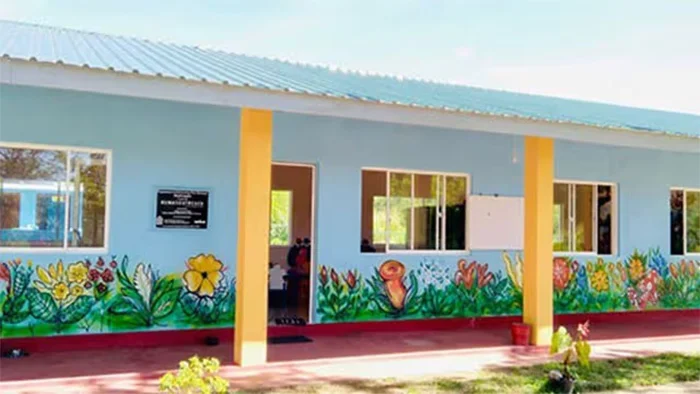
The Ministry of Education, Higher Education and Vocational Education will introduce a single curriculum for preschools across the country from next year, according to Ministry Secretary Nalaka Kaluwewe.
Speaking at a programme on Monday (5), Kaluwewe said the new reforms would end the practice of individual preschools adopting different curricula and educational approaches.
He said the Ministry, as the institution primarily responsible for the country’s human resources, was introducing reforms covering preschool education as part of the broader education reforms currently underway.
“From next year, a single curriculum will be introduced for preschool education and implemented across the country,” he said.
Kaluwewe said preschools would no longer be permitted to teach different content or follow separate educational approaches.
He added that a comprehensive programme was already underway to assess the existing education system and introduce reforms across all three sectors of education.
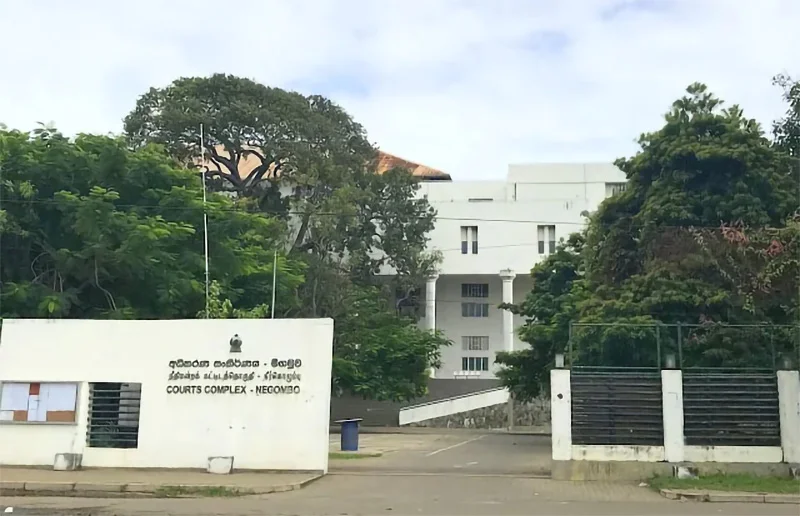
Negombo Magistrate Shilanee Perera yesterday (06) ordered discharging the fourth suspect Jiffry Mohamed from further proceedings in the alleged drug case, stating that no offence under section 54 (a) of the Poisons, Opium and Dangerous Drugs Act has been disclosed in the reports before Court.
The Magistrate held further that no other criminal offence has been alleged against the suspect in the proceedings before Court.
Jiffry Mohamed, Director of A Y Investments Impex (Pvt) Ltd of ‘Supernova Complex’, Bankshall Street, Colombo, was produced in the Negombo Magistrate’s Court on allegations of receiving deposits of money from the bank account of the 1st suspect one Fernando. The 1st suspect was arrested previously with alleged possession of heroin. 1st suspect Fernando was enlarged on bail by the Negombo High Court.
President’s Counsel M.M. Zuhair appearing with Sanjay Perera, M.D.C Jayamini and Mayurika de Silva for Jiffry Mohamed filed written submissions that Jiffry Mohamed is a businessman of repute with no previous convictions or involvement with police or courts. His business accounts are open for deposits into which he regularly receives advance payments from multiple importers for import of goods. He is a service provider and deposits the payments received to banks. Thereafter it is the bank which converts the rupees into foreign currencies and transfers the money to the foreign exporters of goods to Sri Lanka. This is a lawful process under the Import & Export Control Act Regulation No 1 of 2011.
Counsel submitted that according to the police Jiffry Mohamed had received over Rs 74 billion into his rupee accounts during the years 2024 and 2025. He is not aware of Fernando and had no knowledge of any deposits by the 1st suspect or the history of any such deposits. Jiffry Mohamed has no knowledge or any records relating to drugs. In this case there is no allegation or evidence that the suspect had trafficked or possessed any quantity of any drugs at any time.
Quoting Sriyalatha Saraswathie Vs Attorney General Counsel Zuhair submitted that “The criminal liability attaches only to possession which is to be proved to be ‘actual’, ‘exclusive’ and ‘conscious possession’ on the part of a person. The facts of this case clearly show that there is no offence committed by Jiffry Mohamed under the dangerous drugs act.
Negombo Magistrate following the written submissions filed on behalf of the 4th suspect, directed the Negombo Headquarters Police to file a detailed report on the evidence relating to the allegations. Negombo Headquarters police filed report that there is no material to proceed further under the Drugs Act. Magistrate thereupon discharged suspect Jiffry Mohamed.

WB: Economy back, but households still hurt

Rumesh Tharanga among nominees announced for World Athlete of the Year 2026

Faith, mythology, rituals, and Buddhism – A response

NCCSL to conduct practical workshop on food labelling and advertising regulations in Sri Lanka

Cenmetrix and NOLIMIT drive Sri Lanka’s RFID shift in retail

Single curriculum for preschools from next year

‘Dates have the highest sugar content to fight Coronavirus’

Sunday Island 27 December – Headlines

#SundayIsland 17th December – Headlines

Sunday Island – 28th March

Sunday Island Headlines – 21 March

Sunday Island – 21st February – Headlines
-

 Latest News7 days ago
Gold winner Tharanga gets brand-new Honda Vezel from SLAAJ
-

 News6 days ago
US-assisted ‘Ice’ detection: NPC to examine IGP’s move to transfer drug-busting team
-

 Editorial5 days ago
Colombo Port drug bust: The plot thickens
-

 News7 days ago
Civil society activist accuses govt. of favouring Ven. Gnanasara
-
 Midweek Review7 days ago
Dappula’s Easter Sunday ‘grand conspiracy’ claim demolished
-

 Editorial7 days ago
When crime bosses rise above law and shrines
-
Editorial6 days ago
Drug busting, transfers and trust deficit
-

 Features3 days ago
The first woman in the foreign service or Ceylon Overseas Service it was then called