
News
DEW urges Sri Lanka to deviate from neo-liberal economic strategy

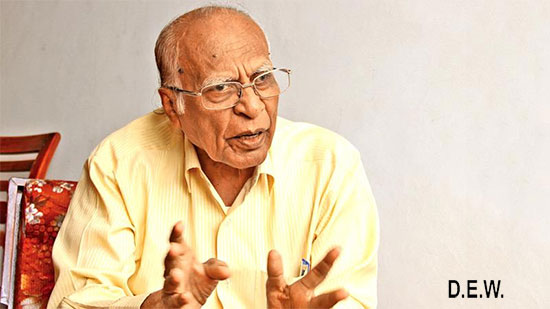
Former General Secretary of the Communist Party D.E.W. Gunasekera, has said the current economic crisis couldn’t be resolved unless Sri Lanka deviates from the neo-liberal strategy.
The former lawmaker said so at the opening of the 22nd National Congress of the Sri Lanka Communist Party recently. “44 years of experience is more than enough. We must embark upon a strategy of planning – market – state intervention. The strategy of Import and Consumption should make way for export-oriented, domestic production and national savings strategy. Our exports need diversification. Human resource development is the best guarantee for mixed foreign remittances. We must make our country the best tourist destination in the world. We must stop borrowing forthwith money from the international money market. We must go in for concessionary loans from our friendly countries. We must make best use of the new Silk Road Economic Project.
The most important element needed is national unity and religious harmony. This is the best guarantee for foreign capital. We missed the great opportunity offered to us by termination of anti-terrorist war.
The only way to ensure a new economic strategy is the unity of left, radical, nationalist forces. There is no other alternative.”
Excerpts of the speech: “National Congresses of our Party has always been eventful, colourful, and fruitful. It has immensely contributed towards raising political consciousness, enhancing political thinking, and formulating policies. Our Party, formed in 1943, in the midst of World War II, is the second oldest Party in the country.
At the outset, I wish to remember with great respect, honour, and gratitude the six founding leaders of our Party namely, Dr. Sugeeshwara Wickremasinghe, Pieter Keuneman, M.G. Mendis, Ven. Udakandewela Sri Saranankara, A. Vayithyalingam, and P. Kandaiah.
“The 22nd National Congress is being held at a time of a deep, profound, and decisive economic crisis. We had to postpone this Congress several times owing to the Corona Pandemic. Even today, we are holding it amidst health restrictions.
“We have presented a political thesis incorporating all aspects of the crisis for discussion and debate. We are now in the process of formulating economic policy and programme for the Country, taking into account the global developments, decisive changes, and also taking into account the successes and failures of our past Policies.
“Our last economic policy document, adopted by the 5th National Congress, was a long-term strategy and policies presented by the then General Secretary Dr. S.A. Wickremasinghe. It was the first and last Policy presented and ever introduced to the Country by a Political Party. It is still relevant which has now become a Study Course used by the Universities. New Economic Policy will be presented to the people in due course, after approval by a Special Congress.
“First, I would like to touch on the current international situation: We entered the 21st Century, with a new changing world economic order and also a changing new balance of power with a rise of the Asian economy. There is no longer a unipolar or bipolar world.
“There have emerged new regional economic centres – North American, EU, Asian, African Union, Latin American CELAC, emerging new Euro Asia, East Asia, North Asia, South Asia, and the Middle East, etc. This is an unprecedented development in economic history. The National Liberation Movement, Economic Globalisation, Scientific and Technological Revolution have brought about this reality.
“The second feature of world development is the decline of imperialism. The birth of modern imperialism took place in and around 1880, according to historian142 years have elapsed. The leadership changed from Great Britain to the US with World War II. With neo-liberalism in crisis, imperialism is passing through a period of decay and decline on all fronts after China became the second economic power as from 2010.
China has made two landmark achievements, namely alleviation of abject poverty and the new Silk Road Economic Project or the Belt and Road Initiative (BRI) comprising 140 odd countries. Argentina is the latest partner in the BRI.
“Imperialism is today left with three options. i.e., confrontation, competition, and corporation with 10 nuclear nations. Imperialism cannot again choose world war as a political solution to an economic crisis. That is why China and Russia appeal to the US, choosing competition or co-operation, preferably co-operation.
“We have to formulate our Economic Strategy in this world context.
“Thirdly, of late we are facing a geopolitical challenge here in the Indo-Pacific Zone relevant to Sri Lanka and South Asia.
“In my view, South Asia is more united and peaceful than ever before. We must strengthen this trend. We must continue with our non-aligned policy of dynamic neutrality. That is our appeal to all South Asian States. The emergence of two military organisations as “QUAD” and white Imperialist AUKUS. NATO has entered the Indo-Pacific Zone. It is making a similar attempt with the Ukrainian crisis expanding the frontiers to Eastern Europe. This is in line with the choice of “Confrontation Policy”. Our Congress condemned this attempt with all vehemence. We appeal to India to come back to its traditional policy of non-alignment.”


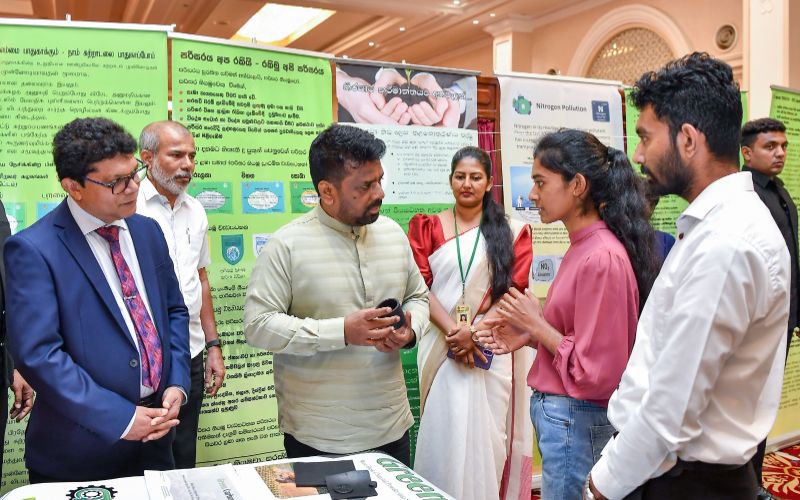
The National commemoration of World Environment Day 2026, held under the theme “Let us take action to mitigate the impacts of climate change”, was held this morning (05) at the Temple Trees under the patronage of President Anura Kumara Dissanayake.
The environmental policy of the present Government, which is guided by a vision of a sustainable environment that ensures the survival and well-being of all living beings, prioritises maintaining a balance between socio-economic development and environmental protection, with a view to fostering a healthy society and a balanced ecosystem. Accordingly, within the framework of sustainable development and in line with the principles of the United Nations Framework Convention on Climate Change, Sri Lanka is actively contributing to global efforts to reduce greenhouse gas emissions.
In line with this programme, a “Climate Week” was declared from 30 May to 05 June in conjunction with the 2026 World Environment Day National commemoration. A series of environmental programmes were organised across the country with the participation of the “Clean Sri Lanka” initiative and contributions from the public sector, private sector and civil society organisations.
Furthermore, in conjunction with this year’s World Environment Day commemoration, five forests, Ritigala, Aliyawetunuwewa, Mulagala, Konkatiyawa and Kallanchiya were declared reserved forests by the Department of Forest Conservation under the patronage of the President.
The introduction of the enhanced National Green Reporting Guidelines, the declaration of the Magama Sand Dunes as a sensitive area by the Department of Coastal Conservation and Coastal Resources Management, the clearance of the Elephant crossings by the Department of Wildlife Conservation and the designation of the Kuda Bubula Spring and Kapurella Hot Water Wetland as protected areas were also announced.
In addition, the first issue of the environmental magazine “Soba” for 2026, the “Soba Ketha” environmental publication and a resource book on plastic waste management were officially launched.
A certificate confirming that the World Environment Day national commemoration had been conducted as a carbon-neutral programme was also formally presented to the President.
The President also participated in the presentation of prizes and certificates to the winners of the art competition organised by the Climate Change Division, as well as to the winners of the eco-friendly innovations and designs competition organised by the Central Environmental Authority under the World Environment Day theme.
President Anura Kumara Dissanayake also joined a group photograph with environmental researchers.
Addressing the event, Minister of Environment, Dr. Dammika Patabendi stated that…
The United Nations designated World Environment Day in 1972. Today marks the second World Environment Day being commemorated under the National People’s Power Government. In collaboration with the Department of Forest Conservation, five forests have been declared as protected areas in conjunction with this year’s World Environment Day under the “Vanaspati” programme. These include Ritigala, Aliyawetunuwewa, Mulagala Reserve, Konkatiyawa Reserve and Kallanchiya five forests located in the Anuradhapura District. The Government began designating protected areas from World Environment Day 2025, when Nilgala, Kottawa, Thulhiri Kanda, Weerawila and Udaliyadda forests were declared as reserves.
The “Vanaspati” programme was officially launched on 15 June last year. Through this initiative, the Ministry of Environment and the Department of Forest Conservation successfully declared 29 forests as protected areas in 2025. In 2026, a further 50 reserves were declared on World Forest Day, focusing primarily on four districts including Ampara, Nuwara Eliya and Badulla. In addition, two more forests were declared protected in conjunction with the recent ‘Ehi Passiko’ Peace Walk. With today’s declaration of five additional forests, a total of 86 forests have been declared as protected areas within one year, which is a significant achievement.
We have made significant efforts to address human–elephant conflict. One of our key aspirations has been to create designated corridors that allow elephants to move safely through their natural habitats. Today, we have succeeded in opening three elephant corridors in the Hambantota and Monaragala districts. In addition to this, substantial work has been undertaken in recent years to establish elephant management reserves and facilitate the opening of such corridors. Although an elephant management reserve was declared in Hambantota several years ago, the necessary legal regulations and operational mechanisms had not been put in place. We have now gazetted the required regulations and appointed an operational committee and implementation work is currently underway. During this process, we identified shortages in human and physical resources within institutions such as the Department of Wildlife Conservation and the Department of Forest Conservation. As a solution, we have taken steps to fill existing vacancie.
Furthermore, arrangements have been made to strengthen institutional capacity by providing essential infrastructure, including the procurement of motorcycles, tractors, mini-tractors, and cab vehicles to support field operations and improve efficiency.
We are currently working on formulating a policy for the management of tame elephants. In addition, efforts are underway to develop the Pinnawala Elephant Orphanage into an elephant breeding and research centre, addressing a key gap in the country’s conservation infrastructure. In the context of environmental protection, it is evident that many of the existing laws and regulations are outdated. Accordingly, steps are being taken to amend and modernise these legal frameworks.
Deputy Minister of Environment ,Anton Jayakody, Acting Secretary of the Ministry of Environment , R.H.M.P. Abeykoon, Chairman of the Central Environmental Authority , Professor Thilak Hewawasam, Director General of the Department of Wildlife Conservation S.M.L.R.P. Marasinghe, along with environmentalists, researchers, university and school students, were among those present on the occasion.
(PMD)

The commissioning ceremony of the deep-sea patrol vessel as Samudravijaya, gifted to the Sri Lanka Navy by the United States Coast Guard to enhance the Navy’s operational capabilities, was held under the patronage of Commander-in-Chief of the Armed Forces, President Anura Kumara Dissanayake, on Thursday afternoon (04) at the Eastern Terminal premises of the Port of Colombo.
The vessel was officially handed over to Sri Lanka by the United States Coast Guard on 2 December 2025. Following modifications to meet the operational requirements of the Sri Lanka Navy, the vessel commenced its voyage to Colombo on 20 February 2026 from the United States Coast Guard Yard in Baltimore, Maryland.
The induction of the vessel marks a significant step towards further strengthening the operational capabilities of the Sri Lanka Navy and enhancing the country’s maritime and national security. The vessel is expected to make an important contribution to maritime surveillance, search and rescue operations, protection of fisheries resources, environmental monitoring and the enforcement of international maritime laws and conventions. In particular, it will serve as a vital asset in combating narcotics trafficking and other transnational maritime crimes, which remain major challenges for both Sri Lanka and the wider region.
During the ceremony, President Dissanayake presented the official commissioning warrant to the vessel’s Commanding Officer, Captain Gayan Wickramasuriya. The President subsequently unveiled the vessel’s name board and official insignia before undertaking an inspection tour of the ship. The Commander of the Navy briefed those present on the vessel’s operational readiness, systems and capabilities.
President Dissanayake also signed the vessel’s Distinguished Visitors’ Book and was presented with a commemorative plaque featuring a replica of the vessel.
Among those present were Minister of Ports and Civil Aviation Anura Karunatilaka. Deputy Minister of Defence, Major General Aruna Jayasekara (Retd.), Secretary to the Ministry of Defence, Air Vice Marshal Sampath Thuyacontha (Retd.), Admiral of the Fleet Wasantha Karannagoda, Commander of the Army, Lieutenant General Lasantha Rodrigo, Commander of the Air Force, Air Vice Marshal Vasu Bandu Edirisinghe. Commander of the Navy, Vice Admiral Kanchana Banagoda, Inspector General of Police, Attorney-at-Law Priyantha Weerasooriya, Charge d’affaires to the U.S. Embassy Ms. Jayne Howell, Senior Defence Official and Defence Attache with Spouse Lieutenant Colonel Matthew House, representatives of the Embassy and senior officers of the Sri Lanka Navy.
(PMD)

Death toll rises to 12: Director remanded
Some residents were allegedly chained
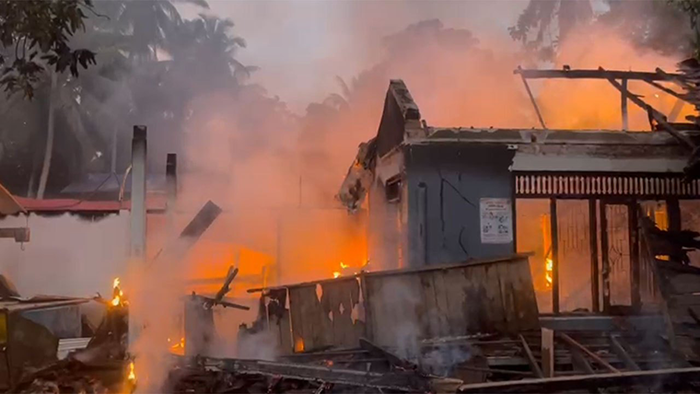
Police have come under public pressure to investigate allegations of inhumane treatmenf the residents at an elders’ home in Batagoda, which was also reportedly used as a care centre for persons with special needs, following a devastating fire that has so far claimed 12 lives.
Eyewitnesses who were among the first responders told the media that several residents had been chained inside rooms at the Senehase Kedella Elders’ Home when the fire broke out on Wednesday. They claimed that rescue efforts were hindered as iron chains could not be removed, and that some residents died while being restrained.
Authorities have not yet verified these claims, and Police said investigations are continuing.
Police spokesman ASP F.U. Wootler, contacted for comment, said there were rumours to that effect, but the Police were not in a position to verify the claims until a report from the Government Analyst was received. He said eight survivors with burn injuries were being treated in hospital.
Meanwhile, the Director of the facility had been arrested and was due to be produced before the Horana Magistrate’s Court, Police said adding that he was remanded till June 11.
The death toll from the fire has risen to 12 as of Thursday morning following the recovery of additional charred remains during ongoing forensic examinations at the site. Six others sustained serious injuries and are being treated at the Horana Base Hospital.
Police said 72 residents were inside the facility at the time of the blaze. Of them, 10 died inside the building, seven were injured and hospitalised, while 51 were rescued and relocated.
Survivors were initially housed at Batagoda Junior School before being transferred with Army assistance to another branch of the same care network in Galpatha.
A magisterial inquiry was conducted on Thursday morning. Horana Magistrate Lakmini Vidanagamage visited the scene. The burnt remains were examined and removed under judicial supervision.
Separately, allegations have emerged that residents were required to pay an admission fee of Rs. 75,000, along with a monthly charge of Rs. 35,000 to the centre. Police have not commented on these claims.
The director was taken to the scene as part of ongoing investigations, while forensic experts continue examinations to determine the cause of the fire, which remains undetermined.Anguruwatota Police are conducting investigations.
By Norman Palihawadane and Nishan S Priyantha

Everest guide survived six-day ordeal by eating chocolate and ‘chewing ice’

Nasa astronauts return to ISS after sheltering during air leak repair attempt

World Environment Day marked by National Celebration under President’s Patronage

Qualifier Chwalinska sets up final against Andreeva

Zelensky proposes face-to-face talks in open letter to Putin

President Commissions Offshore Patrol Vessel ‘Samudra Vijaya’ into Sri Lanka Navy

‘Dates have the highest sugar content to fight Coronavirus’

Sunday Island 27 December – Headlines

#SundayIsland 17th December – Headlines

Sunday Island – 28th March

Sunday Island Headlines – 21 March

Sunday Island – 21st February – Headlines
-

 News4 days ago
Lankan duo emerge winners in Latin dance championship held in Blackpool, UK
-
 News7 days ago
IMF urges Lanka not to meddle with exchange rate
-

 Business5 days ago
IMF’s unstated rate:Sri Lanka’s $695m loan costs about 5.33% per annum
-
 News7 days ago
State of emergency extended
-

 Latest News2 days ago
Kusal Mendis, Pathum Nissanka, bowlers put Sri Lanka 1-0 up
-
 News2 days ago
New US tariffs proposed on 60 countries, including Sri Lanka
-

 Business5 days ago
Sri Lankan scientist-innovator Milinda Edirisinghe introduces AI-integrated gem testing system to gemological world
-

 Features6 days ago
Are threats to Buddha Sasana external or from within?