Connect with us

News

Chinese Ambassador urges sincere unity and cooperation among regional nations given gravity of pandemic

Published

on

Given the gravity of the COVID-19 pandemic, countries in the region must cooperate with each other sincerely, Qi Zhenhong, Chinese Ambassador to Sri Lanka said yesterday issuing a statement. With this aim in mind China works with Sri Lanka, Afghanistan, Pakistan, Nepal and Bangladesh to provide pandemic support, he said.

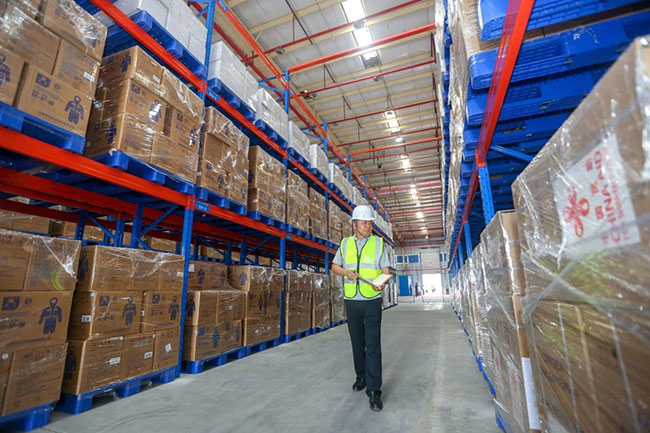
“As of early September, China has provided a total of about 120 million doses of vaccines to South Asian countries through various channels. Among them, Pakistan, Sri Lanka, Bangladesh, and Nepal have received 70 million, 22 million, 19 million, and 7.4 million doses respectively, and Pakistan and Bangladesh also have started local vaccine production with China’s support,” Zhenhong said.

Given below is the statement in full: “Since April this year, South Asia is facing a new round of COVID-19 pandemic, and Sri Lanka has been suffering the most serious impact than ever. In times of adversity, it is even more necessary for people in the same boat to help each other, and more urgently for countries in the region to cooperate sincerely. On April 27th, China established a response mechanism with Sri Lanka, Afghanistan, Pakistan, Nepal and Bangladesh the first time. The foreign ministers of the six countries held a visual conference to discuss joint efforts to fight the pandemic and revive the economy, and achieved important outcomes, including the announcement to establish the China-South Asia Emergency Supplies Reserve and the China-South Asia Poverty Alleviation and Cooperative Development Center. In early July, these two important platforms were officially launched in Chongqing and Chengdu of China, and achieved great outcomes quickly. During the past two months, numerous vaccines and medical supplies have been unhinderedly sent to South Asian countries including, which have strongly supported the fight against pandemic in the region. In this process, we further realize that: Firstly, unity and cooperation is the only correct choice to overcome the pandemic. While facing great pressure on its own pandemic prevention and control, China established and launched the China-South Asia Emergency Supplies Reserve in just 70 days, only was to provide a new and important platform as well as the firmest and strongest support for regional countries to join hands in the fight against the pandemic and emergency cooperation as soon as possible. This fully demonstrates “China’s speed” and “China’s sincerity” in further promoting cooperation with South Asian countries. As President Xi Jinping pointed out, “The Covid-19 pandemic warned the world in a special form that human beings are a community of shared future, honor and disgrace. No country can be immune to major crises, and unity and cooperation are the correct way for the world.”

“Secondly, vaccine cooperation is a key weapon to defeat COVID-19. The six foreign ministers have repeatedly emphasized the key role of vaccines in the fight against the pandemic. President Gotabaya Rajapaksa also stressed that only vaccines could stop the pandemic. As of early September, China has provided a total of about 120 million doses of vaccines to South Asian countries through various channels. Among them, Pakistan, Sri Lanka, Bangladesh, and Nepal have received 70 million, 22 million, 19 million, and 7.4 million doses respectively, and Pakistan and Bangladesh also have started local vaccine production with China’s support. On September 9th, President Xi Jinping announced at the BRICS Summit that on top of the 100 million U.S. dollars donation to COVAX, China will donate an additional 100 million doses of vaccines to fellow developing countries within this year. As a friendly neighbor of China, South Asia will undoubtedly benefit a lot.

“Thirdly, focusing on livelihood is a matter of urgent priority. In order to address the prominent challenges facing South Asian countries in the field of poverty reduction and development in the COVID-19 pandemic, China initiated the China-South Asian Countries Poverty Alleviation and Cooperative Development Center. The successful launching and operation of the center will play an effective role in gathering strength, pooling resources and promoting experience exchanges, thereby supporting the South Asian countries to improve economy and livelihood. It will promote poverty reduction and eradication, as well as enhance the well-being of the people of the region. The Foreign Ministers have also agreed to deepen Belt and Road cooperation, secure the industrial and supply chains, and strengthen collaboration in poverty reduction, food security and other fields. We will continue to actively put the above-mentioned outcomes into effect, while further enhancing the quality of the cooperation mechanism among us, to expand the areas of cooperation, achieve more visible results and better benefit our people.

“This Six Countries FMs’ Meeting Mechanism, as a new initiative, is open, inclusive, and mutually beneficial in its nature. Therefore, it always welcomes new members from the region. China hopes and believes that countries of the region will work together to develop, safeguard and fully utilize this mechanism. China firmly stands with the people of South Asia and always provides as much assistance as possible within its capacity. In July, President Xi Jinping in his speech at the APEC Informal Economic Leaders’ Retreat promised that China will provide another $3 billion international aid over the next three years to support the COVID-19 response and economic and social recovery in other developing countries. As long as the COVID-19 pandemic is haunting the world, China will not halt its efforts and assistance for global cooperation in defeating the pandemic.

“We are delighted to see that under the strong leadership of President Gotabaya Rajapaksa and Prime Minister Mahinda Rajapaksa, and with the joint efforts of its people of all ethnic groups, Sri Lanka has made world-renowned achievements in vaccination. We are also expecting the pandemic situation to improve in following days. China-Sri Lanka cooperation, being important part of China-South Asian cooperation, will certainly benefit from the regional cooperation. The Port City Colombo and the Hambantota Port and Industrial Park have attracted high interests from other South Asian countries including a Maldivian company to build yachts in Hambantota Port. More and more regional cooperative projects will be established in the future. China looks forward to joining hands with Sri Lanka and other regional countries in confronting and overcoming challenges, defeating COVID-19 pandemic and achieving greater and better development in this region.”


Continue Reading
Click to comment

Leave a Reply

Your email address will not be published. Required fields are marked *

Latest News

Advisory for Severe Lightning issued for Galle, Matara, Kaluthara and Rathnapura districts

Published

on

By

Advisory for Severe Lightning Issued by the Natural Hazards Early Warning Centre Issued at 12.30 p.m. 21 March 2026, valid for the period until 11.00 p.m. 21 March 2026

Thundershowers accompanied with severe lightning are likely to occur at some places in the Galle, Matara, Kaluthara and Rathnapura districts after 1.00 p.m.

There may be temporary localized strong winds during thundershowers. General public is kindly requested to take adequate precautions to minimize damages caused by lightning activity.

ACTION REQUIRED:

The Department of Meteorology advises that people should:

 Seek shelter, preferably indoors and never under trees.

 Avoid open areas such as paddy fields, tea plantations and open water bodies during thunderstorms.

 Avoid using wired telephones and connected electric appliances during thunderstorms.

 Avoid using open vehicles, such as bicycles, tractors and boats etc.

 Beware of fallen trees and power lines.

 For emergency assistance contact the local disaster management authorities.

Continue Reading

News

Sri Lanka says it denied US request to land two aircraft at Mattala airport

Published

on

By

Sri Lanka’s president says his government turned down a request from the United States to land two US combat aircraft at a civilian airport earlier this month.

President Anura Kumara Dissanayake told Sri Lanka’s parliament on Friday that Washington had requested permission for the aircraft to land at Mattala Rajapaksa International Airport in southern Sri Lanka from March 4 to 8.

The request was made on February 26, two days before the US and Israel launched their military offensive against Iran.

“They wanted to bring two warplanes armed with eight antiship missiles from a base in Djibouti”, Dissanayake told lawmakers. “We turned down the request to maintain Sri Lanka’s neutrality”, he added to applause.

The US-Israeli war on Iran has sparked widespread concern globally, as Iranian missile and drone attacks across the wider Middle East have sent energy prices soaring and fuelled fears of a widening conflict.

US President Donald Trump has also been pressuring Washington’s allies to show more support for the war, slamming NATO countries as “cowards” for refusing to help secure the Strait of Hormuz.

Iran has essentially shuttered the critical Gulf waterway  amid the war, forcing leaders around the world to scramble to try to offset the effects on their economies and energy supplies.

Amid the turmoil, many countries have refused to get directly involved in the war while calling for urgent de-escalation.

On Friday, Switzerland announced that it would halt any weapons exports to the US that could be used in military operations against Iran, citing its longstanding policy of neutrality.

“The export of war materiel to countries involved ⁠in the international armed conflict with Iran cannot be authorised for the duration of the conflict”, the Swiss government said.

Sri Lanka’s president also cited his country’s neutrality in the decision to deny the US request to land the two aircraft at Matalla airport earlier this month.

Dissanayake said he had received another request that same day, on February 26, from Iran to seek permission for three naval vessels to make a goodwill visit to Sri Lanka.

“With two requests before us, the decision was clear,” he said, noting that the government denied both to avoid taking sides as signs of escalating conflict emerged.

“Had we said ‘yes’ to Iran, we would have had to say ‘yes’ to the US, as well”, Dissanayake added.

In early March, Sri Lanka’s navy rescued 32 Iranian crew off IRIS Dena after it was torpedoed by a US submarine off the country’s coast, killing at least 84 people.

Days later, Sri Lanka evacuated more than 200 crew members from a second Iranian vessel, IRIS Bushehr, after the ship requested assistance from Colombo.

[Aljazeera]

Continue Reading

News

President maintains Lanka has been even-handed in dealing with Iran and US

Published

on

President

Sri Lanka refused the request by three Iranian ships to come to Sri Lanka on a goodwill visit and the request by the United States to land two of its fighter jets  in Mattala, President Anura Kumara Dissanayake told Parliament yesterday.

“Sri Lanka maintained neutrality by refusing the two requests by both the US and Iran,” he said.

President Dissanayake provided a clarification on domestic fuel prices in light of rising crude oil prices in the global market and subsequent fuel price increases in other countries, triggered by the ongoing crisis in the Middle East.

The President highlighted that the Ceylon Petroleum Corporation (CPC) currently supplies 57% of the country’s fuel requirements, while the remaining 43% is supplied by the private sector.

He further noted that private sector suppliers have requested pricing that reflects current global market rates for the fuel they import.

Accordingly, the President emphasised that a decisive decision on fuel price adjustments must be reached as expeditiously as possible to ensure the continuity of the national fuel supply.

Addressing the Parliament, the President stated that the current pricing formula dictates that for every one-dollar increase in global oil prices, domestic fuel prices must rise by Rs. 2.

He noted that the primary impact being faced is driven by the surge in global fuel prices rather than the depreciation of the rupee against the US dollar.

The President said that, globally, countries have been compelled to make difficult decisions regarding fuel costs, with price increases ranging from approximately 6% to 50%.

He added that while global prices have risen by as much as 49%, the domestic increase has been limited to 8%.

He further stated that Sri Lanka is currently facing a significant challenge in maintaining fuel supply.

The Ceylon Petroleum Corporation (CPC) accounts for 57% of the country’s fuel supply. He noted that had the CPC been the sole supplier, fluctuations could have been managed by offsetting current losses with future profits.

However, he said the private sector now controls 43% of the market, and their position is that if retail prices do not reflect the current landed cost of fuel, they will cease imports.

He added that, from a business perspective, this is a valid concern, as private companies reportedly incur a loss of approximately USD 55 million per shipment, which he said is unsustainable.

The President emphasised that the contribution of the private sector is essential to maintaining the national fuel supply, but noted that they will only participate if they are able to sell at cost-reflective prices.

He stressed that the issue of fuel pricing must, therefore, be addressed urgently.

He also pointed out that under the existing Act, companies are permitted to increase prices; however, the maximum retail price is determined by the Ceylon Petroleum Corporation.

“Although we have entered into agreements with these private companies, the necessary legislative amendments to the Act have not yet been finalised,” he noted.

Regarding government revenue, the President stated that tax income from fuel currently stands at Rs. 20 billion, compared to Rs. 240 billion generated last year from taxes on diesel.

Continue Reading

Trending