
News
Wholesale mafia blamed for unusually high vegetable prices


Vegetable prices at the Peliyagoda Manning Wholesale Market surged to unusually high levels yesterday (26), raising concerns among consumers as the festive season drives up demand. The situation is expected to persist over the next few days, a spokesman for the Manning Market told The Island.
He said a sharp increase in the number of buyers visiting the wholesale market, ahead of upcoming festivities, had resulted in a sudden spike in demand, prompting wholesale traders to raise prices significantly. The price hikes have affected a wide range of commonly consumed vegetables, placing additional pressure on household budgets.
According to market sources, the wholesale price of beans climbed to Rs. 1,100 per kilogram, while capsicum soared to Rs. 2,000 per kilogram. Green chillies were selling at around Rs. 1,600 per kilogram. Prices of other vegetables, including beetroot, brinjal (eggplant), tomatoes, bitter gourd, snake gourd and knolkhol, also recorded unusually high increases.
The spokesman alleged that despite the steep rise in prices, vegetable farmers have not benefited from the increases. Instead, he claimed that a group of traders, who effectively control operations at the wholesale market, are arbitrarily inflating prices to maximise profits.
He warned that if the relevant authorities fail to intervene promptly to curb these practices, vegetable prices could escalate further during the peak festive period. Such a trend, he said, would disproportionately benefit a small group of middlemen while leaving consumers to bear the brunt of higher food costs.
By Kamal Bogoda ✍️








Death toll rises to 12: Director remanded
Some residents were allegedly chained
Police have come under public pressure to investigate allegations of inhumane treatmenf the residents at an elders’ home in Batagoda, which was also reportedly used as a care centre for persons with special needs, following a devastating fire that has so far claimed 12 lives.
Eyewitnesses who were among the first responders told the media that several residents had been chained inside rooms at the Senehase Kedella Elders’ Home when the fire broke out on Wednesday. They claimed that rescue efforts were hindered as iron chains could not be removed, and that some residents died while being restrained.
Authorities have not yet verified these claims, and Police said investigations are continuing.
Police spokesman ASP F.U. Wootler, contacted for comment, said there were rumours to that effect, but the Police were not in a position to verify the claims until a report from the Government Analyst was received. He said eight survivors with burn injuries were being treated in hospital.
Meanwhile, the Director of the facility had been arrested and was due to be produced before the Horana Magistrate’s Court, Police said adding that he was remanded till June 11.
The death toll from the fire has risen to 12 as of Thursday morning following the recovery of additional charred remains during ongoing forensic examinations at the site. Six others sustained serious injuries and are being treated at the Horana Base Hospital.
Police said 72 residents were inside the facility at the time of the blaze. Of them, 10 died inside the building, seven were injured and hospitalised, while 51 were rescued and relocated.
Survivors were initially housed at Batagoda Junior School before being transferred with Army assistance to another branch of the same care network in Galpatha.
A magisterial inquiry was conducted on Thursday morning. Horana Magistrate Lakmini Vidanagamage visited the scene. The burnt remains were examined and removed under judicial supervision.
Separately, allegations have emerged that residents were required to pay an admission fee of Rs. 75,000, along with a monthly charge of Rs. 35,000 to the centre. Police have not commented on these claims.
The director was taken to the scene as part of ongoing investigations, while forensic experts continue examinations to determine the cause of the fire, which remains undetermined.Anguruwatota Police are conducting investigations.
By Norman Palihawadane and Nishan S Priyantha

Sri Lanka CERT has issued a public warning over the circulation of artificial intelligence (AI)-generated videos falsely depicting President Anura Kumara Dissanayake, Prime Minister Harini Amarasuriya and several other prominent personalities to promote fraudulent investment schemes online.
According to complaints received by the national cyber security agency, the videos have been created using deepfake technology and are being used as part of attempts to defraud members of the public through financial scams.
The images of famous sports personalities and other public figures have also been misused in the deceptive content.
The agency has warned that similar AI-generated material has been used to spread false information relating to investment opportunities, employment offers, as well as matters concerning the country’s economy and tax policies.
According to Sri Lanka CERT, the videos are being widely shared across online platforms and frequently contain links urging viewers to make investments in return for purported profits.The agency has cautioned that these links may redirect users to fraudulent websites designed to steal personal information, financial data and money from unsuspecting victims.
Sri Lanka CERT has urged the public to exercise extreme caution when encountering such content online and advised against clicking on suspicious links or sharing personal information through unverified websites.
“The public should remain vigilant and avoid becoming victims of false information and online fraud schemes,” the agency said.
Sri Lanka CERT has also encouraged internet users to verify information through official sources before acting on any investment, employment or financial offers circulated via social media or other online platforms.
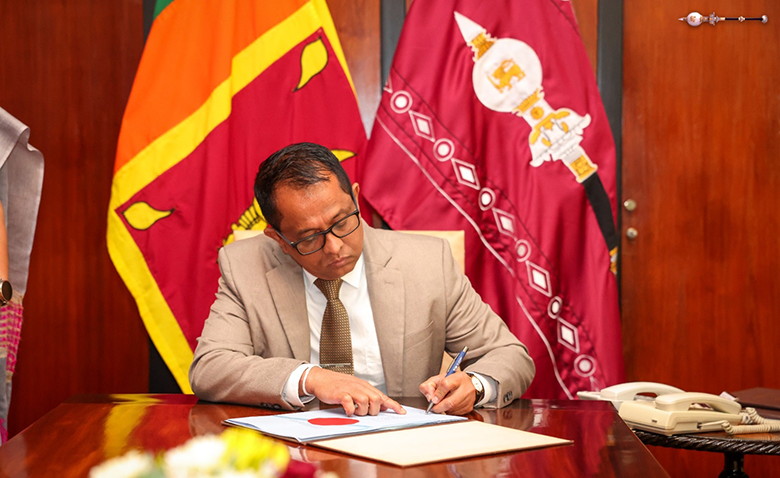
Speaker Dr Jagath Wickramaratne on Wednesday endorsed the certificate on the Inland Revenue (Amendment) Bill, bringing the legislation into force as the Inland Revenue (Amendment) Act, No. 11 of 2026, Parliament sources said.
The Bill, which amends the Inland Revenue Act, No. 24 of 2017, was passed by Parliament on May 19.
The new law introduces a series of reforms aimed at modernising tax administration procedures, improving compliance and enforcement mechanisms, enhancing the accuracy of tax calculations and deductions, and strengthening transparency within the tax system.
The amendments also support broader economic policy objectives and include measures designed to reinforce anti-money laundering safeguards.Among the key provisions of the Act is the mandatory use of Taxpayer Identification Number (TIN) certificates for specified high-value financial transactions.
The legislation also introduces revisions to the calculation of taxable income, clarifies tax exemptions applicable to certain projects and business entities, and expands the scope for information disclosure to relevant authorities.
The amendments are expected to improve the efficiency of tax administration while facilitating greater accountability and regulatory oversight.With the Speaker’s endorsement of the certificate, the Inland Revenue (Amendment) Bill has now become law as the Inland Revenue (Amendment) Act, No. 11 of 2026.

Pakistan hold their nerve to take series in low-scoring scrap

Robinson routs New Zealand top-order as England hit back on 16-wicket day

Rumesh Tharanga shatters Rome Diamond League record

Showers about 100 mm are likely at some places in the Western and Sabaragamuwa provinces and in Galle, Matara, Kandy and Nuwara-Eliya districts

Elders’ home devastated by fire was a ‘house of horror’: Witnesses

CERT : AI-generated videos depicting Prez, PM lure public into financial scams

‘Dates have the highest sugar content to fight Coronavirus’

Sunday Island 27 December – Headlines

#SundayIsland 17th December – Headlines

Sunday Island – 28th March

Sunday Island Headlines – 21 March

Sunday Island – 21st February – Headlines
-

 News6 days ago
IMF urges Lanka not to meddle with exchange rate
-

 News3 days ago
Lankan duo emerge winners in Latin dance championship held in Blackpool, UK
-

 Business4 days ago
IMF’s unstated rate:Sri Lanka’s $695m loan costs about 5.33% per annum
-
 News6 days ago
State of emergency extended
-

 Features5 days ago
Are threats to Buddha Sasana external or from within?
-

 News4 days ago
UNP challenges NPP move to amend Vihara – Devalagam Act
-

 Business4 days ago
Sri Lankan scientist-innovator Milinda Edirisinghe introduces AI-integrated gem testing system to gemological world
-

 Latest News1 day ago
Kusal Mendis, Pathum Nissanka, bowlers put Sri Lanka 1-0 up