
News
TNA, allies call for outfit like IIIM in Syria to probe SL

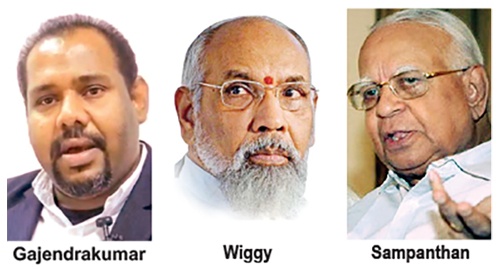
Three Tamil political parties represented in Parliament backed by several other civil society groups, have urged the Geneva-based United Nations Human Rights Council (UNHRC) to set up an evidence gathering mechanism, similar to the International Independent Investigatory Mechanism (IIIM), in relation to Syria, established as a subsidiary body of the UN General Assembly, with a strict time frame of 12 months duration to investigate Sri Lanka war crimes.
The following is the text of the letter addressed to UNHRC members by the TNA, TNPF and TMTK: “We, the elected representatives of the Tamil people in Sri Lanka, leaders of Tamil national political parties, members of the Tamil victim communities and Tamil civil society organizations write this letter in the lead up to the 46th Session of the United Nations Human Rights Council (UNHRC) when the situation in Sri Lanka is to be evaluated. We note that within a week of the end of the armed ethnic conflict in Sri Lanka, a joint communiqué by the Government of Sri Lanka and the United Nations was issued at the conclusion of UN Secretary-General’s visit to Sri Lanka on 23 May 2009 with the following: “Sri Lanka reiterated its strongest commitment to the promotion and protection of human rights, in keeping with international human rights standards and Sri Lanka’s international obligations. The Secretary-General underlined the importance of an accountability process for addressing violations of international humanitarian and human rights law. The Government will take measures to address those grievances” Upon Sri Lanka failing to take meaningful steps to address the above commitments, the UN Secretary General appointed on 22 June 2010, a three-member panel to look into human rights and accountability issues during the final stages of the armed ethnic conflict in Sri Lanka. This report of the Panel of Experts (POE) was handed over to the Secretary General in March 2011. Subsequently, the Secretary General referred the POE to the President of the UNHRC and the High Commissioner for Human Rights in September 2011. Thereafter, the UNHRC adopted Resolution 19/2 “Promoting Reconciliation and Accountability in Sri Lanka” in March 2012 and since then has been seized of the matter with several resolutions in March 2013 and March 2014. Subsequently, the Government of Sri Lanka co-sponsored Resolutions 30/1 (October 2015), 34/1 (March 2017) and 40/1 (March 2019). Leaders across the political spectrum in Sri Lanka including from both the major political parties have categorically and without exception stated that they will protect the Sri Lankan armed forces from prosecutions. It is now time for Member States to acknowledge that there is no scope for a domestic process that can genuinely deal with accountability in Sri Lanka.
“The continuing and intensifying oppression against the Tamils including militarisation, indefinite detention of political prisoners, land grab in the name of archaeological explorations, the denial of traditional, collective land rights like cattle grazing rights, intensifying surveillance of political and civil society activists, the denial of burial rights during COVID19 to our Muslim brethren and the denial of the right to memory underscore the urgency of addressing the deteriorating situation. As the UNHRC meets in February and March 2021 to evaluate the Sri Lankan Government’s commitments under Resolution 40/1 and plan further action, we urge that member states categorically come to this conclusion by way of a final Resolution. The Resolution must declare that Sri Lanka has failed in its obligations to investigate allegations of violations committed during the armed ethnic conflict and atrocity crimes including genocide, crimes against humanity and war crimes.
“In such a context the Resolution must acknowledge that there is no prospect for accountability in Sri Lanka by way of its own domestic mechanisms or through hybrid mechanisms.
We request the following: 1. Member States urge in the new resolution that other organs of the United Nations including the UN Security Council and the UN General Assembly take up the matter and take suitable action by reference to the International Criminal Court and any other appropriate and effective international accountability mechanisms to inquire into the crime of genocide, war crimes and crimes against humanity.
2. The President of the UNHRC refers matters on accountability in Sri Lanka back to the UN Secretary General for action as stated above.
3. Member States to mandate the Office of the High Commissioner for Human Rights (OHCHR) to continue to monitor Sri Lanka for ongoing violations and have an OHCHR field presence in country.
4. Without detracting from that which has been stated in point 1 above, take steps to establish an evidence gathering mechanism similar to the International Independent Investigatory Mechanism (IIIM) in relation to Syria established as a subsidiary body of the UN General Assembly with a strict time frame of twelve months duration.
We reiterate the need for concrete action with accountability and for the above the matter to be escalated to higher forums. Thus, we urge Member States to take decisive and timely action to grant redress to the people who have been denied justice thus far.”





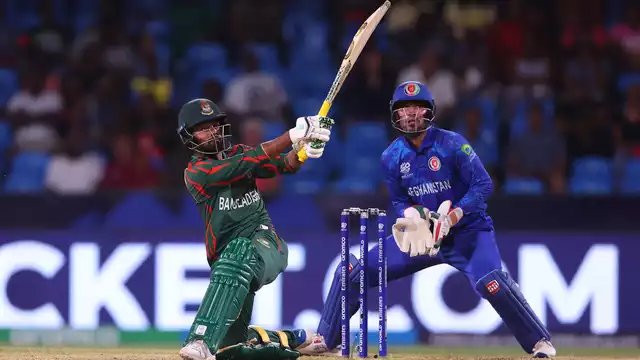
[ Cricbuzz]
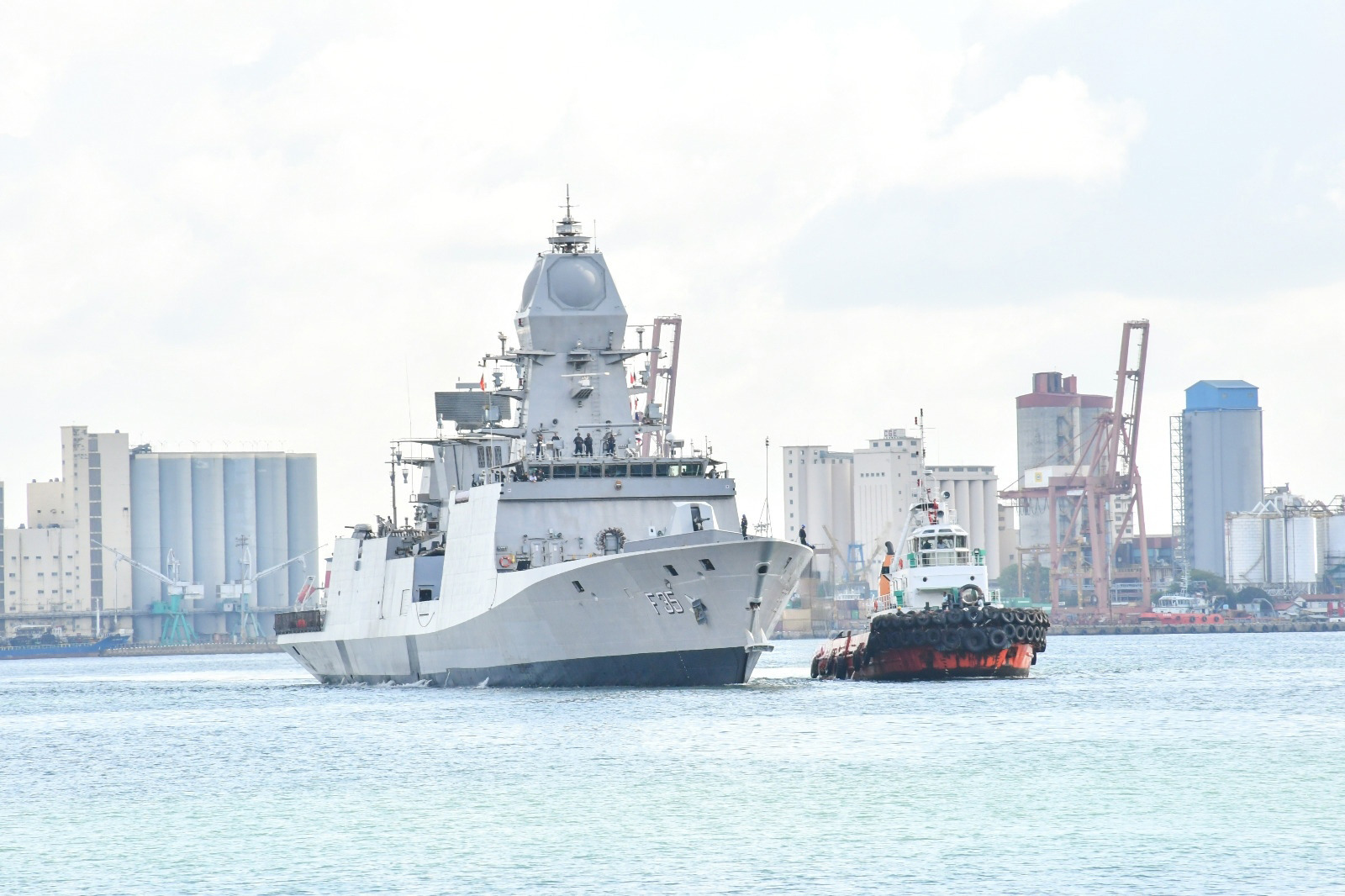
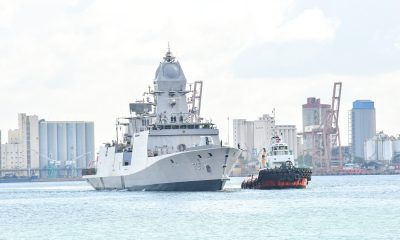
The Indian Naval Ship (INS) Udaygiri arrived at the Port of Colombo on an official visit today, 8 September 2026, where it was received by the Sri Lanka Navy in accordance with time-
honoured naval traditions.
INS Udaygiri is a 149.02m long Frigate, Commanded by Captain Vikas Sood. Meanwhile, the Commanding Officer of the visiting ship is scheduled to call on Commander Western Naval
Area, Rear Admiral Harsha De Silva at the Western Naval Command Headquarters.
Captain Sood served as the Defence Adviser at the Indian High Commission in Sri Lanka from July 2020 to October 2023.
During their stay in the island, the crew of INS Udaygiri will participate in several goodwill events organized by the Sri Lanka Navy to enhance camaraderie between the two forces.
The visiting personnel are also scheduled to visit prominent tourist and cultural locations across the island.
Additionally, Sri Lanka Navy personnel are expected to visit the ship for capability observation and knowledge sharing, and will conduct onboard training during its stay.
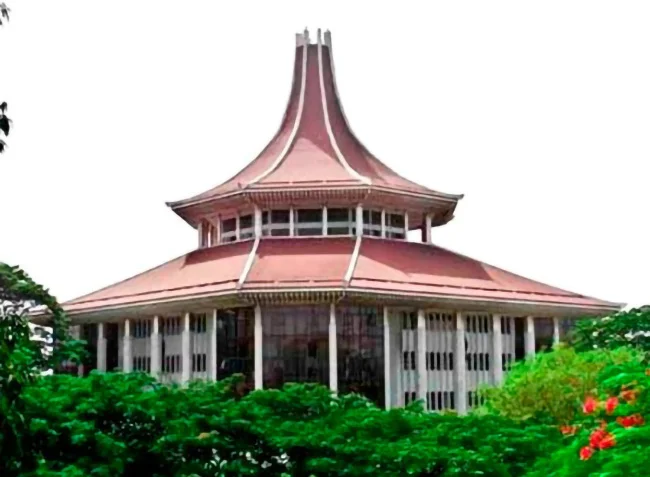
The Supreme Court has been petitioned seeking an explanation as to how eight petitions filed against the 22nd Amendment to the Constitution were not listed for hearing . Two of the petitioners, namely Dias Bandaralage Ajith Shantha Kumara Jayathilaka and Gunathilakage Dakum Dulara Gunathilaka, have requested an opportunity to examine the official Registry and parliamentary records so that all material facts may be objectively established. They said that their petitions that had been registered by the Supreme Court should have been heard along with other petitions.
The Registrar of the Supreme Court, Secretary General of Parliament, Speaker and the Attorney General have been named as the respondents.
The five-member bench that heard the petitions consisted of Chief Justice P. Padman Surasena, Achala Wengappuli, J, Arjuna Obeyesekere, J, Sampath B. Abayakoon, J and K.M.G.H. Kulatunga, J.
The petitioners sought the explanation in the absence of any judicial order dismissing, rejecting, striking out, terminating or otherwise disposing the said petitions. They have requested the disclosure of the complete procedural history of the unlisted cases.
The second petitioner Gunathilaka has referred to a speech by Jaffna District Independent MP Ramanathan Archuna in Parliament, on 21 August, 2026, regarding X-Press Pearl, a container carrier that sank off the port of Colombo, and related matters.
They have sought leave to proceed under Articles 17 and 126 of the Constitution and asked for a full Bench of the Supreme Court, or the widest Bench, constitutionally permissible.
They also requested that the Chief Justice and Achala Wengappuli refrain from participating in the hearing and determination of their application, having regard to the objective-appearance issue arising from their prior constitutional and judicial participation in matters forming part of the factual subject matter now requiring examination.
Meanwhile, General Secretary of Vinivida Foundation, Nagananda Kodituwakku, has requested the Supreme Court Registrar not to proceed with the determination of 22nd Amendment process, pending the hearing of fundamental rights petition filed by Chairman of the Vinivida Foundation lawyer, Sugandhika Fernando, seeking a full bench, excluding Chief Justice Preethi Padman Surasena, to hear the petitions challenging the 22nd Amendment Bill. She also requested that the hearing be suspended immediately until the matter was fully heard and determined.
Among the respondents are Chief Justice Surasena, the first respondent, and Attorney General Parinda Ranasinghe. Justices Yasantha Kodagoda, Shiran Gooneratne, Achala Wengappuli and Priyantha Fernando.
(SF)

Afghanistan to host Zimbabwe, Bangladesh in ODI tri-series

Sandhu’s 6 for 7 seals Pakistan’s semi-final spot

INS Udaygiri makes port call in Colombo

Showers in the Uva, Central and Eastern provinces and in Polonnaruwa district

22A: Exclusion of 8 petitions questioned, action filed against SC Registrar, others

Thailand shuts door on undesirables from Sri Lanka

‘Dates have the highest sugar content to fight Coronavirus’

Sunday Island 27 December – Headlines

#SundayIsland 17th December – Headlines

Sunday Island – 28th March

Sunday Island Headlines – 21 March

Sunday Island – 21st February – Headlines
-

 News6 days ago
Denied of promotion to SC despite vacancies, justice Gurusinghe retires
-

 Latest News6 days ago
Grade 5 scholarship exam results released
-

 News6 days ago
22A: SC urged to suspend hearing, appoint full bench
-

 Midweek Review7 days ago
The local and global dynamics of Sri Lanka’s 22nd Amendment
-

 News4 days ago
Namal remanded until Sept. 18 over Airbus deal investigation
-

 Latest News3 days ago
Tharanga creates history with Diamond League crown in Brussels
-

 News6 days ago
Govt. seeks NATO assistance
-

 News7 days ago
40 professional organisations and TU oppose proposed 22A