
News
Interim Truth & Reconciliation Secretariat DG: Sri Lankan military will not be targeted

By Shamindra Ferdinando
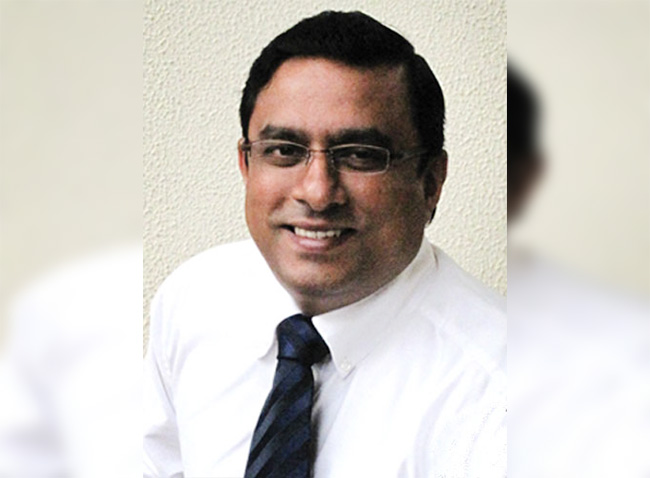
Interim Secretariat for Truth and Reconciliation (ISTRM) Director General Dr. Asanga Gunawansa, PC, declared there was absolutely no basis for concerns that the proposed Commission for Truth, Unity and Reconciliation (CTUR) targeted the war-winning military.
Dr. Gunawansa said so responding to The Island query regarding Sarvajana Balaya raising this grave concern, both in and out of Parliament.
The PC asserted that Sarvajana Balaya or other political parties and organisations may have reached that conclusion for want of understanding of the Bill. Had the Bill been perused carefully, they would have realized their concerns were baseless, the ISTRM Chief said. “Perhaps, they misinterpreted the Bill due to lack of understanding of the issues at hand.”
The government presented the relevant Bill to the Parliament on Tuesday (03). National Freedom Front (NFF) lawmaker Wimal Weerawansa emphasized that the Bill shouldn’t have been presented in view of the impending Presidential Election and the matter should have been addressed after the Presidential Election.
Dr. Gunawansa emphasized that the Bill was not meant to harm the military.
In section 16 of the proposed Bill, it is specifically provided as follows:
“16. (1) The Commission’s recommendations shall not be deemed to be a determination of civil or criminal liability of any person.”
Even though Section 16(2) of the Bill provides as follows,
“16 (2) Notwithstanding anything to the contrary in the Code of Criminal Procedure Act, No. 15 of 1979 or any other law, it shall be lawful for the Attorney-General to institute criminal proceedings in a designated court of law in respect of any offence based on material collected in the course of an investigation or inquiry or both, as the case may be, by the Commission established under this Act”,
Pointing out that the Attorney General has the power to investigate and prosecute suspects for crimes,” Dr. Gunawansa explained if evidence emerged regarding perpetration of a crime during investigations and inquiries undertaken by the proposed Commission, then prosecutions would take place based on further investigation into such matters and provided that the Attorney General is satisfied that there were sufficient grounds to issue an indictment.
“Even if an indictment is issued, the starting point for any criminal prosecution in Sri Lanka is the presumption of innocence. Therefore, no one could be punished for a criminal offence unless proven guilty beyond reasonable doubt.”
Dr. Gunawansa said that ISTRM conducted a spate of stakeholder meetings during December 2023 to August 2024 period. Representatives of police and the armed forces, as well as the Defence Ministry, who appeared before ISTRM, expressed the view that a credible domestic reconciliation mechanism could help them clear their names. Dr. Gunawansa quoted them as having said that in the absence of such a credible mechanism they and in some instances their children found it difficult to obtain visas to travel overseas.
Responding to another query, Dr. Gunawansa stressed that the Bill had been explained to all political parties, including senior members of the Sarvajana Balaya. According to him none of the political parties had submitted their views and observations as regards the draft Bill though they were invited to do so.
The government established ISTRM in September 2023 to lay the ground work for establishing the proposed CTUR.
Dr. Gunawansa pointed out that the ISTRM is a temporary entity. Since its establishment, it has done the following key functions:
(a) There was a draft prepared back in 2016 to establish a Truth Commission following the extensive consultations held by the Consultation Task Force. The ISTRM compared this draft with the laws enacted in other jurisdictions to establish truth commissions and based on a comparative study, introduced several amendments. This amended version was thereafter gazetted on 1st January 2024, in all three languages, as a concept paper, by the Minister of Foreign Affairs, with the objective of facilitation further consultations with stakeholders.
(b) The ISTRM held over 150 meetings with stakeholders during the period December 2023 to August 2024. These meetings were held in the Western province and all other eight provinces, covering 17 districts. The stakeholders included political leaders, religious leaders, victims, families of victims, civil society organizations, the military and the police, and former soldiers. Based on the findings and input received during the stakeholder meetings, several amendments were introduced to the aforesaid concept paper. Thereafter, the revised draft was Gazetted by H.E. the President on 05th August 2024.
(c) In addition to the above, currently the ISTRM is in the process of completing a study based on 12 jurisdictions which will provide way forward examples for the CTUR, should be established in Sri Lanka.



The Sri Lanka Navy successfully recovered its Fast Attack Craft P 4447 following a successful salvage operation, bringing a multi-stage emergency response to a close.
The craft, which ran into distress during a routine patrol on 15th August 2026 off Angulana, was brought to the surface on 11th September, from a depth of approximately 80 feet. It was
subsequently towed to the Colombo Dockyard premises.
The initial phase of the operation immediately following the incident focused on search and rescue. A joint effort involving the Navy, Air Force, Police, and local fishermen from Angulana
resulted in the rescue of 11 crew members. The search and rescue phase drew to a close with the recovery of the remains of the Second in Command of the craft, on 4th September.
Following the search and rescue phase, specialized Navy diving and salvage teams launched a dedicated recovery phase against rough sea conditions and underwater challenges, adhering to
strict safety protocols. The Navy’s marine, hull, electrical, and electronic engineering teams utilized specialized technical know-how and equipment to raise the vessel in stages.
Thus, the salvage operation marked an outstanding achievement attained through the professionalism, technical expertise of Navy divers, and coordinated contribution of all
engineering and technical branches of the Sri Lanka Navy. Technical support and specialized expertise were also extended by the Sri Lanka Ports Authority and Colombo Dockyard PLC.


By Shamindra Ferdinando
The Opposition should intensity its focus on the forthcoming selection of a member of the Commission to Investigate Allegations of Bribery or Corruption (CIABOC) and remain vigilant as Speaker Dr. Jagath Wickremaratne, MP, the head of the Constitutional Council (CC) tasked with making the relevant recommendation, is under investigation by the CIABOC, sources familiar with the ongoing inquiry told The Island.
Chethiya Goonasekara, PC, is expected to complete his three-year term on Dec 31, 2026. Sources pointed out that CIABOC Commissioners are appointed by the President on the recommendation made by the 10-member Constitutional Council.
The CIABOC initiated the investigation following a complaint lodged by suspended Chief of Staff and Deputy Secretary General of Parliament Chaminda Kularatne in early February this year. Sources said that as Goonasekera is scheduled to complete his term toward the end of 2026, the CC would have to call applications soon to choose the successor.
Goonasekara received his appointment from President Ranil Wickremesinghe in January 2024. A Justice W. M. N. P. Iddawala was appointed Chairman of the CIABOC. The other commissioner is K. Bernard Rajapakse.
Asked whether Iddawala and Rajapakse, too, would complete their terms soon, sources said that in terms of the Anti-Corruption Act No 09 of 2023, the Chairman of CIABOC would hold office for a period of five years, second commissioner (K. Bernard Rajapakse) for four years and the third commissioner (Chethiya Goonasekara) for a period of three years.
Sources said that the Opposition as well as civil society representatives in the CC should take up the issue of Speaker facing an investigation by the CIABOC taking part in the forthcoming selection process. Responding to queries, sources emphasized that the issue was whether in terms of Section 107 of the Anti-Corruption Act the participation of the Speaker in the selection process amounted to a violation of the Act itself.
The current members of the CC are Dr Jagath Wickramaratne, Speaker and Chairman of the Constitutional Council, Dr. Harini Amarasuriya, Prime Minister, Sajith Premadasa, Leader of the Opposition, Bimal Rathnayake, MP, Aboobucker Athambawa, MP, Ajith P. Perera, MP, Sivagnanam Shritharan, MP, Austin Fernando, Civil society representative, Prof. Wasantha Seneviratne, Civil society representative and Ranjith Ariyaratne, Civil society representative.
Sources pointed out that in spite of the sensitivity of the case, the CIABOC recorded Kularatne’s statement in the second week of August, six months after he lodged the complaint.
The CIABOC on 3, 8 and 10 Sept recorded the statements from the Transport Officer, Deputy Director, Administration and Assistant Director, Finance regarding the use of facilities by the Speaker, those assigned to his staff and other relevant matters.
The NPP named Dr. Wickramaratne as the Speaker after Asoka Ranwala resigned over controversy regarding his higher education qualifications.
SJB lawmaker Dayasiri Jayaskera has repeatedly raised the issues concerning the Speaker with the focus also on the Speaker using two government-managed residences, relevant staff in addition to expenditure on food, transport and fuel provided to the Speaker’s private secretary.
Political sources said that trouble erupted after the Parliamentary Staff Advisory Council in late January sacked Kularatne accusing him of providing false information to secure his appointment. Before being appointed as the Deputy Secretary-General of Parliament in 2023, Kularatne held several high-ranking positions, including Secretary to the Chief Government Whip, Additional Secretary to the President, Additional Secretary to the Prime Minister, and Additional Secretary to the Leader of the Opposition.
The SJB declared in Parliament that Ranwala should be brought back as the Speaker as they have no faith in Wickramaratne. MP Mujibur Rahuman jokingly told parliament that the Opposition wouldn’t raise Ranwala’s educational qualifications.

The Government Medical Officers’ Association (GMOA) has stressed the need to conduct a comprehensive countrywide cadre revision urgently.
GMOA spokesman Dr. Lasitha Dhammika told The Island that the failure on the part of successive governments to conduct cadre revision caused the deterioration of the public sector health services. Due to the absence of required statistics, they hadn’t been able to fully comprehend the situation on the ground and to ascertain the requirements of the public.
Dr. Dhammika pointed out the expansion of the services without supporting statistics and the need to initiate an immediate cadre revision. According to him, the GMOA had raised this issue with successive governments without success. The GMOA spokesman said that they also sought relevant information from the Health Ministry in terms of the Right to Information (RTI) Act two weeks ago but was yet to receive response.
(SF)

Fast Attack Craft P 4447 recovered in successful salvage operation

Showers above 100 mm are likely at some places in the Western, Central, Sabaragamuwa, Southern, North-central and North-western provinces

Shafali, Mandhana power India to eighth Asia Cup title

Tharanga wins Ultimate Javelin title

CIABOC member’s appointment: Controversy over Speaker under probe heading selection process

GMOA: Countrywide cadre revision not done since 2015

‘Dates have the highest sugar content to fight Coronavirus’

Sunday Island 27 December – Headlines

#SundayIsland 17th December – Headlines

Sunday Island – 28th March

Sunday Island Headlines – 21 March

Sunday Island – 21st February – Headlines
-

 Sports4 days ago
DDS set to lose Test captaincy
-
 News7 days ago
Thailand shuts door on undesirables from Sri Lanka
-

 News4 days ago
Sri Lanka faces new grid challenge as rooftop solar surges: former CEB GM
-

 Latest News4 days ago
Shafali, Deepti power India into sixth T20 Asia Cup final
-
 Business7 days ago
CEB successor company breaks into top three in competitive BESS tender
-

 Opinion6 days ago
Navigating Sri Lanka’s Israeli Dilemma
-

 Latest News3 days ago
Sri Lanka thwart Fatima Sana challenge to secure Asia Cup final spot
-
 Features5 days ago
Lost for 90 years: Rare Goby resurfaces in Jaffna